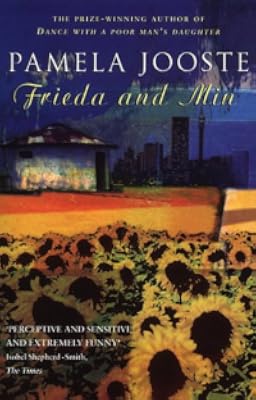
Frieda and Min
by Pamela Jooste
On This Page
Description
In apartheid South Africa, a poor Jewish girl and a 'white kaffir' form a lifetime friendship. When Frieda first met Min, with her golden hair and ivory bones, what struck her most was that Min was wearing a pair of African sandals, the sort made out of old car tyres. She was a silent, unhappy girl, dumped on Frieda's exuberant family in Johannesburg for the summer of 1964 so that her mother could go off with her new husband. In a way, Min and Frieda were both outsiders - Min, raised in the show more bush by her idealistic doctor father, and Frieda, daughter of a poor Jewish saxophone player who lived almost on top of a native neighborhood. The two girls, thrown together - the 'white kaffir' and the poor Jewish girl - formed a strange but loyal friendship, a friendship that was to last even through the terrible years of oppression and betrayal during the time of South Africa under Apartheid. show lessTags
Recommendations


























Member Reviews
A book that started very promisingly, but about two thirds of the way through it veered into romantic fiction of the worst kind.
The book opens in Johannesburgh South Africa 1964 and Frieda is 14 years old. her family are Jewish and they live in a poor part of town, but are still like many white people able to employ black maids. Min also 14 years old comes to stay for a period and she has a very different background as the daughter of a doctor who treats black people deep in bush country. Despite their differences the girls become good friends.
The relationship between the two girls and the influences of their families are very well portrayed. Frieda's family are intent that she marries well and their focus is on Aunt Sadie, who is show more about to marry one of the richest Jewish men in the district and so a real success story for the family. Frieda is urged to follow suit and she complies despite the reservations of her friend Min. The two girls back stories are sketched in and Jooste is very good and bringing out the desperate need of the Jewish family to make their way in the white society. The problem however is Frieda's friend Min who insists on treating black people as human beings and soon starts getting into trouble with the authorities.
The story moves on to 1975 and Min's first arrest. Frieda is able to bail her out but from then on the whole novel seems to loose its footing. Min is soon in trouble again first being placed under house arrest and then jailed. Perhaps Jooste has moved out of the world that she knows or perhaps she is aiming at a different audience for her novel. Frieda again becomes the knight in shinning armour, but her nativity in dealing with the authorities seems overdone. The apartheid regime also seems to be a little soft focus and I didn't believe a word of the last third of this novel show less
The book opens in Johannesburgh South Africa 1964 and Frieda is 14 years old. her family are Jewish and they live in a poor part of town, but are still like many white people able to employ black maids. Min also 14 years old comes to stay for a period and she has a very different background as the daughter of a doctor who treats black people deep in bush country. Despite their differences the girls become good friends.
The relationship between the two girls and the influences of their families are very well portrayed. Frieda's family are intent that she marries well and their focus is on Aunt Sadie, who is show more about to marry one of the richest Jewish men in the district and so a real success story for the family. Frieda is urged to follow suit and she complies despite the reservations of her friend Min. The two girls back stories are sketched in and Jooste is very good and bringing out the desperate need of the Jewish family to make their way in the white society. The problem however is Frieda's friend Min who insists on treating black people as human beings and soon starts getting into trouble with the authorities.
The story moves on to 1975 and Min's first arrest. Frieda is able to bail her out but from then on the whole novel seems to loose its footing. Min is soon in trouble again first being placed under house arrest and then jailed. Perhaps Jooste has moved out of the world that she knows or perhaps she is aiming at a different audience for her novel. Frieda again becomes the knight in shinning armour, but her nativity in dealing with the authorities seems overdone. The apartheid regime also seems to be a little soft focus and I didn't believe a word of the last third of this novel show less
A very sweet book, a bit YA for me. I think if I'd read it as a teenager, it would have rocked my world a bit but not now. For anyone who wants kind of an easy read intro to life in South Africa in the 1960s and 70s, this might be a good one.
I did like Frieda very very much - I could really hear her voice.
I did like Frieda very very much - I could really hear her voice.
Freida and Min are both outsiders in white South Africa, Min having been raised in the bush by her idealistic father, and Freida the daughter of a poor Jewish saxophone player. Their strange but loyal friendship lasts through the terrible years of oppression and betrayal during the time of South Africa under apartheid.
Ratings
Members
- Recently Added By
Author Information

7 Works 233 Members
Awards and Honors
Awards
Common Knowledge
- Important places
- South Africa
Classifications
Statistics
- Members
- 42
- Popularity
- 691,233
- Reviews
- 3
- Rating
- (2.94)
- Languages
- English
- Media
- Paper, Ebook
- ISBNs
- 4
- ASINs
- 1