
Wealth Addiction
by Philip Slater
24 Members (4.31)
On This Page
Description
Listeners learn how to recognize wealth addiction & kick the habit - not by denying themselves, but through a process of joyous self-fulfillmentTags
Recommendations




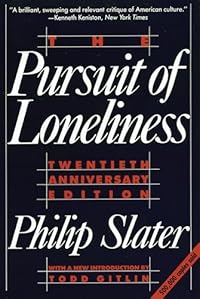








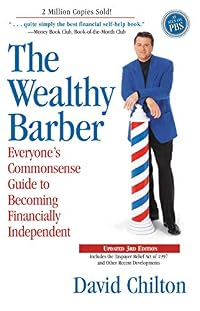


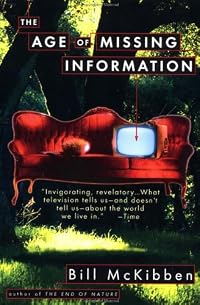


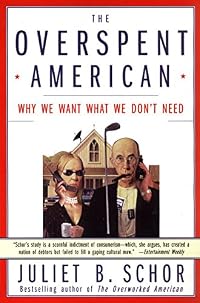

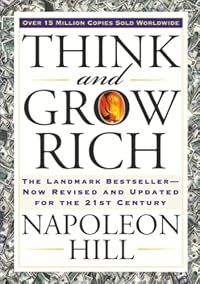

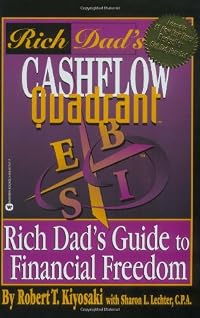
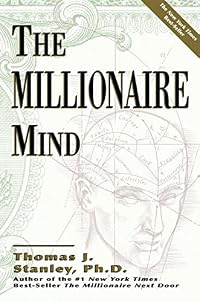
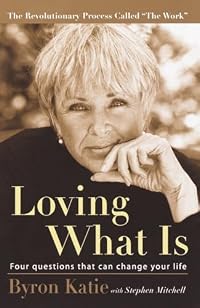
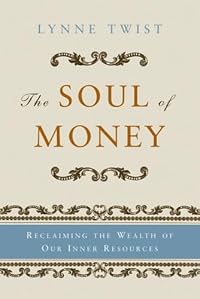




Member Recommendations
Member Reviews
Members
- Recently Added By
Published Reviews
ThingScore 50
Wealth is like muck. It is not good but if it be spread."" So said Sir Francis Bacon, and Philip Slater clearly agrees. The author of The Pursuit of Loneliness here turns his attention to the pursuit of wealth: some of his volleys strike their targets; others sink. For Slater, we are a nation of addicts, from the ""closet addicts"" (who don't have lots of money but sure wish they did) to show more ""heavy addicts"" on the scale of John D. Rockefeller and Howard Hughes. What makes for addiction? ""Moneythink"": forgetting that money is merely symbol, that it is means and not ends. Slater's four signs of addiction (if you were wondering) are ""a closing hand,"" confusion about goals, increasing possession with decreasing use, and ""tension and search behavior."" Ultimately ""moneythink"" makes for unhappiness: ""Addicts never see the rainbow because they're too busy looking for the pot of gold."" show less
added by SnootyBaronet
Author Information

5 Works 440 Members
Some Editions
Common Knowledge
- Canonical title
- Wealth Addiction
- Original publication date
- 1980
- Epigraph
- Since olden times there has rarely been a sage who was wealthy.
- Yoshida Kenko
Wealth is like muck.
It is not good but if it be spread.
- Sir Francis Bacon - Dedication
- To Al Adato, Glen Lyons, Mark Messer, Jim Mosher, Andy Schiffrin, and Ed Teitcher
- First words
- People worry a lot about money these days.
- Quotations
- An affluent middle-class person clearly spends a good deal of time as an unpaid janitor, while a person wealthy enough to have servants becomes an unpaid Head Janitor. From a strictly rational viewpoint, owning is an extremel... (show all)y inefficient way to maximize pleasure. Unless there is an extraordinary difference in cost or quality, or almost constant use , it makes more sense to rent just about anything, and leave it up to the renter to provide the janitorial services: the searching, the protecting, the maintaining. The renter, after all, makes a living by providing those services.
The relationship of pleasure to money is complex. For example, money is subject to diminishing returns of pleasure. Indeed, beyond some point, the larger the new sum, the lower the return in pleasure. I would suggest that for... (show all) most people the pleasure peak for a money windfall is about 5 percent of one’s current income: up to that point, the more money the more pleasure; but beyond that point, the more money the less pleasure. This is so because a larger sum usually tempts us to enlarge our scale of living in some way—to make a major acquisition of real or personal property, change our life-style, or begin involving ourselves in the management of investments so as to generate more money.
When a flood threatens, most people will be out on the levee piling up sandbags. The Addict will be buying up boats—“betting on the disaster.” A millionaire developer during the London Blitz was heard to say, “Did you... (show all) hear the bombs last night? There must be some bargains around this morning!” Arndt Krupp, founder of the munitions dynasty, bought up land in Essen at bargain prices from citizens fleeing the plague—the Krupp family still owns it after four hundred years.
Medicine is the classic example of the distorting effect of money. While one function of a doctor is to save lives, studies have found that “the fewer the physicians in a population, the lower the mortality rate.” Further... (show all)more, “during physician strikes in Canada, the United States, England, and Israel, the death rate actually fell.” Commenting on one such strike in Los Angeles a columnist suggested that the sharp decrease in the death rate was due to the marked reduction in surgical operations. A congressional subcommittee estimated that in the year 1974 alone, 2.4 million unnecessary surgeries were performed at a cost of $4 billion and leading to 11,900 deaths.
Radical mastectomies, routine in this country for breast cancer, “have no higher cure rate than the ‘lumpectomies’ that are routine in England.” A surgeon, asked why he nevertheless performed them, replied: “A radic... (show all)al mastectomy goes for $750. A simple mastectomy for $250. Which do you think we’re going to say is best?” Perhaps this says all that needs to be said about the role of money in motivating people to perform socially useful tasks.
When I worked hard and had a large income I felt deprived of many things. Now that I have very little I live like a king (at least in my own eyes) and it’s a rare day that I’m not consciously grateful for my good fortune. - Last words
- (Click to show. Warning: May contain spoilers.)I believe there is still time to redirect our energies as a people-to build a society together that will be a source of enjoyment and pride for all of us.
Classifications
Statistics
- Members
- 24
- Popularity
- 1,106,757
- Rating
- (4.31)
- Languages
- English
- Media
- Paper, Audiobook
- ISBNs
- 3
- UPCs
- 1
