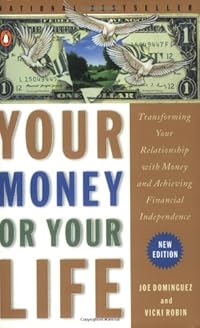
Your Money or Your Life: Transforming Your Relationship with Money and Achieving Financial Independence
by Joe Dominguez, Vicki Robin (Author)
On This Page
Description
A fully revised edition of one of the most influential books ever written on personal finance with more than a million copies sold“The best book on money. Period.” –Grant Sabatier, founder of “Millennial Money,” on CNBC Make It
"This is a wonderful book. It can really change your life." -Oprah
For more than twenty-five years, Your Money or Your Life has been considered the go-to book for taking back your life by changing your relationship with money. Hundreds of show more thousands of people have followed this nine-step program, learning to live more deliberately and meaningfully with Vicki Robin’s guidance. This fully revised and updated edition with a foreword by "the Frugal Guru" (New Yorker) Mr. Money Mustache is the ultimate makeover of this bestselling classic, ensuring that its time-tested wisdom applies to people of all ages and covers modern topics like investing in index funds, managing revenue streams like side hustles and freelancing, tracking your finances online, and having difficult conversations about money.
Whether you’re just beginning your financial life or heading towards retirement, this book will show you how to:
• Get out of debt and develop savings
• Save money through mindfulness and good habits, rather than strict budgeting
• Declutter your life and live well for less
• Invest your savings and begin creating wealth
• Save the planet while saving money
• …and so much more!
"The seminal guide to the new morality of personal money management." -Los Angeles Times. show less
Tags
Recommendations

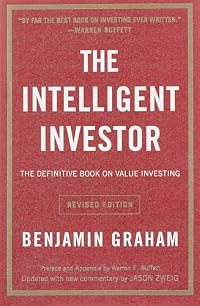
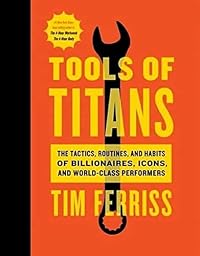
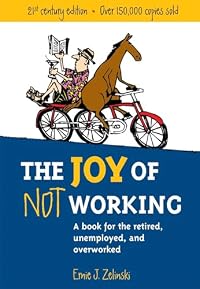
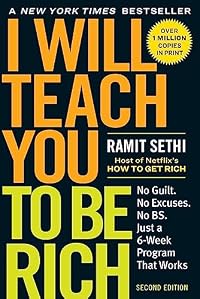

Member Recommendations
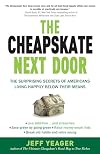
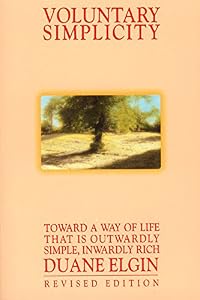
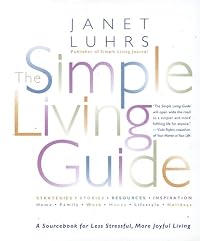
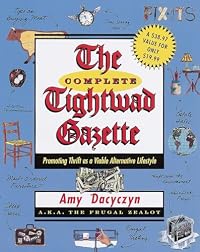
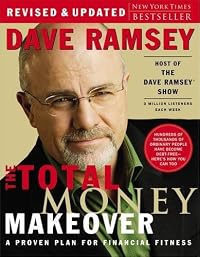
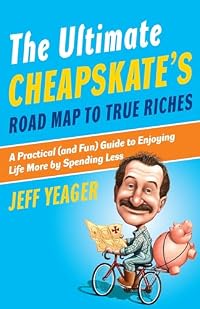
The Cheapskate Next Door: The Surprising Secrets of Americans Living Happily Below Their Means by Jeff Yeager
jeremyhoover The Cheapskate Next Door provides interesting stories about and tips from people who would understand the nine-step formula in YMOYL. It's a nice companion book.
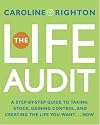
The Life Audit: A Step-by-Step Guide to Taking Stock, Gaining Control, and Creating the Life You Want... Now by Caroline Righton
Silvernfire The Life Audit is like taking the analysis and tracking you do for your finances in Your Money or Your Life and applying it to the rest of your life (your relationships, your image, your health, and most of all, your time).
infjsarah Both books are about the mental attitudes needed rather than the how to do it practicalities
Member Reviews
I would describe many books as life-changing. Whether or not they are, they felt like it at the time. Few of those end in meaningful day to day changes in my behavior or actions. This book is different. It goes far deeper than what I thought were the foundations of financial planning and one's relationship with money.
I'm in the process of re-reading while following the steps in full depth. As a very clear picture emerges of how much life I have to trade for simple pleasures, the desire to chase these pleasures is dissolving. This book leads to a massive amount of soul-searching. I haven't evaluated my life this much since I exited high school and was thrown head first into a university before knowing what I wanted to do or why to do show more it.
Perhaps I can make a more coherent review when my head stops spinning. I do know that I'll be recommending this book to anyone open to a shakedown of their life. This is so much more than a book about money. It's a huge upgrade for your life's operating system. show less
I'm in the process of re-reading while following the steps in full depth. As a very clear picture emerges of how much life I have to trade for simple pleasures, the desire to chase these pleasures is dissolving. This book leads to a massive amount of soul-searching. I haven't evaluated my life this much since I exited high school and was thrown head first into a university before knowing what I wanted to do or why to do show more it.
Perhaps I can make a more coherent review when my head stops spinning. I do know that I'll be recommending this book to anyone open to a shakedown of their life. This is so much more than a book about money. It's a huge upgrade for your life's operating system. show less
Robin, Vicki, and Joe Dominguez. Your Money or Your Life: 9 Steps to Transforming Your Relationship with Money and Achieving Financial Independence: Revised and Updated for the 21st Century. 2008.
This classic work lays out steps to first become more aware of your financial position and spending habits, and then use that knowledge to work toward financial independence. If you know how much money you are spending on your job (commuting, work lunches, etc.), for instance, you might find it possible to spend LESS.
Not all of the advice struck me as particularly helpful, and the investment section is extremely cautious. However, the authors specify that you can do the steps out of order, which is a little unusual for this kind of book--they show more so often tell you that you MUST go in order. Calculating your real hourly wage struck me as particularly helpful for making spending decisions.In general, even this update seems out of date; their suggestions for tracking spending and net worth are very pencil-and-paper oriented, for instance. Still, the basic concept that knowledge of your financial reality is empowering (and the ways they suggest gaining that knowledge) is well-conveyed. show less
This classic work lays out steps to first become more aware of your financial position and spending habits, and then use that knowledge to work toward financial independence. If you know how much money you are spending on your job (commuting, work lunches, etc.), for instance, you might find it possible to spend LESS.
Not all of the advice struck me as particularly helpful, and the investment section is extremely cautious. However, the authors specify that you can do the steps out of order, which is a little unusual for this kind of book--they show more so often tell you that you MUST go in order. Calculating your real hourly wage struck me as particularly helpful for making spending decisions.In general, even this update seems out of date; their suggestions for tracking spending and net worth are very pencil-and-paper oriented, for instance. Still, the basic concept that knowledge of your financial reality is empowering (and the ways they suggest gaining that knowledge) is well-conveyed. show less
“Your Money or Your Life” was one of the first books in the new wave of personal finance books and is significantly more concerned with the “personal” than the “finance”. The point of personal finance, according to authors Joe Dominguez and Vicki Robin, is not to accumulate wealth for the sake of accumulating wealth, but rather to accumulate wealth in order to exchange it for time. Dominguez (whose financial philosophy is at the core of the book) has a strongly anti-consumerist message, arguing that, in economic terms, there is a point at which collecting stuff gives decreasing marginal benefit. The purpose of money, according to Dominguez, is not to collect stuff, but to, at some point, exchange your money for freedom, show more freeing you from your job and your obligations in order to live your life however you please.
The financial principles of “Your Money or Your Life” are relatively simple. Dominguez is not a budgeter. Rather, he emphasizes tracking earnings and spending and calculating how much of your life is spent earning money and how much of your life is spent on everything you buy. This is the key to the book. Once you begin seeing your purchases in terms of the amount of life energy you’ve spent acquiring the money to make those purchases, your spending habits are bound to change.
There are a lot of subjects covered here and it would be impossible to do justice to them all, but there are two that seem particularly worthy of discussion. First, there is a list of 101 frugality tips which focus on saving both time and money. Some are obvious (don’t bounce checks), some not so obvious (eat a proper diet and get proper exercise), and none are as banal as the ultra-frugal tips you usually see today (make sure your tires are inflated and use less laundry detergent). It is a list worth perusing mostly because the tips are meant to save time as well as money.
The one aspect of real criticism comes simply from the datedness of the book, first published in 1992. Dominguez’s only means of investment is long-term US treasuries which, twenty years ago were averaging a better than seven percent return and were completely risk-free investments. In 2010, US treasuries are only yielding three to four percent and are not adequate investment vehicles as their yield is unlikely to greatly outpace inflation. This one criticism aside, “Your Money or Your Life” is a fantastic book and is worth reading if only for its unique take on the way earning and spending money affects our lives. show less
The financial principles of “Your Money or Your Life” are relatively simple. Dominguez is not a budgeter. Rather, he emphasizes tracking earnings and spending and calculating how much of your life is spent earning money and how much of your life is spent on everything you buy. This is the key to the book. Once you begin seeing your purchases in terms of the amount of life energy you’ve spent acquiring the money to make those purchases, your spending habits are bound to change.
There are a lot of subjects covered here and it would be impossible to do justice to them all, but there are two that seem particularly worthy of discussion. First, there is a list of 101 frugality tips which focus on saving both time and money. Some are obvious (don’t bounce checks), some not so obvious (eat a proper diet and get proper exercise), and none are as banal as the ultra-frugal tips you usually see today (make sure your tires are inflated and use less laundry detergent). It is a list worth perusing mostly because the tips are meant to save time as well as money.
The one aspect of real criticism comes simply from the datedness of the book, first published in 1992. Dominguez’s only means of investment is long-term US treasuries which, twenty years ago were averaging a better than seven percent return and were completely risk-free investments. In 2010, US treasuries are only yielding three to four percent and are not adequate investment vehicles as their yield is unlikely to greatly outpace inflation. This one criticism aside, “Your Money or Your Life” is a fantastic book and is worth reading if only for its unique take on the way earning and spending money affects our lives. show less
If you want your hand held very tightly and things explained slowly and methodically to you, this is the book for you. Or perhaps you enjoy the mental masturbation of someone telling you how bad it is to buy stuff, subtly congratulating you for not doing so. You also might enjoy it if you like metaphors that are wildly inaccurate, like this one that tries to make you understand money through something more 'tangible':
"Our life energy is more real in our actual experience than money. You could even say money equals our life energy. So, while money has no intrinsic reality, our life energy does--at least to us. It's tangible, and it's finite."
Maybe I'm stupid, but how is 'life energy' more tangible than money? You can literally touch show more money; can you do that with life energy?
Obviously, I didn't enjoy the book's tone or pacing, but even the ideas contained within it are dubious. One of the first things that the book tells you to do is to make an inventory of every little thing in your house, only leaving out things that might be worth less than $1. Talk about a high investment of time for questionable value. Irrespective of this example, though, the book has a very low signal-to-noise ratio; you have to read through 5-10 pages of the same idea regurgitated 100 different ways before another one comes along.
I'd recommend Early Retirement Extreme instead, which has a much higher proclivity to present novel ideas. The reason I gave this book more than 1 star is because I think that for someone who isn't as sold on the concept of financial independence, it could be useful to have information be relayed at a more leisurely pace. show less
"Our life energy is more real in our actual experience than money. You could even say money equals our life energy. So, while money has no intrinsic reality, our life energy does--at least to us. It's tangible, and it's finite."
Maybe I'm stupid, but how is 'life energy' more tangible than money? You can literally touch show more money; can you do that with life energy?
Obviously, I didn't enjoy the book's tone or pacing, but even the ideas contained within it are dubious. One of the first things that the book tells you to do is to make an inventory of every little thing in your house, only leaving out things that might be worth less than $1. Talk about a high investment of time for questionable value. Irrespective of this example, though, the book has a very low signal-to-noise ratio; you have to read through 5-10 pages of the same idea regurgitated 100 different ways before another one comes along.
I'd recommend Early Retirement Extreme instead, which has a much higher proclivity to present novel ideas. The reason I gave this book more than 1 star is because I think that for someone who isn't as sold on the concept of financial independence, it could be useful to have information be relayed at a more leisurely pace. show less
I first bought this at a used bookstore years ago and moved it around with me before eventually donating it without ever reading it. I finally for some reason picked it up on a Kindle deal, and I guess now was the time to read it during my current money obsession. I had no idea in all the years I had it on my shelves that it essentially is a book about early retirement, so again it’s still difficult for me to think of that as a possibility in my own life. But I did appreciate how she breaks things down, and I loved that she spent the time to update the original version into modern life; of course now I wonder what some of that version’s advice would be in the pre-internet world. I’m glad I have it digitally now though as I show more definitely plan to revisit it as I work on things. show less
If you're looking for an approach to personal finance that's genuinely personal and not the usual banal instruction that treats money management like homework (i.e. necessary, boring and to be completed as quickly as possible in order to move on to better things), then Your Money or Your Life is a refreshing place to start.
Earning and spending are forever interwoven with our actions, and I appreciate this book's healthy attitude toward thinking conscientiously about the function of money in our everyday lives. There's lots of filler here too, mostly in the form of real-life examples and moralizing, but this isn't necessarily a bad thing if you're seeking a narrative context.
The most useful advice for me is the section on assigning show more values to spending (relevant self-assessment is good practice no matter what your situation), but this presumes a good handle on the basics of budgeting, which is fundamentally the most important. The section on investing seems dated and carelessly limiting even though I understand the author's intention to want to simplify the process. The goal should be to pursue the smartest option, and that doesn't always mean the simplest.
Overall, a helpful book that I found less helpful with each successive re-read. show less
Earning and spending are forever interwoven with our actions, and I appreciate this book's healthy attitude toward thinking conscientiously about the function of money in our everyday lives. There's lots of filler here too, mostly in the form of real-life examples and moralizing, but this isn't necessarily a bad thing if you're seeking a narrative context.
The most useful advice for me is the section on assigning show more values to spending (relevant self-assessment is good practice no matter what your situation), but this presumes a good handle on the basics of budgeting, which is fundamentally the most important. The section on investing seems dated and carelessly limiting even though I understand the author's intention to want to simplify the process. The goal should be to pursue the smartest option, and that doesn't always mean the simplest.
Overall, a helpful book that I found less helpful with each successive re-read. show less
This was recommended as a good “money lifestyle” read on one of the YouTube channels I follow (The Financial Diet). It feels a bit dated at times but overall did offer up some interesting financial food for thought.
The main premise of the book is the idea of looking at money that you spend as life energy. Any time you work to make money is part of your life energy you are giving to that process. As you purchase things in your life you should be cognizant of this.
The book presents a ten step process for being FI (financially independent). This process involves doing a lot of things that I already do as part of my finances, but might be eye opening to those who like to turn a blind eye or ignore their finances. It involves things like show more calculating your net worth and figuring how much dollars->life energy you are actually spending on day to day items.
I really like this idea and it did make me reconsider the way I spend money. I was able to look at our personal finances more closely and target trouble areas (like the amount we spend on eating out). I also really enjoyed some of the stats and historical discussion about American life and economy and the innate problems American society has.
I did think their final step of being able to live off of interest from bonds to become completely FI was a bit unrealistic. The book is updated to mention that in more current times it may be more practical to diversify that strategy. It is also mentioned that any investing comes with risk and adopting this style of life can be risky.
In the end I think I pulled enough useful information from this book to impact my life and finances in a positive way. Will I adopt this type of lifestyle completely? Probably not, I will take a more moderate approach and modify trouble areas of my life.
Overall I would definitely recommend to those who are interested in becoming financially independent and really want to take a look at how money affects their lives. This is also a good book for those who want to get a head start on ridding themselves of debt and planning a solid retirement. show less
The main premise of the book is the idea of looking at money that you spend as life energy. Any time you work to make money is part of your life energy you are giving to that process. As you purchase things in your life you should be cognizant of this.
The book presents a ten step process for being FI (financially independent). This process involves doing a lot of things that I already do as part of my finances, but might be eye opening to those who like to turn a blind eye or ignore their finances. It involves things like show more calculating your net worth and figuring how much dollars->life energy you are actually spending on day to day items.
I really like this idea and it did make me reconsider the way I spend money. I was able to look at our personal finances more closely and target trouble areas (like the amount we spend on eating out). I also really enjoyed some of the stats and historical discussion about American life and economy and the innate problems American society has.
I did think their final step of being able to live off of interest from bonds to become completely FI was a bit unrealistic. The book is updated to mention that in more current times it may be more practical to diversify that strategy. It is also mentioned that any investing comes with risk and adopting this style of life can be risky.
In the end I think I pulled enough useful information from this book to impact my life and finances in a positive way. Will I adopt this type of lifestyle completely? Probably not, I will take a more moderate approach and modify trouble areas of my life.
Overall I would definitely recommend to those who are interested in becoming financially independent and really want to take a look at how money affects their lives. This is also a good book for those who want to get a head start on ridding themselves of debt and planning a solid retirement. show less
Members
- Recently Added By
Lists

Books Read in 2016
4,666 works; 197 members

Books Read in 2022
5,164 works; 111 members
Author Information

1+ Work 3,051 Members
Joe Dominguez was born on February 2, 1938. Considered a pioneer in the sustainability movement, he, together with partner Vicki Robin, co-authored the best-seller Your Money or Your Life: Transforming Your Relationship with Money and Achieving Financial Independence. Dominguez was 31 years of age when he retired from a job as a technical stock show more analyst on Wall Street with a nest egg of about $70,000. He continued to live off of the investment income, about $6,000 a year, with a strong desire to tell others how to do the same. The proceeds of his book sales and other efforts to increase financial literacy have been donated to the New Road Map Foundation, an all-volunteer, non-profit foundation founded to promote the reduction of North American consumption. Dominguez died of cancer in Seattle on January 11, 1997. (Bowker Author Biography) show less

Some Editions
Awards and Honors
Distinctions
Work Relationships
Is contained in
Is retold in
Common Knowledge
- Canonical title
- Your Money or Your Life: Transforming Your Relationship with Money and Achieving Financial Independence
- Alternate titles
- Your Money or Your Life: 9 Steps to Transforming Your Relationship with Money and Achieving Financial Independence
- Original publication date
- 1992
- Dedication
- We dedicate this book to all of the people
who are actively engaged in leaving our planet
in better shape than they found it. - First words
- "Your money or your life."
- Last words
- (Click to show. Warning: May contain spoilers.)We wish you great success.
Classifications
Statistics
- Members
- 3,052
- Popularity
- 5,764
- Reviews
- 43
- Rating
- (4.04)
- Languages
- 7 — Chinese, English, French, German, Polish, Portuguese, Spanish
- Media
- Paper, Audiobook, Ebook
- ISBNs
- 28
- UPCs
- 1
- ASINs
- 12