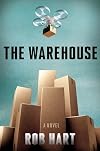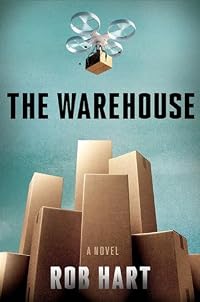
The Warehouse
by Rob Hart
On This Page
Description
Paxton never thought he'd be working for Cloud, the giant tech company that's eaten much of the American economy. Much less that he'd be moving into one of the company's sprawling live-work facilities. But compared to what's left outside, Cloud's bland chainstore life of gleaming entertainment halls, open-plan offices, and vast warehouses ... well, it doesn't seem so bad. It's more than anyone else is offering. Zinnia never thought she'd be infiltrating Cloud. But now she's undercover, show more inside the walls, risking it all to ferret out the company's darkest secrets. And Paxton, with his ordinary little hopes and fears? He just might make the perfect pawn. If she can bear to sacrifice him. As the truth about Cloud unfolds, Zinnia must gamble everything on a desperate scheme--one that risks both their lives, even as it forces Paxton to question everything about the world he's so carefully assembled here. Together, they'll learn just how far the company will go ... to make the world a better place. Set in the confines of a corporate panopticon that's at once brilliantly imagined and terrifyingly real, The Warehouse is a near-future thriller about what happens when Big Brother meets Big Business--and who will pay the ultimate price.-- show lessTags
Recommendations







Member Reviews
In 'The Warehouse', Rob Hart delivers a horribly plausible picture of a near-future dystopian America and an intriguing, I-need-to-know-how-this-will-work-out thriller. What I liked most was that 'The Warehouse' doesn't fall into the simple black-and-white, good-guy bad-guy mode that so many techno-thrillers have. There are no simple answers here and no oversimplified people either. The result is an engaging, thought-provoking piece of Speculative Fiction that left me wanting to read more of Rob Hart's work.
The story takes place in an America where poverty is widespread as the effects of climate change destroy traditional ways of making a living or even living outdoors at all. America is now a nation where those who have money hunker show more down at home and have what they need delivered by drones owned and run by Cloud, a sort of Amazon on steroids. Those who don't have money try hard to win and keep a job at Cloud. Most of them live and work in MotherClouds, enormous warehouse compounds built in remote areas of America, well away from towns or cities.
The MotherCloud setup is more than an extrapolation of Amazon work practices. It mimics the neo-serfdom / modern slavery of some Chinese factory towns, made worse by the addition of a Corporate America 'Everything is good here' propaganda gloss
The plot explores Cloud in three ways. Firstly through posts on the public blog of Gibson Wells, the founder of Cloud, who, knowing that he is dying, wants to share the real story of how Cloud came to be, the good that it's done and the bright future that it offers America and Americans. Secondly through the eyes of Paxton, an inventor who used to run a small company that Cloud put out of business and who now needs to take the only job he can get, as a worker in a MotherCloud. Finally, we see Cloud through the eyes of Zinnia, who wasn't looking for a job because she already had one, to infiltrate Cloud and who gets herself hired to the same MotherCloud as Paxton.
Of the three voices, I found Gibson Wells' the most disturbing. The book opens with his first blog post. It only takes a few lines to establish his direct but folksy style and tell me that he's a skilled manipulator who can't be trusted. Here's how it starts.
'WELL, I'M DYING.
A lot of men make it to the end of their life and they don't know that they've reached it. Just the lights go off one day. Here I am with a deadline.
I don't have time to write a book about my life, like everyone has been telling me I should, so this will have to do. A blog seems pretty fitting, doesn't it? I haven't been sleeping much lately so this gives me something to keep myself occupied at night.
Anyway, sleep is for people who lack ambition.
At least there'll be some kind of a written record. I want you to hear it from me rather than someone looking for a buck, making educated guesses. In my line of work, I can tell you: guesses are rarely educated.
Gibson Wells is a wonderful, if frightening, invention. In him. Rob Hart has captured perfectly the tone I've heard from many CEO types, framing the narrative of their own success. It's spookily accurate and made all the more disturbing by the folksy simplicity of the language. Everything seems calm and reasonable and even benign until you consider who benefits and see the bladed steel camouflaged by a 'We're all just folks here' smile.
We get a different view of Cloud from Paxton, who is hired into the security section because he'd worked for years as a Prison Guard while getting the money together to start his business. Through him we get a behind-the-scenes view of how order is kept at Cloud. We also get to experience what it's like, to step out of poverty and hopelessness in a job that gives him, not just a place to live and food in his belly, but the dignity of being a valued part of something bigger than himself, even if that thing was responsible for destroying the company he'd built.
Zinnia gives us the worker drone view, even if she's actually a hornet in the hive. She is assigned to the warehouse floor, racing against the clock to pick items from the shelves and take them to the right conveyor belt. Through her work, we see how the workers are surveilled, measured and pushed to exhausting levels of performance every day. We also get to see Cloud through the eyes of someone who doesn't want to be there, who knows that Cloud has something to hide.
I became completely immersed in Cloud. Most of me hated the idea of it but part of me had to admit that it was a better option for its workers than being out in the punishing heat, homeless and hungry. I wanted to say that those shouldn't be the only two options but I found myself wondering what I'd do if they were.
'The Warehouse' works very well as a thriller. You can see the collision between Gibson Wells, Paxton and Zinnia coming but you are kept guessing about how and when and what it will mean. There are some good surprises along the way and the ending was as textured and thought-provoking as the rest of the story.
I strongly recommend the audiobook version of 'The Warehouse'. The narration is unusual but effective: Emily Woo Zeller is the main narrator but with the voice of Paxton cut in during dialogue and with a wonderfully folksy narrator reading Gibson Wells' blog. show less
The story takes place in an America where poverty is widespread as the effects of climate change destroy traditional ways of making a living or even living outdoors at all. America is now a nation where those who have money hunker show more down at home and have what they need delivered by drones owned and run by Cloud, a sort of Amazon on steroids. Those who don't have money try hard to win and keep a job at Cloud. Most of them live and work in MotherClouds, enormous warehouse compounds built in remote areas of America, well away from towns or cities.
The MotherCloud setup is more than an extrapolation of Amazon work practices. It mimics the neo-serfdom / modern slavery of some Chinese factory towns, made worse by the addition of a Corporate America 'Everything is good here' propaganda gloss
The plot explores Cloud in three ways. Firstly through posts on the public blog of Gibson Wells, the founder of Cloud, who, knowing that he is dying, wants to share the real story of how Cloud came to be, the good that it's done and the bright future that it offers America and Americans. Secondly through the eyes of Paxton, an inventor who used to run a small company that Cloud put out of business and who now needs to take the only job he can get, as a worker in a MotherCloud. Finally, we see Cloud through the eyes of Zinnia, who wasn't looking for a job because she already had one, to infiltrate Cloud and who gets herself hired to the same MotherCloud as Paxton.
Of the three voices, I found Gibson Wells' the most disturbing. The book opens with his first blog post. It only takes a few lines to establish his direct but folksy style and tell me that he's a skilled manipulator who can't be trusted. Here's how it starts.
'WELL, I'M DYING.
A lot of men make it to the end of their life and they don't know that they've reached it. Just the lights go off one day. Here I am with a deadline.
I don't have time to write a book about my life, like everyone has been telling me I should, so this will have to do. A blog seems pretty fitting, doesn't it? I haven't been sleeping much lately so this gives me something to keep myself occupied at night.
Anyway, sleep is for people who lack ambition.
At least there'll be some kind of a written record. I want you to hear it from me rather than someone looking for a buck, making educated guesses. In my line of work, I can tell you: guesses are rarely educated.
Gibson Wells is a wonderful, if frightening, invention. In him. Rob Hart has captured perfectly the tone I've heard from many CEO types, framing the narrative of their own success. It's spookily accurate and made all the more disturbing by the folksy simplicity of the language. Everything seems calm and reasonable and even benign until you consider who benefits and see the bladed steel camouflaged by a 'We're all just folks here' smile.
We get a different view of Cloud from Paxton, who is hired into the security section because he'd worked for years as a Prison Guard while getting the money together to start his business. Through him we get a behind-the-scenes view of how order is kept at Cloud. We also get to experience what it's like, to step out of poverty and hopelessness in a job that gives him, not just a place to live and food in his belly, but the dignity of being a valued part of something bigger than himself, even if that thing was responsible for destroying the company he'd built.
Zinnia gives us the worker drone view, even if she's actually a hornet in the hive. She is assigned to the warehouse floor, racing against the clock to pick items from the shelves and take them to the right conveyor belt. Through her work, we see how the workers are surveilled, measured and pushed to exhausting levels of performance every day. We also get to see Cloud through the eyes of someone who doesn't want to be there, who knows that Cloud has something to hide.
I became completely immersed in Cloud. Most of me hated the idea of it but part of me had to admit that it was a better option for its workers than being out in the punishing heat, homeless and hungry. I wanted to say that those shouldn't be the only two options but I found myself wondering what I'd do if they were.
'The Warehouse' works very well as a thriller. You can see the collision between Gibson Wells, Paxton and Zinnia coming but you are kept guessing about how and when and what it will mean. There are some good surprises along the way and the ending was as textured and thought-provoking as the rest of the story.
I strongly recommend the audiobook version of 'The Warehouse'. The narration is unusual but effective: Emily Woo Zeller is the main narrator but with the voice of Paxton cut in during dialogue and with a wonderfully folksy narrator reading Gibson Wells' blog. show less
This was a rollercoaster of a read for me, but it's made me a fan of Hart going forward.
The truth is, I probably wouldn't have picked this up if I hadn't attended an (online) talk Hart gave about writing and publishing. Amazon's big and nefarious enough, the future Hart paints here is too easy for me to imagine--a case where a dystopian feels a touch too close to the current reality for me to be comfortable or really want to read it. BUT, Hart's talk was dynamic, so I picked it up anyway, and was quickly hooked.
The first third or so was tough to read. As I said, and as I'd suspected might be the case, it felt too close to the reality of our possible future for me to read the story here without getting mired down in thinking about show more reality and being depressed by it. And when I read fiction, I generally want to escape from all that, so I'd put the book down and feel a tiny bit of trepidation for when I'd pick it up again, if I did. But when I got to some point between the third and the halfway mark (probably closer to the halfway mark if I'm being honest, considering how long it took me to read the book), all of a sudden, the characters became bigger than the dystopia. (In a good way.) Finally, I got totally wrapped up in the dystopia for what it was--warning as much as prediction, story as much as reality.
In the last 75 pages or so, I couldn't put the book down, and I'm left now with such a mix of emotions that this novel feels more like a journey than many. It'll stick with me for a long time, and as I said at first, I suspect I'll be among the first in line to read anything else Hart writes.
Recommended. show less
The truth is, I probably wouldn't have picked this up if I hadn't attended an (online) talk Hart gave about writing and publishing. Amazon's big and nefarious enough, the future Hart paints here is too easy for me to imagine--a case where a dystopian feels a touch too close to the current reality for me to be comfortable or really want to read it. BUT, Hart's talk was dynamic, so I picked it up anyway, and was quickly hooked.
The first third or so was tough to read. As I said, and as I'd suspected might be the case, it felt too close to the reality of our possible future for me to read the story here without getting mired down in thinking about show more reality and being depressed by it. And when I read fiction, I generally want to escape from all that, so I'd put the book down and feel a tiny bit of trepidation for when I'd pick it up again, if I did. But when I got to some point between the third and the halfway mark (probably closer to the halfway mark if I'm being honest, considering how long it took me to read the book), all of a sudden, the characters became bigger than the dystopia. (In a good way.) Finally, I got totally wrapped up in the dystopia for what it was--warning as much as prediction, story as much as reality.
In the last 75 pages or so, I couldn't put the book down, and I'm left now with such a mix of emotions that this novel feels more like a journey than many. It'll stick with me for a long time, and as I said at first, I suspect I'll be among the first in line to read anything else Hart writes.
Recommended. show less
Huxley (Brave New World) and Orwell (1984) are smiling, wherever they may be.
Why? Because The Warehouse, by Rob Hart, is right in their wheelhouse. It’s a dystopian novel in which a corporation named ‘Cloud’ has smothered most other businesses into oblivion. They can’t compete against Cloud’s predatory pricing, against the pressure of immediate delivery of any product, by drone, or against Cloud’s copying and undercutting of products at their earliest stages of development. Now business districts are literal wastelands, grass growing through the concrete, every store boarded up or sitting fallow, hot dust blowing through the empty streets. Employment can only be found at Cloud warehouses, where workers must labor, eat, sleep show more and live, 24 hours a day, continuously monitored through their ID bracelets, which offer or deny access to all resources and areas within the facility.
Within this environment, two protagonists pursue their beleaguered lives - a dispassionate, single-minded corporate spy, Zinnia, whose mission is to determine the energy source that powers the unbelievably large complexes of cinder block warehouses, dorms, and services, each requiring much more power than the grid could possibly supply, and a compassionate and outgoing everyman figure, Paxton, whose small independent business was extinguished when Cloud charged too much to sell his product, cut out all other distribution avenues, then stole the product while it was in the patent stage. The systemic venality of Cloud, from its total disregard of the welfare of its employees to its constant surveillance and control over them, is the force that each tries to overcome before its relentlessness grinds them down into puddles of drool on the warehouses’ linoleum floors.
Zinnia has a cover job as a red-shirted ‘picker’, constantly running through the miles of aisles, picking newly purchased goods off the storage shelves and delivering them to conveyor belts while trying to meet quotas and severe time limits. The mindlessness of the job allows her to ponder how to get around the constant surveillance and control imposed by the CloudBand bracelet. Paxton is assigned a job like one he has held in the past, but hated - a position as a blue-shirted security guard. Of course, in the time-honored tradition of dystopic fiction, the protagonists only gradually learn the startling truths behind their circumstances.
The Warehouse wonderfully reflects classical science fiction alarms about the dire consequences of encroaching predatory corporations and their greedy and amoral billionaire owners. I’m sure the producers of the movie Soylent Green and Pohl and Kornbluth (The Space Merchants) are smiling at least as broadly as Huxley and Orwell.
I received a free copy of this book from the publisher in exchange for an honest review. show less
Why? Because The Warehouse, by Rob Hart, is right in their wheelhouse. It’s a dystopian novel in which a corporation named ‘Cloud’ has smothered most other businesses into oblivion. They can’t compete against Cloud’s predatory pricing, against the pressure of immediate delivery of any product, by drone, or against Cloud’s copying and undercutting of products at their earliest stages of development. Now business districts are literal wastelands, grass growing through the concrete, every store boarded up or sitting fallow, hot dust blowing through the empty streets. Employment can only be found at Cloud warehouses, where workers must labor, eat, sleep show more and live, 24 hours a day, continuously monitored through their ID bracelets, which offer or deny access to all resources and areas within the facility.
Within this environment, two protagonists pursue their beleaguered lives - a dispassionate, single-minded corporate spy, Zinnia, whose mission is to determine the energy source that powers the unbelievably large complexes of cinder block warehouses, dorms, and services, each requiring much more power than the grid could possibly supply, and a compassionate and outgoing everyman figure, Paxton, whose small independent business was extinguished when Cloud charged too much to sell his product, cut out all other distribution avenues, then stole the product while it was in the patent stage. The systemic venality of Cloud, from its total disregard of the welfare of its employees to its constant surveillance and control over them, is the force that each tries to overcome before its relentlessness grinds them down into puddles of drool on the warehouses’ linoleum floors.
Zinnia has a cover job as a red-shirted ‘picker’, constantly running through the miles of aisles, picking newly purchased goods off the storage shelves and delivering them to conveyor belts while trying to meet quotas and severe time limits. The mindlessness of the job allows her to ponder how to get around the constant surveillance and control imposed by the CloudBand bracelet. Paxton is assigned a job like one he has held in the past, but hated - a position as a blue-shirted security guard. Of course, in the time-honored tradition of dystopic fiction, the protagonists only gradually learn the startling truths behind their circumstances.
The Warehouse wonderfully reflects classical science fiction alarms about the dire consequences of encroaching predatory corporations and their greedy and amoral billionaire owners. I’m sure the producers of the movie Soylent Green and Pohl and Kornbluth (The Space Merchants) are smiling at least as broadly as Huxley and Orwell.
I received a free copy of this book from the publisher in exchange for an honest review. show less
This is all-too-plausible glimpse of a possible future that's only a half-step away. We are already familiar with nearly every aspect of life that is presented in this novel. Hart takes concepts that are, by now, almost normalized and puts them into a larger, more encompassing context. The relationships seem real, the dialogue normal and the action believable. It's easy to see why someone would find employment at the Cloud as something worthwhile, just as miners in the Old West saw fit to live in company towns. Security at the price of personal freedom.
It's not surprising that Ron Howard has already scooped up the motion picture rights.
It's not surprising that Ron Howard has already scooped up the motion picture rights.
From the way this was described, I was expecting a thematic cross between [b:The Octopus: A Story of California|876843|The Octopus A Story of California|Frank Norris|https://i.gr-assets.com/images/S/compressed.photo.goodreads.com/books/1348726269l/876843._SY75_.jpg|151337] and [b:The Jungle|41681|The Jungle|Upton Sinclair|https://i.gr-assets.com/images/S/compressed.photo.goodreads.com/books/1332140681l/41681._SY75_.jpg|1253187], with parts of [b:The Grapes of Wrath|18114322|The Grapes of Wrath|John Steinbeck|https://i.gr-assets.com/images/S/compressed.photo.goodreads.com/books/1375670575l/18114322._SY75_.jpg|2931549] mixed in.
So I was a little disappointed when I found out that it wasn't really that. To be fair, I don't think anything show more could have lived up to those expectations, and the book was enjoyable as an "Evil, Inc." thriller. But so far as the thematic content went, I think a better focus would have been on how
people in general had failed to learn from the past (even if it had to be cloaked as Gibson Wells explaining how he learned from the past). The United States has already experienced the Lochner era and the court-endorsed idea that the "freedom of contract" between individual workers and the companies they worked for would be unconstitutionally infringed upon if the companies were required to provide any safety protections at all, no matter how dangerous the work. During the same period, corporations went to court to block state and federal child labor laws, and more often than not got the Supreme Court to agree with them. To this day, there are no direct federal laws against child labor - the laws are actually against introducing products made with child labor into interstate commerce. Also, during that time period, when unionization efforts and strikes were thwarted, some workers resorted to bombs. There was so much labor strife at Sunkist that it was nicknamed "Gunkist." Way too many people make the mistake of romanticizing the Gilded Age, and assume that if they traveled back in time, they would be a part of the 1%.
Not to mention that the United States has already experienced a massive drought that destroyed large swathes of farmland and displaced tens of thousands of people.
I found it odd that Fahrenheit 451 and The Handmaid's Tale were mentioned as examples of cautionary fiction that had vanished. Bradbury himself said that Fahrenheit 451 had at least as much to do with the dangers of the passive consumption of mass media as with censorship, and The Handmaid's Tale seems to have even less to do with what was going on here. If anything, the books I mentioned in the first paragraph should have been used. Especially [b:The Octopus: A Story of California|876843|The Octopus A Story of California|Frank Norris|https://i.gr-assets.com/images/S/compressed.photo.goodreads.com/books/1348726269l/876843._SY75_.jpg|151337]. Even Gibson Well's discussion of "the market dictates" seems somewhat similar to the idea of the wheat market dictating everything, even to Pacific and Southwestern.
What's interesting is that none of the books I listed are truly cautionary dystopias - while they tell fictional stories, the stories were written to draw attention to things that were actually happening. Those are the books that should have vanished first.
Don't get me wrong. This was a good read and really easy to get caught up in. I enjoyed it very much as a thriller, but when it comes to the thematic content, I simply think there is other fiction out there that has handled it at least as well if not better. I'll admit some of the others are older and longer and may be more difficult to relate to because of that, but I do think they should have at least been mentioned as examples of some of the books people had lost interest in. That, and the history of the Gilded Age. To me, that would have been the best way to point out that "history repeats itself because no one listens the first time." show less
So I was a little disappointed when I found out that it wasn't really that. To be fair, I don't think anything show more could have lived up to those expectations, and the book was enjoyable as an "Evil, Inc." thriller. But so far as the thematic content went, I think a better focus would have been on how
people in general had failed to learn from the past (even if it had to be cloaked as Gibson Wells explaining how he learned from the past). The United States has already experienced the Lochner era and the court-endorsed idea that the "freedom of contract" between individual workers and the companies they worked for would be unconstitutionally infringed upon if the companies were required to provide any safety protections at all, no matter how dangerous the work. During the same period, corporations went to court to block state and federal child labor laws, and more often than not got the Supreme Court to agree with them. To this day, there are no direct federal laws against child labor - the laws are actually against introducing products made with child labor into interstate commerce. Also, during that time period, when unionization efforts and strikes were thwarted, some workers resorted to bombs. There was so much labor strife at Sunkist that it was nicknamed "Gunkist." Way too many people make the mistake of romanticizing the Gilded Age, and assume that if they traveled back in time, they would be a part of the 1%.
Not to mention that the United States has already experienced a massive drought that destroyed large swathes of farmland and displaced tens of thousands of people.
I found it odd that Fahrenheit 451 and The Handmaid's Tale were mentioned as examples of cautionary fiction that had vanished. Bradbury himself said that Fahrenheit 451 had at least as much to do with the dangers of the passive consumption of mass media as with censorship, and The Handmaid's Tale seems to have even less to do with what was going on here. If anything, the books I mentioned in the first paragraph should have been used. Especially [b:The Octopus: A Story of California|876843|The Octopus A Story of California|Frank Norris|https://i.gr-assets.com/images/S/compressed.photo.goodreads.com/books/1348726269l/876843._SY75_.jpg|151337]. Even Gibson Well's discussion of "the market dictates" seems somewhat similar to the idea of the wheat market dictating everything, even to Pacific and Southwestern.
What's interesting is that none of the books I listed are truly cautionary dystopias - while they tell fictional stories, the stories were written to draw attention to things that were actually happening. Those are the books that should have vanished first.
Don't get me wrong. This was a good read and really easy to get caught up in. I enjoyed it very much as a thriller, but when it comes to the thematic content, I simply think there is other fiction out there that has handled it at least as well if not better. I'll admit some of the others are older and longer and may be more difficult to relate to because of that, but I do think they should have at least been mentioned as examples of some of the books people had lost interest in. That, and the history of the Gilded Age. To me, that would have been the best way to point out that "history repeats itself because no one listens the first time." show less
"The Warehouse" by Rob Hart
The entire time I imagined that this was a story of Amazon if it was the last company left that ruled world…. This was a dystopian thriller that delves into the dark side of corporate dominance and surveillance in a world where a tech giant, Cloud, has become an all-encompassing force.
The story follows Paxton, who finds himself working for Cloud and living in one of their live-work facilities. As he settles into the seemingly comfortable life within Cloud's walls, he becomes acquainted with Zinnia, who is undercover, infiltrating Cloud to uncover its darkest secrets. As the truth about Cloud unravels, Paxton and Zinnia are thrust into a high-stakes game of survival, where they must question their loyalties show more and make daring choices that could impact the fate of humanity.
This had some thought-provoking exploration of the potential consequences of unchecked corporate power. Hart paints a hauntingly realistic picture of a near-future world where a single company has monopolized various aspects of society, from commerce to living arrangements, creating a dystopian setting that feels all too real and is unsettling. show less
The entire time I imagined that this was a story of Amazon if it was the last company left that ruled world…. This was a dystopian thriller that delves into the dark side of corporate dominance and surveillance in a world where a tech giant, Cloud, has become an all-encompassing force.
The story follows Paxton, who finds himself working for Cloud and living in one of their live-work facilities. As he settles into the seemingly comfortable life within Cloud's walls, he becomes acquainted with Zinnia, who is undercover, infiltrating Cloud to uncover its darkest secrets. As the truth about Cloud unravels, Paxton and Zinnia are thrust into a high-stakes game of survival, where they must question their loyalties show more and make daring choices that could impact the fate of humanity.
This had some thought-provoking exploration of the potential consequences of unchecked corporate power. Hart paints a hauntingly realistic picture of a near-future world where a single company has monopolized various aspects of society, from commerce to living arrangements, creating a dystopian setting that feels all too real and is unsettling. show less
Do you remember that scene in Idiocracy where you could walk into that small town called Costco and get your law degree and get a special Starbucks?
Yeah, well this novel isn't that. But it is definitely Amazon on steroids, employing pretty much the last of humanity (or 30 million of them) as little drones send disposable products all around the world to disposable people.
Sound intriguing? Make no mistake, this is definitely a dystopia. Your job performance is on a five-star rating system and if you get a single star, you're FIRED. Sound slightly familiar? Just make this a company town with its own credit system, accommodations, and insular paranoid big-brother total tracking nightmare, throw the newbies into the mix, and THEN tell me show more whether or not YOU ALREADY LIVE THERE. :)
I liked this book. It's nastily familiar and a pleasurable easy read full of twists and turns and espionage and counter-espionage. It does have a big warning as a core message, but I didn't mind how stark it was. After all, we're in COSTCO/AMAZON now, baby! :) show less
Yeah, well this novel isn't that. But it is definitely Amazon on steroids, employing pretty much the last of humanity (or 30 million of them) as little drones send disposable products all around the world to disposable people.
Sound intriguing? Make no mistake, this is definitely a dystopia. Your job performance is on a five-star rating system and if you get a single star, you're FIRED. Sound slightly familiar? Just make this a company town with its own credit system, accommodations, and insular paranoid big-brother total tracking nightmare, throw the newbies into the mix, and THEN tell me show more whether or not YOU ALREADY LIVE THERE. :)
I liked this book. It's nastily familiar and a pleasurable easy read full of twists and turns and espionage and counter-espionage. It does have a big warning as a core message, but I didn't mind how stark it was. After all, we're in COSTCO/AMAZON now, baby! :) show less
Members
- Recently Added By
Published Reviews
ThingScore 100
The Warehouse is a fun, fast-paced read full of well-developed characters and a plot that builds to an explosive finale. It treads known dystopian ground, but the story's so close to our reality that it walks a fine line between a near-future thriller and a smart satire. Comparisons to Amazon are easy to make, and that's precisely what should worry us the most. It's also where things get meta show more because that's where most readers will buy the book. Nicely played, Mr. Hart. show less
added by fulner
Lists

Read-alike - Infinite Detail by Tim Maughan
8 works; 1 member

Kirkus Starred Fiction Reviews of Books Published in 2019
411 works; 12 members

Books Read in 2022
5,164 works; 111 members

Top Five Books of 2024
795 works; 264 members
Author Information

22+ Works 1,901 Members
Rob Hart is the author of the Ash McKenna series: New Yorked, City of Rose, South Village, The Woman from Prague, and Potter's Field. He also co-wrote Scott Free with James Parterson. His next novel, The Warehouse, has been optioned for film by Ron Howard. He lives in New York City with his wife and daughter. Find more at www.robwhart.com and on show more Twitter at @robwhart. show less
Awards and Honors
Distinctions
Common Knowledge
- Canonical title
- The Warehouse
- Original publication date
- 2019-08-20
- People/Characters
- Gibson Wells; Paxton; Zinnia
- Important places
- MotherCloud
- Epigraph
- I pity the man who wants a coat so cheap that the man or woman who produces the cloth or shapes it into a garment will starve in the process. -U.S. President Benjamin Harrison, 1891
- Dedication
- For Maria Fernandes
- First words
- Well, I'm dying!
- Quotations
- I'm giving my employees the tools they need to be masters of their own destiny. And that train runs two ways. A one-star employee doesn't just bring down the average, they're in a position they're not suited for. You wouldn't... (show all) take a physicist and ask them to blow glass. Or a butcher and ask them to program a website. People have different skill sets and talents. Yes, Cloud is a big employer, but maybe you're not the right fit for us.
The ramen was okay. All the parts were there, but it lacked the alchemy of place. That special touch that came from someone who studied the dish like it was a passion, rather than the reality of it: a small white woman in a h... (show all)airnet and a green polo scooping out a premeasured portion into a bowl and sticking it in the microwave.
Our mission at Cloud is to promote an enriching and supportive atmosphere that allows everyone to thrive and succeed. We provide a comprehensive approach to inclusivity, access, and equality, through collaborative, deliberate... (show all) efforts within our community. - Last words
- (Click to show. Warning: May contain spoilers.)Ember asked, "Are you coming?" but Paxton could barely hear it over Zinnia's voice whispering in his ear.
- Blurbers
- Crouch, Blake; Wendig, Chuck; Dawson, Delilah S.; Vance, Ashlee; Sager, Riley; Burke, Alafair (show all 8); Rozan, S. J.; Tremblay, Paul
- Original language*
- Englisch
- Canonical DDC/MDS
- 813.6
- Canonical LCC
- PS3608.A7868
*Some information comes from Common Knowledge in other languages. Click "Edit" for more information.
Classifications
Statistics
- Members
- 688
- Popularity
- 41,400
- Reviews
- 47
- Rating
- (3.80)
- Languages
- 5 — English, German, Italian, Polish, Portuguese
- Media
- Paper, Audiobook, Ebook
- ISBNs
- 22
- ASINs
- 6