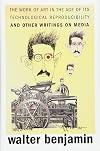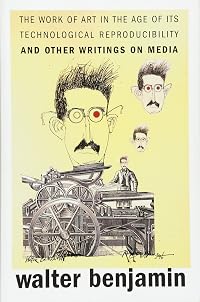
The Work of Art in the Age of Its Technological Reproducibility, and Other Writings on Media
by Walter Benjamin
On This Page
Description
Benjamin's famous "Work of Art" essay sets out his boldest thoughts--on media and on culture in general--in their most realized form, while retaining an edge that gets under the skin of everyone who reads it. In this essay the visual arts of the machine age morph into literature and theory and then back again to images, gestures, and thought. This essay, however, is only the beginning of a vast collection of writings that the editors have assembled to demonstrate what was revolutionary about show more Benjamin's explorations on media. Long before Marshall McLuhan, Benjamin saw that the way a bullet rips into its victim is exactly the way a movie or pop song lodges in the soul. This book contains the second, and most daring, of the four versions of the "Work of Art" essay--the one that addresses the utopian developments of the modern media. The collection tracks Benjamin's observations on the media as they are revealed in essays on the production and reception of art; on film, radio, and photography; and on the modern transformations of literature and painting. The volume contains some of Benjamin's best-known work alongside fascinating, little-known essays--some appearing for the first time in English. In the context of his passionate engagement with questions of aesthetics, the scope of Benjamin's media theory can be fully appreciated. show lessTags
Recommendations






Member Reviews
Interesting to connect the lived experience to photography, and how photography can record accumulated degradation of a touristic location. I was (and still am to some extent) an avid photographer (pre-instagram) however, a few years ago I started to realise a couple of things. It occurred to me that collecting images of photogenic locals was a disgraceful invasion of their privacy (duh!), and secondly that I was spending so much time literally focussed on the image 'within' the camera's field of view that I was missing the actual experience of the ' space and place'. I still use my phone camera but more as a record of a moment in time than trying to capture that 'perfect' image. There is a certain nostalgia that kicks in, however, when show more I remind myself I don't have to take the film in 'to get developed and printed' before I can see the image...a bit like saving up your paper-round money for weeks (or months) to buy that one record you have to have…
The dilemma of travel, people want to see nice places but sadly that often destroys the nice place. What hasn’t helped is instagram vanity and cheap (climate trashing) travel. My holidays of the last 3 years involve sketchbook, pencils & paint. It’s a cliche but drawing makes me see, not simply look. It also slows me right down after months of rushing around at work. I didn’t start out drawing well, it’s been a slog having low talent. Looking back at the sketchbooks and postcards really bring the places back to life. It’s a visceral experience.
The mobile phone seems to stop people even looking directly at the scene, just squinting at a tiny screen before “click” and leaving. So sad, rushing about collecting poorly taken photos just like the people before & after them. I’m convinced they’d enjoy more by just sitting quietly to soak in the view then buying a very well photographed postcard in the next village.
Why do we want to rush about?
Probably teaching someone else how to suck eggs, but this calls to mind Walter Benjamin's thoughts on photography in his 1936 essay, “The Work of Art in the Age of Mechanical Reproduction”. Prescient writing, I reckon...
#Urban Sketching #uskp #uskportugal #Watercolour Book Review Everyday Urban Sketching Urban Sketching UrbanSketching Watercolour show less
The dilemma of travel, people want to see nice places but sadly that often destroys the nice place. What hasn’t helped is instagram vanity and cheap (climate trashing) travel. My holidays of the last 3 years involve sketchbook, pencils & paint. It’s a cliche but drawing makes me see, not simply look. It also slows me right down after months of rushing around at work. I didn’t start out drawing well, it’s been a slog having low talent. Looking back at the sketchbooks and postcards really bring the places back to life. It’s a visceral experience.
The mobile phone seems to stop people even looking directly at the scene, just squinting at a tiny screen before “click” and leaving. So sad, rushing about collecting poorly taken photos just like the people before & after them. I’m convinced they’d enjoy more by just sitting quietly to soak in the view then buying a very well photographed postcard in the next village.
Why do we want to rush about?
Probably teaching someone else how to suck eggs, but this calls to mind Walter Benjamin's thoughts on photography in his 1936 essay, “The Work of Art in the Age of Mechanical Reproduction”. Prescient writing, I reckon...
#Urban Sketching #uskp #uskportugal #Watercolour Book Review Everyday Urban Sketching Urban Sketching UrbanSketching Watercolour show less
In "The World of Art in the Age of Its Technological Reproducibility," second version, Walter Benjamin argues that in this "new stage in the technology of reproduction," (20) that the "unique existence in a particular place" is lacking in reproduction — authenticity eludes technological reproduction (21). Reproduction detaches an object from tradition and from its aura, or its "strange tissue of space and time: the unique apparition of a distance, however near it may be" (23). Technological reproduction thus moves us from an age of ritual to an age of politics (24-25). However, mass reproduction allows for "a different kind of participation" (39). He is concerned about the "aestheticizing of political life" (41), but also sees hope in show more moves like Dadaism, which seek to immerse people in contemplation of art (39). show less
A deep study on capitalism, industry and the social role of art. It is very specific to its time, but still has major resonance in today's world, particularly n the age of digital reproduction.
One of the best critics on pbotography ever
Ratings
Members
- Recently Added By
Lists

Books Read in College
80 works; 5 members
Author Information

520+ Works 16,311 Members
Walter Benjamin (1892-1940) was a German-Jewish Marxist literary critic, essayist, translator and philosopher associated with the Frankfurt School of critical theory.
Work Relationships
Classifications
- Genres
- Nonfiction, Philosophy, Art & Design, Literature Studies and Criticism, General Nonfiction
- DDC/MDS
- 302.23 — Society, government, & culture Social sciences, sociology & anthropology Mass Communication & Media Communication Media (Means of communication)
- LCC
- N72 .S6 .B413 — Fine Arts Visual arts Theory. Philosophy. Aesthetics of the visual arts
- BISAC
Statistics
- Members
- 463
- Popularity
- 65,862
- Reviews
- 4
- Rating
- (4.19)
- Languages
- English
- Media
- Paper, Ebook
- ISBNs
- 2