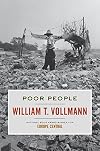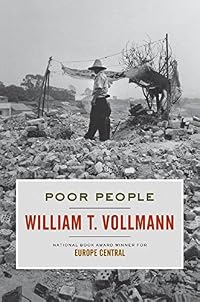
Poor People
by William T. Vollmann
On This Page
Description
That was the simple yet groundbreaking question William T. Vollmann asked in cities and villages around the globe. The result of Vollmann's fearless inquiry is a view of poverty unlike any previously offered. Poor People struggles to confront poverty in all its hopelessness and brutality, its pride and abject fear, its fierce misery and quiet resignation, allowing the poor to explain the causes and consequences of their impoverishment in their own cultural, social, and religious terms. With show more intense compassion and a scrupulously unpatronizing eye, Vollmann invites his readers to recognize in our fellow human beings their full dignity, fallibility, pride, and pain, and the power of their hard-fought resilience. Some images that appeared in the print edition of this book are unavailable in the electronic edition due to rights reasons. show lessTags
Recommendations


















Member Reviews
Vollman, winner of the National Book Award for Europe Central, spent a number of years travelling the world and interviewing people who by most standards would be considered poor. He asked them the basic question: 'Why are you poor?' In this series of essays Vollmann describes the people he met and they tell their stories in their own words. Vollmann stuggles with the questions of what makes some people poor, what are the characteristics of poverty, and how various societies view their poor.
This is not an academic treatise. It does not have a thesis, and does not arrive at any easy answers. It is, however, an engrossing read. More than 100 photographs of the people he interviewed, as well as other scenes of poverty, are included in the show more book, which makes these people all the more real. As Vollmann notes, too often we prefer to make our poor invisible. show less
This is not an academic treatise. It does not have a thesis, and does not arrive at any easy answers. It is, however, an engrossing read. More than 100 photographs of the people he interviewed, as well as other scenes of poverty, are included in the show more book, which makes these people all the more real. As Vollmann notes, too often we prefer to make our poor invisible. show less
The one word that comes to mind throughout reading this book was ambivalence. Not about the subject matter, but about the book itself. What was Vollmann really trying to accomplish? Who does he think he is to broach such a subject with such a voice? And why must he write so confoundingly? The answers to these questions revealed themselves slowly and towards the end of the book. In short, he is appealing not to the masses but to the rich. He is following in the footsteps of sociologists who founded the science, often speaking like they did from their late 19th century literary customs. Long-winded for sure, but ultimately readable if you can stick with it. Pleasure reading this book was not; both the subject matter and the writing style show more sees to that. But I suppose that was his point. This book was not meant to be pleasurable in the least.
Vollmann travels around the world asking poor people why some are poor and others are rich. He asks if rich people have a duty to poor people and what can be done to help rectify the situation. The answers he receives do nothing to alleviate their situation. In the end, it is as it has been from the beginning of time so it seems - some are rich and others are poor because that is just the way it is. Nor does he offer any answers himself. He does, however, attempt to describe the phenomena that go along with poverty. In his view, poverty entails invisibility, deformity, unwantedness, dependence, accident-prone-ness, pain, numbness, and estrangement.
While the stories of these people and their accompanying photographs were intriguing, he fails to answer the question that caused the book to be written. Perhaps that was the point after all - there are no answers. The elements that make up the impoverished population are so vast and ingrained that there really is no way to remedy them. It runs much deeper and much stronger than any cursory look into the problem using anecdotal evidence could ever hope to explain let alone fix.
So I read the book, and I learned something. While what I learned was neither groundbreaking nor life changing, perhaps I will look differently at the next person who solicits me for money on the street and perhaps I will react differently to the request. After all, I am rich when you look at it relatively; but then again, relatively speaking, so might they be too. show less
Vollmann travels around the world asking poor people why some are poor and others are rich. He asks if rich people have a duty to poor people and what can be done to help rectify the situation. The answers he receives do nothing to alleviate their situation. In the end, it is as it has been from the beginning of time so it seems - some are rich and others are poor because that is just the way it is. Nor does he offer any answers himself. He does, however, attempt to describe the phenomena that go along with poverty. In his view, poverty entails invisibility, deformity, unwantedness, dependence, accident-prone-ness, pain, numbness, and estrangement.
While the stories of these people and their accompanying photographs were intriguing, he fails to answer the question that caused the book to be written. Perhaps that was the point after all - there are no answers. The elements that make up the impoverished population are so vast and ingrained that there really is no way to remedy them. It runs much deeper and much stronger than any cursory look into the problem using anecdotal evidence could ever hope to explain let alone fix.
So I read the book, and I learned something. While what I learned was neither groundbreaking nor life changing, perhaps I will look differently at the next person who solicits me for money on the street and perhaps I will react differently to the request. After all, I am rich when you look at it relatively; but then again, relatively speaking, so might they be too. show less
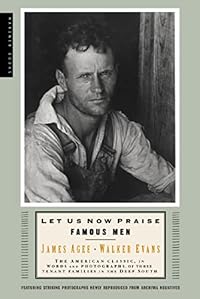
Intense. Beautiful photos. Intended to be a response to Agee's Let Us Now Praise Famous Men, raises good criticism about Agee's stance re: poor people, but of course, this is not Agee and nothing else is Agee (to me).
Not the typical Vollmann work - non-fiction research book, sociological in nature. Writing is strong as usual but not as amazing and sheerly overwhelming as normal. At times he seems to lapse or force his writing into prosaic metaphors overly flowery and excessive, or overdone superlatives -- hard to explain but not Vollmann-esque, a little over the top. As far as the content, very strong, research is good, he makes the points clearly. A few other criticisms: the book has over 100 pictures of poor people at the end of the book, I would have like them to be serialized in chronological order as they appear in the book; as it was I had to jump around to find them. Would have loved the pictures to be in the middle. Also, since most of the show more pictures were grainy black and white, I am not sure why they didn't just put the pictures in as they came up--they were not repeated enough to make it worth having a separate section. Some of the tables are not well marked or referenced. Small things to be sure and shouldn't put off a reader. The concept of calculating relative daily wages across time, continents, and other variables is brilliant. I guess I just didn't like the flow. However the research is non pareil and I'm not sure you'd get that kind of field research anywhere else: the scientist would not have the heart and perspective. show less
Is this a book? It reads like the strange ruminations of a poet more than a book about the world’s poor. Vollmann spends pages and pages trying to define what it is when he talks about poverty, arguing with himself back and forth, repeating phrases over and over, speculating. I suppose I just wasn’t in the mood for this book.
"Throughout the book, I read about people who have been dispossessed of property, belongings, employment, dignity, or security due to circumstances that are oftentimes beyond their control. It made me thankful for what I do have and who I am. It saddened me for those whose lives consist of a struggle for mere survival."
Read it all at http://troysworktable.blogspot.com/2007/04/poor-people.html
Read it all at http://troysworktable.blogspot.com/2007/04/poor-people.html
Word stories of poeverty from Vollmann's travels, incl 127 pages black and white photos, not great print
Members
- Recently Added By
Author Information

54+ Works 9,827 Members
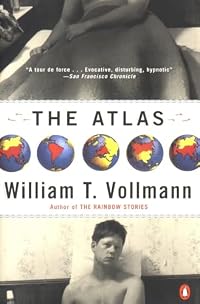
Journalist and novelist William T. Vollmann was born in 1959 and educated at Cornell University. He worked as a comptuer programmer before becoming a journalist and covering Bosnia, Sarajevo and Afghanistan. He has written extensively since 1987, when his first book, You Bright and Risen Angels, was published. The Atlas (1996) won the PEN Center show more USA West Award for the best novel by a writer living west of the Mississippi. His newest work of Non-Fiction is entitled, Imperial. (Bowker Author Biography) show less
Awards and Honors
Common Knowledge
- Canonical title
- Poor People
- Original publication date
- 2007
- Dedication
- This book is dedicated to my interpreters, without whom I would have remained more deaf and ignorant than is already the case. Because I sought to give my interviewees center stage, and even so could not avoid distracting yo... (show all)u with various misunderstandings and interpretations of them, the interviewers' presences got suppressed whenever possible. Only where their own reactions illuminated the poor people themselves did I leave them in the picture. Their patience, in many cases their bravery, and above all their local knowledge made this book possible.
- First words
- The first time I met Sunee, I was in Klong Toey seeking a peeor person whom I could ask why poverty existed, and she rushed up to me, drunkenly plucking at my sleeve, pleading with me to come home with her.
- Last words
- (Click to show. Warning: May contain spoilers.)They budgeted five hundred million yen to remove us...
Classifications
- Genres
- Sociology, Nonfiction, General Nonfiction, History
- DDC/MDS
- 362.5 — Society, Government, and Culture Social problems and social services Social Welfare Poor (from social service perspectives)
- LCC
- HV4028 .V65 — Social sciences Social pathology. Social and public welfare. Criminology Social pathology. Social and public welfare. Protection, assistance and relief Poor in cities. Slums
- BISAC
Statistics
- Members
- 492
- Popularity
- 61,132
- Reviews
- 11
- Rating
- (3.86)
- Languages
- 7 — English, French, German, Greek, Italian, Portuguese (Portugal), Spanish
- Media
- Paper, Ebook
- ISBNs
- 13
- ASINs
- 1