On This Page
Description
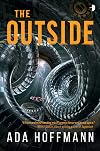
Super-intelligent AI Gods rule the galaxy. Their algorithms determine the rewards you reap before and after death. But the Gods give and the Gods take away. And Yasira has never been good at Gods... Autistic scientist Yasira Shien has developed a radical new energy drive on board The Pride of Jai that could change the future of humanity. But when she activates it, reality warps, destroying the space station and everyone left inside. The Gods declare her work heretical, and Yasira is abducted show more by their agents. Instead of simply executing her, the offer mercy - if she'll help them hunt down a bigger target: her mysterious, vanished mentor. With her homeworld's fate in the balance, Yasira must choose who to trust: the Gods and their ruthless post-human angels, or the rebel scientist whose unorthodox mathematics could turn her world, literally, inside out. show lessTags
Recommendations














Member Reviews
Cthulhu-tinged space opera, tech a bit handwavey with deus ex geniuses, and the various relationships and bits of (especially Angel) culture are far more a draw than the protagonist.
Author debuting with a riff on Annihilation.
Often emphasizes 'uniformity' in neurodivergent stereotypes and internal experiences rather than reflecting the spectrum as such. But one could blame that on the protagonist herself engaging in rigid and surface-level thinking. Structurally setting up monolithic patterns of neurology. The novel in moments actually deflates those in interesting ways.
Particularly, one of the chapter heading quotes, from a fictional psychiatrist(?) talking about, essentially, tokenism around giftedness being just as toxic as show more stigma.
The biggest flaw in its representation of autism is leaning on the confluence of neurodivergence and genius to shortcut science a la, "It just works," but the themes deal heavily with faith, so, enh.
Overall I enjoyed it as a light (not light-hearted) romp, though the pacing could've been better, with the ending too obvious a lead-in to sequel. But I might eventually pick that up, so! show less
Author debuting with a riff on Annihilation.
Often emphasizes 'uniformity' in neurodivergent stereotypes and internal experiences rather than reflecting the spectrum as such. But one could blame that on the protagonist herself engaging in rigid and surface-level thinking. Structurally setting up monolithic patterns of neurology. The novel in moments actually deflates those in interesting ways.
Particularly, one of the chapter heading quotes, from a fictional psychiatrist(?) talking about, essentially, tokenism around giftedness being just as toxic as show more stigma.
The biggest flaw in its representation of autism is leaning on the confluence of neurodivergence and genius to shortcut science a la, "It just works," but the themes deal heavily with faith, so, enh.
Overall I enjoyed it as a light (not light-hearted) romp, though the pacing could've been better, with the ending too obvious a lead-in to sequel. But I might eventually pick that up, so! show less
You know those times when you're super anxious about new (to you) authors you request on Netgalley just by the looks of the cover?
Yeah, well, I think I've just found my second squeeworthy book for the year and I'm going to say just this one thing:
If there's any justice in the world, this book is going to get nominated and rise to the very top of the hopefuls for 2020's Hugo Awards for best novel.
Wow, right? Like, WHY?
It tickled ALL my hot buttons. I'm a superfan of good science, Hard-SF beautiful explorations, quantum computer AIs ascended to gods, and Outsider coolness that quacks like a Cthuhlu duck, walks like a Cthuhlu duck, and chatters with insanity in your ears with hundreds of tentacles and eyes as you just fall down the hole of show more imaginary numbers made real.
Oh, it has a great autistic scientist female in the lead, engaging in a cat-and-mouse chase with her old advisor who is guilty of unconscionable crimes against humanity and is a heretic of the AI gods.
Who is good and who is bad? Can she trust anyone? Is reality even what it seems?
Oh, yeah. This is the cat's meow. It has all the best features of Yoon Ha Lee's Machineries of Empire with a very different kind of story and flavor. Tentacles, madness, living alien spacecraft, altered reality, timey-wimey stuff... you name it, this has it. :)
AND I JUST EAT THIS STUFF UP. This is easily one of the two most squeeworthy SF's of the year and now I'm a life-long fan of this author.
*Squeedance* *Squeedance*
Let's get this one READ and talked about, folks!!! show less
Yeah, well, I think I've just found my second squeeworthy book for the year and I'm going to say just this one thing:
If there's any justice in the world, this book is going to get nominated and rise to the very top of the hopefuls for 2020's Hugo Awards for best novel.
Wow, right? Like, WHY?
It tickled ALL my hot buttons. I'm a superfan of good science, Hard-SF beautiful explorations, quantum computer AIs ascended to gods, and Outsider coolness that quacks like a Cthuhlu duck, walks like a Cthuhlu duck, and chatters with insanity in your ears with hundreds of tentacles and eyes as you just fall down the hole of show more imaginary numbers made real.
Oh, it has a great autistic scientist female in the lead, engaging in a cat-and-mouse chase with her old advisor who is guilty of unconscionable crimes against humanity and is a heretic of the AI gods.
Who is good and who is bad? Can she trust anyone? Is reality even what it seems?
Oh, yeah. This is the cat's meow. It has all the best features of Yoon Ha Lee's Machineries of Empire with a very different kind of story and flavor. Tentacles, madness, living alien spacecraft, altered reality, timey-wimey stuff... you name it, this has it. :)
AND I JUST EAT THIS STUFF UP. This is easily one of the two most squeeworthy SF's of the year and now I'm a life-long fan of this author.
*Squeedance* *Squeedance*
Let's get this one READ and talked about, folks!!! show less
I received an ARC of this Angry Robot book via Netgalley, in exchange for an honest and unbiased review. My opinions are my own :-)
Autistic writers are severely underrepresented in SFF, despite the fact that we make up a huge proportion of the fanbase. One could make a case for autistic people being absolutely foundational in SFF--we are often the super-fans, in this genre. And yet, as far as I am aware, no autistic SFF writers are published by the Big 5. (I would absolutely love to be corrected on this--let me know if I've overlooked somebody.)
We seem to find better representation with independent presses, and Angry Robot in particular have a pretty good track record for publishing neurodiverse writers. I'm always keen to see more show more ownvoices autistic novels out there, though, and when I heard that Angry Robot were putting out a Lovecraft-influenced space opera featuring an #ownvoices autistic protagonist, I jumped straight on it.
Please note, this review contains minor spoilers, especially towards the end of the review.
###
"The Outside" follows Dr. Yasira Shein, an autistic scientist existing in a far-future space faring society. The setting is a good one, bordering on science-fantasy: humanity created powerful AI, who "ascended" to godhood and decided to take over. Y'know, for humanity's own good, and all that. With a rather Machiavellian flair, they legitimised their control by building a religion around it, one which draws heavily on Judeo-Christian terms (eg, angels) aspects but isn't shy of borrowing from a myriad of other influence.
It's an odd juxtaposition, especially considering the hard scifi feel to much of the narrative, but works well for both obscuring certain technological explanations, and gives a believable framework for why the general population put up with such a disadvantageous situation.
Feeding into the concept of angels, religion, and technological prayers is the darker concept of heresy (a word that invariably gives me 40k flashbacks, but that's no bad thing.) Much of the book centres on the efforts of various characters to contain the spread of heresy, in this case referring to psychological and metaphysical influences from a force that exists "outside" of known time and space (where the novel draws its title from.)
To shortcut for the sake of review, the concept of Outside is very similar to Lovecraftian lore: an existence or understanding beyond human ken, that defies the laws of physics and nature. It's tied into the idea that reality is mostly illusion and perspective, and interacting with this force has a tendency to drive people insane. Even when it doesn't, the AI gods are not keen on its subversive nature, and do their best to stomp out anything remotely heretical. Suffice to say, the setting was a huge plus for me. I have a quiet fondness for religion of any kind in a scifi setting, and a lasting fondness for all things Lovecraft inspired.
Back to Yasira, before you forget about her! I don't want to go in-depth with plot spoilers, as that's not the sort of review I tend to write. The main thrust of the conflict is that Yasira unintentionally kicks off a heretical "incident" and rather than put to death, they put her to use: she therefore becomes caught up in the gods' efforts to stomp out certain Outside influences, which they've been struggling to contain. The person at the heart of this heretical contamination is none other than Yasira's former academic mentor, Dr. Talirr.
Naturally, the gods are far from completely honest, and it quickly becomes apparent that they are more concerned with maintaining control, even at the expense of human life. The more Yasira is drawn into their schemes, the more disillusioned she becomes. On the other side, Dr. Talirr is attempting to wield the forces of the Outside to fight the gods, who are responsible for abuse she suffered as a child, and who quietly oppress the population they rule. She spends much of her time trying to recruit or influence Yasira from afar, though she has ways and means to be "present" in the novel (I'll refrain from saying too much here.)
There's an underlying nod here to the abuse experienced by autistic children who are forced to undergo ABA, which is a type of "therapy" designed to train autistic traits away in the name of making us seem more neurotypical. (If you're not familiar with this history, a quick google search on ABA and PTSD will bring you up to speed.)
Against that backdrop, you might expect Dr. Talirr to be the obvious good guy character, a sort of Han Solo esque figure who shows Yasira the "truth" about the proverbial evil empire. But in fact, Talirr is a secondary antagonist--and I think this is one of the strengths of the novel. Her history and experiences have warped her worldview, shaping her into a person who is as dangerous and twisted as the angels she is fighting, and as indifferent to the lives of other humans. Although she does have truths to reveal and lessons to teach, her cause isn't just, and her goals are unpleasant.
Because both Yasira and Talirr are on the spectrum, the novel offers an interesting and nuanced examination of a particular spectrum trait--the tendency to see issues in black and white. Talirr's tendency has been exacerbated because of her experiences, and people are either on her side or against her; right, or wrong; useful, or expendable. Challenging the gods is valid, as is Talirr's pain, but her methods and motivations are fundamentally selfish, and she lacks--or rather, has lost--the ability to consider the situation in shades of grey.
I don't really want to make this about me, but I do feel compelled to mention that learning to see situations in shades of grey has been one of the biggest challenges of my adult life re autism. It's a point of view that affects every discussion, argument, conversation, relationship, political stance, life goals, on and on. I found Hoffman's exploration thoughtful and interesting.
Yasira therefore ends up in a situation where she is offered two extremes to a very serious problem, and neither are the correct option. There are no good choices. This is on top of the other issues she faces in the novel--loss of friends, livelihood, girlfriend, and the enormous stress the situation puts her in, all of that exacerbated for someone who is autistic.
SOME SPOILERS AHEAD.
In brief summary: The Outside's influence is spreading across a certain planet. Not everyone dies, and sometimes the effects are bordering on beneficial, but Yasira believes very strongly that it isn't fair to inflict such changes on people without their consent, and her argument for that is persuasive. Besides, the loss of life and madness experienced by others is inarguably problematic.
The gods/angels want to squash the problem in any way possible, even if that means killing thousands of people. Talirr wants to bring the gods down, even if it means ruining the lives of thousands of people.
Yasira's solution is to reject both of the extremes offered, and cobble together her own half-way point. I don't want to give explicit spoilers (leave SOMEthing for those who have read this far!) but the underlying premise of her solution is communication and connection. Allowing empathy to shape the Outside, and using communication to break gods' stranglehold. When people connect, talk, and share, they are stronger for it in a myriad different ways; not only as individuals, but politically and socially. This is a reoccurring theme in the novel (especially with the 'gone' people, who I won't get into here--talking with people who communicate in different ways from us.)
There is something fundamentally brilliant about an ownvoices autistic character choosing connection and communication as her solution, in both a literal and metaphorical sense. Much of autistic life is spent trying to connect and communicate with other people, and perhaps more than many allistics, we are acutely aware of the painful need to make ourselves heard and understood. And what an empowering experience it can be to finally wield your voice. Connection is powerful--literally for Yasira, but all people everywhere, too.
WRAP UP
I did enjoy the book very much but--and here is where we get into subjectivity--my science education and understanding is pretty poor, so there was some stuff which went way over my head, especially early on. Talirr was the most interesting character to me, and I would have liked to see more of her and less of Akavi, but that's again a subjective preference. Still, the novel is overall a very strong read, especially in a sub-genre I don't often feel gripped by (space opera) and I would very much recommend it to SF fans, and especially for any autistic SFF fans who might enjoy a bit of well-deserved (and well written) representation. show less
Autistic writers are severely underrepresented in SFF, despite the fact that we make up a huge proportion of the fanbase. One could make a case for autistic people being absolutely foundational in SFF--we are often the super-fans, in this genre. And yet, as far as I am aware, no autistic SFF writers are published by the Big 5. (I would absolutely love to be corrected on this--let me know if I've overlooked somebody.)
We seem to find better representation with independent presses, and Angry Robot in particular have a pretty good track record for publishing neurodiverse writers. I'm always keen to see more show more ownvoices autistic novels out there, though, and when I heard that Angry Robot were putting out a Lovecraft-influenced space opera featuring an #ownvoices autistic protagonist, I jumped straight on it.
Please note, this review contains minor spoilers, especially towards the end of the review.
###
"The Outside" follows Dr. Yasira Shein, an autistic scientist existing in a far-future space faring society. The setting is a good one, bordering on science-fantasy: humanity created powerful AI, who "ascended" to godhood and decided to take over. Y'know, for humanity's own good, and all that. With a rather Machiavellian flair, they legitimised their control by building a religion around it, one which draws heavily on Judeo-Christian terms (eg, angels) aspects but isn't shy of borrowing from a myriad of other influence.
It's an odd juxtaposition, especially considering the hard scifi feel to much of the narrative, but works well for both obscuring certain technological explanations, and gives a believable framework for why the general population put up with such a disadvantageous situation.
Feeding into the concept of angels, religion, and technological prayers is the darker concept of heresy (a word that invariably gives me 40k flashbacks, but that's no bad thing.) Much of the book centres on the efforts of various characters to contain the spread of heresy, in this case referring to psychological and metaphysical influences from a force that exists "outside" of known time and space (where the novel draws its title from.)
To shortcut for the sake of review, the concept of Outside is very similar to Lovecraftian lore: an existence or understanding beyond human ken, that defies the laws of physics and nature. It's tied into the idea that reality is mostly illusion and perspective, and interacting with this force has a tendency to drive people insane. Even when it doesn't, the AI gods are not keen on its subversive nature, and do their best to stomp out anything remotely heretical. Suffice to say, the setting was a huge plus for me. I have a quiet fondness for religion of any kind in a scifi setting, and a lasting fondness for all things Lovecraft inspired.
Back to Yasira, before you forget about her! I don't want to go in-depth with plot spoilers, as that's not the sort of review I tend to write. The main thrust of the conflict is that Yasira unintentionally kicks off a heretical "incident" and rather than put to death, they put her to use: she therefore becomes caught up in the gods' efforts to stomp out certain Outside influences, which they've been struggling to contain. The person at the heart of this heretical contamination is none other than Yasira's former academic mentor, Dr. Talirr.
Naturally, the gods are far from completely honest, and it quickly becomes apparent that they are more concerned with maintaining control, even at the expense of human life. The more Yasira is drawn into their schemes, the more disillusioned she becomes. On the other side, Dr. Talirr is attempting to wield the forces of the Outside to fight the gods, who are responsible for abuse she suffered as a child, and who quietly oppress the population they rule. She spends much of her time trying to recruit or influence Yasira from afar, though she has ways and means to be "present" in the novel (I'll refrain from saying too much here.)
There's an underlying nod here to the abuse experienced by autistic children who are forced to undergo ABA, which is a type of "therapy" designed to train autistic traits away in the name of making us seem more neurotypical. (If you're not familiar with this history, a quick google search on ABA and PTSD will bring you up to speed.)
Against that backdrop, you might expect Dr. Talirr to be the obvious good guy character, a sort of Han Solo esque figure who shows Yasira the "truth" about the proverbial evil empire. But in fact, Talirr is a secondary antagonist--and I think this is one of the strengths of the novel. Her history and experiences have warped her worldview, shaping her into a person who is as dangerous and twisted as the angels she is fighting, and as indifferent to the lives of other humans. Although she does have truths to reveal and lessons to teach, her cause isn't just, and her goals are unpleasant.
Because both Yasira and Talirr are on the spectrum, the novel offers an interesting and nuanced examination of a particular spectrum trait--the tendency to see issues in black and white. Talirr's tendency has been exacerbated because of her experiences, and people are either on her side or against her; right, or wrong; useful, or expendable. Challenging the gods is valid, as is Talirr's pain, but her methods and motivations are fundamentally selfish, and she lacks--or rather, has lost--the ability to consider the situation in shades of grey.
I don't really want to make this about me, but I do feel compelled to mention that learning to see situations in shades of grey has been one of the biggest challenges of my adult life re autism. It's a point of view that affects every discussion, argument, conversation, relationship, political stance, life goals, on and on. I found Hoffman's exploration thoughtful and interesting.
Yasira therefore ends up in a situation where she is offered two extremes to a very serious problem, and neither are the correct option. There are no good choices. This is on top of the other issues she faces in the novel--loss of friends, livelihood, girlfriend, and the enormous stress the situation puts her in, all of that exacerbated for someone who is autistic.
SOME SPOILERS AHEAD.
In brief summary: The Outside's influence is spreading across a certain planet. Not everyone dies, and sometimes the effects are bordering on beneficial, but Yasira believes very strongly that it isn't fair to inflict such changes on people without their consent, and her argument for that is persuasive. Besides, the loss of life and madness experienced by others is inarguably problematic.
The gods/angels want to squash the problem in any way possible, even if that means killing thousands of people. Talirr wants to bring the gods down, even if it means ruining the lives of thousands of people.
Yasira's solution is to reject both of the extremes offered, and cobble together her own half-way point. I don't want to give explicit spoilers (leave SOMEthing for those who have read this far!) but the underlying premise of her solution is communication and connection. Allowing empathy to shape the Outside, and using communication to break gods' stranglehold. When people connect, talk, and share, they are stronger for it in a myriad different ways; not only as individuals, but politically and socially. This is a reoccurring theme in the novel (especially with the 'gone' people, who I won't get into here--talking with people who communicate in different ways from us.)
There is something fundamentally brilliant about an ownvoices autistic character choosing connection and communication as her solution, in both a literal and metaphorical sense. Much of autistic life is spent trying to connect and communicate with other people, and perhaps more than many allistics, we are acutely aware of the painful need to make ourselves heard and understood. And what an empowering experience it can be to finally wield your voice. Connection is powerful--literally for Yasira, but all people everywhere, too.
WRAP UP
I did enjoy the book very much but--and here is where we get into subjectivity--my science education and understanding is pretty poor, so there was some stuff which went way over my head, especially early on. Talirr was the most interesting character to me, and I would have liked to see more of her and less of Akavi, but that's again a subjective preference. Still, the novel is overall a very strong read, especially in a sub-genre I don't often feel gripped by (space opera) and I would very much recommend it to SF fans, and especially for any autistic SFF fans who might enjoy a bit of well-deserved (and well written) representation. show less
I liked this quite a lot. The only reason I didn't give it 5 stars is that it tended to drag at times.
The main character, Yasira Chien, was refreshing original. An autistic lesbian physicist! She is the inventor of a new kind of power source. The book opens with the new device about to be tested on a purpose-built space station. But something goes wrong during start up and a warp in reality caused its self destruction, along with the station. Yasira sensed something was wrong and sounded the alarm and about 2/3 of the crew safely evacuated. But Yashira still felt guilty about the 100 lives lost.
The world building is pretty good here. Humans have spread across the galaxy, meeting some other space faring aliens. But humans are restricted show more by the AI Gods they created and lost control of years ago. Most higher orders of technology are God-built and humans are allowed to use it but the use is strictly controlled. The power source built by Yashira was an attempt to get around some of those restrictions. The Gods were not unhappy when it failed but not why it failed. Her device somehow tapped into the Outside, some dimension apart from reality which threatens humanity and the Gods.
Most of the book is Yashira and one of the Gods angels looking for her mentor, also an autistic, who originally mapped out how to tap into Outside and may be responsible for other outbreaks around the galaxy. It's also about Yashira coming to grips with her responsibility for the loss of life on the space station, and a larger outbreak of Outside on her home planet.
I can't speak for the book's realistic treatment of autism. The author, Ada Hoffmann is autistic herself, according to the her biography, and a gender-fluid scientist as well. They say you should write about what you know.
Some parts of the book aren't particularly original. The concept of super AI's controlling the universe is certainly not new (think Neil Asher's Polity series and many Alastair Reynolds books). And a number of science fiction tropes are worked in like warp drive, matter transmission portals, ansibles, etc. Also, the concept of AIs as gods is also not original, think any number of Star Trek episodes, but the working of the religion around the Gods was different with computer augmented humans as Angels doing the ground work for the Gods.
The book is standalone but the ending certainly left open the prospect for future stories. I'll be looking for a followup. show less
The main character, Yasira Chien, was refreshing original. An autistic lesbian physicist! She is the inventor of a new kind of power source. The book opens with the new device about to be tested on a purpose-built space station. But something goes wrong during start up and a warp in reality caused its self destruction, along with the station. Yasira sensed something was wrong and sounded the alarm and about 2/3 of the crew safely evacuated. But Yashira still felt guilty about the 100 lives lost.
The world building is pretty good here. Humans have spread across the galaxy, meeting some other space faring aliens. But humans are restricted show more by the AI Gods they created and lost control of years ago. Most higher orders of technology are God-built and humans are allowed to use it but the use is strictly controlled. The power source built by Yashira was an attempt to get around some of those restrictions. The Gods were not unhappy when it failed but not why it failed. Her device somehow tapped into the Outside, some dimension apart from reality which threatens humanity and the Gods.
Most of the book is Yashira and one of the Gods angels looking for her mentor, also an autistic, who originally mapped out how to tap into Outside and may be responsible for other outbreaks around the galaxy. It's also about Yashira coming to grips with her responsibility for the loss of life on the space station, and a larger outbreak of Outside on her home planet.
I can't speak for the book's realistic treatment of autism. The author, Ada Hoffmann is autistic herself, according to the her biography, and a gender-fluid scientist as well. They say you should write about what you know.
Some parts of the book aren't particularly original. The concept of super AI's controlling the universe is certainly not new (think Neil Asher's Polity series and many Alastair Reynolds books). And a number of science fiction tropes are worked in like warp drive, matter transmission portals, ansibles, etc. Also, the concept of AIs as gods is also not original, think any number of Star Trek episodes, but the working of the religion around the Gods was different with computer augmented humans as Angels doing the ground work for the Gods.
The book is standalone but the ending certainly left open the prospect for future stories. I'll be looking for a followup. show less
This book... Where do I start?
It took me two months to read this book. I'm not a fast reader, but that's slow even by my standards. Please don't assume I read slowly because it was boring. And it's not as if it's hard science fiction, wherein I need to spend hours trying to understand the science being flung around all willy-nilly. It's not actually that science-intense.
Oh, but it is intense. Dense. Rich.
One time I bought a bottle of stout that was so exquisitely intense in its flavour (not to mention its alcohol content) that I couldn't drink more than a 100 mL at a time. This book is like that beer.
In the far future, Yasira is a physicist in charge of a new power reactor on a space station. Only instead of producing power like it's show more meant to, it tears a hole in the fabric of the universe. Some people escape, but many die. The space station is destroyed. And then the angel Akavi (working for the AI God Nemesis) comes for Yasira. She's guilty of unknowingly committing heresy, but because the one the Gods really want is Yasira's former mentor, Evianna, Akavi makes her an offer. Instead of killing her, she can work for them to help take town Evianna.
It's all very complicated and convoluted and wonderful. I think I'm doing a terrible job of explaining it, but I just don't have the words. show less
It took me two months to read this book. I'm not a fast reader, but that's slow even by my standards. Please don't assume I read slowly because it was boring. And it's not as if it's hard science fiction, wherein I need to spend hours trying to understand the science being flung around all willy-nilly. It's not actually that science-intense.
Oh, but it is intense. Dense. Rich.
One time I bought a bottle of stout that was so exquisitely intense in its flavour (not to mention its alcohol content) that I couldn't drink more than a 100 mL at a time. This book is like that beer.
In the far future, Yasira is a physicist in charge of a new power reactor on a space station. Only instead of producing power like it's show more meant to, it tears a hole in the fabric of the universe. Some people escape, but many die. The space station is destroyed. And then the angel Akavi (working for the AI God Nemesis) comes for Yasira. She's guilty of unknowingly committing heresy, but because the one the Gods really want is Yasira's former mentor, Evianna, Akavi makes her an offer. Instead of killing her, she can work for them to help take town Evianna.
It's all very complicated and convoluted and wonderful. I think I'm doing a terrible job of explaining it, but I just don't have the words. show less
As with some other reviews that I read I think that there are issues here with pacing and exposition with this exercise in "Lovecraft subversions," but Hoffmann sufficiently sticks the landing that I really have no problem giving this novel four stars; I know, generous of me. It is a first novel after all. One comment that Hoffman made in her acknowledgements that stuck with me is that Yasira Shien's antagonist, Akavi Averis, was actually the seed crystal of this story, and the main struggle of writing this book was turning Yasira into a believable character. There is sometimes an awkward tension between Yasira's journey of self-discovery and the tautness you might expect in a thriller.
Here is some surface information for those who are doing challenges. The main character is an autistic lesbian. The main antagonist is also a female scientist who is autistic. There is a gender fluid character, an asexual character, and pronouns are mentioned in passing. Now these are all just pieces of the characters. Not the central reason for the story.
A scientist runs afoul of the Gods by creating a machine that becomes contaminated with the Outside. An angel then forces/enlists the scientist to capture her mentor, who is the reason why the Outside contaminated her machine.
Now the interesting part is that the Gods are AI's and control access to the technology that humans can build or create. Of course that is clunky old tech. show more Humanity has developed on other worlds and the Gods control who can go to each world when because they control the tech. This world must have been so much fun to dream up. Ada Hoffman does not make the science so complex that lay people like me can not understand a word. It is easy to follow how the tech is different for each faction.
The characters interactions with that tech is how she outlines the differences. It is liken a third world countries access to a first worlds access to technology now. In fact she does not really invent new technology here. I really think that the characters are what makes this book go around.
She quickly gives the readers the limitations of the characters. Those limits make the characters more interesting. She does not make them into superhuman beings, or change the parameters that they are working in. What she does is have them discover more about their inner selves and how that applies to their goals and the outer world.
This means that there really does not feel like the ending is contrived or the twists mechanical. It all feels very organic in how the story evolves.
I really hope that Ada Hoffman writes more stories based on the characters. I want to know what happens next. show less
A scientist runs afoul of the Gods by creating a machine that becomes contaminated with the Outside. An angel then forces/enlists the scientist to capture her mentor, who is the reason why the Outside contaminated her machine.
Now the interesting part is that the Gods are AI's and control access to the technology that humans can build or create. Of course that is clunky old tech. show more Humanity has developed on other worlds and the Gods control who can go to each world when because they control the tech. This world must have been so much fun to dream up. Ada Hoffman does not make the science so complex that lay people like me can not understand a word. It is easy to follow how the tech is different for each faction.
The characters interactions with that tech is how she outlines the differences. It is liken a third world countries access to a first worlds access to technology now. In fact she does not really invent new technology here. I really think that the characters are what makes this book go around.
She quickly gives the readers the limitations of the characters. Those limits make the characters more interesting. She does not make them into superhuman beings, or change the parameters that they are working in. What she does is have them discover more about their inner selves and how that applies to their goals and the outer world.
This means that there really does not feel like the ending is contrived or the twists mechanical. It all feels very organic in how the story evolves.
I really hope that Ada Hoffman writes more stories based on the characters. I want to know what happens next. show less
Members
- Recently Added By
Lists

Favorite Science Fiction by Women Authors
737 works; 202 members

LGBTQIA Horror
172 works; 7 members
LGBTQ+ Speculative Fiction
821 works; 51 members

Character-driven SF
59 works; 1 member

Books Read in 2020
4,379 works; 124 members

tumblr recommends Sci-Fi
35 works; 1 member
Author Information

12+ Works 662 Members
Some Editions
Awards and Honors
Awards
Series

Common Knowledge
- Canonical title*
- L'Extern
- Original title
- The Outside
- Original publication date
- 2019
- People/Characters
- Yasira Shien
- Dedication
- For Virgo
tanto m'aggrada il tuo commandamento, che l'ubbidir, se già fosse, m'è tardi; più non t'è uo' ch'aprirmi il tuo talento. - First words
- Formula for the present evil age: Take lifeless rock and sculpt it.
- Last words
- (Click to show. Warning: May contain spoilers.)It was enough.
- Publisher's editor
- Jourdan, Phil
- Original language*
- Anglès
*Some information comes from Common Knowledge in other languages. Click "Edit" for more information.
Classifications
Statistics
- Members
- 467
- Popularity
- 65,269
- Reviews
- 26
- Rating
- (3.73)
- Languages
- Catalan, English
- Media
- Paper, Audiobook, Ebook
- ISBNs
- 6
- ASINs
- 4