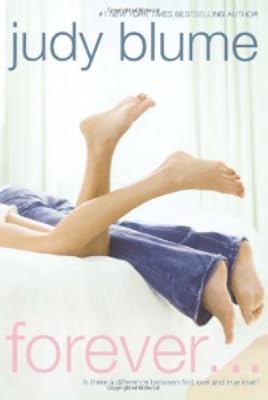
Forever . . .
by Judy Blume
On This Page
Description
Two high school seniors believe their love to be so strong that it will last forever.Tags
Recommendations

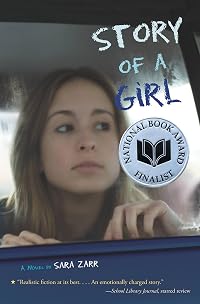
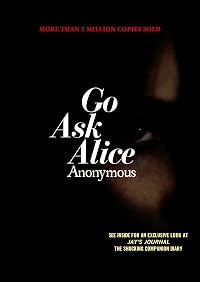

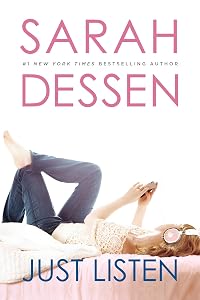


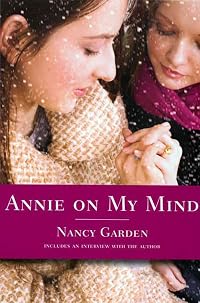
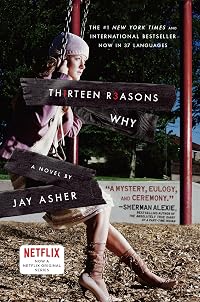

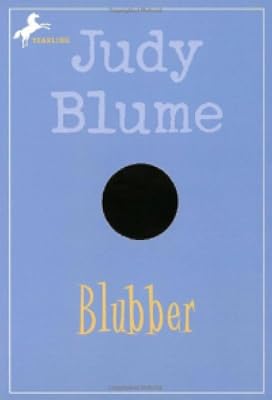
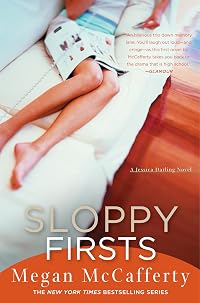
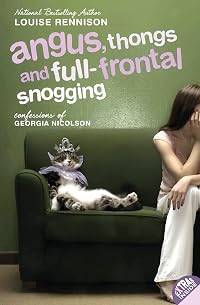






Member Recommendations
Member Reviews
I was interested in Forever by Judy Blume because of the controversy that surrounds it; I knew it was banned because of the sexual content and wondered just what sort of content elicited such a heated reaction from people. While sex is definitely talked about and not shied away from in this book, it is done tastefully and responsibly; although truly, I expected nothing less from Judy Blume.
This book centers on the idea of having a first love and what it’s like to be young and exploring a new relationship. I enjoyed that it doesn’t happen all at once; Blume takes her time in showing how the romance and love develops between Katherine and Michael. It’s also done in a healthy way, which was probably my favorite part about this novel, show more sadly. I feel like too often TV and books idealize unhealthy relationships, but this book very much shows a healthy relationship between two teenagers, and it’s still just as exciting and entertaining (more so, because I’m not grossed out by awful behavior).
Overall, I think this book is great for teens to introduce them to the world of relationships and give them idea of what it looks like and how to have difficult conversations with their parents or significant others. It’s a tad bit dated, but not so much that it’s unrecognizable. Besides that, it’s a super cute romance and it brought up all the feelings I had when I was with my “first love,” so it’s really just great overall. I definitely recommend this for anyone looking for a cute teen romance.
Also posted on Purple People Readers. show less
This book centers on the idea of having a first love and what it’s like to be young and exploring a new relationship. I enjoyed that it doesn’t happen all at once; Blume takes her time in showing how the romance and love develops between Katherine and Michael. It’s also done in a healthy way, which was probably my favorite part about this novel, show more sadly. I feel like too often TV and books idealize unhealthy relationships, but this book very much shows a healthy relationship between two teenagers, and it’s still just as exciting and entertaining (more so, because I’m not grossed out by awful behavior).
Overall, I think this book is great for teens to introduce them to the world of relationships and give them idea of what it looks like and how to have difficult conversations with their parents or significant others. It’s a tad bit dated, but not so much that it’s unrecognizable. Besides that, it’s a super cute romance and it brought up all the feelings I had when I was with my “first love,” so it’s really just great overall. I definitely recommend this for anyone looking for a cute teen romance.
Also posted on Purple People Readers. show less
The great paradox of young adult literature is that it was created to communicate a genuine young adult voice, yet that purpose was immediately co-opted by adults. S. E. Hinton wrote The Outsiders when she was a teenager herself in 1967 and created a whole new market-- yet not even ten years later, the mid-thirties Judy Blume was cranking out YA novel after YA novel. Mike Cadden of Missouri Western University touched on this in his article, "The Irony of Narration in the Young Adult Novel" (2000). As he says, "Novels constructed by adults to simulate an authentic adolescent's voice are inherently ironic because the so-called adolescent voice is never-- and can never be-- truly authentic. [...] [T]he YA novelist often intentionally show more communicates to the immature reader a single and limited awareness of the world that the novelist knows to be incomplete and insufficient. It is a sophisticated representation of a lack of sophistication; it is an artful depiction of artlessness" (146).
Where Cadden goes with this is to classify YA novels into three different narrative strategies, based on the extent to which the YA reader is made aware of the inherent irony: is the reader taught that the viewpoint of the novel of "incomplete and insufficient"? It's a useful classification system; where Cadden ends the article is to promote a model for "ethical fiction": Cadden argues that YA novels ought to make clear the limited viewpoints of their narratives, and that authors ought to "help[ ] young readers detect and cope with irony, complexity, and contingency so rich in the world they hope so desperately to know" (153). This fascinates me because one of Hinton's purposes in The Outsiders was expressly anti-didactic, she was tired of novels for teens that delivered pat morals on how to liver properly. But Cadden sees an educational purpose for YA lit, and of the books I taught in my young adult literature course, surely none was more educational than Forever..., which is basically a 200-page brochure on sex for teens. It covers both the logistics and the emotions of it: Katherine visits Planned Parenthood for birth control in a scene that seems like it comes straight out of a brochure, but she also learns about how your first time might not be amazing as you dreamed, and how you might think your first love will last "forever..." but it definitely will not.
I would probably peg Forever... as what Cadden calls "Single-voicedness and Character Narration": "Each text provides a single voice that is so highly confident that it is ultimately unassailable within the text. These books and speakers provide only one argument or position on a matter, and most important, they fail to provide within the text the tools necessary to reveal the contestability of these immature perspective to the equally immature reader" (148). Indeed, Katherine is confident throughout Forever... in her love for her boyfriend Michael, and her belief that is meant to be and will always be. For the adult reader, at least, her wrongness is clear, and Cadden does allow that hyperbole is a tool for revealing what he calls "debilitating world views" (153): "Hyperbole [...] is harder to detect than either the contradiction provided by multiple perspectives or the doubt suggested by a more self-conscious narrator" (149).
But I think that despite the unassailability of Katherine's voice (her parents disagree with her, of course, but the narrative itself doesn't provide the kind of tools that would cause Cadden to classify a book as "Double-voicedness and Character Narration"), Forever... provides a different way of leading to questioning world views: plot and story. Katherine might think she is completely right, but the actual events of the book show that she is wrong, even if the narrative doesn't acknowledge this in a double-voiced way.
The thing is, though, that Forever... is terrible. Katherine's narrative voice lacks any of the spark of Ponyboy's in The Outsiders, or of later first-person narrators like Titus in Feed or Briony in Chime. She is plainly and obviously a way for Blume to disseminate information to the reader about teenage sex, and this makes the book unable to engage an adult reader in the way that most YA fiction can. My students weren't fans, but I didn't expect them to be: I taught this book because its purpose is so unlike that of The Outsiders, despite The Outsiders creating the very genre in which Forever... operates.
What really fascinated me about the book was how much my students reacted against it. I mean, I didn't like it very much, but they took particular exception to Michael, who they saw as violating Katherine's consent. Not that he rapes her or anything, but the pressure he applies to Katherine (at one point he accuses her of being a tease) is uncomfortable, moreso to a group of millennials in 2017 raised on discourses around consent and rape culture that I just don't think were there in 1975. Blume appended a preface to the novel at some point (I'm not sure when exactly, but it's in my 2014 edition and contains a web address, so that provides something of a range) indicating that the book doesn't say as much about STIs as it ought, but I think the pressure that Michael puts on Katherine, and Katherine seems to accept as normal, has dated far worse. Not to accuse my students of inconsistency (because the different viewpoints may have actually been held by different people), but after lambasting the book for how didactic it was, and also agreeing that one of the good things about The Outsiders was its lack of moralizing, they also thought it hadn't taught something it ought to have taught, they there was a "debilitating world view" that had gone unaddressed. I'm not sure what to make of this inconsistency in our expectations for young adult literature, one that would recur throughout the semester. show less
Where Cadden goes with this is to classify YA novels into three different narrative strategies, based on the extent to which the YA reader is made aware of the inherent irony: is the reader taught that the viewpoint of the novel of "incomplete and insufficient"? It's a useful classification system; where Cadden ends the article is to promote a model for "ethical fiction": Cadden argues that YA novels ought to make clear the limited viewpoints of their narratives, and that authors ought to "help[ ] young readers detect and cope with irony, complexity, and contingency so rich in the world they hope so desperately to know" (153). This fascinates me because one of Hinton's purposes in The Outsiders was expressly anti-didactic, she was tired of novels for teens that delivered pat morals on how to liver properly. But Cadden sees an educational purpose for YA lit, and of the books I taught in my young adult literature course, surely none was more educational than Forever..., which is basically a 200-page brochure on sex for teens. It covers both the logistics and the emotions of it: Katherine visits Planned Parenthood for birth control in a scene that seems like it comes straight out of a brochure, but she also learns about how your first time might not be amazing as you dreamed, and how you might think your first love will last "forever..." but it definitely will not.
I would probably peg Forever... as what Cadden calls "Single-voicedness and Character Narration": "Each text provides a single voice that is so highly confident that it is ultimately unassailable within the text. These books and speakers provide only one argument or position on a matter, and most important, they fail to provide within the text the tools necessary to reveal the contestability of these immature perspective to the equally immature reader" (148). Indeed, Katherine is confident throughout Forever... in her love for her boyfriend Michael, and her belief that is meant to be and will always be. For the adult reader, at least, her wrongness is clear, and Cadden does allow that hyperbole is a tool for revealing what he calls "debilitating world views" (153): "Hyperbole [...] is harder to detect than either the contradiction provided by multiple perspectives or the doubt suggested by a more self-conscious narrator" (149).
But I think that despite the unassailability of Katherine's voice (her parents disagree with her, of course, but the narrative itself doesn't provide the kind of tools that would cause Cadden to classify a book as "Double-voicedness and Character Narration"), Forever... provides a different way of leading to questioning world views: plot and story. Katherine might think she is completely right, but the actual events of the book show that she is wrong, even if the narrative doesn't acknowledge this in a double-voiced way.
The thing is, though, that Forever... is terrible. Katherine's narrative voice lacks any of the spark of Ponyboy's in The Outsiders, or of later first-person narrators like Titus in Feed or Briony in Chime. She is plainly and obviously a way for Blume to disseminate information to the reader about teenage sex, and this makes the book unable to engage an adult reader in the way that most YA fiction can. My students weren't fans, but I didn't expect them to be: I taught this book because its purpose is so unlike that of The Outsiders, despite The Outsiders creating the very genre in which Forever... operates.
What really fascinated me about the book was how much my students reacted against it. I mean, I didn't like it very much, but they took particular exception to Michael, who they saw as violating Katherine's consent. Not that he rapes her or anything, but the pressure he applies to Katherine (at one point he accuses her of being a tease) is uncomfortable, moreso to a group of millennials in 2017 raised on discourses around consent and rape culture that I just don't think were there in 1975. Blume appended a preface to the novel at some point (I'm not sure when exactly, but it's in my 2014 edition and contains a web address, so that provides something of a range) indicating that the book doesn't say as much about STIs as it ought, but I think the pressure that Michael puts on Katherine, and Katherine seems to accept as normal, has dated far worse. Not to accuse my students of inconsistency (because the different viewpoints may have actually been held by different people), but after lambasting the book for how didactic it was, and also agreeing that one of the good things about The Outsiders was its lack of moralizing, they also thought it hadn't taught something it ought to have taught, they there was a "debilitating world view" that had gone unaddressed. I'm not sure what to make of this inconsistency in our expectations for young adult literature, one that would recur throughout the semester. show less
Well, one thing you can say about this book is that when someone reviews it, they can sure reveal a lot about themselves. For example, one reviewer said that this book is pornographic. Another said it's totally predictable. Another said it's pretty tame compared to what real teens do today. Some people react by putting their fingers in their ears and crying "Abstinence! Abstinence!" Others will tell you that Judy Blume helped them understand how to have sex responsibly. You know an author has really struck a chord when she inspires such strong and varied reactions.
So here's my reaction to this book: It's not pornographic, but it's graphic. Pornography, by definition, is intended to stimulate. The detailed sex scenes in this book are, I show more think, not intended to be stimulating--they're necessary for the book to work. How can you write a book about a girl's first sexual relationship without writing about the sex? It's not gratuitous, it's honest. And graphic.
I didn't think the story was predictable, either. In the middle of the story, I thought the point was that teenagers can fall in love and it can be real and strong. But by the end of the book, Blume had actually pulled the rug out from underneath her heroine Kath. We see that teenagers rarely know themselves well enough to make big promises like "I'll love you forever."
The book is certainly dated, but Blume's right when she says in the preface to the newer editions that feelings don't really change. I think a lot of girls today struggle with the same decisions Kath struggles with. No one wants to be a tease or a prude. No one wants to rush into something they're not ready for. Man, it's freaking difficult to be a teenager. Your body is ready for things your heart isn't. Everyone has an opinion about what you should or shouldn't do. Reading this book made me glad to be an adult.
So I would definitely recommend this book to teenagers who are thinking about having sex, or already having it. It certainly wouldn't do any harm, and could just possibly help them make up their minds about their own tough decisions. show less
So here's my reaction to this book: It's not pornographic, but it's graphic. Pornography, by definition, is intended to stimulate. The detailed sex scenes in this book are, I show more think, not intended to be stimulating--they're necessary for the book to work. How can you write a book about a girl's first sexual relationship without writing about the sex? It's not gratuitous, it's honest. And graphic.
I didn't think the story was predictable, either. In the middle of the story, I thought the point was that teenagers can fall in love and it can be real and strong. But by the end of the book, Blume had actually pulled the rug out from underneath her heroine Kath. We see that teenagers rarely know themselves well enough to make big promises like "I'll love you forever."
The book is certainly dated, but Blume's right when she says in the preface to the newer editions that feelings don't really change. I think a lot of girls today struggle with the same decisions Kath struggles with. No one wants to be a tease or a prude. No one wants to rush into something they're not ready for. Man, it's freaking difficult to be a teenager. Your body is ready for things your heart isn't. Everyone has an opinion about what you should or shouldn't do. Reading this book made me glad to be an adult.
So I would definitely recommend this book to teenagers who are thinking about having sex, or already having it. It certainly wouldn't do any harm, and could just possibly help them make up their minds about their own tough decisions. show less
Wow, finally a book by Blume I didn't enjoy or think was well done. This is a famous piece of hers because of the controversy of underage sex during dating. It has been frequently banned. It's one that has eluded my collection for years and once I finally found it, read it quickly but was left disappointed.
Blume is usually pro at weaving realistic situations, writing emotional depth convincingly, and propelling average stories forever with oomph, but here it all fell short. It felt too forced, as if it was something she was trying to write about but missed the mark on. Despite the heavy subject matter, the language was too simplistic and empty for what it accomplished, unconvincing.
In times past this was an important, controversial show more book. Sex among teens in books now isn't as taboo and the world is more jaded. Back then a lot of kids needed a respectful fiction source to go to about sex, experiences, and questions. This did fill that purpose then, even if I still think the writing was lackluster and didn't enjoy the characterization/events.
Love was supposed to be the driving factor, but the relationship seemed stale, forced, and not realistic to how seventeen year olds feel. Some of the dialogue was cheesy and almost like reading a guide.
The ending left a bad taste in my mouth. It was predictable - realistic even - but it felt out there without any substance and irked me emotionally. Kathy's parents were particularly obnoxious and I would have rebelled at that age with the kind of control they were trying to exert. So, an important book for its time and while the theme hasn't diminished, I don't think the writing was stellar nor the protagonist realistic. show less
Blume is usually pro at weaving realistic situations, writing emotional depth convincingly, and propelling average stories forever with oomph, but here it all fell short. It felt too forced, as if it was something she was trying to write about but missed the mark on. Despite the heavy subject matter, the language was too simplistic and empty for what it accomplished, unconvincing.
In times past this was an important, controversial show more book. Sex among teens in books now isn't as taboo and the world is more jaded. Back then a lot of kids needed a respectful fiction source to go to about sex, experiences, and questions. This did fill that purpose then, even if I still think the writing was lackluster and didn't enjoy the characterization/events.
Love was supposed to be the driving factor, but the relationship seemed stale, forced, and not realistic to how seventeen year olds feel. Some of the dialogue was cheesy and almost like reading a guide.
The ending left a bad taste in my mouth. It was predictable - realistic even - but it felt out there without any substance and irked me emotionally. Kathy's parents were particularly obnoxious and I would have rebelled at that age with the kind of control they were trying to exert. So, an important book for its time and while the theme hasn't diminished, I don't think the writing was stellar nor the protagonist realistic. show less
Written in the seventies, Forever manages to have a fairly timeless quality to it, touching on subject matter and emotions relevant to coming of age in any era.
The premise is very, very simple, Katherine, in the last half of her senior year of high school falls in love for the first time, and she navigates all the complicated territory that comes along with that, such as sex, maintaining your own identity in a couple (with college looming on the horizon, does she switch paths to be closer to him?), and just how big of a promise forever is at only eighteen years old.
The sexuality in this book might be a bit much for readers who prefer “a closed door,” however, there’s a reality to those scenes that I thought was really show more well-executed, the language is frank rather than flowery or idealized, and it felt honest in the expectations, the disappointments, and the pleasure aspect, too, it doesn’t pretend that everything is perfect nor does it shame or punish its teenage heroine for enjoying sex.
Aside from the Ralph nickname/euphemism, the pacing is really the only area of this book where I had mixed feelings. On the one hand, the quick pace suited the story, it kind of mimicked how fast your life and your feelings change at that age, it captures the hurried intensity. On the other hand, I would have liked to see this book be just a little bit longer to fully explore some of the topics this really only brushes up against like teen pregnancy, mental health, and questioning your sexuality.
Still, this is solid storytelling that has aged incredibly well, if you like realistic contemporary young adult books, this is definitely worth a try. show less
The premise is very, very simple, Katherine, in the last half of her senior year of high school falls in love for the first time, and she navigates all the complicated territory that comes along with that, such as sex, maintaining your own identity in a couple (with college looming on the horizon, does she switch paths to be closer to him?), and just how big of a promise forever is at only eighteen years old.
The sexuality in this book might be a bit much for readers who prefer “a closed door,” however, there’s a reality to those scenes that I thought was really show more well-executed, the language is frank rather than flowery or idealized, and it felt honest in the expectations, the disappointments, and the pleasure aspect, too, it doesn’t pretend that everything is perfect nor does it shame or punish its teenage heroine for enjoying sex.
Aside from the Ralph nickname/euphemism, the pacing is really the only area of this book where I had mixed feelings. On the one hand, the quick pace suited the story, it kind of mimicked how fast your life and your feelings change at that age, it captures the hurried intensity. On the other hand, I would have liked to see this book be just a little bit longer to fully explore some of the topics this really only brushes up against like teen pregnancy, mental health, and questioning your sexuality.
Still, this is solid storytelling that has aged incredibly well, if you like realistic contemporary young adult books, this is definitely worth a try. show less
I can't remember when I first read Forever, and am actually not 100% sure that I read it when I was younger at all, even though that seems very strange for a child of the '70s and '80s who definitely gobbled up Judy Blume's books for slightly younger readers. Whether I did or not, it seemed positively revolutionary to me reading it as an adult in 2015, and I have even more respect for Judy Blume now than I already did. I read an interview with her earlier this year where she described herself as more of a storyteller than a wordsmith (or something to that effect), and that is true. No one will be wowed by the language or descriptions in Forever, but it is a good story laced with important messages about sex. Katherine is a young woman show more (a senior in high school, who turns 18 in the book) whose parents (and grandparents!) respect her ability to make responsible decisions, who acknowledge and affirm her sexual coming of age, speak frankly with her about it, and make sure that she has the information and skills she needs to acquire and use birth control when she decides she is ready to be fully intimate with her boyfriend. She even goes to Planned Parenthood in the book, and describes a place where young women are treated with respect and a lack of judgment. She isn't tortured about her decision to start having sex (which Blume almost always refers to as "making love") in the context of a committed relationship with a loving young man, enjoys it, and knows herself well enough to trust her own instincts when making a difficult decision at the end of the book. Every teenager who is unfortunate enough to live in a part of the country that labors under the delusional assumptions of abstinence-only sex education should be drop shipped a copy immediately! Forever wouldn't work if Judy Blume was just standing on her sex positive soapbox without a convincing and engaging plot and characters to illustrate the message, though, and fortunately, she isn't. Judy Blume is a storyteller, and a very good one, and I'm grateful that she has put that skill to such good use helping teens to negotiate adolescence for the past several decades. Forever was always a controversial book, but it is truly disheartening to read it forty years after its 1975 publication and reflect that the United States has, in many respects, taken steps backward when it comes to the topics it treats. Despite some dated '70s language and references, I hope that teens who pick up this book today can benefit from Blume's perspective. show less
I admittedly had no idea what this would be about when I picked it up. Reading the synopsis on the back of the book made me think it would be about a sappy teen summer romance. So when it began to delve into a young woman's first experience with sex, I was startled, but somehow gratified. It was astoundingly honest in the depictions of "the first time" and subsequent sex afterward. It also went step by step how the girl obtained birth control and got her first pelvic exam. Judy Blume managed to, in a very straight forward, honest story, capture what most all girls go through when deciding whether or not to have sex, not only the physical, but the emotional. Overall, I would recommend this to any parent looking for a safe way to begin show more talking to their teens about sex. show less
Members
- Recently Added By
Published Reviews
Katherine and Michael's romance progresses rapidly from kissing to sexual intercourse after Katherine gets the Pill-- but will their love last forever?
added by kthomp25
Lists

Best Young Adult
399 works; 101 members

NPRs your favorites: 100 Best Ever Teen Novels
237 works; 49 members

Banned Books Week 2014
268 works; 63 members
BBC's 100 Novels That Shaped Our World
100 works; 22 members
Banned and Challenged Books List
14 works; 3 members

Most Popular Young Adult Lit on LT
100 works; 4 members

Same Title
115 works; 3 members

75 Books for Fall Literacy Block - Dr. Reed
67 works; 2 members

Books Read in 2017
4,249 works; 129 members

Books Featured in "Paperback Crush"
228 works; 7 members

Florida's Book Bans and Challenges
311 works; 4 members

Florida
366 works; 3 members

Camps -- children's/young adult fiction
324 works; 9 members
Our Favorite Banned Books
138 works; 122 members

Best Love Stories
107 works; 14 members
Author Information

87+ Works 103,620 Members
Judy Blume was born in Elizabeth, New Jersey on February 12, 1938. She received a bachelor's degree in education from New York University in 1961. Her first book, The One in the Middle Is the Green Kangaroo, was published in 1969. Her other books include Are You There, God? It's Me Margaret; Then Again, Maybe I Won't; Tales of a Fourth Grade show more Nothing; Otherwise Known as Sheila the Great; and Blubber. Her adult titles include Wifey, Smart Women, Summer Sisters, and In the Unlikely Event. In 1996, she received the American Library Association's Margaret A. Edwards Award for Lifetime Achievement and in 2004, she received the National Book Foundation's Medal for Distinguished Contribution to American Letters. (Bowker Author Biography) show less
Some Editions
Awards and Honors
Awards
Distinctions
Notable Lists
Work Relationships
Has as a student's study guide
Common Knowledge
- Original publication date
- 1975
- People/Characters
- Katherine Danziger; Michael Wagner; Erica Small; Artie; Jamie; Theo (show all 10); Sybil; Ike; Sharon; Ralph
- Important places
- New Jersey, USA; New York, New York, USA; Stowe, Vermont, USA
- Related movies
- Forever (1978 | IMDb)
- Dedication
- FOR RANDY as promised...with love
- First words
- Sybil Davison has a genius I.Q. and has been laid by at least six different guys.
- Quotations
- He and Mom started reminiscing about their college days. I didn't tell them that with Michael and me it's different. That it's not just some fifties fad, like going steady. That with us it is love--real, true honest-to-god lo... (show all)ve.
- Last words
- (Click to show. Warning: May contain spoilers.)"Theo called."
Classifications
- Genres
- Teen, Fiction and Literature, Young Adult
- DDC/MDS
- 813.54 — Literature & rhetoric American literature in English American fiction in English 1900-1999 1945-1999
- LCC
- PZ7 .B6265 .F — Language and Literature Fiction and juvenile belles lettres Fiction and juvenile belles lettres Juvenile belles lettres
- BISAC
Statistics
- Members
- 3,666
- Popularity
- 4,405
- Reviews
- 147
- Rating
- (3.48)
- Languages
- 6 — English, French, German, Italian, Japanese, Spanish
- Media
- Paper, Audiobook, Ebook
- ISBNs
- 47
- UPCs
- 1
- ASINs
- 19