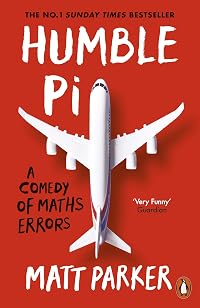
Humble Pi: A Comedy of Maths Errors
by Matt Parker
On This Page
Description
"This tour of real-world mathematical disasters reveals the importance of math in everyday life. All sorts of seemingly innocuous mathematical mistakes can have significant consequences. Exploring and explaining a litany of glitches, near misses, and mathematical mishaps involving the internet, big data, elections, street signs, lotteries, the Roman Empire, and an Olympic team, Matt Parker uncovers the ways math trips us up"--Tags
Recommendations



Member Reviews
The Daily Show for Math. In this hilarious and sometimes tragic book about math in the real world - some instances discussed include the deaths of hundreds of people, but most discussions are of a humorous bent - Parker does a truly phenomenal job of showing just how easy it is to get math wrong, and what can happen in the real world in that situation. From bridge collapses to programming errors to planes running out of fuel midair and all kinds of other situations, Parker truly does an excellent job of looking across the spectrum of math errors and showing both what should have been the correct result and what happened with the wrong one. Truly hilarious, and very much recommended.
As a connoisseur of fine mistakes, I was happy to find Matt Parker’s book. I knew him from YouTube where he broadcasts the same type of content. He is a mathematics teacher and comedian, and I thought this book was about as good as something like this can be. I can’t tell you too much about it or it would spoil all the great mistakes (although there are a few that you’ve probably heard of), but I was entertained to hear that the German police were searching for a serial killer for years. Her DNA turned up at every crime scene. They eventually learned that the DNA belonged to a woman who worked at the factory that made the cotton swabs they were using.
Summary: An exploration of all the ways we use (and misuse) math in the real world, and the ways our calculations can go badly wrong.
Were you among those who wondered how on earth you would ever use that math you learned in high school? The truth is that even if you do not, there are others using that math in just about every aspect of our physical world from our bridges to our medical hardware to our buildings. The amazing thing is how we can describe and predict how things will work through our calculations. And sometimes, if we make a mistake, or a wrong assumption, those calculations can go badly wrong. Some of those mistakes are just amusing or complete nonsense. But some can be deadly…
Matt Parker explores many of the ways math show more goes wrong in the real world, citing dozens of real world examples for the different classes of math errors he discusses. He starts with how we lose track of time, particularly with our timekeeping rollover features on our computers. Usually, it’s no problem because they start counting each time we turn them on. But leave it running long enough for the time to roll over, and the world can come to a grinding halt, a real problem if it occurs mid-flight.
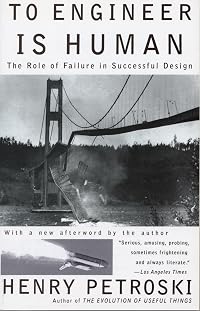
He discusses engineering problems, like the failure to calculate resonance effects on bridges and engineer to compensate for them. One of the most famous, and tragic, was the collapse of the Kansas City Hyatt Regency Walkways when the design of how sections of box beams were supported by nuts was changed without recalculating load limits. Then there are the errors that can creep into spreadsheet formulas and calculations that can produce misleading information on which businesses make decisions.
We often make counting mistakes with intervals. Like how many posts do you need to support a five section fence? (Six). We make geometry mistakes, like the example of the diagram of a soccer ball with all the sections, white and black, being hexagonal. This is not possible on a spherical ball which is why the white sections are hexagons and the black ones are pentagons. Shapes are important. Deformations on rocket boosters combined with cold circular O-rings spelled disaster on a space shuttle. Some are the minor difference in precisely engineered parts that are outside tolerances or times when conventions of measurement vary among those on the same project.
Many of the mistakes concerns the peculiarities of computer calculations, including rounding errors and supposed randomization programs and errors of even a single line of code in an algorithm. Another math problem is what “average” means and what you do with that where most people aren’t “average.” So often, math and computer code are part of complex systems, that when changed, involve recalculating or reviewing every part. Often the things overlooked create problems.
Parker explains all of this in language even this non-mathematician can understand and includes many images and illustrations, making this an enjoyable read (while reminding us the acts of faith involved in everything from spreadsheets to suspension bridges to airplane flights). We assume talented people have made, checked, and rechecked calculations and code for accuracy. And most of the time, things work…except when they don’t.
He also alerts us to fallacies that we may encounter with statistics or so-called random numbers or even in how we count. What seems common sense is not in every case.
There’s one other interesting quirk in this book, and that is in the pagination, which is in reverse order, from 313 to zero, and then a roll over number, 4,294,967,294. I kind of liked it personally. How many times have you wondered, “how many pages left in this book?” In this case, the page number you are on is the answer! This feature may give you a sense of the light touch this author takes in a book dealing with ostensibly serious matters making it such a good read. show less
Were you among those who wondered how on earth you would ever use that math you learned in high school? The truth is that even if you do not, there are others using that math in just about every aspect of our physical world from our bridges to our medical hardware to our buildings. The amazing thing is how we can describe and predict how things will work through our calculations. And sometimes, if we make a mistake, or a wrong assumption, those calculations can go badly wrong. Some of those mistakes are just amusing or complete nonsense. But some can be deadly…
Matt Parker explores many of the ways math show more goes wrong in the real world, citing dozens of real world examples for the different classes of math errors he discusses. He starts with how we lose track of time, particularly with our timekeeping rollover features on our computers. Usually, it’s no problem because they start counting each time we turn them on. But leave it running long enough for the time to roll over, and the world can come to a grinding halt, a real problem if it occurs mid-flight.
He discusses engineering problems, like the failure to calculate resonance effects on bridges and engineer to compensate for them. One of the most famous, and tragic, was the collapse of the Kansas City Hyatt Regency Walkways when the design of how sections of box beams were supported by nuts was changed without recalculating load limits. Then there are the errors that can creep into spreadsheet formulas and calculations that can produce misleading information on which businesses make decisions.
We often make counting mistakes with intervals. Like how many posts do you need to support a five section fence? (Six). We make geometry mistakes, like the example of the diagram of a soccer ball with all the sections, white and black, being hexagonal. This is not possible on a spherical ball which is why the white sections are hexagons and the black ones are pentagons. Shapes are important. Deformations on rocket boosters combined with cold circular O-rings spelled disaster on a space shuttle. Some are the minor difference in precisely engineered parts that are outside tolerances or times when conventions of measurement vary among those on the same project.
Many of the mistakes concerns the peculiarities of computer calculations, including rounding errors and supposed randomization programs and errors of even a single line of code in an algorithm. Another math problem is what “average” means and what you do with that where most people aren’t “average.” So often, math and computer code are part of complex systems, that when changed, involve recalculating or reviewing every part. Often the things overlooked create problems.
Parker explains all of this in language even this non-mathematician can understand and includes many images and illustrations, making this an enjoyable read (while reminding us the acts of faith involved in everything from spreadsheets to suspension bridges to airplane flights). We assume talented people have made, checked, and rechecked calculations and code for accuracy. And most of the time, things work…except when they don’t.
He also alerts us to fallacies that we may encounter with statistics or so-called random numbers or even in how we count. What seems common sense is not in every case.
There’s one other interesting quirk in this book, and that is in the pagination, which is in reverse order, from 313 to zero, and then a roll over number, 4,294,967,294. I kind of liked it personally. How many times have you wondered, “how many pages left in this book?” In this case, the page number you are on is the answer! This feature may give you a sense of the light touch this author takes in a book dealing with ostensibly serious matters making it such a good read. show less
I love maths. I really do. I am not very good at it which is precisely what I love about it. Its difficulty.
So, I have really enjoyed this book. It is a bit math/programming heavy but interesting enough that if you vaguely understand the maths, it makes for an enjoyable read. All the maths bits are explained so nothing is too far from being understood and appreciated.
The combination of silly but sometimes critical maths errors that happen in the world with the hilarious comedy style (and narration) of Matt Parker and you get the most fun you can extract out of things going wrong.
So, I have really enjoyed this book. It is a bit math/programming heavy but interesting enough that if you vaguely understand the maths, it makes for an enjoyable read. All the maths bits are explained so nothing is too far from being understood and appreciated.
The combination of silly but sometimes critical maths errors that happen in the world with the hilarious comedy style (and narration) of Matt Parker and you get the most fun you can extract out of things going wrong.
Making mistakes, especially when dealing with abstractions, is easy and common. In the software world, one saying is "There are no non-trivial programs without bugs." Another one goes "Testing can show the presence of bugs but never their absence." Most of us have heard of Murphy's law. I'm surprised that things tend to work as well as they do and at how confident we can be that we got things right. This book can be seen as a kind of sober celebration of this state of affairs along with some attempts to theorize about how mistakes can better be prevented by looking at how they occurred. What's more, it's often funny.
A personal note: There is one section that the author suggests you skip over if you happen to be on an airplane. I didn't show more do so even though I was waiting to board a plane to Amsterdam at the time. I reasoned that giving in to fear at this point could only make matters scarier. I (and the flight) were fine. show less
A personal note: There is one section that the author suggests you skip over if you happen to be on an airplane. I didn't show more do so even though I was waiting to board a plane to Amsterdam at the time. I reasoned that giving in to fear at this point could only make matters scarier. I (and the flight) were fine. show less
This is a book of when math, programming and engineering mistakes have resulted in errors, from the hilarious to the deadly. Most, if not all, of the cases have been widely known for a long time but for those that haven’t spent the last couple of decades observing interesting failure reports, the book can be a fun companion when you are stuck somewhere and can’t move for a while.
I had hoped for more math errors, but most failures included are programming or engineering mistakes, which by their very nature involve numbers. The classic failures in date management are included, as are the classic unit conversion errors and some classic programming and system administration errors.
There are also a couple of numerical anecdotes that show more don’t seem like errors at all, such as the observation that the average human does not exist (i.e. humans are so diverse that you can’t find anyone that isn’t outside the 30% span of average in some category).
While I was not completely blown away by this book, I do recommend Matt Parker’s YouTube channel standupmaths. As the channel name implies, Matt Parker do enjoy the occasional punchline, something that can also be observed in the book. show less
I had hoped for more math errors, but most failures included are programming or engineering mistakes, which by their very nature involve numbers. The classic failures in date management are included, as are the classic unit conversion errors and some classic programming and system administration errors.
There are also a couple of numerical anecdotes that show more don’t seem like errors at all, such as the observation that the average human does not exist (i.e. humans are so diverse that you can’t find anyone that isn’t outside the 30% span of average in some category).
While I was not completely blown away by this book, I do recommend Matt Parker’s YouTube channel standupmaths. As the channel name implies, Matt Parker do enjoy the occasional punchline, something that can also be observed in the book. show less
3.5 stars (rating shown may vary depending on whether site allows half star ratings)
Who would have thought I'd like a book about math? I can do math for the most part (my math skills break down a bit when we get to higher level math such as calculus--and I'm not even sure about trigonometry or pre-calculus anymore, though I could do them at one time.)
Unlike some of the other reviewers, I did not already know most of the stories included in the book (yes, I probably had heard about a few) nor had I really thought about the math behind the ones that I did know. I found the stories interesting--not necessarily comedic since some did result in deaths of those affected--but they did point out the importance of math and calculations and show more engineering and computer programs in our technology. And should also encourage us to make sure certain parts of our care are double checked or question errors that come up etc. (Be involved in your healthcare.)
It's a bit scary to realize how much we have to trust that others did the right calculations (planes, bridges, etc.).
Overall, I found it an interesting read and not one I wanted to put down. There were a few spots where the explanations exceeded my understanding--even after me reading them several times to try to understand. I finally just accepted the gist of the explanation and moved on and didn't let it bother me. show less
Who would have thought I'd like a book about math? I can do math for the most part (my math skills break down a bit when we get to higher level math such as calculus--and I'm not even sure about trigonometry or pre-calculus anymore, though I could do them at one time.)
Unlike some of the other reviewers, I did not already know most of the stories included in the book (yes, I probably had heard about a few) nor had I really thought about the math behind the ones that I did know. I found the stories interesting--not necessarily comedic since some did result in deaths of those affected--but they did point out the importance of math and calculations and show more engineering and computer programs in our technology. And should also encourage us to make sure certain parts of our care are double checked or question errors that come up etc. (Be involved in your healthcare.)
It's a bit scary to realize how much we have to trust that others did the right calculations (planes, bridges, etc.).
Overall, I found it an interesting read and not one I wanted to put down. There were a few spots where the explanations exceeded my understanding--even after me reading them several times to try to understand. I finally just accepted the gist of the explanation and moved on and didn't let it bother me. show less
Members
- Recently Added By
Lists

The Five Books That Represent Us
391 works; 148 members

Books Read in 2026
1,891 works; 66 members
Author Information

4 Works 2,252 Members
Matt Parker is the author of Things to Make and Do in the Fourth Dimension as well as a stand-up comedian and YouTuber. He writes about math for The Guardian, hosts the Science Channel's Outrageous Acts of Science, and appears regularly on various BBC shows, including More or Less, The Infinite Monkey Cage, and Qi.
Common Knowledge
- Canonical title*
- Processo al Pi Greco. Equivoci, disastri e altri errori matematici
- Original title
- Humble Pi: A Comedy of Maths Errors
- Alternate titles
- Humble Pi: When Math Goes Wrong In The Real World
- Original publication date
- 2019
- People/Characters
- Avery Blank; Richard Feynmann; Bill Gates; Julius Caesar; Pope Gregory; Steve Null (show all 10); Brian Test; Barack Obama; Donald Trump; Michael Larson
- Important places
- Canada; French Guiana, South America; Australia; Fenchurch Street; Kansas City, Missouri, USA; Los Angeles, California, USA (show all 15); Mars (planet); Null Island; Sesame Street; Tokyo, Japan; Wall Street, New York, New York, USA; Tacoma, Washington, USA; United Kingdom; Vancouver, British Columbia, Canada; Wobbly Bridge
- Important events
- Tacoma Narrows Bridge Collapse; Michael Larson's streak on game show "Press Your Luck"; Pepsi Points redeemable for items; Julian Calendar instituted; Gregorian Calendar; Kansas City Hyatt walkway collapse (show all 12); UK Parliamentary petition for geometrically correct footballs on signs; Space Shuttle Challenger Disaster; Therac-25 radiation machine overdoses; Hubble Telescope construction and repair; Obamacare Meme; Ariadne 5 rocket self destruct
- Dedication
- Dedicated to my relentlessly supportive wife, Lucie. Yes, I appreciate that dedicating a book about mistakes to your wife is itself a bit of a mistake.
- First words
- In 1995 Pepsi ran a promotion where people could collect Pepsi Points and then trade them in for Pepsi Stuff.
- Last words
- (Click to show. Warning: May contain spoilers.)Our modern world depends on mathematics, and when things go wrong, it should serve as a sobering reminder that we need to keep an eye on the hot cheese but also remind us of all the math that works faultlessly around us.
- Blurbers
- Harford, Tim; Ellenberg, Jordan; Rutherford, Adam; North, Ryan
- Original language
- English UK
- Canonical DDC/MDS
- 510
- Canonical LCC
- QA99
*Some information comes from Common Knowledge in other languages. Click "Edit" for more information.
Classifications
Statistics
- Members
- 1,429
- Popularity
- 16,463
- Reviews
- 34
- Rating
- (4.00)
- Languages
- 6 — Dutch, English, German, Italian, Polish, Spanish
- Media
- Paper, Audiobook, Ebook
- ISBNs
- 21
- ASINs
- 8