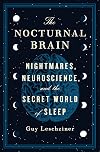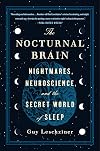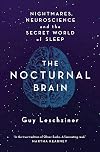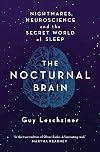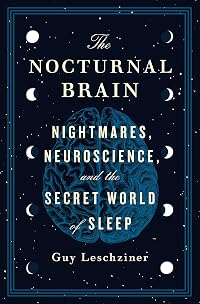
The Nocturnal Brain: Nightmares, Neuroscience, and the Secret World of Sleep
by Guy Leschziner
On This Page
Description
A renowned neurologist shares the true stories of people unable to get a good night's rest in The Nocturnal Brain: Nightmares, Neuroscience, and the Secret World of Sleep, a fascinating exploration of the symptoms and syndromes behind sleep disorders. For Dr. Guy Leschziner's patients, there is no rest for the weary in mind and body. Insomnia, narcolepsy, night terrors, apnea, and sleepwalking are just a sampling of conditions afflicting sufferers who cannot sleep-and their experiences in show more trying are the stuff of nightmares. Demoniac hallucinations frighten people into paralysis. Restless legs rock both the sleepless and their sleeping partners with unpredictable and uncontrollable kicking. Out-of-sync circadian rhythms confuse the natural body clock's days and nights. Then there are the extreme cases. A woman in a state of deep sleep who gets dressed, unlocks her car, and drives for several miles before returning to bed. The man who has spent decades cleaning out kitchens while "sleep-eating." The teenager prone to the serious, yet unfortunately nicknamed Sleeping Beauty Syndrome stuck in a cycle of excessive unconsciousness, binge eating, and uncharacteristic displays of aggression and hypersexuality while awake. With compassionate stories of his patients and their conditions, Dr. Leschziner illustrates the neuroscience behind our sleeping minds, revealing the many biological and psychological factors necessary in getting the rest that will not only maintain our physical and mental health, but improve our cognitive abilities and overall happiness. show lessTags
Recommendations




















Member Reviews
One way of discovering how any bodily organ does what it does is to study the effects produced when it goes wrong, and that’s as true of the sleeping brain as any other organ. The Secret World of Sleep is a book of case studies, the personal stories of patients who have passed through the Sleep Disorders Centre based at two hospitals, Guy’s and St. Thomas’s, in London.
As the author puts it, “…while we think of our brains switching off at night, these patients illustrate that quite the opposite is true. The functions and dysfunctions of our nocturnal brains are as numerous and varied as those of the daytime, and influence every aspect of our waking lives too.” And some of the things people struggle with, for years, show more when sleep goes haywire are astonishing. For example, cases of people having sex in their sleep (or, more usually, attempting to have it) are so well-known this condition even has a name: sexomnia. What doesn’t have a name is climbing out of bed during the night, getting fully dressed and then driving a car for miles—without mishap and all while sound asleep. Or compulsively eating vast amounts of food at night, fast asleep.
Then there’s cataplexy, an instant collapse into deep sleep triggered by a sudden emotion—laughing at a joke for instance. Can you imagine going through life half-afraid to laugh at anything funny for fear of keeling over in front of everybody? Narcolepsy is worse: this is excessive sleep, sleeping the majority of the time, and can include falling asleep without warning at any moment—while walking down the street say, or crossing a busy road, or just trying to do a day’s work. Then there are disorders of our internal body-clock: picture a 24-hour wall-clock running just a little too fast; every now and then it will be showing the right time, before creeping ahead again until, weeks later, it is the full twelve hours out of synch. Incredibly, there are people saddled with an internal clock just like that.
The conventional view is that we are either awake or asleep, and one thing this book has taught me is that it’s not that clear-cut at all. Also, the brain isn’t awake or asleep as a unit either; some parts sleep while the rest is awake (I knew dolphins and birds such as swifts do this, but had no idea that, to a much lesser extent, so do we). One message that comes across from this book overall is of increasingly blurring “boundaries”—as much between “awake” and “asleep” as between the biological and psychological.
To be honest, while the individual cases here are fascinating, I’m not sure I learned as much about sleep itself as I was hoping to. I did read this book out of interest in the brain though, rather than because of any sleep problems of my own; and that’s something it definitely has given me: a real appreciation of just how lucky I am that I don’t; a true appreciation, for the first time really, of a good night’s sleep. show less
As the author puts it, “…while we think of our brains switching off at night, these patients illustrate that quite the opposite is true. The functions and dysfunctions of our nocturnal brains are as numerous and varied as those of the daytime, and influence every aspect of our waking lives too.” And some of the things people struggle with, for years, show more when sleep goes haywire are astonishing. For example, cases of people having sex in their sleep (or, more usually, attempting to have it) are so well-known this condition even has a name: sexomnia. What doesn’t have a name is climbing out of bed during the night, getting fully dressed and then driving a car for miles—without mishap and all while sound asleep. Or compulsively eating vast amounts of food at night, fast asleep.
Then there’s cataplexy, an instant collapse into deep sleep triggered by a sudden emotion—laughing at a joke for instance. Can you imagine going through life half-afraid to laugh at anything funny for fear of keeling over in front of everybody? Narcolepsy is worse: this is excessive sleep, sleeping the majority of the time, and can include falling asleep without warning at any moment—while walking down the street say, or crossing a busy road, or just trying to do a day’s work. Then there are disorders of our internal body-clock: picture a 24-hour wall-clock running just a little too fast; every now and then it will be showing the right time, before creeping ahead again until, weeks later, it is the full twelve hours out of synch. Incredibly, there are people saddled with an internal clock just like that.
The conventional view is that we are either awake or asleep, and one thing this book has taught me is that it’s not that clear-cut at all. Also, the brain isn’t awake or asleep as a unit either; some parts sleep while the rest is awake (I knew dolphins and birds such as swifts do this, but had no idea that, to a much lesser extent, so do we). One message that comes across from this book overall is of increasingly blurring “boundaries”—as much between “awake” and “asleep” as between the biological and psychological.
To be honest, while the individual cases here are fascinating, I’m not sure I learned as much about sleep itself as I was hoping to. I did read this book out of interest in the brain though, rather than because of any sleep problems of my own; and that’s something it definitely has given me: a real appreciation of just how lucky I am that I don’t; a true appreciation, for the first time really, of a good night’s sleep. show less
“You can survive longer without food than without sleep. The fact that sleep is fundamental to life is unarguable, but in modern society, at least until recently, we have taken for granted that sleep simply happens, and is a necessary evil to allow us to live our waking lives.”
I’ve been plagued by insomnia since I was a teenager, and nothing has ever really resolved the issue, though I’ve tried everything from hypnotherapy to sleeping tablets. It’s something I’ve always just managed, but I am finding as I get older that its having increasingly negative effects. So I was curious as to what I might learn about disordered sleep in The Nocturnal Brain, from neurologist and sleep specialist Dr. Guy Leschziner.
In each chapter of show more The Nocturnal Brain, Leschziner introduces a patient with a particular sleep issue. He provides a case history, presented with commentary from the patient, and explains the diagnosis, causes and subsequent treatment. From snoring to sleep-walking, narcolepsy to night terrors, the disorders examined range from the common to the bizarre, and I found them all quite fascinating.
Leschziner has made a good attempt at making the science accessible for a lay person though at times it can become a little dense. What is clear is that for many people sleep is a complicated process. It can be affected by a combination of biological and psychological factors, and as such sleep medicine often requires a multidisciplinary approach.
I found The Nocturnal Brain to be an interesting and engaging read, and Leschziner has convinced me to look into arranging a consultation with a sleep specialist. show less
I’ve been plagued by insomnia since I was a teenager, and nothing has ever really resolved the issue, though I’ve tried everything from hypnotherapy to sleeping tablets. It’s something I’ve always just managed, but I am finding as I get older that its having increasingly negative effects. So I was curious as to what I might learn about disordered sleep in The Nocturnal Brain, from neurologist and sleep specialist Dr. Guy Leschziner.
In each chapter of show more The Nocturnal Brain, Leschziner introduces a patient with a particular sleep issue. He provides a case history, presented with commentary from the patient, and explains the diagnosis, causes and subsequent treatment. From snoring to sleep-walking, narcolepsy to night terrors, the disorders examined range from the common to the bizarre, and I found them all quite fascinating.
Leschziner has made a good attempt at making the science accessible for a lay person though at times it can become a little dense. What is clear is that for many people sleep is a complicated process. It can be affected by a combination of biological and psychological factors, and as such sleep medicine often requires a multidisciplinary approach.
I found The Nocturnal Brain to be an interesting and engaging read, and Leschziner has convinced me to look into arranging a consultation with a sleep specialist. show less
This is a fascinating collection of case studies examining a variety of sleep disorders. Among the disorders included here are REM sleep behaviour disorder, narcolepsy, "sleeping beauty" syndrome, and insomnia of several varieties. Leschziner and his patients (they all collaborated to ensure that the details of their experiences were accurate) describe the effects on the patient, the impact of the patient's condition on those nearest and dearest to them, and advances (or not) in the field that have led to different treatments. The analogy that Leschziner presents when describing our understanding of the brain as obtained through current technology (EEGs and so on) is being told to map the ocean floors but being given only a snorkel and show more an air tank -- it's impossible to do a deep dive, so our observations are limited to what's on the surface.
If you like books by authors such as Oliver Sacks, Suzanne O'Sullivan, or Helen Thomson (Unthinkable), you will probably like this book -- the case studies are presented in a way that highlights the patient as a person, rather than as the condition they happen to have. show less
If you like books by authors such as Oliver Sacks, Suzanne O'Sullivan, or Helen Thomson (Unthinkable), you will probably like this book -- the case studies are presented in a way that highlights the patient as a person, rather than as the condition they happen to have. show less
Rating: 3.5
Most of us are aware of sleep apnea and restless legs syndrome. Some of us have family members who sleepwalk or sleep talk, and a few of us have probably experienced episodes of insomnia. In this book, Dr. Leschziner covers all of these conditions and more. He also presents a number of very unusual sleep disorders that I had never heard of, providing an overview of the relevant neuroanatomy and neurophysiology in language that is accessible to the lay reader. Some of the concepts are challenging and the neurologist-author uses analogies to clarify them . Each chapter focuses on a different condition, examining it through the eyes of one or two patients. Some disorders are not easily remedied, and the reader learns of the show more physician’s challenges in attempting to treat sufferers as well.
While I enjoyed the book and learned a lot, I did feel that most chapters could have been pared down. Some material is repetitive, and some patients’ comments are not particularly illuminating or insightful. show less
Most of us are aware of sleep apnea and restless legs syndrome. Some of us have family members who sleepwalk or sleep talk, and a few of us have probably experienced episodes of insomnia. In this book, Dr. Leschziner covers all of these conditions and more. He also presents a number of very unusual sleep disorders that I had never heard of, providing an overview of the relevant neuroanatomy and neurophysiology in language that is accessible to the lay reader. Some of the concepts are challenging and the neurologist-author uses analogies to clarify them . Each chapter focuses on a different condition, examining it through the eyes of one or two patients. Some disorders are not easily remedied, and the reader learns of the show more physician’s challenges in attempting to treat sufferers as well.
While I enjoyed the book and learned a lot, I did feel that most chapters could have been pared down. Some material is repetitive, and some patients’ comments are not particularly illuminating or insightful. show less
Thankfully I have never had any issues in sleeping. I put my head on the pillow and almost always I am asleep within a few minutes. I sleep deeply too, I missed the entire Great Storm in 1987 and was totally oblivious to a massive lightning storm that struck an oak tree opposite where I lived. My father has always called it a short course in death…
Sleep is essential to our health, but no one can say with any conviction exactly why we need it. If we are sleep deprived then there is a finite time that we can survive, hence why it is used as a form of torture. So what happens to our brain at night? A lot of what we can learn about the brain when it is resting is by studying those that struggle with all manner of sleep-related issues.
Guy show more Leschzineris well placed to explain these sleep issues as he is the head of the Sleep Disorders Centre at Guy's and St. Thomas's Hospitals. In this book, he explains the various types of disorders that he has come across, such as sleepwalking, apnoea, night terrors and narcolepsy through the stories of the people that he has met and treated. Some of the things that these people have to suffer sound horrendous, paralysis, tremors and hallucinations for example. The story of a lady who would wake in the middle of the night and drive around whilst asleep and be utterly unaware what she was doing is terrifying.
This book by Leschziner is a fine addition to the discussion and understanding of this little understood habit that we have to undertake every day for our health. His compassionate writing about the people that he is treating will help those that have been suffering from insomnia and other sleeping disorders to understand that they are not alone. There are several books out there now about sleeping. Why We Sleep by Matthew Walker is a really good explanation of why we need sleep and this accessible book is a fine addition to the knowledge of sleep. show less
Sleep is essential to our health, but no one can say with any conviction exactly why we need it. If we are sleep deprived then there is a finite time that we can survive, hence why it is used as a form of torture. So what happens to our brain at night? A lot of what we can learn about the brain when it is resting is by studying those that struggle with all manner of sleep-related issues.
Guy show more Leschzineris well placed to explain these sleep issues as he is the head of the Sleep Disorders Centre at Guy's and St. Thomas's Hospitals. In this book, he explains the various types of disorders that he has come across, such as sleepwalking, apnoea, night terrors and narcolepsy through the stories of the people that he has met and treated. Some of the things that these people have to suffer sound horrendous, paralysis, tremors and hallucinations for example. The story of a lady who would wake in the middle of the night and drive around whilst asleep and be utterly unaware what she was doing is terrifying.
This book by Leschziner is a fine addition to the discussion and understanding of this little understood habit that we have to undertake every day for our health. His compassionate writing about the people that he is treating will help those that have been suffering from insomnia and other sleeping disorders to understand that they are not alone. There are several books out there now about sleeping. Why We Sleep by Matthew Walker is a really good explanation of why we need sleep and this accessible book is a fine addition to the knowledge of sleep. show less
This is a really neat look at our brain and sleep issues, but I do NOT recommend it if you are a hypochondriac. I found it fascinating and educational, though on the scary side as far as some of the illnesses / disorders discussed. (Thank goodness the really scary ones are also really rare.)
The Nocturnal Brain
5 Stars
A collection of case studies of patients attending the author's sleep clinic together with the medical and scientific explanations for the various 'lesions', i.e., disorders/conditions presented in each case.
The book is exceedingly well-written with a narrative style that makes the neurological terminology easy for the layperson to understand.
The subject matter is utterly fascinating and Dr. Leschziner's presentation, analysis and discussion kept me turning the pages.
In sum, one of the best non-fiction works I've read.
5 Stars
A collection of case studies of patients attending the author's sleep clinic together with the medical and scientific explanations for the various 'lesions', i.e., disorders/conditions presented in each case.
The book is exceedingly well-written with a narrative style that makes the neurological terminology easy for the layperson to understand.
The subject matter is utterly fascinating and Dr. Leschziner's presentation, analysis and discussion kept me turning the pages.
In sum, one of the best non-fiction works I've read.
Members
- Recently Added By
Lists

Top Five Books of 2020
982 works; 350 members

Science: Health & Medical
100 works; 1 member
Author Information

7+ Works 452 Members
Common Knowledge
- Original publication date
- 2019
Classifications
- Genres
- Nonfiction, General Nonfiction, Science & Nature
- DDC/MDS
- 616.8498 — Applied science & technology Medicine & health Diseases, Allergies, Skin Conditions Nervous Disorders: Autism, Anorexia, OCD Manifestations of nervous system diseases Various symptoms Sleep disorder
- LCC
- RC548 .L47 — Medicine Internal medicine Internal medicine Neurosciences. Biological psychiatry. Neuropsychiatry Psychiatry Psychopathology Neuroses
- BISAC
Statistics
- Members
- 300
- Popularity
- 107,024
- Reviews
- 11
- Rating
- (3.82)
- Languages
- Dutch, English, German, Spanish
- Media
- Paper, Audiobook, Ebook
- ISBNs
- 13
- ASINs
- 4