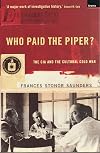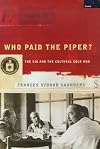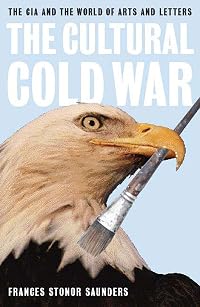
The Cultural Cold War: The CIA and the World of Arts and Letters
by Frances Stonor Saunders
On This Page
Description
"In The Cultural Cold War, Frances Stonor Saunders presents for the first time the shocking evidence that the CIA infiltrated every niche of the cultural sphere during the postwar years. In a book that draws together recently declassified documents and exclusive interviews, the author narrates the extraordinary story of a secret campaign in which some of the most vocal exponents of intellectual freedom in the West became instruments of the American government. The CIA's front organizations show more and the philanthropic foundations that channeled its money also organized conferences, founded magazines, ran congresses, mounted exhibitions, arranged concerts, and flew symphony orchestras around the world." "Many of the period's foremost intellectuals and artists appear in the book: Isaiah Berlin, Clement Greenberg, Sidney Hook, Arthur Koestler, Irving Kristol, Robert Lowell, Henry Luce, Andre Malraux, Mary McCarthy, Reinhold Neibuhr, George Orwell, Jackson Pollock, Bertrand Russell, Jean-Paul Sartre, Arthur Schlesinger, Jr., and Stephen Spender, among others. While many were unwitting participants in the CIA's cultural operation, others were willing collaborators."--Jacket. show lessTags
Recommendations















Member Reviews
The Cultural Cold War is a deeply researched study of a tempest in a tea pot. In the immediate aftermath of WW2, several OSS associated American figures: Michael Josselson, Melvin Lasky, and Nicolas Nabokov (cousin of the famous writer), noticed that the Soviet Union was beating the pants off of the Western Allies in terms of propaganda and cultural prestige, and that this should be countered by every available means.
These arguments found an avid audience in the newly formed CIA, and the interlocking establishment apparat of WASPy Groton-Yale-Harvard types who formed the backbone of the American elite and the CIA's upper echelons. Under the aegis of the Congress for Cultural Freedom, the CIA funded a wide variety of anti-Soviet efforts, show more from showcases of composers banned as "decadent" under Soviet musical practice, to translations and distributions of books, and the organization of conferences and elite-centered journals. All of these organizations concealed their CIA ties, forming a means to organize the Non-Communist Left from pro-Communist attitudes towards neutrality and from neutrality to Atlanticism.
The deceit was probably necessary. An American Ministry of Culture, or "white propaganda" programs out of the State Department, would have attracted reflexive disdain from European intellectuals and know-nothing American conservatives. It also proved the fatal unravelling of the enterprise in the late 1960s, as sloppy finances made it obvious that the CIA paid pass-through foundations with funded the Congress and various magazines like Encounters.
As far as CIA activities went, this was all probably harmless. Saunders doesn't have complete figures, but the activities of the Congress must be far less expensive than the covert sabotage programs and coups of the Office of Policy Coordination, which were less expensive than stationing another armored division in Germany, which was less expensive than developing a supersonic nuclear bomber. If anyone died, it was a consequence of high living at one of the Congress' retreats; not assassination.
On the flip side, it's hard to see what this effort actually accomplished. The Congress never damaged the prestige of Sartre and Camus, who rejected Stalinism on their own after the 1956 Invasion of Hungary. The Red Scare and waves of McCarthy associated censorship put lie to the claim that America was a bastion of freedom. The escalating Vietnam War would have likely fractured the Non-Communist Left alliance eventually, even without the revelations about the CCF. And the ultimate cultural victory, the psychedelic exuberance of the Beats and the Hippies had nothing to do with any of the CIA's cultural programs (maybe something to do with MKULTRA and Timothy Leary, but that was hardly part of a master plan).
This book is comprehensively and deeply researched, and covers an interesting period in history, though from an angle without much relevance. Many figures regarded as intellectual and artistic giants were funded in part by the CIA without much damage to their current reputation. Conversely, CIA money couldn't keep many others from sinking into obscurity. Culture was a sideshow to the main action, be that in Moscow, Berlin, or Saigon. show less
These arguments found an avid audience in the newly formed CIA, and the interlocking establishment apparat of WASPy Groton-Yale-Harvard types who formed the backbone of the American elite and the CIA's upper echelons. Under the aegis of the Congress for Cultural Freedom, the CIA funded a wide variety of anti-Soviet efforts, show more from showcases of composers banned as "decadent" under Soviet musical practice, to translations and distributions of books, and the organization of conferences and elite-centered journals. All of these organizations concealed their CIA ties, forming a means to organize the Non-Communist Left from pro-Communist attitudes towards neutrality and from neutrality to Atlanticism.
The deceit was probably necessary. An American Ministry of Culture, or "white propaganda" programs out of the State Department, would have attracted reflexive disdain from European intellectuals and know-nothing American conservatives. It also proved the fatal unravelling of the enterprise in the late 1960s, as sloppy finances made it obvious that the CIA paid pass-through foundations with funded the Congress and various magazines like Encounters.
As far as CIA activities went, this was all probably harmless. Saunders doesn't have complete figures, but the activities of the Congress must be far less expensive than the covert sabotage programs and coups of the Office of Policy Coordination, which were less expensive than stationing another armored division in Germany, which was less expensive than developing a supersonic nuclear bomber. If anyone died, it was a consequence of high living at one of the Congress' retreats; not assassination.
On the flip side, it's hard to see what this effort actually accomplished. The Congress never damaged the prestige of Sartre and Camus, who rejected Stalinism on their own after the 1956 Invasion of Hungary. The Red Scare and waves of McCarthy associated censorship put lie to the claim that America was a bastion of freedom. The escalating Vietnam War would have likely fractured the Non-Communist Left alliance eventually, even without the revelations about the CCF. And the ultimate cultural victory, the psychedelic exuberance of the Beats and the Hippies had nothing to do with any of the CIA's cultural programs (maybe something to do with MKULTRA and Timothy Leary, but that was hardly part of a master plan).
This book is comprehensively and deeply researched, and covers an interesting period in history, though from an angle without much relevance. Many figures regarded as intellectual and artistic giants were funded in part by the CIA without much damage to their current reputation. Conversely, CIA money couldn't keep many others from sinking into obscurity. Culture was a sideshow to the main action, be that in Moscow, Berlin, or Saigon. show less
Read the Italian edition in a library, and liked it enough to immediately buy on Amazon a copy of original edition (in English).
It is a nice "connecting-the-dots" book that actually helped in understanding some puzzling connections that, through my political and business activities, I had found since the early 1980s, but considered mere oddities
It is a nice "connecting-the-dots" book that actually helped in understanding some puzzling connections that, through my political and business activities, I had found since the early 1980s, but considered mere oddities
Such an important book, so well researched and clear, and so devastating. I thought I was knowledgeable about the CIA's covert activities, but had no idea how it extended into the cultural realms, especially literature, but also music, art, and dance. How bizarre and unsettling to discover that the CIA was funding so many widely read literary magazines around the world, authors, orchestras (the Boston Pops world tours!), musicians, painters, as part of its "Psychological Warfare Division" among other entities, which were part of its cold war efforts.
Most people are probably aware that the CIA sponsored a lot of activities, legal and extralegal, in the war against the Communist bloc known as the Cold War. But it is perhaps less well-known to what extent the CIA was involved in sponsoring, bribing and suborning writers, musicians, actors and intellectuals to agitate against the Soviet Union and its allies, as well as communism and Marxism in general. In particular the CIA-run organization "Congress for Cultural Freedom" and its flagship intellectual journal 'Encounter' had a great influence in the West in terms of effective propagandizing for the US point of view.
Frances Stonor Saunders, an independent film producer and writer for the New Statesman, has now produced an authoritative show more modern history of the CIA and the Congress, as well as related organizations, focusing both on the global political dimen. She focuses on the global politics, but also on the individuals involved on all sides, the many prominent writers and intellectuals in the organizations, and what it looked like from the CIA's perspective, for which she makes use of newly declassified documents. She shows convincingly that the "non-Communist Left" was by and large bribed or cajoled by the CIA, in so far as they didn't enthousiastically volunteer, into joining their propaganda front. She also shows that later denials by people such as Stephen Spender and Melvin Lasky of their knowledge of CIA involvement is extremely unrealistic and most likely just another lie.
That is not to say that this work is a polemic; far from it, Saunders writes very matter-of-factly and evenhandedly, and has little interest in discussing the merits of various political positions, though she does not fail to comment on the context of the Cold War at times, when she contrasts high-minded phrasery with the rather brutal and cynical realities of Vietnam, CIA activity in Latin America, the Soviet purges, the repression of Hungary, etc. The book is very extensive, making use of various sorts of sources, including interviews with important participants, in which they reflect remarkably often in a rather cynical way on their past activities. It's quite astounding how many famous writers, composers, intellectuals etc., from Nabokov's cousin to Stravinsky and from Russell to Stuart Hampshire, were involved in organized campaigns to attack and discredit their socialist colleagues. For that alone, this book is worth reading, that these crimes are not forgotten. show less
Frances Stonor Saunders, an independent film producer and writer for the New Statesman, has now produced an authoritative show more modern history of the CIA and the Congress, as well as related organizations, focusing both on the global political dimen. She focuses on the global politics, but also on the individuals involved on all sides, the many prominent writers and intellectuals in the organizations, and what it looked like from the CIA's perspective, for which she makes use of newly declassified documents. She shows convincingly that the "non-Communist Left" was by and large bribed or cajoled by the CIA, in so far as they didn't enthousiastically volunteer, into joining their propaganda front. She also shows that later denials by people such as Stephen Spender and Melvin Lasky of their knowledge of CIA involvement is extremely unrealistic and most likely just another lie.
That is not to say that this work is a polemic; far from it, Saunders writes very matter-of-factly and evenhandedly, and has little interest in discussing the merits of various political positions, though she does not fail to comment on the context of the Cold War at times, when she contrasts high-minded phrasery with the rather brutal and cynical realities of Vietnam, CIA activity in Latin America, the Soviet purges, the repression of Hungary, etc. The book is very extensive, making use of various sorts of sources, including interviews with important participants, in which they reflect remarkably often in a rather cynical way on their past activities. It's quite astounding how many famous writers, composers, intellectuals etc., from Nabokov's cousin to Stravinsky and from Russell to Stuart Hampshire, were involved in organized campaigns to attack and discredit their socialist colleagues. For that alone, this book is worth reading, that these crimes are not forgotten. show less
Read the Italian edition in a library, and liked it enough to immediately buy on Amazon a copy of original edition (in English).
It is a nice "connecting-the-dots" book that actually helped in understanding some puzzling connections that, through my political and business activities, I had found since the early 1980s, but considered mere oddities
It is a nice "connecting-the-dots" book that actually helped in understanding some puzzling connections that, through my political and business activities, I had found since the early 1980s, but considered mere oddities
Very good account of the underside of postwar and later 20thC American exportation of arts and cultural programmes.
Acquired as a give-away book in an Illinois hotel while on research leave.
Acquired as a give-away book in an Illinois hotel while on research leave.
> Babelio : https://www.babelio.com/livres/Stonor-Saunders-Qui-mene-la-danse--La-CIA-et-la-G...
> RÉSUMÉ. — 1947 : l'Europe se relève du cataclysme de la Seconde Guerre mondiale ; la guerre froide peut commencer.
Qui mène la danse ? nous fait découvrir un aspect très peu connu de la lutte d'influence qu'ont alors menée avec acharnement les Etats-Unis et l'Union soviétique sur le terrain de la vie culturelle américaine et européenne. Frances Stonor Saunders met au jour le programme secret de propagande mis au point par la CIA, qui fit de la culture une véritable machine de guerre pour combattre le bloc soviétique et ses thuriféraires. De considérables moyens humains et financiers furent employés pour utiliser la show more littérature, la musique, l'art et la presse comme armes idéologiques privilégiées en faveur des Etats-Unis. Les manipulations furent plus ou moins licites, plus ou moins apparentes de Raymond Aron à Jackson Pollock, en passant par Arthur Koestler, Ignazio Silone et Igor Stravinski, de très nombreuses personnalités du monde littéraire et artistique ont été généreusement rémunérées, utilisées par les services secrets américains, soit directement par des officiers traitants, soit par l'intermédiaire de fondations. Cette vaste enquéte retrace l'histoire de l'élite intellectuelle en Europe et aux Etats-Unis à travers un théâtre d'ombres peuplé de personnages brillants, de fins manipulateurs et d'espions sans vergogne. Ce livre, qui a déjà fait couler beaucoup d'encre en Angleterre, en Espagne et en Allemagne, est un document exceptionnel sur l'histoire de la guerre froide.
Connaissez-vous Michael Josselson, Melvin Lasky ? Non ? Rien de plus normal, car ces gens-là, liés à la CIA, firent tout pour qu'on ne parle jamais d'eux. Et leurs noms seraient longtemps restés dans les oubliettes de l'Histoire si une Anglaise, Frances Stonor Saunders, n'avait décortiqué les consortiums d'intellectuels financés dans le monde par la CIA à partir de 1948 afin de contrer sur le plan culturel le rival soviétique. Etude d'une propagande soft fondée sur une méthodologie des réseaux ? Autre histoire d'une CIA qui sut frayer avec les beaux esprits ? Son livre, préférant au sensationnalisme approximatif la rigueur historienne, nous plonge dans les coulisses d'une guerre froide où l'Etat américain, privé de ministère de la Culture, comprit vite que les dollars du plan Marshall ne suffiraient pas : l'aide financière devrait être complétée par un programme de guerre culturelle. show less
> RÉSUMÉ. — 1947 : l'Europe se relève du cataclysme de la Seconde Guerre mondiale ; la guerre froide peut commencer.
Qui mène la danse ? nous fait découvrir un aspect très peu connu de la lutte d'influence qu'ont alors menée avec acharnement les Etats-Unis et l'Union soviétique sur le terrain de la vie culturelle américaine et européenne. Frances Stonor Saunders met au jour le programme secret de propagande mis au point par la CIA, qui fit de la culture une véritable machine de guerre pour combattre le bloc soviétique et ses thuriféraires. De considérables moyens humains et financiers furent employés pour utiliser la show more littérature, la musique, l'art et la presse comme armes idéologiques privilégiées en faveur des Etats-Unis. Les manipulations furent plus ou moins licites, plus ou moins apparentes de Raymond Aron à Jackson Pollock, en passant par Arthur Koestler, Ignazio Silone et Igor Stravinski, de très nombreuses personnalités du monde littéraire et artistique ont été généreusement rémunérées, utilisées par les services secrets américains, soit directement par des officiers traitants, soit par l'intermédiaire de fondations. Cette vaste enquéte retrace l'histoire de l'élite intellectuelle en Europe et aux Etats-Unis à travers un théâtre d'ombres peuplé de personnages brillants, de fins manipulateurs et d'espions sans vergogne. Ce livre, qui a déjà fait couler beaucoup d'encre en Angleterre, en Espagne et en Allemagne, est un document exceptionnel sur l'histoire de la guerre froide.
Connaissez-vous Michael Josselson, Melvin Lasky ? Non ? Rien de plus normal, car ces gens-là, liés à la CIA, firent tout pour qu'on ne parle jamais d'eux. Et leurs noms seraient longtemps restés dans les oubliettes de l'Histoire si une Anglaise, Frances Stonor Saunders, n'avait décortiqué les consortiums d'intellectuels financés dans le monde par la CIA à partir de 1948 afin de contrer sur le plan culturel le rival soviétique. Etude d'une propagande soft fondée sur une méthodologie des réseaux ? Autre histoire d'une CIA qui sut frayer avec les beaux esprits ? Son livre, préférant au sensationnalisme approximatif la rigueur historienne, nous plonge dans les coulisses d'une guerre froide où l'Etat américain, privé de ministère de la Culture, comprit vite que les dollars du plan Marshall ne suffiraient pas : l'aide financière devrait être complétée par un programme de guerre culturelle. show less
Jun 25, 2022French
Members
- Recently Added By
Lists

Author Information

13+ Works 1,076 Members
Some Editions
Awards and Honors
Awards
Series
Belongs to Publisher Series
Le terre [Fazi] (89)
Common Knowledge
- Original title
- Who Paid the Piper?: CIA and the Cultural Cold War
- Original publication date
- 1999
- Important places
- USA
- Important events
- Cold War
- Disambiguation notice
- First published in UK (1999) with title: Who paid the piper? : the CIA and the cultural Cold War; Published in US (2000) with title: ... (show all)n.loc.gov/99086681" rel="nofollow" target="_new">The cultural cold war : the CIA and the world of arts and letters.
Classifications
Statistics
- Members
- 465
- Popularity
- 65,347
- Reviews
- 7
- Rating
- (3.69)
- Languages
- 6 — English, French, German, Italian, Portuguese, Spanish
- Media
- Paper, Ebook
- ISBNs
- 16
- ASINs
- 4