On This Page
Description
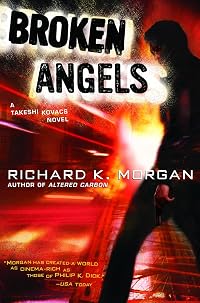
Cynical, quick-on-the-trigger Takeshi Kovacs, the ex-U.N. envoy turned private eye, has changed careers, and bodies, once more . . . trading sleuthing for soldiering as a warrior-for-hire, and helping a far-flung planet's government put down a bloody revolution.But when it comes to taking sides, the only one Kovacs is ever really on is his own. So when a rogue pilot and a sleazy corporate fat cat offer him a lucrative role in a treacherous treasure hunt, he's only too happy to go AWOL with a show more band of resurrected soldiers of fortune. All that stands between them and the ancient alien spacecraft they mean to salvage are a massacred city bathed in deadly radiation, unleashed nanotechnolgy with a million ways to kill, and whatever surprises the highly advanced Martian race may have in store. But armed with his genetically engineered instincts, and his trusty twin Kalashnikovs, Takeshi is ready to take on anything-and let the devil take whoever's left behind. show lessTags
Recommendations
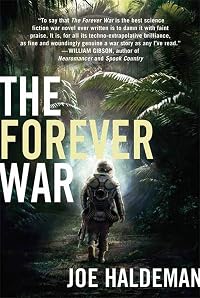
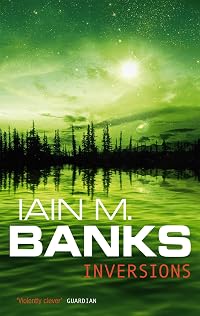
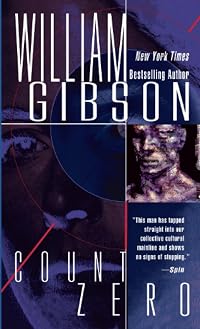
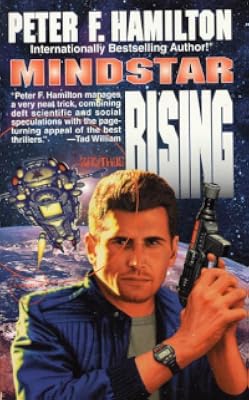

Member Recommendations
Member Reviews
Broken Angels is very similar to Altered Carbon in some ways, and very different in others. It would have been easy, I reckon, to write another novel about Takeshi Kovacs investigating crimes, once again playing with the tropes of the noir genre. Richard Morgan does maintain the gritty, violent tone of Altered Carbon. Even moreso than in Altered Carbon, too, one can tell this isn't just violence for the sake of violence; this isn't just shock value. Rather, Morgan is very much interested in how politics and capital interact to create massive acts of violence, and how people react to the structures that enable violence. And, given the advanced technology of Morgan's future world, how what already happens in our world could get show more even worse. It sounds somewhat clinical and banal when I describe it, but I think it's really well done, and probably the best part of the book.
What I missed from Altered Carbon, though, was the setting and the (sub)genre; putting the story on Earth and making it a mystery let Morgan explore the complexities of how immortality technology and mind transference would impact society on any number of levels. Broken Angels is set on an Earth colony, and is more aligned with the mil sf subgenre (though a particularly antipatriotic strain of it, I would say), and thus we don't get as much of what hooked me in Altered Carbon. I think what Morgan is doing, Morgan does quite well, but it's less to my taste.
Still, in the next book Kovacs will be returning to his home planet, and the little glimpses of it we get throughout Broken Angels are fascinating: a place broken by political philosophy and sectarian violence. I think Morgan can go some good stuff with these ingredients, so I am looking forward to the next book. show less
What I missed from Altered Carbon, though, was the setting and the (sub)genre; putting the story on Earth and making it a mystery let Morgan explore the complexities of how immortality technology and mind transference would impact society on any number of levels. Broken Angels is set on an Earth colony, and is more aligned with the mil sf subgenre (though a particularly antipatriotic strain of it, I would say), and thus we don't get as much of what hooked me in Altered Carbon. I think what Morgan is doing, Morgan does quite well, but it's less to my taste.
Still, in the next book Kovacs will be returning to his home planet, and the little glimpses of it we get throughout Broken Angels are fascinating: a place broken by political philosophy and sectarian violence. I think Morgan can go some good stuff with these ingredients, so I am looking forward to the next book. show less
hard-bitten science fiction. unlike the first Takeshi Kovacs novel, this one is not a futuristic noir with tight prose wound around tech. this second novel is suffused with militaristic war babble. similar to how the first Alien movie was about a routine mining/transport vessel’s journey going horribly awry but the second movie was all about kicking ass.
i still liked the book. a lot. it expanded the Kovacs universe on the intriguing Martian subject but the majority of it was a slick, tech-warrior’s feast with an underlying moralism and insight into violence that just managed to stave off glorifying violence by a hair’s breadth. it was not nearly as rich and deep as the first book. it spent too much time in the middle casting its show more players and not enough world-building. i’m also much, much more interested in the Archaeology Guild than in the military system but the latter is what we got full-bore. it would be fantastic to see a spin-off series that follows the Guild, maybe even Wardani's exploits.
but these are all personal preferences, they neither inform nor mirror the quality of writing: clear, strong, terse, funny, occasionally poignant, always smart, but maybe not eloquent. show less
i still liked the book. a lot. it expanded the Kovacs universe on the intriguing Martian subject but the majority of it was a slick, tech-warrior’s feast with an underlying moralism and insight into violence that just managed to stave off glorifying violence by a hair’s breadth. it was not nearly as rich and deep as the first book. it spent too much time in the middle casting its show more players and not enough world-building. i’m also much, much more interested in the Archaeology Guild than in the military system but the latter is what we got full-bore. it would be fantastic to see a spin-off series that follows the Guild, maybe even Wardani's exploits.
but these are all personal preferences, they neither inform nor mirror the quality of writing: clear, strong, terse, funny, occasionally poignant, always smart, but maybe not eloquent. show less
While Altered Carbon is a noir inspired mystery, Broken Angels is a treasure quest. Takeshi Kovacs, having had his sentence commuted after his success in the first novel, is now making a living as a mercenary on the war torn world of Sanction IV. His Envoy skills make him a valuable asset, and thus he is suited up in an enhanced sleeve—slang term for body, whether organic or artificial—with all sorts of neurological advances (thought controlled weapon interfaces) and biochemical additives (combat ready focus, situational awareness) that make him more lethal than ever. Despite his propensity for killing, we know from Altered Carbon that he's not a heartless monster. He has a code that he lives by, and it's pretty much what keeps him show more from falling into the abyss of soulless killing machine. He's no prig; he knows what he's doing. But even in war, there are lines that shouldn't be crossed.
All the carnage has added an extra layer of world weariness to his cynical mindset, so when he's offered a chance to go AWOL for a huge payout, he jumps at the chance. The prize is an ancient Martian spacecraft, floating in a remote location of the solar system, but only accessible through a teleportation gate. The only person who knows where the gate is and how to open it is archeologist Tanya Wardani, who's currently wasting away in a refugee camp. Envoys are more than elite soldiers; they're also skilled in the social sciences. Wardani has PTSD, and Kovacs has to work with her—primarily in VR as time can be sped up or slowed down as per the situation—to assist in her recovery.
The Martians were barely discussed in the first book. Basically they're the key to interstellar travel, even providing maps to inhabitable worlds in this corner of the galaxy. Much is still unknown about them, but their remnant technological artifacts are priceless. Archaeology has become a multi-billion dollar industry, despite the protests of actual scientists, and corporations fight over access to dig sites, hoping for the next big find that will yield a bonanza.
Mandrake, one of these corporations, is bankrolling this mission and profiting from the war. Matthias Hand is the executive representing Mandrake. He and Kovacs put together a team from a pile of purchased cortical stacks—the constructs which house the backup of everyone's consciousness, built like airplane black boxes—from the salvaged war dead. The recruitment process, which takes place entirely in VR, makes for a great introduction to each of the book's minor characters, and I found each of these interviews intriguing.
The team then heads to the site of the gate so that Wardani can get to work. There are a host of problems: The nearby city of Sauberville has been nuked, and radiation is slowly killing even these engineered sleeves; there's a saboteur in their midst; Hand's rivals have dropped a semi-intelligent lethal nanobot assembly nearby; and the only way out is guarded by Kovacs' former mercenary unit.
There are a couple sex scenes in the book that seemed gratuitous, especially as they didn't do much in the way of character development, but Morgan plants a clue to the identity of the saboteur in each scene that could easily be overlooked. Still, I have to wonder if they could've been handled differently.
The violence is graphic, but essential to the story. Morgan is emphasizing how terrible and dehumanizing war is. Sanction IV has become a corporate testing ground for the latest and greatest in military hardware. Human life is devalued so much that it becomes nothing more than a line item on a corporate balance sheet. Death is a form of slavery as soldiers become indebted to those who upload their stacks into new sleeves—at a price—and sent back to the front. The alternative is eternity in VR limbo. Stack death is the only true death.
Fortunately, the Martian ship proves to be more than just a MacGuffin. In fact, Morgan plays it up like a cross between a haunted house and Egyptian tomb. Morgan also ties it into the book's anti-war theme, but I won't spoil it for you.
All in all, I found Broken Angels to be a highly entertaining and engaging read, full of action, mystery, and the occasional philosophical debate on the nature of life, death, war, and spirituality. show less
All the carnage has added an extra layer of world weariness to his cynical mindset, so when he's offered a chance to go AWOL for a huge payout, he jumps at the chance. The prize is an ancient Martian spacecraft, floating in a remote location of the solar system, but only accessible through a teleportation gate. The only person who knows where the gate is and how to open it is archeologist Tanya Wardani, who's currently wasting away in a refugee camp. Envoys are more than elite soldiers; they're also skilled in the social sciences. Wardani has PTSD, and Kovacs has to work with her—primarily in VR as time can be sped up or slowed down as per the situation—to assist in her recovery.
The Martians were barely discussed in the first book. Basically they're the key to interstellar travel, even providing maps to inhabitable worlds in this corner of the galaxy. Much is still unknown about them, but their remnant technological artifacts are priceless. Archaeology has become a multi-billion dollar industry, despite the protests of actual scientists, and corporations fight over access to dig sites, hoping for the next big find that will yield a bonanza.
Mandrake, one of these corporations, is bankrolling this mission and profiting from the war. Matthias Hand is the executive representing Mandrake. He and Kovacs put together a team from a pile of purchased cortical stacks—the constructs which house the backup of everyone's consciousness, built like airplane black boxes—from the salvaged war dead. The recruitment process, which takes place entirely in VR, makes for a great introduction to each of the book's minor characters, and I found each of these interviews intriguing.
The team then heads to the site of the gate so that Wardani can get to work. There are a host of problems: The nearby city of Sauberville has been nuked, and radiation is slowly killing even these engineered sleeves; there's a saboteur in their midst; Hand's rivals have dropped a semi-intelligent lethal nanobot assembly nearby; and the only way out is guarded by Kovacs' former mercenary unit.
There are a couple sex scenes in the book that seemed gratuitous, especially as they didn't do much in the way of character development, but Morgan plants a clue to the identity of the saboteur in each scene that could easily be overlooked. Still, I have to wonder if they could've been handled differently.
The violence is graphic, but essential to the story. Morgan is emphasizing how terrible and dehumanizing war is. Sanction IV has become a corporate testing ground for the latest and greatest in military hardware. Human life is devalued so much that it becomes nothing more than a line item on a corporate balance sheet. Death is a form of slavery as soldiers become indebted to those who upload their stacks into new sleeves—at a price—and sent back to the front. The alternative is eternity in VR limbo. Stack death is the only true death.
Fortunately, the Martian ship proves to be more than just a MacGuffin. In fact, Morgan plays it up like a cross between a haunted house and Egyptian tomb. Morgan also ties it into the book's anti-war theme, but I won't spoil it for you.
All in all, I found Broken Angels to be a highly entertaining and engaging read, full of action, mystery, and the occasional philosophical debate on the nature of life, death, war, and spirituality. show less
I truly didn't have a clue what I was getting into when I started this second book in the Kovacs trilogy. Altered Carbon was a VERY different beast.
That being said, we pick up with Kovacs thirty years after his reawakening on Earth and he's far down his lonesome path, giving up on private eye stuff and giving up his free will to join a war. An ongoing war that's either economics or ongoing economics by other means, that is. Give him something bloody to bite into and he's happy enough. It certainly doesn't hurt that his particular Envoy training gets him all the best gigs and privileges.
But is this a hard-bitten war novel? It certainly seems to be, with the wrinkle of easy sleeving into new flesh and the bitter by-line of corporations show more versus colonial governments.
But. Add an ancient civilization, the one that we stole the tech that turned us all into immortals, a fantastic find, and then turn it into an exploratory heist novel with enormous opportunities for cross and double-cross, and we've suddenly gone into great hardcore SF territory.
Kovacs is still fantastic and Morgan has a talent turning out complicated and memorable characters up and down the line. I felt sad for each death. And what beautiful deaths they were. This was some harsh territory filled with great mysteries. Kovac's intuition still runs as hot as his hallucinatory madness.
Few hard-SF novels are quite as memorable as this one, but that's more a feature of the characters than anything else. I've read some really amazing epics. Even so, this one is deeply satisfying and a winner on nearly all levels.
It IS NOT anything like a repeat of the first. Get that expectation out of the way and I'm sure everyone's enjoyment will be very high. :) show less
That being said, we pick up with Kovacs thirty years after his reawakening on Earth and he's far down his lonesome path, giving up on private eye stuff and giving up his free will to join a war. An ongoing war that's either economics or ongoing economics by other means, that is. Give him something bloody to bite into and he's happy enough. It certainly doesn't hurt that his particular Envoy training gets him all the best gigs and privileges.
But is this a hard-bitten war novel? It certainly seems to be, with the wrinkle of easy sleeving into new flesh and the bitter by-line of corporations show more versus colonial governments.
But. Add an ancient civilization, the one that we stole the tech that turned us all into immortals, a fantastic find, and then turn it into an exploratory heist novel with enormous opportunities for cross and double-cross, and we've suddenly gone into great hardcore SF territory.
Kovacs is still fantastic and Morgan has a talent turning out complicated and memorable characters up and down the line. I felt sad for each death. And what beautiful deaths they were. This was some harsh territory filled with great mysteries. Kovac's intuition still runs as hot as his hallucinatory madness.
Few hard-SF novels are quite as memorable as this one, but that's more a feature of the characters than anything else. I've read some really amazing epics. Even so, this one is deeply satisfying and a winner on nearly all levels.
It IS NOT anything like a repeat of the first. Get that expectation out of the way and I'm sure everyone's enjoyment will be very high. :) show less
Decades after the events of Altered Carbon, Takeshi Kovacs continues life as a killer for hire. Where he played the role of a detective in Altered Carbon, Kovacs is more of a soldier in this one. While events are mentioned in passing, Broken Angels can be read without Altered Carbon. For those who watched the Netflix show, this book is thankfully nothing like season 2.
War rages on the world of Sanction IV between a corporate backed government and revolutionaries/terrorists, and Kovacs starts off having been almost killed in the fighting. Fellow soldier Schneider talks to him about an archaeological find that would make them wealthy enough to retire from soldiering. Broken Angels leaves behind the noir feel of its predecessor, replacing show more it with suspense, action, and Martians. A bit of horror gets in there too. For fans of the the mystery approach, a small one is on-going through the second half of the book, and completely changed my view of one character when Takeshi confronts the culprit at the end.
Takeshi's cynicism stands out more this time around, likely as a result of the war going on around him. While the tone is darker overall, there is more levity in the banter between Kovacs and his companions. Still, I think the noir of Altered Carbon fit the character better.
The worldbuilding is expanded here, and we learn that some of humanity's advancements come from a lost Martian people. Not a new concept in sci-fi, but putting it in the conflict between corporate fatcats who only see a way to advance their status vs. self-righteous revolutionaries who giggle at the thought of using the alien weapons to kill people was a nice touch.
Overall, I think I preferred Altered Carbon, but Broken Angels was a decent read. show less
War rages on the world of Sanction IV between a corporate backed government and revolutionaries/terrorists, and Kovacs starts off having been almost killed in the fighting. Fellow soldier Schneider talks to him about an archaeological find that would make them wealthy enough to retire from soldiering. Broken Angels leaves behind the noir feel of its predecessor, replacing show more it with suspense, action, and Martians. A bit of horror gets in there too. For fans of the the mystery approach, a small one is on-going through the second half of the book, and completely changed my view of one character when Takeshi confronts the culprit at the end.
Takeshi's cynicism stands out more this time around, likely as a result of the war going on around him. While the tone is darker overall, there is more levity in the banter between Kovacs and his companions. Still, I think the noir of Altered Carbon fit the character better.
The worldbuilding is expanded here, and we learn that some of humanity's advancements come from a lost Martian people. Not a new concept in sci-fi, but putting it in the conflict between corporate fatcats who only see a way to advance their status vs. self-righteous revolutionaries who giggle at the thought of using the alien weapons to kill people was a nice touch.
Overall, I think I preferred Altered Carbon, but Broken Angels was a decent read. show less
The second Takeshi Kovacs book, "Broken Angels", is not a hard-boiled mystery like the first book, but a sci-fi military treasure hunt.
It is still the same wonderfully imagined gritty future. People are stored as data in tiny, nearly indestructible "stacks" embedded in the spine of their natural body. When the body suffers catastrophic organic damage (which happens a lot) a person is "resleeved" into a spanking fresh body.
The side characters, as before, are an amazing array of drug-addled cyborgs, ruthless corporate thugs, and shady associates who's true motives may or may not be concealed in a new sleeve. The war tech is solid and The Soul Market is particularly creepy.
My only disappointment is that we have slightly less show more opportunity to watch Kovacs wreak havoc at the absurd levels of the first book. We already know he is the most badass dude on the planet. He is trained in assassination and undercover regime change, sports physically enhanced sleeves with inhuman reflexes, is grafted with super-heightened intuition, and usually dosed to the gills with a variety of drugs. Following him bludgeon his way through Earth's underworld, Daredevil-style, was one of the great joys of the first book. In "Broken Angels", there is still a fair share of gunplay and beatdowns and the obligatory sexy-time with two different dames, but mostly Kovacs is an introspective observer along for the ride.
Richard Morgan continues to explore the ideas of reality, personality, society, and humanity that could be impacted by person-stored-as-data technology and seems to conclude the world would still be a pretty dark place. In fact, I think Morgan may really be a uniquely disillusioned AI who's knowledge of humans is based mostly on Jim Thompson novels and film adaptations of Phillip K. Dick. I'm cool with that.
I love this universe. I can't wait to read the next Kovacs installment. show less
It is still the same wonderfully imagined gritty future. People are stored as data in tiny, nearly indestructible "stacks" embedded in the spine of their natural body. When the body suffers catastrophic organic damage (which happens a lot) a person is "resleeved" into a spanking fresh body.
The side characters, as before, are an amazing array of drug-addled cyborgs, ruthless corporate thugs, and shady associates who's true motives may or may not be concealed in a new sleeve. The war tech is solid and The Soul Market is particularly creepy.
My only disappointment is that we have slightly less show more opportunity to watch Kovacs wreak havoc at the absurd levels of the first book. We already know he is the most badass dude on the planet. He is trained in assassination and undercover regime change, sports physically enhanced sleeves with inhuman reflexes, is grafted with super-heightened intuition, and usually dosed to the gills with a variety of drugs. Following him bludgeon his way through Earth's underworld, Daredevil-style, was one of the great joys of the first book. In "Broken Angels", there is still a fair share of gunplay and beatdowns and the obligatory sexy-time with two different dames, but mostly Kovacs is an introspective observer along for the ride.
Richard Morgan continues to explore the ideas of reality, personality, society, and humanity that could be impacted by person-stored-as-data technology and seems to conclude the world would still be a pretty dark place. In fact, I think Morgan may really be a uniquely disillusioned AI who's knowledge of humans is based mostly on Jim Thompson novels and film adaptations of Phillip K. Dick. I'm cool with that.
I love this universe. I can't wait to read the next Kovacs installment. show less
This review is also on Woken Furies (#2 and #3 in the Altered Carbon series)
First I read Altered Carbon and was so touched by it that I then read the other two in the series: Broken Angels and Woken Furies.
So during the day I am tooling around the Baltic: Russia, Finland, Sweden, then Germany. I am soaking up all this stuff from the past, most of it brilliant. By night, however, I am soaking up all this stuff from the future, all of it brilliant.
The main protagonist, Takeshi Kovacs, like all good mass murdering heroes, has some moral dilemmas about what he does for a living. The good thing about sci-fi is that it doesn’t get its head stuck up its arse Moral dilemmas are dealt with in a very pragmatic fashion that usually involves show more someone dying, sometimes the wrong person.
This is not the thinking person’s sci-fi, it is more the feeling person’s sci-fi. I am assuming in writing this that you also like sci-fi and have the same snobbish pretensions that I do.
One real stand out thing about this series is that it is racially blurring. Is Takeshi Kovacs black? or sometimes black? and sometimes Asian? or sometimes something else entirely? I ask that because it is not often in any book that the main protagonist is so very undefined that you cannot hang any racial stereotypes on his frame, benevolent or not. It remind me of something that I came across recently that said, “The body is only a garment, address the wearer not the cloak.” To all practical purposes it places the focus more directly on the character themselves and takes away any visualising you may (unconsciously) do to flesh them out. As a device I really liked it. Having said that, all the arseholes were quite clearly defined.
I cannot think of another genre that has to ride so much stigma from so-called “book people” than sci-fi. I recently read The Sense of an Ending by Julian Barnes, it is brilliant. I also read The Martian by Andy Weir it too, is brilliant.
Both are fiction, but one requires reading things like The Guardian or The New York Times and the other takes imagination. No Bookers for guessing which is which.
As an aside, a few years back I set myself the task of reading all the Booker winners. Man, apart from a few gems, most of them are like looking at your grandparents underwear. show less
First I read Altered Carbon and was so touched by it that I then read the other two in the series: Broken Angels and Woken Furies.
So during the day I am tooling around the Baltic: Russia, Finland, Sweden, then Germany. I am soaking up all this stuff from the past, most of it brilliant. By night, however, I am soaking up all this stuff from the future, all of it brilliant.
The main protagonist, Takeshi Kovacs, like all good mass murdering heroes, has some moral dilemmas about what he does for a living. The good thing about sci-fi is that it doesn’t get its head stuck up its arse Moral dilemmas are dealt with in a very pragmatic fashion that usually involves show more someone dying, sometimes the wrong person.
This is not the thinking person’s sci-fi, it is more the feeling person’s sci-fi. I am assuming in writing this that you also like sci-fi and have the same snobbish pretensions that I do.
One real stand out thing about this series is that it is racially blurring. Is Takeshi Kovacs black? or sometimes black? and sometimes Asian? or sometimes something else entirely? I ask that because it is not often in any book that the main protagonist is so very undefined that you cannot hang any racial stereotypes on his frame, benevolent or not. It remind me of something that I came across recently that said, “The body is only a garment, address the wearer not the cloak.” To all practical purposes it places the focus more directly on the character themselves and takes away any visualising you may (unconsciously) do to flesh them out. As a device I really liked it. Having said that, all the arseholes were quite clearly defined.
I cannot think of another genre that has to ride so much stigma from so-called “book people” than sci-fi. I recently read The Sense of an Ending by Julian Barnes, it is brilliant. I also read The Martian by Andy Weir it too, is brilliant.
Both are fiction, but one requires reading things like The Guardian or The New York Times and the other takes imagination. No Bookers for guessing which is which.
As an aside, a few years back I set myself the task of reading all the Booker winners. Man, apart from a few gems, most of them are like looking at your grandparents underwear. show less
Members
- Recently Added By
Lists

Best Science Fiction Novels
816 works; 426 members

Best Cyberpunk
41 works; 7 members

Jean's Sci Fi/Fantasy Reading list
189 works; 12 members

Books Read in 2017
4,249 works; 129 members
Author Information

42+ Works 21,418 Members
Some Editions
Awards and Honors
Notable Lists
Series

Belongs to Publisher Series
Work Relationships
Is contained in
Common Knowledge
- Canonical title
- Broken Angels
- Original title
- Broken Angels
- Original publication date
- 2003-03
- People/Characters
- Takeshi Kovacs
- Important places*
- Fouilles 27, Sanction IV; Landfall, Sanction IV; Dangrek, Sanction IV
- Dedication*
- Celui-ci est pour Virginia Cottinelli, compañera
afìleres, camas, sacapuntas - First words
- I first met Jan Schneider in a Protectorate orbital hospital, three hundred kilometres above the ragged clouds of Sanction IV and in a lot of pain.
- Last words
- (Click to show. Warning: May contain spoilers.)This afterlife shit is overrated.
- Blurbers
- Macleod, Ken; Hamilton, Peter F.; Niven, Larry
- Original language
- English
- Canonical DDC/MDS
- 823.087628
*Some information comes from Common Knowledge in other languages. Click "Edit" for more information.
Classifications
- Genres
- Science Fiction, Fiction and Literature, Mystery
- DDC/MDS
- 823.087628 — Literature & rhetoric English & Old English literatures English fiction By type Genre fiction Adventure fiction Speculative fiction Science fiction Cyberpunk
- LCC
- PR6113 .O748 .B76 — Language and Literature English English Literature 2001-
- BISAC
Statistics
- Members
- 3,476
- Popularity
- 4,786
- Reviews
- 82
- Rating
- (3.84)
- Languages
- 12 — Czech, English, French, German, Hungarian, Italian, Lithuanian, Polish, Portuguese, Spanish, Swedish, Turkish
- Media
- Paper, Audiobook, Ebook
- ISBNs
- 40
- ASINs
- 17