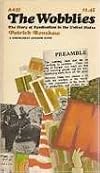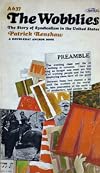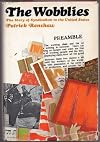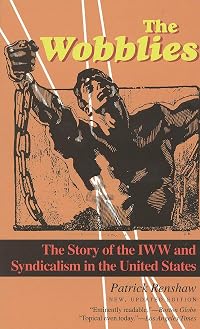
The Wobblies: The Story of the IWW and Syndicalism in the United States
by Patrick Renshaw
On This Page
Description
Does anyone save historians remember the Wobblies? This nickname for the Industrial Workers of the World (IWW), the revolutionary labor union founded in Chicago in 1905, not so long ago was part of the vocabulary of labor and socialist movements everywhere. But few who have heard of the Wobblies know much about their history, aims, or achievements or their impact on American labor. In this new edition of his classic study of the Wobblies, Patrick Renshaw tells the story of how they planned show more to combine the American working class, and eventually wage earners all over the world, into one big labor union with an industrial basis, a syndicalist philosophy, and a revolutionary aim. A careful, balanced work. New York Times Book Review. A lively introduction to a trying and violent period in American industrial history. Journal of American History. The story of American trade unionism is a sorry one dirty and tragic and this is one of the worst chapters. Times Literary Supplement." show lessTags
Recommendations

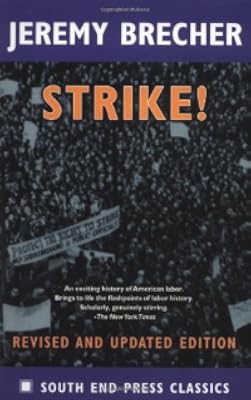
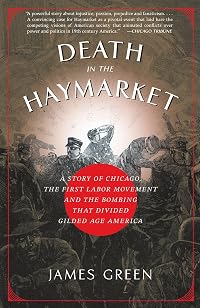
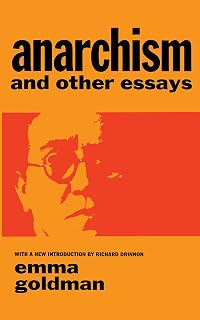

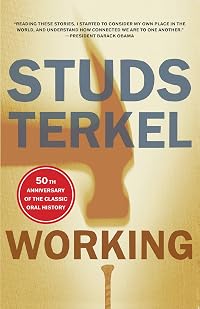








Member Recommendations

pjsullivan Title should be: "Proposed Roads to Freedom: Socialism, Anarchism, and Syndicalism"
Member Reviews
The trouble with unions is disunity, factional infighting, and there is plenty of that in this book. Eventually the syndicalists prevail. What exactly was a syndicalist? It isn’t clear from this book, which could benefit from a glossary of terms. What exactly was an anarcho-syndicalist? What was a Menshevik? The author assumes that you already know these terms. And this book could use a roster of the leading players and where they stood on the divisive issues. Maybe even a chart or graph. Because there are lots of characters in this drama and the beginning reader may have trouble sorting them out. Some interesting ones among them: Mother Jones, Emma Goldman, Lucy Parsons, William Z. Foster, Joe Hill, Eugene Debs, Elizabeth Gurley show more Flynn, Frank Little.
It is a story of struggle for justice and dignity against relentless and brutal persecution. Not a pleasant read, but important. Also a never-ending struggle against internal dissensions and lack of money. The author is sympathetic to the IWW and its aims, but not noticeably biased. Its aims were revolutionary in theory: to unite all workers into one big union, to emancipate them all and put an end to the wage system. Revolutionary, but not violent in theory. As I read this book, I could not help thinking of today’s “Occupy” protesters. There are parallels.
Was the IWW a success or a failure? This book concludes that it left “a mark in the field of civil liberties,” influenced later organizations such as the CIO, and had “an importance which goes beyond its achievements and failures.”
Indexed, with bibliography. Illustrated with archival photos. Recommended to those interested in labor history or early twentieth century American history.
This review based on 1968 paperback edition. show less
It is a story of struggle for justice and dignity against relentless and brutal persecution. Not a pleasant read, but important. Also a never-ending struggle against internal dissensions and lack of money. The author is sympathetic to the IWW and its aims, but not noticeably biased. Its aims were revolutionary in theory: to unite all workers into one big union, to emancipate them all and put an end to the wage system. Revolutionary, but not violent in theory. As I read this book, I could not help thinking of today’s “Occupy” protesters. There are parallels.
Was the IWW a success or a failure? This book concludes that it left “a mark in the field of civil liberties,” influenced later organizations such as the CIO, and had “an importance which goes beyond its achievements and failures.”
Indexed, with bibliography. Illustrated with archival photos. Recommended to those interested in labor history or early twentieth century American history.
This review based on 1968 paperback edition. show less
Reviewed in the March 1968 issue of the Socialist Standard:
http://socialiststandardmyspace.blogspot.com/2010/07/wobblies.html
http://socialiststandardmyspace.blogspot.com/2010/07/wobblies.html
Ratings
Members
- Recently Added By
Author Information
6+ Works 205 Members
Common Knowledge
- Canonical title
- The Wobblies: The Story of the IWW and Syndicalism in the United States
- Original publication date
- 1967; 1968 (slightly corrected paperback edition) (slightly corrected paperback edition)
- People/Characters
- Joe Hill; Frank Little; Elizabeth Gurley Flynn; William E. Trautmann; Mother Jones; Charles Ashleigh (show all 15); Ralph Chaplin; Eugene Debs; Daniel DeLeon; Joseph J. Ettor; Thomas J. Hagery; William J. Haywood; Charles H. Moyer; John Reed; Vincent St. John
- Important places
- Lawrence, Massachusetts, USA; Chicago, Illinois, USA
- Dedication
- To my mother and father,
who now what it means to be rebels. - First words
- INTRODUCTION
Who were the Wobblies?
Classifications
- Genres
- Nonfiction, History, General Nonfiction
- DDC/MDS
- 331.88 — Society, government, & culture Economics Labor economics Labor unions, labor-management bargaining and disputes Labor unions (Trade unions)
- LCC
- HD8055 .I4 .R46 — Social sciences Industries. Land use. Labor Industries. Land use. Labor Labor. Work. Working class By region or country
- BISAC
Statistics
- Members
- 156
- Popularity
- 210,117
- Reviews
- 2
- Rating
- (3.25)
- Languages
- English
- Media
- Paper
- ISBNs
- 1
- ASINs
- 7