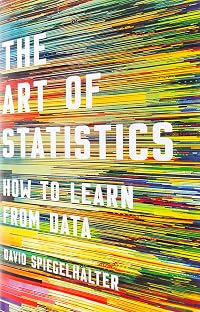
The Art of Statistics: How to Learn from Data
by David Spiegelhalter
On This Page
Description
Shows how to apply statistical reasoning to real-world problems. This isn't simply memorizing formulas or using the tools in a spreadsheet: he emphasizes the importance of clarifying questions, assumptions, and expectations, and--more importantly--knowing how to responsibly interpret the results the software generates.Tags
Recommendations






Member Reviews
After watching Professor Spiegelhalter give a really engaging online lecture for the Royal Statistical Society (which he was president of in 2017-18), I thought it time to give his book a try. He writes very clearly and engagingly, so I definitely recommend it to anyone who is curious about statistics or has to take a course in it but doesn't feel very confident about maths. The only equations are in a glossary at the end; statistical concepts are explained in words with graphs and visualisations to assist. I used to teach introductory statistics (which had been rebranded as 'analytics') to students and would definitely have put this book on the reading list had it been available. I now work as a statistician, so the concepts were not show more new to me. In fact, I use most of them daily. For me the enjoyment was in the wide range of examples Spiegelhalter uses to illustrate his explanations.
Many such are concerned with health, including statistical analysis of Howard Shipman, a GP who became Britain's most prolific serial killer. The first chapter deftly shows how statistical tests could be used to demonstrate how unlikely it was that the number of death certificates Shipman signed was due to chance alone. It also notes that when the same test is applied across a dataset of all GPs, it immediately identified another one that was signing even more. The latter GP, by contrast, worked in an location with a high proportion of elderly people and was compassionately enabling them to remain at home until the end of their lives, rather than dying in hospital. A key lesson from the book is that data analysis requires contextual information to be meaningful and useful.
I particularly appreciated how well Spiegelhalter explained Bayesian methods, which I'm familiar with in theory but have never applied in practise. (I can only remember how methods work if I've actually used them for something.) My favourite chapter explained how Bayes theorem is employed in court cases and in estimating the likelihood that Richard III's skeleton had been unearthed. This chapter also covers how exit polls for UK General Elections are conducted, which is of particular interest less than two weeks after the last one. The 2024 exit poll correctly predicted a Labour landslide.
The last two chapters are titled 'how things go wrong' and 'how we can do statistics better'. Both are very sensible and measured. This quote elegantly encapsulates a sentiment that I periodically experience at work:
Statistics is important and extremely useful. Take it from someone who did not do maths A-level and said at the time, "I'd rather stick pins in my eyes". Even if you're not keen on maths, you might end up fascinated by applied statistics in the social sciences like I did! Spiegelhalter is brilliant at communicating how they work and why they matter. show less
Many such are concerned with health, including statistical analysis of Howard Shipman, a GP who became Britain's most prolific serial killer. The first chapter deftly shows how statistical tests could be used to demonstrate how unlikely it was that the number of death certificates Shipman signed was due to chance alone. It also notes that when the same test is applied across a dataset of all GPs, it immediately identified another one that was signing even more. The latter GP, by contrast, worked in an location with a high proportion of elderly people and was compassionately enabling them to remain at home until the end of their lives, rather than dying in hospital. A key lesson from the book is that data analysis requires contextual information to be meaningful and useful.
I particularly appreciated how well Spiegelhalter explained Bayesian methods, which I'm familiar with in theory but have never applied in practise. (I can only remember how methods work if I've actually used them for something.) My favourite chapter explained how Bayes theorem is employed in court cases and in estimating the likelihood that Richard III's skeleton had been unearthed. This chapter also covers how exit polls for UK General Elections are conducted, which is of particular interest less than two weeks after the last one. The 2024 exit poll correctly predicted a Labour landslide.
The last two chapters are titled 'how things go wrong' and 'how we can do statistics better'. Both are very sensible and measured. This quote elegantly encapsulates a sentiment that I periodically experience at work:
As Ronald Fisher famously put it, 'To consult the statistician after an experiment is finished is often merely to ask him to consult a post mortem examination. He can perhaps say what the experiment died of.'
Statistics is important and extremely useful. Take it from someone who did not do maths A-level and said at the time, "I'd rather stick pins in my eyes". Even if you're not keen on maths, you might end up fascinated by applied statistics in the social sciences like I did! Spiegelhalter is brilliant at communicating how they work and why they matter. show less
An excellent book. I wish it had been written when I was a student of Economics. Instead of just giving statistical formulae, it explains the background to using them. It brings it to life with copious real world examples, many of which the author had been involved. In particular, the enquiries into Harold Shipman and child heart deaths at Bristol Royal infirmary. He exposes the fallacies behind popular newspaper scare stories, such as cancer risks. He makes the subject matter amusing as well as fascinating, and never in an intimidating way. It's also interesting to know the characters behind the different methods, such as Fisher (confidence levels); Neyman and Pearson (type 1 and 2 errors); and Bayes(inverse probability). The author show more admits favouring the last. This book should be on the reading list of every student, journalist and politician. At a time of Covid, never has it been more important to understand the bases of the many statistics debated. show less
After being disappointed by a couple of other statistics books for general audiences (Stigler's Seven Pillars of Statistical Wisdom and Abelson's Statistics as Principled Argument), I finally found what I was looking for. The first few chapters were a bit on the simple side but certainly entertaining enough to keep my interest up. For me the real rewards were in the later parts of the book where the author discusses slightly more advanced topics such as P-values, confidence intervals and Bayesian inference. I had briefly acquainted myself with these topics in my university studies but did not really understand their meaning back then. Without going into their mathematics, the author provides a nice overview of what these statistical show more concepts mean and what they don't mean. This somewhat philosophical review of practical statistical methods should be very useful for anyone who wants to be able to judge statistical conclusions critically. In the final chapters of the book the author also discusses how scientists sometimes misuse statistical methods, how such misuse can be detected and how newspapers and their readers should understand new scientific results when they are expressed in terms of statistics. All of which is very interesting, so I recommend this book. show less
A very nice accessible book on statistics and their application to real world problems. I feel this sort of material should be part of every persons schooling, especially at this more general level.
Not all the subjects are explained with the same quality of examples but overall it is the first book i read where the bridge between the theory and its application comes to life.
Not all the subjects are explained with the same quality of examples but overall it is the first book i read where the bridge between the theory and its application comes to life.
Does a pretty good job breaking this complex subject down for a lay reader. I’m sure there were parts where he oversimplified, and I know there were parts where it was still a bit too complex for me to really grasp (without going back and re-reading entire chapters, which I didn’t do). But I think it finds a pretty happy medium, and I definitely came away from it with a better understanding of how to take all the statistics that come at us these days, as well as some more guidance for the statistics I want to work with professionally.
A fantastic introduction to statistics and powerful argument for what statistics can, and cannot, offer.
Absolutely fabulous book. Brings clarity of understanding to a huge raft of statistics. I particularly enjoyed the discussions of Radar Operating Characteristic ROC curves, the stochastic for detecting Harold Shipman's outlying rate of signing death certificates as early as possible, the idea of Brier sores for forecasting quality, the use of power to determine sample size in hypothesis testing, and the use of likelihood ratios in court cases. Given that the author describes himself as an advocate of the Bayesian approach to interpreting evidence, I felt more could be said about this. Nevertheless, a an excellent book, which everyone should read to better their understanding of the world around them!
Members
- Recently Added By
Lists

Books Read in 2022
5,226 works; 115 members

Finished in 2024
19 works; 1 member
Author Information

David Spiegelhalter is a statistician and chair of the Winton Centre for Risk and Evidence Communication in the Statistical Laboratory at the University of Cambridge. He has served as the president of the Royal Statistical Society and has been knighted for his services to statistics. He lives in Cambridge, UK.
Awards and Honors
Distinctions
Series
Belongs to Publisher Series
Common Knowledge
- Canonical title*
- L'arte della statistica: cosa ci insegnano i dati
- Original title
- The Art of Statistics: How to Learn from Data
- Original publication date
- 2019-03-29; 2019-09 (First US edition) (First US edition)
- Epigraph
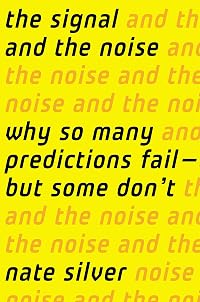
- The numbers have no way of speaking for themselves. We speak for them. We imbue them with meaning. — Nate Silver, The Signal and the Noise
- Dedication
- To statisticians everywhere, with their endearing traits of pedantry, generosity, integrity, and desire to use data in the best way possible
- First words
- Harold Shipman was Britain's most prolific convicted murderer, though he does not fit the archetypal profile of a serial killer.
- Publisher's editor
- Birdsell, Jane
- Blurbers
- Harford, Tim; Page, Scott; Hand, David J.; Bishop, Dorothy; Blastland, Michael
*Some information comes from Common Knowledge in other languages. Click "Edit" for more information.
Classifications
Statistics
- Members
- 788
- Popularity
- 35,460
- Reviews
- 9
- Rating
- (3.94)
- Languages
- English, German, Italian
- Media
- Paper, Audiobook, Ebook
- ISBNs
- 10
- ASINs
- 6