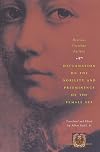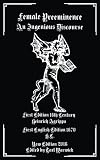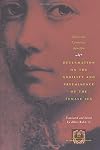
Declamation on the Nobility and Preeminence of the Female Sex
by Henricus Cornelius Agrippa
On This Page
Description
Originally published in 1529, the Declamation on the Preeminence and Nobility of the Female Sex argues that women are more than equal to men in all things that really matter, including the public spheres from which they had long been excluded. Rather than directly refuting prevailing wisdom, Agrippa uses women's superiority as a rhetorical device and overturns the misogynistic interpretations of the female body in Greek medicine, in the Bible, in Roman and canon law, in theology and moral show more philosophy, and in politics. He raised the question of why women were excluded and provided answers based not on sex but on social conditioning, education, and the prejudices of their more powerful oppressors. His declamation, disseminated through the printing press, illustrated the power of that new medium, soon to be used to generate a larger reformation of religion. show lessTags
Recommendations










































Member Reviews
The quarantine has me reading weird stuff recommended by Tumblr like this 1529 treatise on the moral and theological superiority of women. Agrippa wrote this for his patroness Margaret of Austria. Agrippa’s basic thesis is that not only are women amazing, but they are in fact better than men, and here’s why. He has the receipts, folks. Sure they include some very atypical interpretations of both the Bible and Classical Literature, but that’s not about to stop our friend Heinrich.
Enjoy a few of his reasons with me (and I’m only lightly paraphrasing here):
Women are better swimmers
Eve was the last of God’s creations. God had to stop with her, because He had hit perfection with Woman and could go no further.
Women are just SO show more PRETTY, therefore they are full of divine glory.
Men tend to grow bald in old age, and women don’t. A clear mark of female superiority.
Women are clean and men are gross. Just look at the water after each takes a bath. Ew.
Christ took the form of a man because Man is more humble, Woman is more noble.
Every heresy you ever heard of? A man thought it up. Check mate.
There are many stories in the Bible of women who lie, cheat, and even murder, yet are praised for their actions. Conclusion: The wickedness of women is held in higher esteem than the good deeds of men.
It is mothers and nurses who teach their children to speak.
Lawmakers are wicked for keeping women from preaching, as they clearly did in the Bible.
Beyond these and other wonderful reasons for female superiority, Agrippa drops a couple of truth bombs. After listing a series of women poets from antiquity he writes, “yea, except it had been forbidden women to learn letters in these days, even now, as yet might be had women of most famous learning, more excellent in wit than men.” Indeed. How many wonderful books is the world missing because women were not given the right to learn to read and write?
So if you are bored and would like to read something that is in no way typical of its time period, then you could do worse than Heinrich Cornelius Agrippa and his overwhelming love for women.
https://quod.lib.umich.edu/e/eebo/A75977.0001.001?view=toc show less
Enjoy a few of his reasons with me (and I’m only lightly paraphrasing here):
Women are better swimmers
Eve was the last of God’s creations. God had to stop with her, because He had hit perfection with Woman and could go no further.
Women are just SO show more PRETTY, therefore they are full of divine glory.
Men tend to grow bald in old age, and women don’t. A clear mark of female superiority.
Women are clean and men are gross. Just look at the water after each takes a bath. Ew.
Christ took the form of a man because Man is more humble, Woman is more noble.
Every heresy you ever heard of? A man thought it up. Check mate.
There are many stories in the Bible of women who lie, cheat, and even murder, yet are praised for their actions. Conclusion: The wickedness of women is held in higher esteem than the good deeds of men.
It is mothers and nurses who teach their children to speak.
Lawmakers are wicked for keeping women from preaching, as they clearly did in the Bible.
Beyond these and other wonderful reasons for female superiority, Agrippa drops a couple of truth bombs. After listing a series of women poets from antiquity he writes, “yea, except it had been forbidden women to learn letters in these days, even now, as yet might be had women of most famous learning, more excellent in wit than men.” Indeed. How many wonderful books is the world missing because women were not given the right to learn to read and write?
So if you are bored and would like to read something that is in no way typical of its time period, then you could do worse than Heinrich Cornelius Agrippa and his overwhelming love for women.
https://quod.lib.umich.edu/e/eebo/A75977.0001.001?view=toc show less
I heavily suggest reading this book alongside Poel, Marc van der. Cornelius Agrippa, the Humanist Theologian and His Declamations / by Marc van Der Poel. Leiden [etc: Brill, 1997.
Agrippa, disciple of Trithemius was a rare defender of the female sex in these days, so all his arguments need to be put in socio-historical context.
His own wife perished in the black death plague, as he was desperately attempting to find a cure to this illness as a renown plague-doctor, and with the help of his assistant, supposedly - he found one, yet this is shrouded in legend.
Agrippa, disciple of Trithemius was a rare defender of the female sex in these days, so all his arguments need to be put in socio-historical context.
His own wife perished in the black death plague, as he was desperately attempting to find a cure to this illness as a renown plague-doctor, and with the help of his assistant, supposedly - he found one, yet this is shrouded in legend.
I heavily suggest reading this book alongside Poel, Marc van der. Cornelius Agrippa, the Humanist Theologian and His Declamations / by Marc van Der Poel. Leiden [etc: Brill, 1997.
Agrippa, disciple of Trithemius was a rare defender of the female sex in these days, so all his arguments need to be put in socio-historical context.
His own wife perished in the black death plague, as he was desperately attempting to find a cure to this illness as a renown plague-doctor, and with the help of his assistant, supposedly - he found one, yet this is shrouded in legend.
Agrippa, disciple of Trithemius was a rare defender of the female sex in these days, so all his arguments need to be put in socio-historical context.
His own wife perished in the black death plague, as he was desperately attempting to find a cure to this illness as a renown plague-doctor, and with the help of his assistant, supposedly - he found one, yet this is shrouded in legend.
DE LA NOBLEZA Y PREEXCELENCIA DEL SEXO FEMENINO
INTRODUCCIÓN
Heinrich Cornelio Agrippa von Nettesheim nació en Colonia
el 14 de septiembre de 1486. Su padre, Heinrich von Nettesheim,
fue un modesto ciudadano de Colonia del que apenas hay
noticias, aunque en 1526 el propio Agrippa reclamó el carácter noble
de su familia, y sus primeros biógrafos afirmaron que el
epíteto "von" indicaba su origen patricio o caballeresco.
Los primeros datos fehacientes sobre Agrippa nos remontan
al año 1501: tras finalizar sus pretendidos estudios de medicina
y leyes en Colonia, con sus escasos quince años, nuestro hombre
está enrolado en las tropas de Maximiliano I en calidad de
estratega militar, servicio que se prolongaría hasta el año 1506.
Fue en ese show more mismo año cuando Agrippa, abandonando su tierra
natal dirigió sus pasos hacia París, para establecer contacto con
una sociedad' presidida por Faber Stapulensis, sobrenombre...
1. La naturaleza secreta de esta sociedad es ambigua. Parece que el mismo Agrippa
fundó una sociedad secreta, la Sodalitium, entregada a estudios alquímcos, sociedad
que algunos han confundido con el círculo de Léfevre. En cualquier caso, y al margen
de esta sociedad secreta, los contactos de Agrippa con el entorno editorial de
Léfevre en París es indudable. Sobre las sociedades secretas en la época que nos
ocupa es interesante la tesis sostenida por F. Yates en La filosofia oculia en la época show less
INTRODUCCIÓN
Heinrich Cornelio Agrippa von Nettesheim nació en Colonia
el 14 de septiembre de 1486. Su padre, Heinrich von Nettesheim,
fue un modesto ciudadano de Colonia del que apenas hay
noticias, aunque en 1526 el propio Agrippa reclamó el carácter noble
de su familia, y sus primeros biógrafos afirmaron que el
epíteto "von" indicaba su origen patricio o caballeresco.
Los primeros datos fehacientes sobre Agrippa nos remontan
al año 1501: tras finalizar sus pretendidos estudios de medicina
y leyes en Colonia, con sus escasos quince años, nuestro hombre
está enrolado en las tropas de Maximiliano I en calidad de
estratega militar, servicio que se prolongaría hasta el año 1506.
Fue en ese show more mismo año cuando Agrippa, abandonando su tierra
natal dirigió sus pasos hacia París, para establecer contacto con
una sociedad' presidida por Faber Stapulensis, sobrenombre...
1. La naturaleza secreta de esta sociedad es ambigua. Parece que el mismo Agrippa
fundó una sociedad secreta, la Sodalitium, entregada a estudios alquímcos, sociedad
que algunos han confundido con el círculo de Léfevre. En cualquier caso, y al margen
de esta sociedad secreta, los contactos de Agrippa con el entorno editorial de
Léfevre en París es indudable. Sobre las sociedades secretas en la época que nos
ocupa es interesante la tesis sostenida por F. Yates en La filosofia oculia en la época show less
Mar 25, 2018Spanish
Ratings
Members
- Recently Added By
Author Information

Born in Cologne, Germany, Henry Cornelius Agrippa of Nettesheim lived a life that combined action and adventure with scholarly pursuits. His early career was spent as a secretary and diplomat for the Holy Roman Emperor. Missions to Paris and London brought him into contact with new intellectual movements, and he immersed himself in the study of show more philosophy and theology. He learned Hebrew in order to read the Jewish cabalistic literature. His first great written work, The Occult Philosophy (De occulta philosophia), completed 1509-10 is a compendium offering a mystical interpretation of nature through such arcane methods as cabalistic manipulation of Hebrew words and Pythagorean numerology. It quickly established itself as a major handbook of Renaissance magic and deeply influenced such thinkers as Giordano Bruno. In the years following the writing of De occulta philosophia, Agrippa served as a soldier, lawyer, physician, and theologian. A virulent critic of the clergy and of scholastic theology, he engaged in bitter exchanges with theologically conservative opponents over his religious attitudes. Agrippa's own position lay between the intellectual reformism of Erasmus and the outright break with Catholicism represented by Martin Luther. However, Agrippa later moved away from his early confidence in the magical and mystical methods to an unquestioning biblical faith. Agrippa's most important later work Of the Vanitie and uncertaintie of artes and sciences (De incertitudine et vanitate scientiarum et artium) was published at Antwerp in 1530. In the work, Agrippa advocates a thoroughgoing rejection of learning and intellectual attainment in favor of a simple religious piety. That belief came to play an important role in the Renaissance revival of the skeptical tradition of antiquity. Shortly after the appearance of De incertitudine, Agrippa was imprisoned for heresy and died in exile in Grenoble, France. (Bowker Author Biography) show less
Some Editions
Series
Belongs to Publisher Series
Common Knowledge
- Canonical title
- Declamation on the Nobility and Preeminence of the Female Sex
- Original title
- Declamatio de nobilitate et praecellentia foeminei sexus
- Original publication date
- 1529
- Dedication
- To feminist colleagues of many years
whose strengths and courage in many contexts I have witnessed
and whose accomplishments I have admired.
Especially the following:
Patricia Barnes-McConnell
Minna Barr... (show all)ett
Anne Barstow
Eileen Bender
Sidney Bremer
Alice Carse (1932–91)
Elizbeth Clark
Christine Downing
Janet Ray Edwards
Selby Hickey
Margaret L. King
Billie Maguire
Lauren Randel
Naomi Rosenthal
Merrill Skaggs
Rhea Whitehead - First words
- In western Europe and the United States women are nearing equality in the professions, in business, and in politics.
--Editors' Introduction to the series - Last words
- (Click to show. Warning: May contain spoilers.)And now, lest this work turn into a huge book, let this be the end of it.
- Publisher's editor
- King, Margaret L.; Rabil Jr., Albert
- Original language
- Latin
Classifications
- Genres
- Nonfiction, Sexuality and Gender Studies, Philosophy, General Nonfiction, Religion & Spirituality, History
- DDC/MDS
- 305.4 — Society, government, & culture Social sciences, sociology & anthropology Social group - Age, Gender, Ethnicity Women
- LCC
- HQ1201 .A3213 — Social sciences The family. Marriage, Women and Sexuality The Family. Marriage. Women Women. Feminism
- BISAC
Statistics
- Members
- 71
- Popularity
- 443,787
- Reviews
- 4
- Rating
- (3.92)
- Languages
- English, German, Spanish
- Media
- Paper, Ebook
- ISBNs
- 9
- ASINs
- 1