On This Page
Description
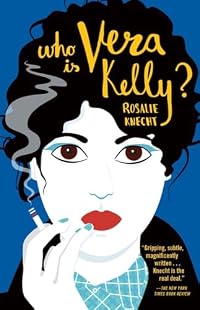
"New York City, 1962. Vera Kelly is struggling to make rent and blend into the underground gay scene in Greenwich Village. She's working night shifts at a radio station when her quick wits, sharp tongue, and technical skills get her noticed by a recruiter for the CIA. Next thing she knows she's in Argentina, tasked with wiretapping a congressman and infiltrating a group of student activists in Buenos Aires. As Vera becomes more and more enmeshed with the young radicals, the fragile local show more government begins to split at the seams. When a betrayal leaves her stranded in the wake of a coup, Vera learns the Cold War makes for strange and unexpected bedfellows, and she's forced to take extreme measures to save herself. An exhilarating page turner and perceptive coming-of-age story, Who Is Vera Kelly? is a novel that introduces an original, wry and whip-smart female spy for the twenty-first century"-- show lessTags
Recommendations

















Member Reviews
I slid straight into "Who Is Vera Kelly?", carried along not by the pace of the plot, which is not the usual you-have-twenty-four-hours- to-save-the-world spy thriller pace but by the nuanced but unpretentious prose and by the clear, calm way in which Vera describes herself and her situation.
We meet two Veras in the book - the 1957 not-quite-eighteen Vera, in emotional distress and heading towards juvie and 1966 twenty-six going on twenty-seven Vera who works for the CIA undercover in Argentina collecting covert surveillance material on politicians and dissidents.
I liked the fact that neither Vera discusses the other. Both are fully occupied by their present. There is no clumsy forboding or regretful reminiscence, just life as it show more happens.
What links the two Veras is a deep awareness of their isolation and their inability to live an authentic life without running the risk of being punished for their sexual orientation.
I enjoyed anticipating the slow reveal that would let me see how the 1957 Vera, in love with her best friend, in conflict with her mother and locked away by the authorities became 1966 Vera, working for a CIA that has a policy of not knowingly employing gay people because of the risk of blackmail.
Vera's narrative about her teenage life has the stunned quiet of shock and dislocation about it that comes from being a teenager dealing with emotions that are larger than you are, when you have no experience to guide you and no power to protect yourself.
One of my favourite passages in the book is seventeen-year-old Vera's description of how she feels about Joanne, the girl she loves, in which she recognises her own inability to look at herself and her emotions directly or set them in context but in which she is able to express their power:
"When I thought of Joanne I could do never do better than a kind of wounded evasion of my romantic feelings for her.
I pretended that I was like one of the great ladies of the nineteenth century who sent each other genteel letters when they were apart about how desperately they missed each other. When we read those letters in history classes, or came across that kind of talk in books, our teachers would explain that what read like passion was just the natural affinity of women for each other andthere was nothing out of the way about it at all.
Joanne had been my favourite person in the world and when she hugged me and her face pressed against my neck I felt a fizzing, nauseous thrill from the pit of my stomach to the bones of my feet. That was all I knew about it and all I could have told anyone if anyone had asked."
Vera's narrative about her time undercover in Buenos Aires is tense in a way that speaks to fear long lived with rather than an adrenalin rush. She habitually and skillfully hides who she is. She is alone, reaching for detachment and finding first panic and then determination and courage. The tension is handled in a low-key way that builds pressure at an inexorable pace that feels like a slow-motion car-crash in which Vera is in the passenger seat.
One of the things I found most engaging about Vera is how clearly she expresses what she sees. Her interior dialogue is nuanced and rich. Here's an example of her reaction to something as she walks through the pre-dawn streets of Buenos Aires as a coupe d'êtat takes place:
"I passed a nightclub with the doors propped open, young people streaming out into the street. I was startled by the intrusion of raucous nighttime into this quiet dawn moment."
As things got worse in Buenos Aires I kept asking myself why Vera had chosen to put herself at risk by going under-cover in a foreign land. I could see no driving idealism or fervent patriotism or even thrill-seeking to explain the choice. As the story unfolded and I started to get an answer to the question, "Who Is Vera Kelly?" I began to understand that Vera's situation in Buenos Aires is only an amplification of her life in the US. Vera has been living under-cover her whole life. It seemed to me that her situation also gave Vera a legitimate reason for watching and manipulating people while remaining distant and hiding who she is.
This feeling was reinforced when Vera finally talks about her relationship with her first-love, Joanne. She Says:
"Joanne was the last person who could look at me and see me looking back. Who could put out her hand and find me there. I wouldn't let it be so easy again."
"Who Is Vera Kelly?" is an accessible, easy-to-read book but that doesn't mean it's a simple one. Part of my pleasure in reading the book came from the way in which the novel uses the spy genre to demonstrate what it's like to live in an environment so hostile to your sexual orientation that you dare not admit to being who you are and the consequential stress, isolation and blurring of identity.
I listened to the audiobook edition, which is narrated with great skill by Elisabeth Rodgers, You can hear a sample of her narration of "Who Is Vera Kelly?" by clicking on the SoundCloud link below.
[soundcloud url="https://api.soundcloud.com/tracks/458792880" params="color=#ff5500&auto_play=false&hide_related=false&show_comments=true&show_user=true&show_reposts=false&show_teaser=true&visual=true" width="100%" height="300" iframe="true" /] show less
We meet two Veras in the book - the 1957 not-quite-eighteen Vera, in emotional distress and heading towards juvie and 1966 twenty-six going on twenty-seven Vera who works for the CIA undercover in Argentina collecting covert surveillance material on politicians and dissidents.
I liked the fact that neither Vera discusses the other. Both are fully occupied by their present. There is no clumsy forboding or regretful reminiscence, just life as it show more happens.
What links the two Veras is a deep awareness of their isolation and their inability to live an authentic life without running the risk of being punished for their sexual orientation.
I enjoyed anticipating the slow reveal that would let me see how the 1957 Vera, in love with her best friend, in conflict with her mother and locked away by the authorities became 1966 Vera, working for a CIA that has a policy of not knowingly employing gay people because of the risk of blackmail.
Vera's narrative about her teenage life has the stunned quiet of shock and dislocation about it that comes from being a teenager dealing with emotions that are larger than you are, when you have no experience to guide you and no power to protect yourself.
One of my favourite passages in the book is seventeen-year-old Vera's description of how she feels about Joanne, the girl she loves, in which she recognises her own inability to look at herself and her emotions directly or set them in context but in which she is able to express their power:
"When I thought of Joanne I could do never do better than a kind of wounded evasion of my romantic feelings for her.
I pretended that I was like one of the great ladies of the nineteenth century who sent each other genteel letters when they were apart about how desperately they missed each other. When we read those letters in history classes, or came across that kind of talk in books, our teachers would explain that what read like passion was just the natural affinity of women for each other andthere was nothing out of the way about it at all.
Joanne had been my favourite person in the world and when she hugged me and her face pressed against my neck I felt a fizzing, nauseous thrill from the pit of my stomach to the bones of my feet. That was all I knew about it and all I could have told anyone if anyone had asked."
Vera's narrative about her time undercover in Buenos Aires is tense in a way that speaks to fear long lived with rather than an adrenalin rush. She habitually and skillfully hides who she is. She is alone, reaching for detachment and finding first panic and then determination and courage. The tension is handled in a low-key way that builds pressure at an inexorable pace that feels like a slow-motion car-crash in which Vera is in the passenger seat.
One of the things I found most engaging about Vera is how clearly she expresses what she sees. Her interior dialogue is nuanced and rich. Here's an example of her reaction to something as she walks through the pre-dawn streets of Buenos Aires as a coupe d'êtat takes place:
"I passed a nightclub with the doors propped open, young people streaming out into the street. I was startled by the intrusion of raucous nighttime into this quiet dawn moment."
As things got worse in Buenos Aires I kept asking myself why Vera had chosen to put herself at risk by going under-cover in a foreign land. I could see no driving idealism or fervent patriotism or even thrill-seeking to explain the choice. As the story unfolded and I started to get an answer to the question, "Who Is Vera Kelly?" I began to understand that Vera's situation in Buenos Aires is only an amplification of her life in the US. Vera has been living under-cover her whole life. It seemed to me that her situation also gave Vera a legitimate reason for watching and manipulating people while remaining distant and hiding who she is.
This feeling was reinforced when Vera finally talks about her relationship with her first-love, Joanne. She Says:
"Joanne was the last person who could look at me and see me looking back. Who could put out her hand and find me there. I wouldn't let it be so easy again."
"Who Is Vera Kelly?" is an accessible, easy-to-read book but that doesn't mean it's a simple one. Part of my pleasure in reading the book came from the way in which the novel uses the spy genre to demonstrate what it's like to live in an environment so hostile to your sexual orientation that you dare not admit to being who you are and the consequential stress, isolation and blurring of identity.
I listened to the audiobook edition, which is narrated with great skill by Elisabeth Rodgers, You can hear a sample of her narration of "Who Is Vera Kelly?" by clicking on the SoundCloud link below.
[soundcloud url="https://api.soundcloud.com/tracks/458792880" params="color=#ff5500&auto_play=false&hide_related=false&show_comments=true&show_user=true&show_reposts=false&show_teaser=true&visual=true" width="100%" height="300" iframe="true" /] show less
After a turbulent youth, the break-up with her mom, some time in a detention centre and no plan what to do with her life, Vera ends up in New York, trying this job and that job. One day, she is addressed by a man who noticed her quick wits and technical understanding. He is a recruiter for the CIA and thus, a couple of years later, Vera finds herself in Buenos Aires with the fake ID of a Canadian student named Anne. Her mission: spy on a group of students who the CIA believes to work for the KGB in order to ally Argentina with the Soviet Union. Vera/Anne makes befriends Ramón and Victoria who have radicalised and are disappointed by how the country is governed. Yet, then suddenly, the military ventures a coup d’état and General show more Onganía’s men take over. Vera/Anne is stuck, foreigners are not allowed to travel anymore, her local contact betrayed her and she gets the runaround by her superior within the CIA. Either she acts for herself, or she is lost.
“Who Is Vera Kelly?” is not an easy to classify novel. It is a kind of bildungsroman, we get to know young Vera who protests against her mother and school and has to grow up the hard way. A young woman who is looking for her place in life and oscillates between different options without a clear aim. On the other hand, the novel is a political or spy crime novel since we have Vera/Anne prying on rebellious students to uncover any KGB involvement in Argentina and also the time after the Revolución which brings the military dictatorship and severe restrictions for the people.
At both times of her life, Vera is lonely, her affection for her school friend is not returned and also when she arrives in New York does she not find a person to really bond with. This qualifies for a lone spy job abroad where she is left to her own devices and cannot really build deep friendships. The experiences she made as a teenager, especially with her mother who kicked her out into the detention centre and did not show any interest in her, gave her quite a good education for her mission.
Vera is not a classic heroine, she is no James Bond and does not compare to any other dazzling movie character. She is actually the perfect spy, she blends in smoothly, goes unnoticed and her technical skills allow her even without any sophisticated equipment to get the information she needs. When she finds herself deserted of all contacts and help, she is close to breaking down but then shows her real strength. She just goes on and finds a solution to escape.
A perfect blend of a young woman who is far ahead of her time in terms of emancipation and going her own way and a world in political turmoil. The plot becomes increasingly suspenseful and thus is a real page-turner. show less
“Who Is Vera Kelly?” is not an easy to classify novel. It is a kind of bildungsroman, we get to know young Vera who protests against her mother and school and has to grow up the hard way. A young woman who is looking for her place in life and oscillates between different options without a clear aim. On the other hand, the novel is a political or spy crime novel since we have Vera/Anne prying on rebellious students to uncover any KGB involvement in Argentina and also the time after the Revolución which brings the military dictatorship and severe restrictions for the people.
At both times of her life, Vera is lonely, her affection for her school friend is not returned and also when she arrives in New York does she not find a person to really bond with. This qualifies for a lone spy job abroad where she is left to her own devices and cannot really build deep friendships. The experiences she made as a teenager, especially with her mother who kicked her out into the detention centre and did not show any interest in her, gave her quite a good education for her mission.
Vera is not a classic heroine, she is no James Bond and does not compare to any other dazzling movie character. She is actually the perfect spy, she blends in smoothly, goes unnoticed and her technical skills allow her even without any sophisticated equipment to get the information she needs. When she finds herself deserted of all contacts and help, she is close to breaking down but then shows her real strength. She just goes on and finds a solution to escape.
A perfect blend of a young woman who is far ahead of her time in terms of emancipation and going her own way and a world in political turmoil. The plot becomes increasingly suspenseful and thus is a real page-turner. show less
'Who is Vera Kelly' was a quick, fun, energetic read. It follows a young woman recruited by the CIA and sent to Argentina in 1966 to monitor the unstable political situation. The narrative cuts between her mission and flashbacks to her past. The flashback chapters are shorter so as not to undermine the pace of espionage-related events. Vera is an excellent protagonist: independent and smart, but also inexperienced and slightly out of her depth. She navigates danger using her wits and technical expertise rather than violence. There are no James-Bond-licensed-to-kill shenanigans here, nor are things nearly as grim as in le Carré's spy novels. I enjoyed the vivid sense of place while Vera stayed in Buenos Aires and appreciated her show more ingenuity. There was tension without overwhelming peril, which made for a pleasantly escapist reading experience. It's also notable that Vera's queerness was a well-developed part of her character without defining her. I would have liked to see her personal political views explored in a little more depth: she treats the CIA's infiltration tasks as just a job and seems to take the global Soviet threat at face value. On the other hand, the political situation as she observes it in Buenos Aires is shown well, via student activism and monitoring of prominent figures. I also liked the twist at the end that the students were planning a protest against UK occupation of the Falklands! The farcical anticlimax of that worked rather well. If you want a book to relax with at the weekend, this is a good choice. show less
2 1/2 stars, rounded up. The word that comes to mind when I think about this novel is 'competent'. The author's has an unfussy way with description that I really like, and that's what kept me going, along with the fact that I was reading for a group read. Otherwise, this was an interesting story that never dove below the surface of the characters or the plot. The only character who had an interior life is Vera, and I felt like she had the appropriate textbook responses to formative events in her life, but her feelings never came alive for me. She's not the kind of character to navel gaze, I get that, but still, I felt like she was a mediocre actress playing the role - she didn't bring it to life. The coup in Argentina and the presence show more of a CIA spy were simply plot devices with no larger meaning outside the plot. I think that this book was meant to be a quick read and not a deep meditation, but it needed to go a little deeper. show less
I enjoyed this one. It's a spy book (of a sort) but it's not a thriller. The chapters alternate between Vera's teen years/coming of age (estranged from mom, discovering her sexuality, various jobs including being recruited by the CIA) to her current time (where she's on assignment to plant bugs & listen in on various people in Argentina since the US is expecting, & supporting, a coup there). I thought it was an interesting & unique take on a "traditional" spy novel. It's pretty well done & worthwhile.
Part mid-century queer coming-of-age story, part spy novel about a CIA agent stationed in Argentina in lead-up to a coup. Who is Vera Kelly? isn't a bad book, but it's not one I found particularly compelling. The book's two timelines didn't play off one another in meaningful ways, and nothing really built to anything. Rosalie Knecht's prose is smooth and there were a couple of nice moments of character observation, but nothing that pushes me to seek out the second book in the series.
Who is Vera Kelly? is almost two completely different, but interspersed stories, not meeting up until the final chapters in Brooklyn, NY.
The coming-of-age story starts in 1957 Maryland. Vera is despondent, her father is dead, her mother isn't interested and her best friend is gone.
The second story has Vera as a CIA consultant in Argentina.
Interesting concept, but I'm not certain that it worked.
The coming-of-age story starts in 1957 Maryland. Vera is despondent, her father is dead, her mother isn't interested and her best friend is gone.
The second story has Vera as a CIA consultant in Argentina.
Interesting concept, but I'm not certain that it worked.
Members
- Recently Added By
Lists

Top Five Books of 2018
802 works; 265 members

Amazon best fictional genre picks monthly for 2018
418 works; 9 members

Books Read in 2018
4,360 works; 110 members

Books Read in 2019
4,052 works; 108 members

Women of Intelligence
27 works; 1 member

Books to read
18 works; 1 member
Author Information

4+ Works 656 Members
Some Editions
Awards and Honors
Awards
Distinctions
Notable Lists
Series

Common Knowledge
- Original publication date
- 2018
- Important places
- Argentina; Buenos Aires
- Important events
- Cold War
- First words
- On a Tuesday I came home from school to an empty house, watched the evening news, and then took two Equanil caplets lifted from my mother.
- Canonical DDC/MDS
- 813.6
- Canonical LCC
- PS3611.N43
Classifications
Statistics
- Members
- 412
- Popularity
- 74,767
- Reviews
- 20
- Rating
- (3.58)
- Languages
- English
- Media
- Paper, Audiobook, Ebook
- ISBNs
- 17
- ASINs
- 3