
Lev AC Rosen
Author of Lavender House
About the Author
Series
Works by Lev AC Rosen
Associated Works
Tagged
Common Knowledge
- Other names
- Rosen, Lev
Rosen, L.C. - Birthdate
- 1982-04-13
- Gender
- male
- Education
- Oberlin College
Sarah Lawrence College - Agent
- Joy Tutela (David Black Literary)
- Nationality
- USA
- Birthplace
- New York, USA
- Places of residence
- New York, New York, USA
- Associated Place (for map)
- New York, USA
Members
Reviews
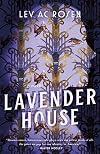
Lev A.C. Rosen's Lavender House offers an interesting variation on the usual 1950s P.I. novel. Here's the set-up: Evander Mills, a police officer caught in a raid on a gay club, loses his job and his home as a result, and is then hired to investigate the potential murder of Irene Lamontaine, the doyen of a wealthy—and quite nontraditional—family.
Mills' life has required that he never be fully himself. He can't afford for his coworkers to discover h's queer (the term used most often used show more the book to describe LGBTQI+ identity), so keeps them at a distance. He can't afford to reveal his job to any of the men who frequent the gay bars he occasionally visits (generally checking which are scheduled to be raided, until the error that leads to his life being turned upside down). He can't see beyond his need to protect himself, so doesn't use the knowledge he has (such as which bar will be raided next) to help other queers.
When Mills takes on the job of investigating Lamontaine's death, he meets a constructed family: Lamontaine's widow, Pearl; Lamontaine's son Henry and his partner Cliff; Margo, Henry's "beard-wife," and her partner Elsie, who runs a high end queer bar; and Margo's mother Alice, the only straight person in their household, as everyone working on the estate is also queer. At first Mills—conditioned to never reveal his full self—is profoundly uncomfortable with, but also fascinated by, life on the Lamontaine estate. But he also begins to see that the freedom the family have at home leaves them with little access to the world outside the estate. Henry needs Margo; Cliff can't be seen in public with Henry; nor can Elsie be seen with Margo.
Mills' job is to determine whether Lamontaine's death in a fall from a balcony was accidental or deliberate—and if it was deliberate, who among the family was responsible. This adds another layer of discomfort to Mills' life. These are people around whom he might finally live more honestly as the man he is, but all of them are suspects, so he can feel safe around none of them.
The mystery here works well enough, but the book's real strength is the way it portrays 1950s gay lives, the impossible choices individuals must make to protect themselves, and their resulting financial and social insecurity. I'm very much hoping this novel will prove to be the first in a series. I'd love to be able to watch the development of the different characters as they challenge the limitations in their lives and as they continue to evolve as a family.
I received a free electronic review copy of this title from the publisher via NetGalley; the opinions are my own. show less
Mills' life has required that he never be fully himself. He can't afford for his coworkers to discover h's queer (the term used most often used show more the book to describe LGBTQI+ identity), so keeps them at a distance. He can't afford to reveal his job to any of the men who frequent the gay bars he occasionally visits (generally checking which are scheduled to be raided, until the error that leads to his life being turned upside down). He can't see beyond his need to protect himself, so doesn't use the knowledge he has (such as which bar will be raided next) to help other queers.
When Mills takes on the job of investigating Lamontaine's death, he meets a constructed family: Lamontaine's widow, Pearl; Lamontaine's son Henry and his partner Cliff; Margo, Henry's "beard-wife," and her partner Elsie, who runs a high end queer bar; and Margo's mother Alice, the only straight person in their household, as everyone working on the estate is also queer. At first Mills—conditioned to never reveal his full self—is profoundly uncomfortable with, but also fascinated by, life on the Lamontaine estate. But he also begins to see that the freedom the family have at home leaves them with little access to the world outside the estate. Henry needs Margo; Cliff can't be seen in public with Henry; nor can Elsie be seen with Margo.
Mills' job is to determine whether Lamontaine's death in a fall from a balcony was accidental or deliberate—and if it was deliberate, who among the family was responsible. This adds another layer of discomfort to Mills' life. These are people around whom he might finally live more honestly as the man he is, but all of them are suspects, so he can feel safe around none of them.
The mystery here works well enough, but the book's real strength is the way it portrays 1950s gay lives, the impossible choices individuals must make to protect themselves, and their resulting financial and social insecurity. I'm very much hoping this novel will prove to be the first in a series. I'd love to be able to watch the development of the different characters as they challenge the limitations in their lives and as they continue to evolve as a family.
I received a free electronic review copy of this title from the publisher via NetGalley; the opinions are my own. show less
After being fired from his job as a police officer for being caught in a gay bar raid, Andy is offered employment investigating the death of the head of a famous soap empire. Andy finds himself staying at Lavender House, home of a queer family where no one hides who they are within the house but all fear what will become of them if the outside world finds out their secrets. As he works to uncover if there’s a murderer among them, Andy contemplates if the freedom of Lavender House is truly show more free.
I greatly enjoyed LAVENDER HOUSE. The story sucked me in from the first pages with an immediate feeling like I was in a film noir. The setting of 1950s San Francisco was fantastic. I loved the queer representation amongst all the characters. There’s a lot of social commentary and thought-provoking moments which I found to make the book very engaging. The plot moved at a great pace. I didn’t have the murderer figured out right away which is always a plus. The ending was satisfying and also open-ended enough that it could smoothly lead into a sequel if the author does so. I would happily read a second book if this became a series. If my home responsibilities had not been in the way, this is a book that I easily would have read in one sitting as it kept me turning pages.
LAVENDER HOUSE was a great queer historical fiction mystery that I’d highly recommend. show less
I greatly enjoyed LAVENDER HOUSE. The story sucked me in from the first pages with an immediate feeling like I was in a film noir. The setting of 1950s San Francisco was fantastic. I loved the queer representation amongst all the characters. There’s a lot of social commentary and thought-provoking moments which I found to make the book very engaging. The plot moved at a great pace. I didn’t have the murderer figured out right away which is always a plus. The ending was satisfying and also open-ended enough that it could smoothly lead into a sequel if the author does so. I would happily read a second book if this became a series. If my home responsibilities had not been in the way, this is a book that I easily would have read in one sitting as it kept me turning pages.
LAVENDER HOUSE was a great queer historical fiction mystery that I’d highly recommend. show less

This was delightful. In terms of basic flavor, think Tamora Pierce's Alanna books ([b:Alanna: The First Adventure|13831|Alanna The First Adventure (Song of the Lioness, #1)|Tamora Pierce|http://photo.goodreads.com/books/1348885690s/13831.jpg|1936544]), but transposed to a steampunk Victorian London and a cast of college-age characters. (And without the eventual corruption of the twin brother into a villain, thank goodness.)
Although it doesn't really have the feel of a science fiction book, I show more decided to shelve it as SF also because, along with the plot, character development, period manners, and steampunk tropes, this book also eloquently describes the passion and joy and beauty of science.
On a social justice note, in addition to the obvious theme of sexism, the author also treats heterosexism (Violet's twin Ashton is "inverted", and is partying on with young men of similar inclination in London while she's off at school), racism, and classism: all quite well, I thought.
I must also note that Ada Lovelace is a minor, though significant, character in the book. :) show less
Although it doesn't really have the feel of a science fiction book, I show more decided to shelve it as SF also because, along with the plot, character development, period manners, and steampunk tropes, this book also eloquently describes the passion and joy and beauty of science.
On a social justice note, in addition to the obvious theme of sexism, the author also treats heterosexism (Violet's twin Ashton is "inverted", and is partying on with young men of similar inclination in London while she's off at school), racism, and classism: all quite well, I thought.
I must also note that Ada Lovelace is a minor, though significant, character in the book. :) show less
We open in a bar, and a woman enters:
"Her lips are painted bright red. She's wearing a yellow skirt that cuts at the calf and a matching jacket decorated with a circular black-stoned brooch. Perched on her short, dark (surely dyed at her age) hair is a small hat with a small pin in it of an overlapping "WAC" -- the Women's Athletic Club. Her style is dated, but very high society. I've seen plenty of women like her, their money protecting them from the change they fear so badly, like a suit show more made of gold foil.
"She lights her cigarette, perched in a holder, and asks the bartender for a Manhattan. She has a deep, sharp voice, and it cuts through the fog of drunkenness in my mind. She's right out of a movie -- she could ask me to kill her husband any second now."
Can't get too much more noir than that, which is appropriate, because it's 1952. Evander "Andy" Mills, our narrator, has just been thrown off the San Francisco police force after being caught at a gay bar in a police raid doing "the things men do in the bathroom of the Black Cat."
The woman who approaches him in that opening scene is Pearl Velez, and she wants Andy to solve a murder. The two of them are alone in her car when he asks who's been murdered, but even in that isolation, it's still a shock when her answer is "my wife."
Pearl and Irene had built an unusual home for themselves on an isolated estate outside the city, a place where their small family of gay men and lesbians can be themselves and live without the constant fear of life in the city. The rest of the family: Irene's son, Henry, and his boyfriend; Henry's wife/beard, Margo, and her girlfriend; and Margo's elderly mother, the only straight resident of Lavender House. There's also a gay butler, and a lesbian couple who work as cook and gardener.
Irene's family is in the soap business, and she was the head chemist/perfumer. That means that in addition to the members of the household, there are business rivals who might have motive.
Lavender House is a smartly plotted mystery, with a fine assortment of characters/suspects and a strong narrative voice. It's also a fine historical novel, a reminder of just how bleak and difficult life could be for sexual minorities in the not-too-distant past (and sadly, still is for too many today). And putting gay and lesbian folks at the center of the story gives it a point of view that helps it to stand out from a sea of noir-ish detective stories.
A second Andy Mills novel is already available (The Bell in the Fog), and there are certainly a lot of possible stories that can be built around a gay private eye who specializes in helping people who don't always have the option of going to the police. A very fine start to a promising series. show less
"Her lips are painted bright red. She's wearing a yellow skirt that cuts at the calf and a matching jacket decorated with a circular black-stoned brooch. Perched on her short, dark (surely dyed at her age) hair is a small hat with a small pin in it of an overlapping "WAC" -- the Women's Athletic Club. Her style is dated, but very high society. I've seen plenty of women like her, their money protecting them from the change they fear so badly, like a suit show more made of gold foil.
"She lights her cigarette, perched in a holder, and asks the bartender for a Manhattan. She has a deep, sharp voice, and it cuts through the fog of drunkenness in my mind. She's right out of a movie -- she could ask me to kill her husband any second now."
Can't get too much more noir than that, which is appropriate, because it's 1952. Evander "Andy" Mills, our narrator, has just been thrown off the San Francisco police force after being caught at a gay bar in a police raid doing "the things men do in the bathroom of the Black Cat."
The woman who approaches him in that opening scene is Pearl Velez, and she wants Andy to solve a murder. The two of them are alone in her car when he asks who's been murdered, but even in that isolation, it's still a shock when her answer is "my wife."
Pearl and Irene had built an unusual home for themselves on an isolated estate outside the city, a place where their small family of gay men and lesbians can be themselves and live without the constant fear of life in the city. The rest of the family: Irene's son, Henry, and his boyfriend; Henry's wife/beard, Margo, and her girlfriend; and Margo's elderly mother, the only straight resident of Lavender House. There's also a gay butler, and a lesbian couple who work as cook and gardener.
Irene's family is in the soap business, and she was the head chemist/perfumer. That means that in addition to the members of the household, there are business rivals who might have motive.
Lavender House is a smartly plotted mystery, with a fine assortment of characters/suspects and a strong narrative voice. It's also a fine historical novel, a reminder of just how bleak and difficult life could be for sexual minorities in the not-too-distant past (and sadly, still is for too many today). And putting gay and lesbian folks at the center of the story gives it a point of view that helps it to stand out from a sea of noir-ish detective stories.
A second Andy Mills novel is already available (The Bell in the Fog), and there are certainly a lot of possible stories that can be built around a gay private eye who specializes in helping people who don't always have the option of going to the police. A very fine start to a promising series. show less
Lists
Pride Wishlist (1)
Awards


You May Also Like


Associated Authors
Statistics
- Works
- 16
- Also by
- 1
- Members
- 2,121
- Popularity
- #12,135
- Rating
- 3.8
- Reviews
- 132
- ISBNs
- 92
- Languages
- 3