
Cat Sebastian
Author of The Queer Principles of Kit Webb
About the Author
Series
Works by Cat Sebastian
Associated Works
Tagged
Common Knowledge
- Birthdate
- 20th Century
- Gender
- female
- Occupations
- lawyer
teacher
writer - Agent
- Deirdre Knight
- Nationality
- USA
- Birthplace
- New Jersey, USA
- Places of residence
- New Jersey, USA
New York, New York, USA - Associated Place (for map)
- USA
Members
Reviews

A sweet and charming love story, which is likely to trick you into learning things about baseball, set in 1960. A sequel in the same world as We Could Be So Good, and also about queer journalists in a time when being a journalist was a much better career than today (but when being queer could get you arrested and fired). I think it's fascinating how Cat Sebastian walks a fine line between seeing and recognizing the dangers and traumas of life for queer people in this time in America, while show more somehow still writing a book that is a sweet, happy-ending romance and not just incredibly dreary. show less

Real Rating: 4.25* of five, rounded down
First, read this:
There just isn't a more fun way to spend a couple of hours than reading well-crafted unserious stories designed to make you smile. Georgie and Lawrence are perfectly matched opposites. A lower-class con-man must be a social creature or fail and be punished by draconian laws. No one is ever going to tell an aristocrat he's wrong and bad for being "on the spectrum" as we say in the twenty-first century. Bring the two together and let the author's wit and cleverness grease the rails and bring the narrative train to full speed.
I love the way Author Cat takes very real issues, such as the social isolation of those on the spectrum, and weaves serious points into her farrago-of-nonsense stories. (I mean that in a *good* way! I need nonsense!) I am, in this case, not quite as rapturous as usual only because I felt it was anachronistic for Georgie to respond so, well, empathetically to Lawrence. It's not impossible! I do fully realize it's not as though empathy only showed its face, shyly and reluctantly, in this century. (And we could use a LOT more of it, come to that.) But it was just a little jangling bell, a thready response up that one sneaky synapse...this is a bridge too far, even in my willing suspension of disbelief that two men—and one an aristocrat!—would be left alone to do as they liked when one is clearly not "right"...fired and fired.
You know what? Screw all that analytical crud. Get this book, read the series, let your mind take a vacation from the darkening edges of our social contract's shredding. Georgie Turner and Lawrence Browne deserve to live their happily-ever-after and you deserve to have it be in your brain. show less
First, read this:
“You have a library of hundreds—if not thousands—of books downstairs, and you let them rot.” So it was a book Turner was waving about, brandishing like a weapon. “Do you have any idea what that does to any person of sense? It’s obscene, I tell you.”show more
–and–
He ruffled feathers without even knowing he had encountered a bird.
–and–
He had never understood what use fine feelings were to a man who was half-starved.
But now
he thought he did.
There just isn't a more fun way to spend a couple of hours than reading well-crafted unserious stories designed to make you smile. Georgie and Lawrence are perfectly matched opposites. A lower-class con-man must be a social creature or fail and be punished by draconian laws. No one is ever going to tell an aristocrat he's wrong and bad for being "on the spectrum" as we say in the twenty-first century. Bring the two together and let the author's wit and cleverness grease the rails and bring the narrative train to full speed.
I love the way Author Cat takes very real issues, such as the social isolation of those on the spectrum, and weaves serious points into her farrago-of-nonsense stories. (I mean that in a *good* way! I need nonsense!) I am, in this case, not quite as rapturous as usual only because I felt it was anachronistic for Georgie to respond so, well, empathetically to Lawrence. It's not impossible! I do fully realize it's not as though empathy only showed its face, shyly and reluctantly, in this century. (And we could use a LOT more of it, come to that.) But it was just a little jangling bell, a thready response up that one sneaky synapse...this is a bridge too far, even in my willing suspension of disbelief that two men—and one an aristocrat!—would be left alone to do as they liked when one is clearly not "right"...fired and fired.
You know what? Screw all that analytical crud. Get this book, read the series, let your mind take a vacation from the darkening edges of our social contract's shredding. Georgie Turner and Lawrence Browne deserve to live their happily-ever-after and you deserve to have it be in your brain. show less
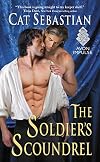
Set in Regency England, this romance follows Jack Turner, who is a kind of Regency-era fixer who takes jobs for women only, and Oliver Rivington, an aristocratic second son who has just sold his army commission after being seriously wounded in the leg. The two cross paths when Oliver tries to hunt down just why his sister would have paid Jack two hundred pounds. The two become friends while they are both busy trying not to fall in love with each other, and they investigate one of Jack's show more cases while they're at it.
It took me a little bit to get into this one, but once I did, I was strongly invested, both in the heroes as characters/in their love story and in the case they were investigating (although it probably bears mentioning that there isn't a whole lot of true investigating on the page). Two things struck me about this story that I really enjoyed. The first was that the realities of the dangers of engaging in a same-sex relationship in early 1800s Britain were fully recognized (even if the HEA is a wee bit hand-wavey) without casting a pall of dread over the whole story. Second was the way women remain important to the story (which is often, though certainly not always, not true in m/m romance). Both men have women in their lives who are important to them (even if they aren't on the page a huge amount of the time), and Jack's work (and specifically the case they work on during the bulk of the story) hinges on the ways women are given little or no recourse by their society when they are wronged.
Absolutely recommended to anyone who enjoys this sort of thing. show less
It took me a little bit to get into this one, but once I did, I was strongly invested, both in the heroes as characters/in their love story and in the case they were investigating (although it probably bears mentioning that there isn't a whole lot of true investigating on the page). Two things struck me about this story that I really enjoyed. The first was that the realities of the dangers of engaging in a same-sex relationship in early 1800s Britain were fully recognized (even if the HEA is a wee bit hand-wavey) without casting a pall of dread over the whole story. Second was the way women remain important to the story (which is often, though certainly not always, not true in m/m romance). Both men have women in their lives who are important to them (even if they aren't on the page a huge amount of the time), and Jack's work (and specifically the case they work on during the bulk of the story) hinges on the ways women are given little or no recourse by their society when they are wronged.
Absolutely recommended to anyone who enjoys this sort of thing. show less

Rating: 4.5* of five
The Publisher Says: An emotional, slow-burn, grumpy/sunshine, queer mid-century romance for fans of Evvie Drake Starts Over, about grief and found family, between the new star shortstop stuck in a batting slump and the reporter assigned to (reluctantly) cover his first season—set in the same universe as We Could Be So Good.
The 1960 baseball season is shaping up to be the worst year of Eddie O’Leary’s life. He can’t manage to hit the ball, his new teammates hate show more him, he’s living out of a suitcase, and he’s homesick. When the team’s owner orders him to give a bunch of interviews to some snobby reporter, he’s ready to call it quits. He can barely manage to behave himself for the length of a game, let alone an entire season. But he’s already on thin ice, so he has no choice but to agree.
Mark Bailey is not a sports reporter. He writes for the arts page, and these days he’s barely even managing to do that much. He’s had a rough year and just wants to be left alone in his too-empty apartment, mourning a partner he’d never been able to be public about. The last thing he needs is to spend a season writing about New York’s obnoxious new shortstop in a stunt to get the struggling newspaper more readers.
Isolated together within the crush of an anonymous city, these two lonely souls orbit each other as they slowly give in to the inevitable gravity of their attraction. But Mark has vowed that he’ll never be someone’s secret ever again, and Eddie can’t be out as a professional athlete. It’s just them against the world, and they’ll both have to decide if that’s enough.
I RECEIVED A DRC FROM THE PUBLISHER VIA NETGALLEY. THANK YOU.
My Review: I'm a Cat Sebastian stan. Her writing chops, her eye for a story, her politics...all *chef's kiss* in my experience. This derfinitely is, please note, a slow-burn love story. I don't think this is a bug, rather a feature; I'm pretty au fait with what happens between men in bed. I'm as interested in how they got there, and why, as in what it is they're gettin' up to.
The fun in this read is that, once the guys get their bodily freak on, I believe that they'll be able, and willing to stay there! These relationships, the ones you can actually picture as real and lasting, are all too rare in fiction...let alone in romantic fiction. It is not, I hurry to reassure the bodyloathers, a meaty, intimately observed intimacy; more of a noises-off kind of affair, where we know what happened and now we see what that brought to Mark and Eddie. One-handed reading is not really Author Cat's stock-in-trade, she hasn't started now.
That being my expectation, and it being met, next point of tension for many readers (including me) is the elephant in the room of any midcentury m/m story: Outing. A reporter and a baseball phenom in physical intimacy would've had a lot of anxiety about being seen to be...a little too close, a bit off in the macho world of baseball...because it would uneash the horrors of public, untrammelled homophobia on the men. This was, after all, the time of The Lavender Scare.
So this backdrop means, in my reading, the HEAs and even HFNs many writers engineer for two men being publicly together in this time-period ring hollow. "That could not happen!" I think, all suspension of disbelief flying away on noisy bat-wings of knowledge. As always, Author Cat spares me the discomfort by making these two behave circumspectly. Mark, a reporter, knows the Power of the Press, and respects the cultural norms to avoid awakening it. He's also just lost his longtime love, and so isn't exactly in a huggy-smoochy frame of mind; Eddie's in his first-ever existential crisis..."I can't do this thing I get praise and an identity from anymore! Help!"...so he's, well, not gonna rock the boat. Such a good way to ensure there's layers of meaning behind their period-appropriate decorous public demeanor.
What makes any story centered around grief readable is hope. The men here don't have a path forward, can't see through the fog of the present into a brighter, better-defined future. Only as they learn to trust each other's love and support as real, solid stones capable of being made into a foundation do they find the ease they're seeking. That was the payoff I needed from this unlikely duo's coming-together: The sense that, to their mutual surprise, they had found together the path that neither had been able to see alone.
In the end, these two find their happiness in their connection. They are, it felt to me, solidly, enduringly connected and will weather their future storms better for being together. Now, how often do fictional people draw out that level of thought and that depth of interest? For anyone who hasn't read Author Cat's earlier work, it might sound surprising that this has happened. I assure you who haven't had the pleasure that this is a long-term feature of all her stories.
Lastly, I hope you'll read this, and resonate to it. It is a very clear statement of a deep, abiding truth of the experience of being Other:
It’s not just the burden of continually lying, it’s keeping your existence a secret. When the world has decided that people are supposed to be a certain way, but you’re living proof to the contrary, then hiding your differences is just helping everybody else erase who you are.
This book, in a period-appropriate way, presents two loving souls whose socially unacceptable love and connection truly prevent them from being erased. show less
The Publisher Says: An emotional, slow-burn, grumpy/sunshine, queer mid-century romance for fans of Evvie Drake Starts Over, about grief and found family, between the new star shortstop stuck in a batting slump and the reporter assigned to (reluctantly) cover his first season—set in the same universe as We Could Be So Good.
The 1960 baseball season is shaping up to be the worst year of Eddie O’Leary’s life. He can’t manage to hit the ball, his new teammates hate show more him, he’s living out of a suitcase, and he’s homesick. When the team’s owner orders him to give a bunch of interviews to some snobby reporter, he’s ready to call it quits. He can barely manage to behave himself for the length of a game, let alone an entire season. But he’s already on thin ice, so he has no choice but to agree.
Mark Bailey is not a sports reporter. He writes for the arts page, and these days he’s barely even managing to do that much. He’s had a rough year and just wants to be left alone in his too-empty apartment, mourning a partner he’d never been able to be public about. The last thing he needs is to spend a season writing about New York’s obnoxious new shortstop in a stunt to get the struggling newspaper more readers.
Isolated together within the crush of an anonymous city, these two lonely souls orbit each other as they slowly give in to the inevitable gravity of their attraction. But Mark has vowed that he’ll never be someone’s secret ever again, and Eddie can’t be out as a professional athlete. It’s just them against the world, and they’ll both have to decide if that’s enough.
I RECEIVED A DRC FROM THE PUBLISHER VIA NETGALLEY. THANK YOU.
My Review: I'm a Cat Sebastian stan. Her writing chops, her eye for a story, her politics...all *chef's kiss* in my experience. This derfinitely is, please note, a slow-burn love story. I don't think this is a bug, rather a feature; I'm pretty au fait with what happens between men in bed. I'm as interested in how they got there, and why, as in what it is they're gettin' up to.
The fun in this read is that, once the guys get their bodily freak on, I believe that they'll be able, and willing to stay there! These relationships, the ones you can actually picture as real and lasting, are all too rare in fiction...let alone in romantic fiction. It is not, I hurry to reassure the bodyloathers, a meaty, intimately observed intimacy; more of a noises-off kind of affair, where we know what happened and now we see what that brought to Mark and Eddie. One-handed reading is not really Author Cat's stock-in-trade, she hasn't started now.
That being my expectation, and it being met, next point of tension for many readers (including me) is the elephant in the room of any midcentury m/m story: Outing. A reporter and a baseball phenom in physical intimacy would've had a lot of anxiety about being seen to be...a little too close, a bit off in the macho world of baseball...because it would uneash the horrors of public, untrammelled homophobia on the men. This was, after all, the time of The Lavender Scare.
So this backdrop means, in my reading, the HEAs and even HFNs many writers engineer for two men being publicly together in this time-period ring hollow. "That could not happen!" I think, all suspension of disbelief flying away on noisy bat-wings of knowledge. As always, Author Cat spares me the discomfort by making these two behave circumspectly. Mark, a reporter, knows the Power of the Press, and respects the cultural norms to avoid awakening it. He's also just lost his longtime love, and so isn't exactly in a huggy-smoochy frame of mind; Eddie's in his first-ever existential crisis..."I can't do this thing I get praise and an identity from anymore! Help!"...so he's, well, not gonna rock the boat. Such a good way to ensure there's layers of meaning behind their period-appropriate decorous public demeanor.
What makes any story centered around grief readable is hope. The men here don't have a path forward, can't see through the fog of the present into a brighter, better-defined future. Only as they learn to trust each other's love and support as real, solid stones capable of being made into a foundation do they find the ease they're seeking. That was the payoff I needed from this unlikely duo's coming-together: The sense that, to their mutual surprise, they had found together the path that neither had been able to see alone.
In the end, these two find their happiness in their connection. They are, it felt to me, solidly, enduringly connected and will weather their future storms better for being together. Now, how often do fictional people draw out that level of thought and that depth of interest? For anyone who hasn't read Author Cat's earlier work, it might sound surprising that this has happened. I assure you who haven't had the pleasure that this is a long-term feature of all her stories.
Lastly, I hope you'll read this, and resonate to it. It is a very clear statement of a deep, abiding truth of the experience of being Other:
It’s not just the burden of continually lying, it’s keeping your existence a secret. When the world has decided that people are supposed to be a certain way, but you’re living proof to the contrary, then hiding your differences is just helping everybody else erase who you are.
This book, in a period-appropriate way, presents two loving souls whose socially unacceptable love and connection truly prevent them from being erased. show less
Lists
Best Audiobooks (1)
Five star books (1)
Awards


You May Also Like


Associated Authors
Statistics
- Works
- 26
- Also by
- 1
- Members
- 5,678
- Popularity
- #4,354
- Rating
- 4.0
- Reviews
- 343
- ISBNs
- 96
- Languages
- 2
- Favorited
- 20