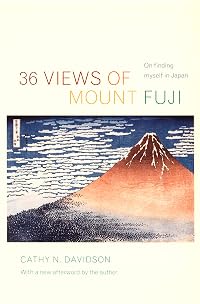
36 Views of Mount Fuji: On Finding Myself in Japan
by Cathy N. Davidson 
On This Page
Description
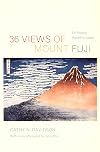
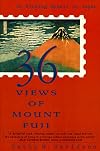
By turns candid, witty, and poignant, 36 Views of Mount Fuji is an American professor's much-praised memoir about her experiences of Japan and the Japanese.Tags
Recommendations



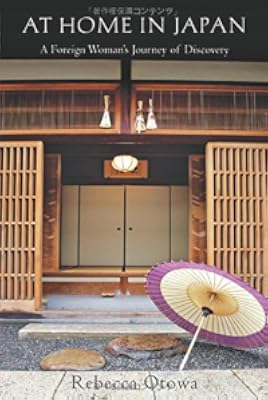

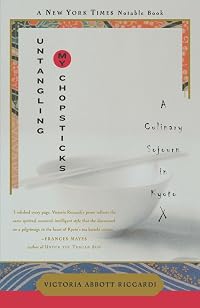
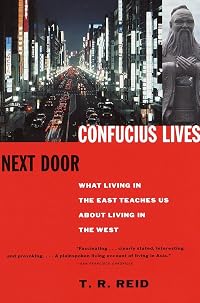




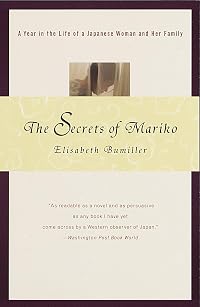















Member Recommendations
Member Reviews
Davidson spent a year with Japan with her husband, Ted. Together, they have jobs teaching English while trying to learn all things Japanese. They make friends who help them with their quest. During this time of total immersion, Davidson becomes intimate with Japanese customs, so much so that when she and Ted are faced with tragedy and their Japanese friends break with tradition for their sake, Davidson is embarrassed and uncomfortable for them. This break from normal protocol touched me. Davidson went back to Japan a total of four times with varying lengths of stay. She and Ted contemplated a move to Japan only to decide the language barrier was too great to conquer. This bothered Davidson. Her inability to learn the language bothered show more her and shattered her confidence so much so she had to put the books she had written in front of her to reaffirm she is a smart woman.
I promise you, you will walk away with a deepened appreciation for Japanese culture. I did not know Tokyo is chaotic and disorganized in purpose. Streets are unnamed to anonymize people's addresses. How do things get delivered? show less
I promise you, you will walk away with a deepened appreciation for Japanese culture. I did not know Tokyo is chaotic and disorganized in purpose. Streets are unnamed to anonymize people's addresses. How do things get delivered? show less
Overall this was an interesting and insightful book, just one that I had a few issues with.
Firstly there is the fact it is rather dated, but that is to be expected. In much of the book this was not a problem because as a memoir much of what she is talking about are universals such as identity, friendships and a sense of place. But whole sections - such as the one where she travels with her husband to Paris and all the other tourists seem to be Japanese - are no longer the case.
Secondly - a lot of the personal, non-Japanese parts are not nearly as interesting. Often these would slip in to lists of names of family member. "Bob and Jane, and my brother-in-law Tom, and his wife were there, along with our friend Harry and his wife, and ..." show more (Not a direct quote BTW). I think the author fell in to the trap many memoirists do of thinking the big events in their life will feel just as important to their readers when it is not the case. Or that they needed to list everyone who turned up to set the scene.
Finally - I did find the fact that in many cases she wrote disparagingly about the 'gaijin' who took the whole 'Japanese culture' thing too seriously - wouldn't mix with other foreigners, tried to be Japanese or at least took traditional culture a little too seriously - a bit hypocritical. This is a woman who built a faux-traditional Japanese house that even her friends say is more Japanese than Japan.
All that said - there are still some great insights in this book, both about Japan and about living a cross-cultural life, both the good and bad. Many 'I lived in Japan for awhile and got a book deal out of it' books have come along since this one, and not that many of them are as well thought out or go as deep as this one does. show less
Firstly there is the fact it is rather dated, but that is to be expected. In much of the book this was not a problem because as a memoir much of what she is talking about are universals such as identity, friendships and a sense of place. But whole sections - such as the one where she travels with her husband to Paris and all the other tourists seem to be Japanese - are no longer the case.
Secondly - a lot of the personal, non-Japanese parts are not nearly as interesting. Often these would slip in to lists of names of family member. "Bob and Jane, and my brother-in-law Tom, and his wife were there, along with our friend Harry and his wife, and ..." show more (Not a direct quote BTW). I think the author fell in to the trap many memoirists do of thinking the big events in their life will feel just as important to their readers when it is not the case. Or that they needed to list everyone who turned up to set the scene.
Finally - I did find the fact that in many cases she wrote disparagingly about the 'gaijin' who took the whole 'Japanese culture' thing too seriously - wouldn't mix with other foreigners, tried to be Japanese or at least took traditional culture a little too seriously - a bit hypocritical. This is a woman who built a faux-traditional Japanese house that even her friends say is more Japanese than Japan.
All that said - there are still some great insights in this book, both about Japan and about living a cross-cultural life, both the good and bad. Many 'I lived in Japan for awhile and got a book deal out of it' books have come along since this one, and not that many of them are as well thought out or go as deep as this one does. show less
Cathy Davidson describes being in Japan as a gaijin and its difficulties and rewards. She has some very interesting stories of people and places she visits. She and her husband live on a professor exchange for a couple of years. They return home to the American Midwest and they find that they pine for Japan. A return trip causes them to rethink their desire to return permanently to Japan. They make many trips over a number of years. I appreciated the tide-like push and pull that Ms Davidson felt for Japan and its customs. She articulated it very well. Good insights into her own thinking and that of her friends (Japanese and gaijin). I shared with Isaac, our friend with whom we stayed while visiting Japan. I think he feels the same show more love/dislike relationship. show less
This book struck deeply, and given the recent terrible events in Japan, has been haunting me.
I didn't expect to like it that much. I thought, oh, another memoir of an expat teaching English. It was so much more, an incredibly nuanced portrayal of Japanese people and customs.
Davidson has a wonderful writing voice, subtle but persuasive. I would recommend this to anyone who wants to know something more about Japan, and also of what occurs when a person attempts insinuating herself in a foreign culture.
I didn't expect to like it that much. I thought, oh, another memoir of an expat teaching English. It was so much more, an incredibly nuanced portrayal of Japanese people and customs.
Davidson has a wonderful writing voice, subtle but persuasive. I would recommend this to anyone who wants to know something more about Japan, and also of what occurs when a person attempts insinuating herself in a foreign culture.
Cathy Davidson's interwoven stories of her four extended trips gave me a glimpse of a far different Japan than most travelers see. Instead of recounting visits chronologically, the book explores aspects of Japanese social behavior and the Japanese psyche. The author blends her experiences teaching English in a Japanese women's university in a suburb of Osaka, her penchant for off-the-beaten path travel, and her commitment to making and maintaining Japanese friendships into a series of essays. Some of the essays focus on educational matters--the role mothers play in preparing children for school, the infamous juku cram schools, and the seeming contradiction between students who toil for years to gain admittance to prestigious show more universities only to rarely attend class. Others deal with her struggles to understand the context of Japanese behavior--whether visiting the entertainment district with the a male colleague, vacationing on the isle of Oki and befriending a local bar owner who shares her enthusiasm for glass fishing floats, or struggling to find the right words to thank an assortment of friends and university associates in a time of grief.
At times the author's attempts to honestly depict her reactions to the Japanese world around her seemed to flicker and then just fade away, leaving me with unanswered questions. But her admiration of the Japanese culture and people, evident in the loving care with which she built a Japanese style house and welcomed Japanese friends there, always shone through. In the end I came to appreciate that the Western world's struggles to fully understand Japanese culture are a more fitting descriptions of its complexity than any neatly wrapped explanation. show less
At times the author's attempts to honestly depict her reactions to the Japanese world around her seemed to flicker and then just fade away, leaving me with unanswered questions. But her admiration of the Japanese culture and people, evident in the loving care with which she built a Japanese style house and welcomed Japanese friends there, always shone through. In the end I came to appreciate that the Western world's struggles to fully understand Japanese culture are a more fitting descriptions of its complexity than any neatly wrapped explanation. show less
This is a well written book of a professor of English who has visited Japan a number of times, initially as part of an exchange program. It describes here awkward adaptation but eventually real love of Japanese ways of life. As she peels back layers of understanding, she finds a greater and more appreciative reality. For instance, she had thought that wives were totally under the thumb of their husbands, until she found out from a woman in her apartment complex that this was not really true. This wife had determined that her family could move, and without any participation by the husband, she found their new home new and negotiated all the finances. She hoped her husband would like, because he would see it for the first time after their show more furniture would have been moved in. Cathy Davidson realized that very few wives in the U.S. would do a substantive life change without ones spouse's participation.
The book is written in chapters that outline a number of her unfoldings while living in Japan. Her assumptions of life there are challenged, but she also challenges her students at Kansai's Women's University to see life differently, particularly as they learn the English language. This is a book well worth reading, but each chapter should be savored separately, as might look at the prints of Katsushika Hokusai's, for which the book is titled. show less
The book is written in chapters that outline a number of her unfoldings while living in Japan. Her assumptions of life there are challenged, but she also challenges her students at Kansai's Women's University to see life differently, particularly as they learn the English language. This is a book well worth reading, but each chapter should be savored separately, as might look at the prints of Katsushika Hokusai's, for which the book is titled. show less
An American’s close look at Japan. The author sees many of the troubling aspects of Japan that receive so much press, but she also takes on wife-husband relationship difficulties, students’ inability to shake off conformity, and Japanese social pressures.
Members
- Recently Added By
Lists

Travelogues in Japan
22 works; 3 members
Author Information

19+ Works 1,417 Members
Cathy N. Davidson directs the Futures Initiative at CUNY. She is the author of many books, including Now You See It, and has written for The Wall Street Journal and Fast Company, among others. Davidson lives in New York City.
Cathy N. Davidson is a LibraryThing Author, an author who lists their personal library on LibraryThing.
Common Knowledge
- Important places
- Japan
- Original language
- English
Classifications
Statistics
- Members
- 265
- Popularity
- 122,390
- Reviews
- 10
- Rating
- (3.89)
- Languages
- English, German
- Media
- Paper, Audiobook, Ebook
- ISBNs
- 7
- UPCs
- 1
- ASINs
- 3