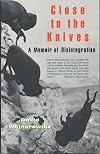
Close to the Knives: A Memoir of Disintegration
by David Wojnarowicz
On This Page
Description
The savage, beautiful, and unforgettable memoirs of an extraordinary artist, activist, and iconoclast who lit up the New York art scene in the late twentieth century David Wojnarowicz's brief but eventful life was not easy. From a suburban adolescence marked by neglect, drugs, prostitution, and abuse to a squalid life on the streets of New York City, to fame-and infamy-as an activist and controversial visual artist whose work was lambasted in the halls of Congress, all before his early death show more from AIDS at age thirty-seven, Wojnarowicz seemed to be at war with a homophobic "establishment" and the world itself. Yet what emerged from the darkness was a truly extraordinary artist and human being-an angry young man of remarkable poetic sensibilities who was inordinately sympathetic to those who, like him, lived and struggled outside society's boundaries. Close to the Knives is his searing yet strangely beautiful account told in a collection of powerful essays. An author whom reviewers have compared to Kerouac and Genet, David Wojnarowicz mesmerizes, horrifies, and delights in equal measure with his unabashed honesty. At once savage and funny, poignant and sexy, compassionate and unforgiving, his words and stories cut like knives, leaving indelible marks on all who read them. show lessTags
Recommendations












































Member Reviews
The memoirs of an American Jean Genet (that's "Jean Genie," then) turned out to be a very good thing--brief encounters not in jail but very Americanly "on the lam" in the midst of the somehow always post-apocalyptic (and like, for an aesthete, terrifying and empty) Middle American landscape and New York in the eighties, so art and heroin and then the AIDS crisis, which blots out all else, and you realize he's imprisoned much more comprehensively than JG ever was--the body unfolds no sensual sphincteral-floral miracle of the rose here but only an ever-expanding Kaposi's lesion; the body is not for pleasure, never again, but for torment and death only, and the memories of friends and lovers and abusers that maybe are unspeakably precious show more now that there won't be any more memories or maybe just drive you mad before you die. Bleak, and all the bleaker when he starts rattling on about "the State" as though the Big Brother Ronnie Raygun line'll make any of this make sense or hurt any less. show less
Close to the Knives employs an aesthetics of rage which is all at once individual and collective, personal and political. The book functions as a high decibel confrontational indictment against the greater culture and those who hold power within it for their ambivalence towards AIDS and their invalidation of queer identity. By queering the formal conventions of memoir through radical prose technique , avid Wojnarowicz puts forth a challenging work that critiques discourses of authority and provides a validation of the personal and collective voice that makes visible the queer experience, asserting that voice is not only valid but that it has a right if not an obligation to be angry and unapologetic. I wholly agree with Dennis Cooper's show more assertion that this book, ideally, should be read by every teenager in America. Every queer person in America. Probably every straight person too. show less
David Wojnarowicz had the microscopic observations of a child. His descriptions were extraordinarily finely detailed and nuanced. But they were direct and stark too. His insights were fascinating. His narrative didn’t so much flow, as roll like a boulder. This is sharp, even piercing writing from a totally off kilter perspective. Most of us do not see life this way.
His world was peopled with damaged friends. He said everyone he knew came from a family of abusive parents, not least his own. His friends were all on the edge, leading fringe lives in which they all psychoanalyzed each other and the country at large from painful perspectives. They lived bizarrely. There was a lot of violence, a lot suicide, and a lot of AIDS. There is show more constant sex, sometimes romantic, usually brutal, often filthy, always craved.
He was never truly happy, but he was happiest outside his nonexistent comfort zone. “Transition is always a relief. Destination means death to me. If I could figure out a way to be forever in transition, in the disconnected and unfamiliar, I could remain in a state of perpetual freedom.” That’s the best definition he could admit to, and it’s more than most could own up to.
His thoughts and dreams were populated with hallways, often long, often dark. I’ve never seen the word hallway so many times in a book. Uncertainty played an outsized role in his short life.
The second half of the book is less enthralling, because it is transcripts of interviews he taped of his friends. It is their words, not his. The interviews serve to bring them closer, before they die off in rapid succession. The hunger for more of Wajnarowicz’s own writing has to wait to the end, where he intersperses the description of a bullfight in Mexico with thoughts and reminiscences it inspires. And almost every paragraph admonishes us to smell the flowers while we can. He did not.
Unfortunately for all of us, the last years of his life were consumed with caring for friends with AIDS, followed by his own case. His fury at the hypocrisy of the dominating government agencies and officials, and especially at the self contradictory and insufferable Church, enraged and changed him. We can’t even imagine what kind of writer he might have become without that ugly diversion. That is possibly an even greater tragedy.
This will have to be eloquent enough. show less
His world was peopled with damaged friends. He said everyone he knew came from a family of abusive parents, not least his own. His friends were all on the edge, leading fringe lives in which they all psychoanalyzed each other and the country at large from painful perspectives. They lived bizarrely. There was a lot of violence, a lot suicide, and a lot of AIDS. There is show more constant sex, sometimes romantic, usually brutal, often filthy, always craved.
He was never truly happy, but he was happiest outside his nonexistent comfort zone. “Transition is always a relief. Destination means death to me. If I could figure out a way to be forever in transition, in the disconnected and unfamiliar, I could remain in a state of perpetual freedom.” That’s the best definition he could admit to, and it’s more than most could own up to.
His thoughts and dreams were populated with hallways, often long, often dark. I’ve never seen the word hallway so many times in a book. Uncertainty played an outsized role in his short life.
The second half of the book is less enthralling, because it is transcripts of interviews he taped of his friends. It is their words, not his. The interviews serve to bring them closer, before they die off in rapid succession. The hunger for more of Wajnarowicz’s own writing has to wait to the end, where he intersperses the description of a bullfight in Mexico with thoughts and reminiscences it inspires. And almost every paragraph admonishes us to smell the flowers while we can. He did not.
Unfortunately for all of us, the last years of his life were consumed with caring for friends with AIDS, followed by his own case. His fury at the hypocrisy of the dominating government agencies and officials, and especially at the self contradictory and insufferable Church, enraged and changed him. We can’t even imagine what kind of writer he might have become without that ugly diversion. That is possibly an even greater tragedy.
This will have to be eloquent enough. show less
In Close to the Knives, David Wojnarowicz gives us an important and timely document: a collection of creative essays -- a scathing, sexy, sublimely humorous and honest personal testimony to the "Fear of Diversity in America." From the author's violent childhood in suburbia to eventual homelessness on the streets and piers of New York City, to recognition as one of the most provocative artists of his generation -- Close to the Knives is his powerful and iconoclastic memoir. Street life, drugs, art and nature, family, AIDS, politics, friendship and acceptance: Wojnarowicz challenges us to examine our lives -- politically, socially, emotionally, and aesthetically.
A memoir of 1980s New York and beyond by a preeminent artist of the AIDS era.
Wojnarowicz's biography is more a collection of essays which flit from topic to topic, his style reminiscent of a more readable Burroughs. There are intensely erotic passages, juxtaposed against the harsh, grimy, filthy reality of living as he did.
Great stuff, echoing the Jarman I read earlier this year.
Wojnarowicz's biography is more a collection of essays which flit from topic to topic, his style reminiscent of a more readable Burroughs. There are intensely erotic passages, juxtaposed against the harsh, grimy, filthy reality of living as he did.
Great stuff, echoing the Jarman I read earlier this year.
Difficult. Violent language. Bitter.
I remember loving this, so.
Members
- Recently Added By
Author Information

31+ Works 1,471 Members
Awards and Honors
Common Knowledge
- Canonical DDC/MDS
- 362.19697920092
- Canonical LCC
- RC607.A26
Classifications
- Genres
- Biography & Memoir, Nonfiction, LGBTQ+
- DDC/MDS
- 362.19697920092 — Society, government, & culture Social problems and social services Social Welfare People with physical illnesses Services to people with specific conditions Diseases Other diseases Diseases of immune system Immune deficiency diseases AIDS History, geographic treatment, biography Biography
- LCC
- RC607 .A26 — Medicine Internal medicine Internal medicine Specialties of internal medicine Immunologic diseases. Allergy
- BISAC
Statistics
- Members
- 637
- Popularity
- 45,634
- Reviews
- 9
- Rating
- (4.34)
- Languages
- English, French, German
- Media
- Paper, Audiobook, Ebook
- ISBNs
- 10
- ASINs
- 2