
Galatea
by Philip Pullman
On This Page
Tags
Recommendations















Member Reviews
The title of this book turned out to have a didactic intent. Now that I get where he was going, I think the piece works decently well as a (young writer's early) Grand Allegory, which is a genre that does not necessarily overlap with the novel. The moral of the allegory was essentially that, in this futurey world, what matters is what is seen and done; the appearance of things has become more important than the things themselves and in fact is, in a way, more real. I find this point of view sort of smacks of Young Man Who Knows Everything, especially since part of this moral undercuts the idea that love has any intrinsic merit. The fact that the narrative relies somewhat heavily on the reader's permission for the author to use a crapton show more of allusions and Very Clever Devices also points to Young Writer Syndrome. I'm not dissing Pullman; he wrote this book in 1976, when, in point of fact, he was a Young Writer. He survived and flourished. I am fascinated with this older work mostly because I like to think about how particular writers get from inchoate to justifiably celebrated. show less
Members
- Recently Added By
Author Information

91+ Works 151,343 Members
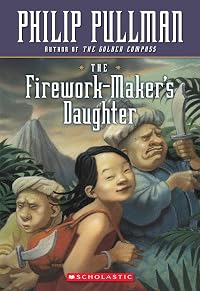
Philip Pullman was born in Norwich on October 19, 1946. He graduated from Oxford University with a degree in English. He taught at various Oxford middle schools and at Westminster College for eight years. He is the author of many acclaimed novels, plays, and picture books for readers of all ages. His first book, Count Karlstein, was published in show more 1982. His other books include: The Firework-Maker's Daughter; I Was a Rat!; Clockwork or All Wound Up; and The Good Man Jesus and the Scoundrel Christ. He is also the author of the Sally Lockhart series and the His Dark Materials Trilogy. He is the author of The Book of Dust, volume 1. He has received numerous awards including the Carnegie Medal and the Guardian Fiction Award for Northern Lights (The Golden Compass), the Whitbread Book of the Year Award for The Amber Spyglass, the Eleanor Farjeon Award for children's literature in 2002, and the Astrid Lindgren Award in 2005. (Bowker Author Biography) show less
Common Knowledge
- Canonical title
- Galatea
- Original publication date
- 1979
Classifications
Statistics
- Members
- 48
- Popularity
- 616,645
- Reviews
- 1
- Rating
- (3.00)
- Languages
- English
- Media
- Paper
- ISBNs
- 2

