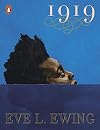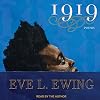
1919
by Eve L. Ewing
On This Page
Description
The Chicago Race Riot of 1919, the most intense of the riots comprising the nation's Red Summer, has shaped the last century but is not widely discussed. In 1919, award-winning poet Eve L. Ewing explores the story of this event-which lasted eight days and resulted in thirty-eight deaths and almost 500 injuries-through poems recounting the stories of everyday people trying to survive and thrive in the city. Ewing uses speculative and Afrofuturist lenses to recast history, and illuminates the show more thin line between the past and the present. show lessTags
Recommendations



Member Reviews
A necessary read. Important poems do not happen in a vacuum and while these poems have the Red Summer of Chicago 1919 as the emotional, intellectual and spiritual center, these poems echo so loudly in a present when politicians create codes to minimize the pain of protesters, or create outrage over having to confront a nation's pain and especially the pain of those terrorized by racism and its offspring of violence. These are voices that could have been heard as loudly today or at any time in between.
The calm of the penultimate poem "I saw Emmett Till this week at the grocery store" has a way of amplifying the pain in a way that takes a true craftsperson.
'I knew him from his hat, one of those
fine porkpie numbers they used to sell
on show more Roosevelt Road. it had lost its feather but
he had carefully folded a dollar bill
and slid it between the ribbon and the felt
and it stood at attention. he wore his money.
upright and strong, he was already to the checkout
by the time I caught up with him. I called out his name'
Eve Ewing from 'I saw Emmett Till this week at the grocery store.'
A collection worth reading many times over. show less
The calm of the penultimate poem "I saw Emmett Till this week at the grocery store" has a way of amplifying the pain in a way that takes a true craftsperson.
'I knew him from his hat, one of those
fine porkpie numbers they used to sell
on show more Roosevelt Road. it had lost its feather but
he had carefully folded a dollar bill
and slid it between the ribbon and the felt
and it stood at attention. he wore his money.
upright and strong, he was already to the checkout
by the time I caught up with him. I called out his name'
Eve Ewing from 'I saw Emmett Till this week at the grocery store.'
A collection worth reading many times over. show less
Just incredible. The pairing of each poem with the epigraphs is just incredible, and each poem is like a snippet of being in the past. "Jump/Rope" is just incredible, probably my "favorite" poem of the collection--it's cutting, like a punch in the chest repeatedly, but also tender. Each poem is really like that though, drawing together this vivid picture of Chicago and Black Chicago in particular before, during, and after the race riots. Strongly recommend, and honestly definitely usable to teach students more about the riots.
Collection of poetry & photos honoring the 1919 Chicago 'Red Summer' race riots. This slim volume is well-worth the time to amplify these events, telling the larger overall story through a street-level view of riots and violence.
I loved this. I absolutely loved this. The mix of photos, excerpts from historical documents, and poetry was so incredibly powerful and beautiful and heartbreaking. I learned so much about events I'd never known existed from this collection. One of my new favorites for sure. Ewing did a phenomenal job. Everyone should read this.
.
**This is an amazing book to look into for those looking to diversify their reading list**
.
**This is an amazing book to look into for those looking to diversify their reading list**
Powerful. I read this the context of having heard her speak, and also reading her nonfiction and comics around the same time. Taken together, its' an amazing range. These are meant to be read aloud.
a very astute analysis of the Red Summer in verse. Well done.
Ratings
Members
- Recently Added By
Lists

Books Read in College
80 works; 5 members
Author Information

75+ Works 1,687 Members
Eve L. Ewing is assistant professor at the University of Chicago School of Social Service Administration. She is the author of 1919 and Electric Arches, and her work has appeared in the New York Times, New Yorker, Atlantic, Washington Post, and many other venues. She was born in Chicago, where she still lives.
All Editions
Awards and Honors
Awards
Distinctions
Common Knowledge
- Important places
- Chicago, Illinois, USA
Classifications
Statistics
- Members
- 240
- Popularity
- 134,950
- Reviews
- 6
- Rating
- (4.39)
- Languages
- English
- Media
- Paper, Audiobook, Ebook
- ISBNs
- 6
- ASINs
- 3