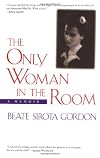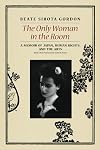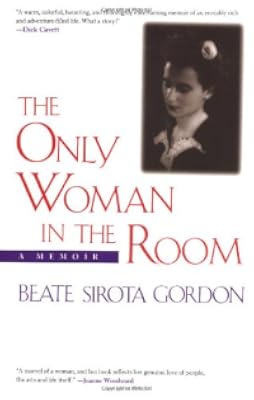
The Only Woman in the Room
by Beate Sirota Gordon
On This Page
Description
A vivid and very personal account of one woman's life in Europe, prewar Japan, and the United States. As the daughter of renowned Russian pianist Leo Sirota, Beate Gordon grew up in the cosmopolitan world of the concert tour, then settled in Japan in the 1930s. During World War II, while her parents remained in Japan under secret service surveillance, Gordon lived alone in the United States, monitoring Tokyo Radio in five languages for the government and later writing radio propaganda. She show more recounts her dramatic reunion with her parents in Tokyo, where she worked in General MacArthur's headquarters, and evokes the postwar suffering in defeated Japan. Her intimate description of helping draft the women's rights section of Japan's new constitution is an astonishing record of history in the making. On returning to the States in 1947, Mrs. Gordon became a cultural impresario, bringing artists, dancers, writers, and musicians from all over to the United States. Her adventures in search of performing artists in such remote and exotic places as Mongolia, Tibet, India, and Indonesia make for hilarious and sometimes hair-raising anecdotes. show lessTags
Recommendations




















Member Reviews
The memoirs of the only woman on the American occupation team to write Japan's post-World War Two constitution, I picked this up not quite sure what to expect. I found it very well-written and easy to read. It was fascinating to read Gordon's thoughts of writing the section on women's rights in Japan's constitution and the process 'behind the scenes' of SCAP, the occupying force. That was the section I was most interested in but after the occupation of Japan, Gordon went on tell of how she became a cultural ambassador, bringing over Asian arts and performers to the United States. It was quite an interesting read and I recommend it to anyone interested in modern Japan.
In Oct. 2007 I had the privilege of hearing Ms.Gordon speak at a renowned women's college in Tokyo. Now in her 80s, Ms. Gordon traveled from her home in the US to visit again the country of her youth, Japan. She spoke in Japanese for over an hour, giving a summary of her life, but most importantly, stressing the importance of the Equal Rights Clause of Japan's consititution, which by quirk of fate she had written.
The Only Woman in the Room, a brief memoir, which includes her contribution to the history of post-war Japan, is refreshingly modest. For some 50 years after the Pacific War, the details of the drafting of Japan's constitution by the 'allied powers' (General MacArthur) had been kept quiet, much of it classified secret show more documents. To the world, appearances were kept as if the Japanese had drafted their own constitution, but in reality it was strictly managed by MacArthur.
Given the prevailing gender chauvinism of Japan (and even the west) at that time, if Ms. Gordon and another woman (economist Eleanor Hadley) had not been present, articulate, and assertive, there would possibly have been no 'equal rights clause' set forth in Japan's constitution. Had Ms. Gordon not had experience growing up in Japan, fluency in the language and knowlege of the plight of women, equal rights in Japan might have taken many more years to arrive.
Speaking before a group of future women leaders of Japan, Ms. Gordon was living testimony to the fact that today's Japanese women have rights of marriage, divorce, voting, owning property, etc., which was not true prior to 1946.
It seems she has always been the type of person so involved in living life that to stop and record all of it in detail would have gotten in the way of living it. Certainly her biography would be a sweeping epic, from her parents' roots in Russia, her father's respected talent as a musician and teacher, through the chaos of the war in Europe, loss of family in Hitler's holocaust, her parents' surviving the war as "non-persons" in Japan, her US college education, her linguistic contributions to the war effort, and so on. Despite all this, I believe perhaps Ms. Gordon does not view herself as being that different from thousands of others who lived through those years, but she did have extraordinary talent and the luck to be in the right place at the right time. show less
The Only Woman in the Room, a brief memoir, which includes her contribution to the history of post-war Japan, is refreshingly modest. For some 50 years after the Pacific War, the details of the drafting of Japan's constitution by the 'allied powers' (General MacArthur) had been kept quiet, much of it classified secret show more documents. To the world, appearances were kept as if the Japanese had drafted their own constitution, but in reality it was strictly managed by MacArthur.
Given the prevailing gender chauvinism of Japan (and even the west) at that time, if Ms. Gordon and another woman (economist Eleanor Hadley) had not been present, articulate, and assertive, there would possibly have been no 'equal rights clause' set forth in Japan's constitution. Had Ms. Gordon not had experience growing up in Japan, fluency in the language and knowlege of the plight of women, equal rights in Japan might have taken many more years to arrive.
Speaking before a group of future women leaders of Japan, Ms. Gordon was living testimony to the fact that today's Japanese women have rights of marriage, divorce, voting, owning property, etc., which was not true prior to 1946.
It seems she has always been the type of person so involved in living life that to stop and record all of it in detail would have gotten in the way of living it. Certainly her biography would be a sweeping epic, from her parents' roots in Russia, her father's respected talent as a musician and teacher, through the chaos of the war in Europe, loss of family in Hitler's holocaust, her parents' surviving the war as "non-persons" in Japan, her US college education, her linguistic contributions to the war effort, and so on. Despite all this, I believe perhaps Ms. Gordon does not view herself as being that different from thousands of others who lived through those years, but she did have extraordinary talent and the luck to be in the right place at the right time. show less
Six-word review: European woman helps define postwar Japan.
Beate Sirota Gordon tells her story capably enough, but it's nothing brilliant. The most striking thing about it is its brevity. I know I wouldn't be capable of telling a minor fraction of my unremarkable history in 171 pages, much less a life as vivid, varied, and consequential as hers. She has a memoirist's knack of letting representative observations and anecdotes convey a sense of events rather than narrating them in exhaustive detail.
Indisputably, the author (who died in 2012 at age 89) led a noteworthy life spanning three continents, both in the performing arts and in her pivotal role as one of the authors of the Japanese constitution drafted by General MacArthur's team in show more 1946. But my rating is not of her life or deeds but of her book. And I'm more impressed by the one than by the other. show less
Beate Sirota Gordon tells her story capably enough, but it's nothing brilliant. The most striking thing about it is its brevity. I know I wouldn't be capable of telling a minor fraction of my unremarkable history in 171 pages, much less a life as vivid, varied, and consequential as hers. She has a memoirist's knack of letting representative observations and anecdotes convey a sense of events rather than narrating them in exhaustive detail.
Indisputably, the author (who died in 2012 at age 89) led a noteworthy life spanning three continents, both in the performing arts and in her pivotal role as one of the authors of the Japanese constitution drafted by General MacArthur's team in show more 1946. But my rating is not of her life or deeds but of her book. And I'm more impressed by the one than by the other. show less
Ratings
Members
- Recently Added By
Lists

Travelogues in Japan
22 works; 3 members
Author Information
1 Work 50 Members
Beate Sirota Gordon (1923-2012) was an Austrian-born American performing arts impresario. Following her work on the Japanese Constitution, Gordon devoted her life to bringing the arts of Asia to the United States. She would receive many honorary degrees and awards, including an Obie, an American Dance Guild Award, and the Order of the Sacred show more Treasure from the Japanese government. show less
Classifications
Statistics
- Members
- 50
- Popularity
- 565,991
- Reviews
- 3
- Rating
- (3.79)
- Languages
- English, Japanese
- Media
- Paper, Ebook
- ISBNs
- 4
- ASINs
- 1