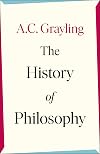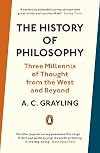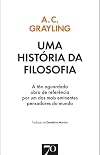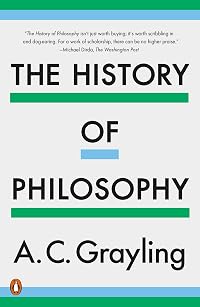
The History of Philosophy
by A. C. Grayling
On This Page
Description
"The first authoritative and accessible single-volume history of philosophy to cover both Western and Eastern traditions, from one of the world's most eminent thinkers The story of philosophy is the story of who we are and why. An epic tale, spanning civilizations and continents, it explores some of the most creative minds in history. But not since the long-popular classic Bertrand Russell's A History of Western Philosophy, published in 1945, has there been a comprehensive and entertaining show more single-volume history of this great, intellectual, world-shaping journey. With characteristic clarity and elegance, A.C. Grayling takes the reader from the worldviews and moralities before the age of the Buddha, Confucius and Socrates through Christianity's capture of the European mind, from the Renaissance and Enlightenment on to Mill, Nietzsche, Sartre and, finally, philosophy today. Bringing together these many threads that all too often run parallel, he surveys in tandem the great philosophical traditions of India, China and the Persian-Arabic world"-- show lessTags
Recommendations



Member Reviews
I’ll admit, the history of philosophy is one of my favorite genres, having read the works of Bertrand Russell, Will Durant, Anthony Kenny, Bryan Magee, Nigel Warburton, and others. Each has its pros and cons, so it’s hard to rank them, but if I had to, Russell’s The History of Western Philosophy and Magee’s Confessions of a Philosopher would top the list. (A Little History of Philosophy by Nigel Warburton would come in a close third, for those looking for a quicker read.)
But now, if I had to recommend one book to someone interested in the subject, it would be A. C. Grayling’s latest, The History of Philosophy, and here’s why.
For a single-volume work, this book has the most extensive coverage, not only because of its higher show more page count, but also because it packs the most content into each page. Grayling states in the introduction that his goal is to write about each philosopher as clearly and concisely as possible without sacrificing the complexity and subtlety of their thinking, which he masterfully achieves.
Whereas Russell’s history only covers up to John Dewey, Grayling takes the reader through the entire twentieth century up to Kripke, and even manages to squeeze in a section on Indian, Chinese, Arabic-Persian, and African philosophy, in addition to an appendix on logic, all in roughly the same number of pages.
How does he do this? Other than by writing clearly and concisely, unlike Russell, who spends 190 pages on Catholic philosophy, Grayling covers Medieval and Renaissance philosophy in 58 pages. Grayling’s principle of selection is more focused, as he makes the valid point that theology is not philosophy and that it requires its own history, much like science. As Grayling wrote, “if the starting point for reflection is the acceptance of religious doctrine, then the reflection that follows is theology, or theodicy, or exegesis, or casuistry, or apologetics, or hermeneutics, but it is not philosophy.” This allows him to dedicate more space to modern and contemporary philosophy.
This is not to say that he ignores Medieval philosophy, just that he covers it in a rather brilliant way. Rather than focusing on the philosophical debates regarding imaginary entities (e.g., the nature of the holy trinity), he simply comments on the legitimate philosophical issues that “arise from or impinge upon” theological thought, i.e., the philosophical problems of time, free will, ethics, etc.
In addition to more focused content, you might think that Grayling would have the edge on Russell for no other reason than the fact that his history was published 74 years after Russell’s, incorporating the latest research and progress in philosophy over the last three quarters of a century. But it’s not only for this reason.
Russell’s account has been legitimately criticized for lacking objectivity and for providing inadequate or misleading coverage of several philosophers. Grayling’s history is an improvement in this regard, as it provides both a more objective and deeper account of each philosopher. Not that Grayling will escape the criticism of bias; for as Russell said, “a man without bias cannot write interesting history — if, indeed, such a man exists."
Grayling is not such a man, but this is a good thing. He does a commendable job of walking the fine line between the objective presentation of each philosopher’s ideas and the analysis and commentary that by definition must be biased toward a particular perspective. (A completely objective history of philosophy without commentary would be nothing other than a series of dull Wikipedia entries.) That said, I wouldn’t be surprised if Grayling is criticized for not hiding his atheism and contempt for religion, but, as he accurately noted, religion is most definitely not philosophy, for several reasons he makes perfectly clear.
Last, I can confidently say that, out of the many works on popular philosophy I’ve read, Grayling provides the clearest accounts of the even the most difficult philosophers (Kant, Hegel, Heidegger). I came away from this book with a sense of greater understanding of the most challenging ideas thanks to what I’m sure was a tremendous amount of work that Grayling put in to make the ideas come to life for a non-philosopher (this is a majorly underrated skill).
Grayling is simply a masterful writer, providing a clear, concise, and entertaining narrative of the deepest and most profound thinking in the history of our species, updated for the twenty-first century (a time in which we need philosophy more than ever). While I wouldn’t say that Grayling’s history replaces Russell’s (Russell is not replaceable), if you decide to read only one book about the history of philosophy, make it this one. show less
But now, if I had to recommend one book to someone interested in the subject, it would be A. C. Grayling’s latest, The History of Philosophy, and here’s why.
For a single-volume work, this book has the most extensive coverage, not only because of its higher show more page count, but also because it packs the most content into each page. Grayling states in the introduction that his goal is to write about each philosopher as clearly and concisely as possible without sacrificing the complexity and subtlety of their thinking, which he masterfully achieves.
Whereas Russell’s history only covers up to John Dewey, Grayling takes the reader through the entire twentieth century up to Kripke, and even manages to squeeze in a section on Indian, Chinese, Arabic-Persian, and African philosophy, in addition to an appendix on logic, all in roughly the same number of pages.
How does he do this? Other than by writing clearly and concisely, unlike Russell, who spends 190 pages on Catholic philosophy, Grayling covers Medieval and Renaissance philosophy in 58 pages. Grayling’s principle of selection is more focused, as he makes the valid point that theology is not philosophy and that it requires its own history, much like science. As Grayling wrote, “if the starting point for reflection is the acceptance of religious doctrine, then the reflection that follows is theology, or theodicy, or exegesis, or casuistry, or apologetics, or hermeneutics, but it is not philosophy.” This allows him to dedicate more space to modern and contemporary philosophy.
This is not to say that he ignores Medieval philosophy, just that he covers it in a rather brilliant way. Rather than focusing on the philosophical debates regarding imaginary entities (e.g., the nature of the holy trinity), he simply comments on the legitimate philosophical issues that “arise from or impinge upon” theological thought, i.e., the philosophical problems of time, free will, ethics, etc.
In addition to more focused content, you might think that Grayling would have the edge on Russell for no other reason than the fact that his history was published 74 years after Russell’s, incorporating the latest research and progress in philosophy over the last three quarters of a century. But it’s not only for this reason.
Russell’s account has been legitimately criticized for lacking objectivity and for providing inadequate or misleading coverage of several philosophers. Grayling’s history is an improvement in this regard, as it provides both a more objective and deeper account of each philosopher. Not that Grayling will escape the criticism of bias; for as Russell said, “a man without bias cannot write interesting history — if, indeed, such a man exists."
Grayling is not such a man, but this is a good thing. He does a commendable job of walking the fine line between the objective presentation of each philosopher’s ideas and the analysis and commentary that by definition must be biased toward a particular perspective. (A completely objective history of philosophy without commentary would be nothing other than a series of dull Wikipedia entries.) That said, I wouldn’t be surprised if Grayling is criticized for not hiding his atheism and contempt for religion, but, as he accurately noted, religion is most definitely not philosophy, for several reasons he makes perfectly clear.
Last, I can confidently say that, out of the many works on popular philosophy I’ve read, Grayling provides the clearest accounts of the even the most difficult philosophers (Kant, Hegel, Heidegger). I came away from this book with a sense of greater understanding of the most challenging ideas thanks to what I’m sure was a tremendous amount of work that Grayling put in to make the ideas come to life for a non-philosopher (this is a majorly underrated skill).
Grayling is simply a masterful writer, providing a clear, concise, and entertaining narrative of the deepest and most profound thinking in the history of our species, updated for the twenty-first century (a time in which we need philosophy more than ever). While I wouldn’t say that Grayling’s history replaces Russell’s (Russell is not replaceable), if you decide to read only one book about the history of philosophy, make it this one. show less
Un libro come questo di 682 pagine, in inglese, non lo si legge, lo si tiene sul comodino e lo si consulta ogni qualvolta nella battaglia quotidiana della vita, hai bisogno di capire di cosa sono fatti gli uomini e il luogo dove abitano. Un viaggio nella storia della vita e di chi, chiamandosi o chiamato filosofo, cerca o ha cercato di capire il senso di tutto. Ardua impresa davvero, ma Grayling mi pare ci riesca alla meglio. Lo conosco per avere letto altri suoi libri. Si dichiara a-teo, ma non è prevenuto. Liberamente scrive quello che pensa e capita di farsi capire ed essere accettato anche da chi non la pensa come lui. E questo posso essere anche io che filosofo non sono, anzi sono l'ultimo arrivato in questo campo della show more conoscenza. Per ora ho letto soltanto la bellissima introduzione e il capitolo sugli stoici. Mi ritengo un seguace di questa filosofia anche se sono un dinosauro digitale. Anzi, proprio per questa ragione. Una filosofia che ha oltre due millenni di vita, che ha ancora qualcosa da dire a chi nasce e vive nel terzo millennio dell'era moderna, significa pure qualcosa, non vi pare? show less
A very good over view of a history of (mainly) western Philosophy.
Have tried a few before but have foundered.
A few reasons for the success of this version:
- about the right length, both overall but also for each individual topic
- took time to not just use the technical language but explained those instances where the same words may have been used but with different meanings
- at times humorous to boot.
Also learnt a new word “redound” which I, at first thought was a typo, as the word (when first used) was in a context that lent itself to meaning “rebound”, and it has a very similar meaning.
It included short sections on Indian, African, Chinese and Arabic-Persian philosophy. I di not find these worked as well, which is probably as show more much to do with my comparative unfamiliarity with the subject matter.
Big Ship
29 December 2019 show less
Have tried a few before but have foundered.
A few reasons for the success of this version:
- about the right length, both overall but also for each individual topic
- took time to not just use the technical language but explained those instances where the same words may have been used but with different meanings
- at times humorous to boot.
Also learnt a new word “redound” which I, at first thought was a typo, as the word (when first used) was in a context that lent itself to meaning “rebound”, and it has a very similar meaning.
It included short sections on Indian, African, Chinese and Arabic-Persian philosophy. I di not find these worked as well, which is probably as show more much to do with my comparative unfamiliarity with the subject matter.
Big Ship
29 December 2019 show less
His super snarky one-page intro to the section on 20th century "Continental Philosopher," whom he very unfavorable compares to the Anglo-American modern empiricist-analytical school, is hilarious.
Un libro come questo di 682 pagine, in inglese, non lo si legge, lo si tiene sul comodino e lo si consulta ogni qualvolta nella battaglia quotidiana della vita, hai bisogno di capire di cosa sono fatti gli uomini e il luogo dove abitano. Un viaggio nella storia della vita e di chi, chiamandosi o chiamato filosofo, cerca o ha cercato di capire il senso di tutto. Ardua impresa davvero, ma Grayling mi pare ci riesca alla meglio. Lo conosco per avere letto altri suoi libri. Si dichiara a-teo, ma non è prevenuto. Liberamente scrive quello che pensa e capita di farsi capire ed essere accettato anche da chi non la pensa come lui. E questo posso essere anche io che filosofo non sono, anzi sono l'ultimo arrivato in questo campo della show more conoscenza. Per ora ho letto soltanto la bellissima introduzione e il capitolo sugli stoici. Mi ritengo un seguace di questa filosofia anche se sono un dinosauro digitale. Anzi, proprio per questa ragione. Una filosofia che ha oltre due millenni di vita, che ha ancora qualcosa da dire a chi nasce e vive nel terzo millennio dell'era moderna, significa pure qualcosa, non vi pare? show less
Nov 28, 2019Italian
Esta história da filosofia explora as principais questões intelectuais que persistem ao longo dos séculos e nas mais variadas circunstâncias. Grayling examina o enraizamento histórico das linhas de pensamento que compõem a filosofia como a conhecemos hoje.
Começa antes de Buda e Confúcio, segue para as antigas escolas gregas de pensamento, através do domínio do cristianismo sobre o pensamento europeu, para a Renascença e o Iluminismo quando os desenvolvimentos nas ciências naturais e revoluções no pensamento sobre o status moral dos indivíduos tiveram um impacto dramático na forma de ver o mundo.
O autor passa então para os filósofos modernos como Darwin, Marx e Freud, cujo pensamento deu origem às ciências sociais. show more Finalmente toca a filosofia e a lógica que desempenharam um papel importante na ascensão da computação e da ciência cognitiva. show less
Começa antes de Buda e Confúcio, segue para as antigas escolas gregas de pensamento, através do domínio do cristianismo sobre o pensamento europeu, para a Renascença e o Iluminismo quando os desenvolvimentos nas ciências naturais e revoluções no pensamento sobre o status moral dos indivíduos tiveram um impacto dramático na forma de ver o mundo.
O autor passa então para os filósofos modernos como Darwin, Marx e Freud, cujo pensamento deu origem às ciências sociais. show more Finalmente toca a filosofia e a lógica que desempenharam um papel importante na ascensão da computação e da ciência cognitiva. show less
May 7, 2021Portuguese (Portugal)
Ratings
Members
- Recently Added By
Lists

2021 - List of books read
53 works; 1 member
Author Information

73+ Works 7,985 Members
Anthony Clifford "A. C." Grayling is a British philosopher. In 2011 he founded and became the first Master of New College of the Humanities, an independent undergraduate college in London. Until June 2011, he was Professor of Philosophy at Birkbeck, University of London, where he taught from 1991. Grayling was born and raised in Luanshya, Northern show more Rhodesia (now Zambia). After moving to England in his teens, he spent three years at the University of Sussex, but said that although he applauded their intention to educate generalists, he wished to be a scholar, so in addition to his BA from Sussex, he also completed one in philosophy as a University of London external student. He went on to obtain an MA from Sussex, then attended Magdalen College, Oxford, where he was taught by P. F. Strawson and A. J. Ayer, obtaining his doctorate in 1981. He lectured in philosophy at St Anne's College, Oxford, before taking up a post in 1991 at Birkbeck, University of London, where in 1998 he became reader in philosophy. (Bowker Author Biography) show less
Awards and Honors
Distinctions
The Guardian Book of the Day (2019-06-01)
Notable Lists
Work Relationships
Is a reply to
Common Knowledge
- Canonical title
- The History of Philosophy
- People/Characters
- Thales; Anaximander; Anaximenes; Pythagoras; Xenophanes; Heraclitus (show all 68); Parmenides; Zeno of Elea; Empedocles; Anaxagoras; Leucippus; Democritus; Socrates; Plato; Aristotle; Augustine of Hippo; Boethius; Anselm of Canterbury; Thomas Aquinas; Roger Bacon; Duns Scotus; William of Ockham; Francis Bacon; René Descartes; Thomas Hobbes; Baruch Spinoza; John Locke; George Berkeley; Gottfried Wilhelm von Leibniz; David Hume; Jean-Jacques Rousseau; Immanuel Kant; Jeremy Bentham; George Wilhelm Friedrich Hege; Arthur Schopenhauer; John Stuart Mill; Karl Marx; Friedrich Nietzsche; Bertrand Russell; Gottlob Frege; G. E. Moore; Ludwig Wittgenstein; Rudolf Carnap; Willard Van Orman Quine; Karl Popper; Gilbert Ryle; J. L. Austin; P. F. Strawson; Donald Davidson; Michael Dummett; Saul Kripke; Charles Stevenson; R. M. Hare; J. L. Mackie; John Rawls; Edmund Husserl; Martin Heidegger; Maurice Merleau-Ponty; Jean-Paul Sartre; Hans-Georg Gadamer; Paul Ricoeur; Gilles Deleuze; Jacques Derrida; Buddha; Confucius; Mencius; Xunzi; Lao Tzu
- Important places
- Ancient Greece; Ancient Rome; India; China; Arabia; Africa (show all 7); Ancient China
- Important events
- Classical Antiquity; Zhou Dynasty; Middle Ages; Enlightenment; 18th century; 19th century (show all 8); 20th century; Existentialism
- First words
- Philosophy's history, as today's students and teachers of philosophy see it, is a retrospective construct.
- Last words
- (Click to show. Warning: May contain spoilers.)And that makes us all players in the history of philosophy.
Classifications
Statistics
- Members
- 654
- Popularity
- 44,182
- Reviews
- 6
- Rating
- (4.03)
- Languages
- 5 — Dutch, English, Portuguese, Spanish, Swedish
- Media
- Paper, Audiobook, Ebook
- ISBNs
- 19
- ASINs
- 5