People/Characters Karl Popper
Works (137)


























































- A Brief History of Time: From the Big Bang to Black Holes by Stephen Hawking
- The Black Swan: The Impact of the Highly Improbable by Nassim Nicholas Taleb
- Papyrus: The Invention of Books in the Ancient World by Irene Vallejo
- Wittgenstein's Poker : The Story of a Ten-minute Argument Between Two Great Philosophers by David Edmonds
- The Philosophy Book: Big Ideas Simply Explained by Will Buckingham
- Confessions of a Philosopher by Bryan Magee
- The History of Philosophy by A. C. Grayling
- Unended Quest: An Intellectual Autobiography by Karl R. Popper
- Objective Knowledge: An Evolutionary Approach by Karl R. Popper
- How to Think About Weird Things: Critical Thinking for a New Age by Theodore Schick
- Popper by Bryan Magee
- The Spiritual Brain: A Neuroscientist's Case for the Existence of the Soul by Mario Beauregard
- The Great Philosophers: From Socrates to Turing by Ray Monk
- Believing Bullshit: How Not to Get Sucked into an Intellectual Black Hole by Stephen Law
- Kuhn vs. Popper: The Struggle for the Soul of Science by Steve Fuller
- Do You Think You're Clever? The Oxford and Cambridge Questions by John Farndon
- Weird Realism: Lovecraft and Philosophy by Graham Harman
- The Great Cholesterol Con: The Truth About What Really Causes Heart Disease and How to Avoid It by Malcolm Kendrick
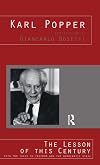
- The Lesson of This Century: With Two Talks on Freedom and the Democratic State by Karl Popper
- Popper by Frederic Raphael
Related Tags
Description
| Description | Sir Karl Raimund Popper CH FBA FRS (28 July 1902 – 17 September 1994) was an Austrian-British philosopher and professor at the London School of Economics. He is generally regarded as one of the greatest philosophers of science of the 20th century. Popper is known for his rejection of the classical inductivist views on the scientific method, in favour of empirical falsification: A theory in the empirical sciences can never be proven, but it can be falsified, meaning that it can and should be scrutinized by decisive experiments. If the outcome of an experiment contradicts the theory, one should refrain from ad hoc manoeuvres that evade the contradiction merely by making it less falsifiable. Popper is also known for his opposition to the classical justificationist account of knowledge which he replaced with critical rationalism, "the first non justificational philosophy of criticism in the history of philosophy". In political discourse, he is known for his vigorous defence of liberal democracy and the principles of social criticism that he came to believe made a flourishing "open society" possible. His political philosophy embraces ideas from all major democratic political ideologies and attempts to reconcile them: social democracy, classical liberalism and conservatism, more explicitly so in his later years. - Wikipedia |