On This Page
Description
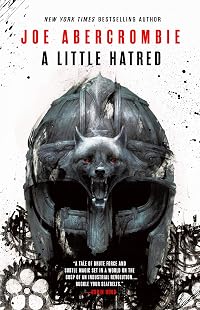
The chimneys of industry rise over Adua and the world seethes with new opportunities. But old scores run deep as ever. On the blood-soaked borders of Angland, Leo dan Brock struggles to win fame on the battlefield, and defeat the marauding armies of Stour Nightfall. He hopes for help from the crown. But King Jezal's son, the feckless Prince Orso, is a man who specializes in disappointments. Savine dan Glokta plans to claw her way to the top of the slag-heap of society by any means necessary. show more But the slums boil over with a rage that all the money in the world cannot control. The age of the machine dawns, but the age of magic refuses to die. With the help of the mad hillwoman Isern-i-Phail, Rikke struggles to control the blessing, or the curse, of the Long Eye. Glimpsing the future is one thing, but with the guiding hand of the First of the Magi still pulling the strings, changing it will be quite another. show lessTags
Recommendations

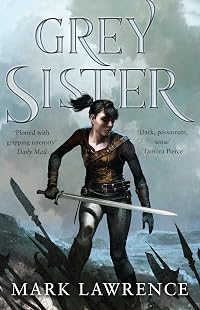
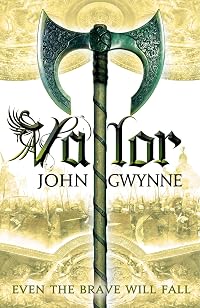
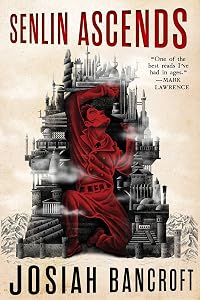
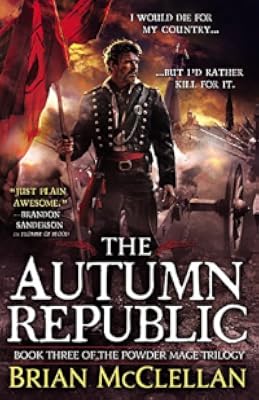


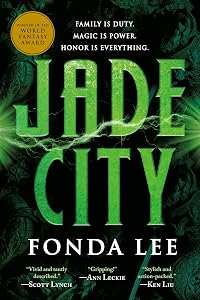
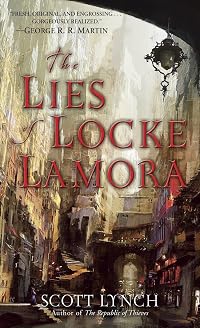
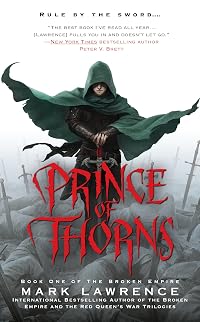
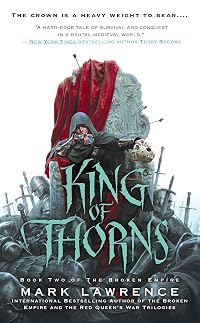

Member Recommendations
Member Reviews
It's been quite some time since I read Joe Abercrombie and from the first page, I was hooked. It's not difficult to pique my interest when it comes to Fantasy books, but it's very difficult to read one this good. All of Abercrombie's trademarks are here: unforgettable characters, shocking violence and a dark sense of humor and believe me, the book is really funny at parts. I know this is just book 1, but I'm already speeding onto the next one. With a story like this, you just have to keep going.
I cannot gush enough about Glokta, one of my all-time favorite characters in any story I've ever read, but his daughter Savine gets her spot in the limelight here too. Terrific!
I cannot gush enough about Glokta, one of my all-time favorite characters in any story I've ever read, but his daughter Savine gets her spot in the limelight here too. Terrific!
“’Oh,’ he gasped. ‘Oh! Oh fuck!’
He [Orso, Queen Terez’s son] arched his back, clutched desperately at the edge of the desk, kicked a pot of pens onto the floor, smacked his head against the wall and sent a little shower of plaster across his shoulders. He tried desperately to squirm away, but she [Savine dan Glokta] had him by the balls. Quite literally. He crushed his face up, nearly swallowed his tongue, coughed and hissed one more desperate, ‘Fuck!’ through gritted teeth, then sagged back with a whimper, kicked and sagged again, legs shuddering weakly with aching after-spams. ‘Fuck,’ he breathed. Savine looked around, lips pursed, then took Orson’s half-full wine glass and spat into it. Even under those show more circumstances, he noticed, she held it by the stem in the most elegant manner. She scraped her tongue against her front teeth, spat again and set the glass down on the desk nest to hers. Orso watched his seed float around in the wine. ‘That…is somewhat disgusting.’
‘Please.’ Savine rinsed her mouth out from the other glass. ‘You only have to look at it.’
‘Such cavalier disrespect. One day, madam, I shall be your king!’
‘And your queen will no doubt spit your come into a golden box to be shared out on holidays for the public good. My congratulation to you both, Your Highness.’
[...]
She slid her fingers into his hair, then twisted his head somewhat painfully down between her legs. ‘My time is valuable.’”
‘The naked gall,’ Orso gave a sigh as he hooked her leg over his shoulder, sliding his hand down the bare skin, hearing her gasp, feeling her shudder. He kissed gently at her shin, at her knee, at her thigh. ‘Is there no end to the demands of one’s subjects?’”
In “A Little Hatred” by Joe Abercrombie
I think the more interesting issue I could raise regarding Grimdark is that fantasy that steers away from moral absolutes and their interplay is increasingly popular despite the fact that the main argument for reading fantasy (or at least the one that raises its head numerous times here; careful, Scribe...) is escapism. Is it that the world we live in now, with its perpetual bombardment of negative headlines (some of which are Daily Hate, some of which are simply, sadly, sad) leaves us rejecting the notion that the battle between good and evil can be won, in such a way that even our fantasies now have no option but to become more cynical? The heroes may win their day but their worlds remain largely unchanged? When you have an iconoclast then there must be a herd for him to go against, and then you likely have a political difference; it's increasingly popular nowadays to frame the enemy as the anarchists, activists and in a return to the Red Scare, the unionists and leftists. Science fiction used to be, as I believe it was Adam Roberts said, the most communist of fictions; nowadays genre fiction as an entity veers a bit more authoritarian. Abercrombie, K. J. Parker, Ruocchio and Daniel Abraham (among others) have changed the face of fantasy and have indeed placed it firmly back in the bestseller lists, however, I disagree with the usual readers that just because their work falls within your undefined label of ‘grimdark’ and has a tendency to favour evil over good, and that it’s one dimensional. What’s the different between your so-called ‘grimdark’ and the work of Eddings, for example? If this trend towards darker more ‘evil’ protagonists is a reflection upon the psyche of its readership, I would love to meet the millions of misguided, delusional, painfully optimistic readers of yesteryear. These works do not replace idealism with cynicism; they simply portray a different side of the same coin. I believe that it’s the way they’re interpreted that reflects the psyche of that particular reader and shouldn't be used to stereotype the entire readership. When characters are shaped by circumstance and history their actions and decisions are arguably even more authentic - even more real - than their idealistic predecessors. Not that this lessens the enjoyment that a modern fantasy reader can get out of earlier works of fantasy. Different types of fantasy with authentic voices that tell fantastic stories are exactly what modern fantasy needs because it needs to be varied. I disagree that only the young and male enjoy the darker types of fantasy. I won’t rehash other arguments, but I believe this to be incorrect. I think it does the genre a disservice to stereotype. I know men and women that read the works of Abercrombie, Lawrence and Weeks. Women work on these books, they read these books and they enjoy these books! I agree that we have to think about the debates that rage around the stereotypical Correio da Manhã headlines (a Portuguese newspaper and TV Station like The Sun), however, these open discussions need to be set in a wider social context than the parallels that can be drawn between them and works of fiction. Is the change from idealistic epic fantasy to darker epic fantasy a reflection of society’s preferences? Maybe. Is the shift from good triumphing over evil to evil triumphing over good a bad thing? Not really. Does it make for a more varied selection of fiction to choose from? Definitely. Therein lies its value. After all, aren’t we all (men and women) just looking for a good read? And “A Little Hatred” is one hell of a good read! It’s definitely a cleaner narrative and well-edited narrative in comparison with his previous novels.
Abercrombie here is in utmost form in terms of cultivating everything in comical and dramatic irony...not really sure how his stuff could find its way into the YA section though (vide above-quote in this review). On top of that I only had to wait two years (the 3rd volume was published on the 16th of September 2021 the day I started reading “A Little Hatred”) to start reading the trilogy from beginning to end (*I’m looking at you, Martin and Rothfuss”*)! show less
He [Orso, Queen Terez’s son] arched his back, clutched desperately at the edge of the desk, kicked a pot of pens onto the floor, smacked his head against the wall and sent a little shower of plaster across his shoulders. He tried desperately to squirm away, but she [Savine dan Glokta] had him by the balls. Quite literally. He crushed his face up, nearly swallowed his tongue, coughed and hissed one more desperate, ‘Fuck!’ through gritted teeth, then sagged back with a whimper, kicked and sagged again, legs shuddering weakly with aching after-spams. ‘Fuck,’ he breathed. Savine looked around, lips pursed, then took Orson’s half-full wine glass and spat into it. Even under those show more circumstances, he noticed, she held it by the stem in the most elegant manner. She scraped her tongue against her front teeth, spat again and set the glass down on the desk nest to hers. Orso watched his seed float around in the wine. ‘That…is somewhat disgusting.’
‘Please.’ Savine rinsed her mouth out from the other glass. ‘You only have to look at it.’
‘Such cavalier disrespect. One day, madam, I shall be your king!’
‘And your queen will no doubt spit your come into a golden box to be shared out on holidays for the public good. My congratulation to you both, Your Highness.’
[...]
She slid her fingers into his hair, then twisted his head somewhat painfully down between her legs. ‘My time is valuable.’”
‘The naked gall,’ Orso gave a sigh as he hooked her leg over his shoulder, sliding his hand down the bare skin, hearing her gasp, feeling her shudder. He kissed gently at her shin, at her knee, at her thigh. ‘Is there no end to the demands of one’s subjects?’”
In “A Little Hatred” by Joe Abercrombie
I think the more interesting issue I could raise regarding Grimdark is that fantasy that steers away from moral absolutes and their interplay is increasingly popular despite the fact that the main argument for reading fantasy (or at least the one that raises its head numerous times here; careful, Scribe...) is escapism. Is it that the world we live in now, with its perpetual bombardment of negative headlines (some of which are Daily Hate, some of which are simply, sadly, sad) leaves us rejecting the notion that the battle between good and evil can be won, in such a way that even our fantasies now have no option but to become more cynical? The heroes may win their day but their worlds remain largely unchanged? When you have an iconoclast then there must be a herd for him to go against, and then you likely have a political difference; it's increasingly popular nowadays to frame the enemy as the anarchists, activists and in a return to the Red Scare, the unionists and leftists. Science fiction used to be, as I believe it was Adam Roberts said, the most communist of fictions; nowadays genre fiction as an entity veers a bit more authoritarian. Abercrombie, K. J. Parker, Ruocchio and Daniel Abraham (among others) have changed the face of fantasy and have indeed placed it firmly back in the bestseller lists, however, I disagree with the usual readers that just because their work falls within your undefined label of ‘grimdark’ and has a tendency to favour evil over good, and that it’s one dimensional. What’s the different between your so-called ‘grimdark’ and the work of Eddings, for example? If this trend towards darker more ‘evil’ protagonists is a reflection upon the psyche of its readership, I would love to meet the millions of misguided, delusional, painfully optimistic readers of yesteryear. These works do not replace idealism with cynicism; they simply portray a different side of the same coin. I believe that it’s the way they’re interpreted that reflects the psyche of that particular reader and shouldn't be used to stereotype the entire readership. When characters are shaped by circumstance and history their actions and decisions are arguably even more authentic - even more real - than their idealistic predecessors. Not that this lessens the enjoyment that a modern fantasy reader can get out of earlier works of fantasy. Different types of fantasy with authentic voices that tell fantastic stories are exactly what modern fantasy needs because it needs to be varied. I disagree that only the young and male enjoy the darker types of fantasy. I won’t rehash other arguments, but I believe this to be incorrect. I think it does the genre a disservice to stereotype. I know men and women that read the works of Abercrombie, Lawrence and Weeks. Women work on these books, they read these books and they enjoy these books! I agree that we have to think about the debates that rage around the stereotypical Correio da Manhã headlines (a Portuguese newspaper and TV Station like The Sun), however, these open discussions need to be set in a wider social context than the parallels that can be drawn between them and works of fiction. Is the change from idealistic epic fantasy to darker epic fantasy a reflection of society’s preferences? Maybe. Is the shift from good triumphing over evil to evil triumphing over good a bad thing? Not really. Does it make for a more varied selection of fiction to choose from? Definitely. Therein lies its value. After all, aren’t we all (men and women) just looking for a good read? And “A Little Hatred” is one hell of a good read! It’s definitely a cleaner narrative and well-edited narrative in comparison with his previous novels.
Abercrombie here is in utmost form in terms of cultivating everything in comical and dramatic irony...not really sure how his stuff could find its way into the YA section though (vide above-quote in this review). On top of that I only had to wait two years (the 3rd volume was published on the 16th of September 2021 the day I started reading “A Little Hatred”) to start reading the trilogy from beginning to end (*I’m looking at you, Martin and Rothfuss”*)! show less
I gave the first book of the First Law Trilogy 3 stars when I first read it, back when I still bothered with stars, and I'd probably do the same here. This is despite the fact that Abercrombie is easily one of my favorite authors. Or maybe it's because of it? I dunno.
Anyway, I liked this book and I'm resisting the urge to jump into the second book. This is a great beginning to a story. I will probably end up rereading (or relistening to) this some time down the line like I did with the FLT. I didn't dislike anything about it. And I loved a lot of it. Even got moved to almost crying at a scene at the end of the book. A scene that was both shocking and yet didn't feel like "SuBvErTInG tHa eXpEcTatIOns"
I just didn't feel like it was a show more full story. And tbh I'm not sure if I would have enjoyed (or even understood) this at all if I hadn't read six(!) other novels (and a collection of short stories) that laid the groundwork. But I like that! There's no reason to even attempt to explain it all again. And I'm glad he didn't. Just don't be fooled by the "#1." This is not a good place to begin. But it's a great place to get to! show less
Anyway, I liked this book and I'm resisting the urge to jump into the second book. This is a great beginning to a story. I will probably end up rereading (or relistening to) this some time down the line like I did with the FLT. I didn't dislike anything about it. And I loved a lot of it. Even got moved to almost crying at a scene at the end of the book. A scene that was both shocking and yet didn't feel like "SuBvErTInG tHa eXpEcTatIOns"
I just didn't feel like it was a show more full story. And tbh I'm not sure if I would have enjoyed (or even understood) this at all if I hadn't read six(!) other novels (and a collection of short stories) that laid the groundwork. But I like that! There's no reason to even attempt to explain it all again. And I'm glad he didn't. Just don't be fooled by the "#1." This is not a good place to begin. But it's a great place to get to! show less
A good, but not great IMO, start to the trilogy. It does get much better though from this set-up point. I really liked the relationship dramas between Savine, Orso, Brock, and Rikke. The shocking twist that Savine learns will of course be known already to the readers of the initial trilogy. The thing that I disliked the most about this one was, [[MAJOR SPOILER]], the ending which involves a very short span of chapters where Rikke sees a vision of the Dogman dying, then Stour kills Scale to take the crown in the North, and Jezal dies mysteriously. That bit felt like it was suddenly too much going on all at once. [[END SPOILER]].
The more things change, the more they stay the same.
In A Little Hatred we return to the world of Abercrombie's The First Law series 30 years after the apocalyptic Battle of Adua that closed out Last Argument of Kings, and the times, they are a changin'. An industrial revolution is well apace, the common lands are rapidly enclosed, and exciting new inventions and manufactories seem to create new opportunities for the rich to get richer and the poor to get ever poorer. This shift has been carefully foreshadowed in some of the standalone novels (The Heroes and Red Country) but Abercrombie really nails the intricacies of an early-modern-era setting here, leaning on literary traditions far afield of your typical fantasy: The poor live in show more brutal conditions that won't be unfamiliar to readers of Charles Dickens or Victor Hugo, while the wealthy citizens of the Union spend their lives carefully preening to participate in a cutthroat vision of "high society" that brings to mind the works of Jane Austen. Naturally, there is still plenty of manly combat to be had in these pages, the overall shift is to a register of social rather than physical conflict. Even magic has seemingly been leached out of the Circle of the World (Bayaz, the First of the Magi, here appears in a business suit, carrying a crystal-topped cane in lieu of his wizard's staff), but the threat of violence and cruelty is never far from the surface.
The plot centers around an interesting quartet of characters (Savine dan Glokta, Leo dan Brock, Rikke, and Crown Prince Orso) brought together and torn apart by fate, blood, desire, and happenstance. These four figures, two men and two women, have some intriguing parallels and oppositions built into them that I think will be interesting as the series moves forward (the book frequently feels like a winking examination of the tropes of romance novels, with some very funny undercutting of eroticism that had me cracking up at times). Unfortunately, while all of these four (along with a few additional POV characters) are fun, unique, and rather likable, none of them so far has attained the "breakout" stature of characters from Abercrombie's earlier books, like Bayaz, Inquisitor Glokta, Monza Murcatto, and of course Logen Ninefingers. The shadow of earlier generations is quite long, and the would-be heroes of the "Age of Madness" have a ways to go before they emerge from it. A big part of the problem is the fact that the majority of the characters Abercrombie introduces here are both quite young (and thus lacking in the twisted, brutal backstories that made figures like Glokta and Ninefingers so instantly intriguing) and the children of famed heroes of the previous age. It's a difficult tightrope to walk, and I don't envy Abercrombie the task of making this new generation the equal to their parents... Overall I think he does about as well as one can.
Abercrombie uses his full set of literary tricks here, from a "Wandering Rocks" style chapter that switches points-of-view to encompass the chaos of a worker's revolt (a technique he previously deployed in [b:The Heroes|9300768|The Heroes (First Law World, #5)|Joe Abercrombie|https://i.gr-assets.com/images/S/compressed.photo.goodreads.com/books/1375671200l/9300768._SY75_.jpg|12879765]) to his perhaps-too-frequent utilization of cutting witticisms and folksy pearls of wisdom (“Battles may sometimes be won by the brave, but wars are always won by the clever,” “When you tell a lie, you have to sound like you believe it. Goes double for the ones you tell yourself,” etc, etc). The overall feeling is of literary richness, almost to overflowing, and there is much to enjoy here on a linguistic and literary level, above and beyond the machinations of the plot.
Overall, I definitely enjoyed this return to the Circle of the World, and it was a ton of fun to look at Abercombie's vision of his world a generation later (I don't think I would recommend that a reader jump right into this without reading at least the original trilogy... this is far less self-contained than one of the standalone novels like [b:Best Served Cold|2315892|Best Served Cold|Joe Abercrombie|https://i.gr-assets.com/images/S/compressed.photo.goodreads.com/books/1347732723l/2315892._SY75_.jpg|2322406]). I'm definitely looking forward to the next books in the series, [b:The Trouble with Peace|40701777|The Trouble with Peace (The Age of Madness, #2)|Joe Abercrombie|https://s.gr-assets.com/assets/nophoto/book/50x75-a91bf249278a81aabab721ef782c4a74.png|63304678] and [b:The Beautiful Machine|40701780|The Beautiful Machine (The Age of Madness, #3)|Joe Abercrombie|https://s.gr-assets.com/assets/nophoto/book/50x75-a91bf249278a81aabab721ef782c4a74.png|63304686]... How delightful that they will be arriving so soon! show less
In A Little Hatred we return to the world of Abercrombie's The First Law series 30 years after the apocalyptic Battle of Adua that closed out Last Argument of Kings, and the times, they are a changin'. An industrial revolution is well apace, the common lands are rapidly enclosed, and exciting new inventions and manufactories seem to create new opportunities for the rich to get richer and the poor to get ever poorer. This shift has been carefully foreshadowed in some of the standalone novels (The Heroes and Red Country) but Abercrombie really nails the intricacies of an early-modern-era setting here, leaning on literary traditions far afield of your typical fantasy: The poor live in show more brutal conditions that won't be unfamiliar to readers of Charles Dickens or Victor Hugo, while the wealthy citizens of the Union spend their lives carefully preening to participate in a cutthroat vision of "high society" that brings to mind the works of Jane Austen. Naturally, there is still plenty of manly combat to be had in these pages, the overall shift is to a register of social rather than physical conflict. Even magic has seemingly been leached out of the Circle of the World (Bayaz, the First of the Magi, here appears in a business suit, carrying a crystal-topped cane in lieu of his wizard's staff), but the threat of violence and cruelty is never far from the surface.
The plot centers around an interesting quartet of characters (Savine dan Glokta, Leo dan Brock, Rikke, and Crown Prince Orso) brought together and torn apart by fate, blood, desire, and happenstance. These four figures, two men and two women, have some intriguing parallels and oppositions built into them that I think will be interesting as the series moves forward (the book frequently feels like a winking examination of the tropes of romance novels, with some very funny undercutting of eroticism that had me cracking up at times). Unfortunately, while all of these four (along with a few additional POV characters) are fun, unique, and rather likable, none of them so far has attained the "breakout" stature of characters from Abercrombie's earlier books, like Bayaz, Inquisitor Glokta, Monza Murcatto, and of course Logen Ninefingers. The shadow of earlier generations is quite long, and the would-be heroes of the "Age of Madness" have a ways to go before they emerge from it. A big part of the problem is the fact that the majority of the characters Abercrombie introduces here are both quite young (and thus lacking in the twisted, brutal backstories that made figures like Glokta and Ninefingers so instantly intriguing) and the children of famed heroes of the previous age. It's a difficult tightrope to walk, and I don't envy Abercrombie the task of making this new generation the equal to their parents... Overall I think he does about as well as one can.
Abercrombie uses his full set of literary tricks here, from a "Wandering Rocks" style chapter that switches points-of-view to encompass the chaos of a worker's revolt (a technique he previously deployed in [b:The Heroes|9300768|The Heroes (First Law World, #5)|Joe Abercrombie|https://i.gr-assets.com/images/S/compressed.photo.goodreads.com/books/1375671200l/9300768._SY75_.jpg|12879765]) to his perhaps-too-frequent utilization of cutting witticisms and folksy pearls of wisdom (“Battles may sometimes be won by the brave, but wars are always won by the clever,” “When you tell a lie, you have to sound like you believe it. Goes double for the ones you tell yourself,” etc, etc). The overall feeling is of literary richness, almost to overflowing, and there is much to enjoy here on a linguistic and literary level, above and beyond the machinations of the plot.
Overall, I definitely enjoyed this return to the Circle of the World, and it was a ton of fun to look at Abercombie's vision of his world a generation later (I don't think I would recommend that a reader jump right into this without reading at least the original trilogy... this is far less self-contained than one of the standalone novels like [b:Best Served Cold|2315892|Best Served Cold|Joe Abercrombie|https://i.gr-assets.com/images/S/compressed.photo.goodreads.com/books/1347732723l/2315892._SY75_.jpg|2322406]). I'm definitely looking forward to the next books in the series, [b:The Trouble with Peace|40701777|The Trouble with Peace (The Age of Madness, #2)|Joe Abercrombie|https://s.gr-assets.com/assets/nophoto/book/50x75-a91bf249278a81aabab721ef782c4a74.png|63304678] and [b:The Beautiful Machine|40701780|The Beautiful Machine (The Age of Madness, #3)|Joe Abercrombie|https://s.gr-assets.com/assets/nophoto/book/50x75-a91bf249278a81aabab721ef782c4a74.png|63304686]... How delightful that they will be arriving so soon! show less
I don't think there is anyone that I enjoy reading more than Joe Abercrombie. I think this may mean I am broken inside because his books are a dark and twisted journey. The worse thing I can say about this book is now I have to wait for the next one. It has all the grime and grit and madness that you expect out of an Abercrombie novel. I love the description of the TV show Deadwood as Shakespeare in the mud. I think that description is just as fitting for all Abercrombie novels and this one is certainly no exception.
I received this book from the publisher, through NetGalley, in exchange for an honest review: my thanks to both of them for this opportunity.
My very first Joe Abercrombie novel was Best Served Cold, a tale of revenge that introduced me to the concept of grimdark as well as a story that had a profound impact on my imagination. Since then I meant to read his widely acclaimed First Law trilogy, but so far I kept being distracted by other titles, although all three books have been sitting on my e-reader for a long time, gathering virtual dust.
When A Little Hatred was announced, I was both intrigued and worried, because I wondered how much my lack of knowledge of previous events would curtail my enjoyment of this new novel: well, I need not show more have been concerned - granted, I’m aware I’ve certainly missed the subtler narrative nuances that readers of The First Law will no doubt perceive, but when an author is as good as Joe Abercrombie you can pick up a sequel series and find yourself right at home. It’s what happened to me with Brian McClellan’s second flintlock series, with John Gwynne now-running new trilogy, and now with The Age of Madness, and that’s the mark of an outstanding writer. This does not mean of course that I have abandoned the idea of filling that gap, on the contrary I now feel more motivated than ever…
The realm of Angland, never the most peaceful of territories, is once again in turmoil: wars of conquest are ongoing between various portions of the domain, with all the expected trappings of brutal skirmishes, looting and torched villages. But there is something else as well, something that’s unusual in a fantasy novel and which adds an intriguing angle to the story: the industrial revolution has come to Angland and while farmlands are being repossessed and smallholders turned away from their homes, the cities become the fulcrum of activity, with factories cropping up everywhere.
If a country enmeshed in war is a dismal sight, one where the… fires of industry burn day and night, polluting the air and absorbing an endless stream of laborers, is a far gloomier one, indeed. There is an almost Dickensian quality in the descriptions of these grim factories where people toil day and night in appalling conditions, only to go home to dirty hovels with no other prospect than more of the same the next day, and all for meager wages. Such a situation is bound to foment rebellion, carried out mainly by two factions called Breakers and Burners, whose names clearly point out to the intentions of their members, so that between the distant wars and the festering discontent there is an ominous atmosphere running throughout this story, even though it’s cleverly balanced with that sort of gallows humor I have come to expect from this author.
""[…] an enterprising fellow had devised a system whereby prisoners could be dropped through the scaffold floor at a touch upon a lever. There was an invention to make everything more efficient these days, after all. Why would killing people be an exception?""
Where the background is an intriguing one, the characters are the true element shining through so much darkness: I’ve come to understand that they represent the “next generation” from the First Law trilogy and here is where I most perceived my lack of knowledge of previous events, because knowing about their roots would certainly have helped me to appreciate them more, but still they are the best part of the story and I ended up loving them all, flaws included – especially the flaws, I dare say… The men, with a few exceptions, seem to be either old geezers past their prime and their former glories or ignorant savages bent on killing for the pure pleasure of it, while the two main characters look both like children still waiting to reconcile themselves with the fact they have grown up.
Both Prince Orso, the heir to the crown, and Leo dan Brock, son of a powerful chieftain, seem to struggle under the pressures of their domineering mothers, the former because he refuses to give up his unending drinking and womanizing in favor of settling down with a wife and start producing children for the continuation of the dynasty; the latter because he wants to cover himself in glory on the battlefield, but was prevented from gaining direct combat experience and is more in love with the idea of fame than anything else. Both of them will get the opportunity to come into their own and prove their worth but the encounter with reality will prove bitterly disappointing and painful – in one case physically painful, indeed – and they will have to reconcile themselves with the notion that the legends of old, which have fueled their ambitions, never talked of the less savory aspects of the road to fame.
The women fare much better, and I loved both the two main female characters – so different and yet with so much in common, as an entertaining conversation between them reveals in the second half of the book, providing one of the best narrative highlights of the story. Savine dan Glokta is the daughter of most feared man in the realm (I remember when his name was mentioned with profound dread in Best Served Cold) and having inherited his ruthlessness has turned it into a drive for cut-throat business: there is no activity, no enterprise she has not a share in, and she looks like the kind of predator no prey can escape. And yet Savine’s privileged, wealthy life left her unprepared to face the awful events she finds herself enmeshed in, teaching her that powerlessness is the worst state to be in.
Rikke, daughter of a northern chieftain, turned out to be my absolute favorite character here: brash, uncouth, foul-mouthed, she is a wonderful contrast to courtly daintiness or city refinement, and her ongoing journey from coddled mascot for a bunch of grizzled warriors to a hard, fearless warrior herself is a joy to behold, enhanced by the peculiar gift of prophecy she must learn to harness and control. Awareness of her failings and the outspoken way she talks about them are among her better qualities, and there is a core of plain common sense in Rikke that’s both refreshing and amusing:
""Why folk insisted on singing about great warriors all the time, Rikke couldn’t have said. Why not sing about really good fishermen, or bakers, or roofers, or some other folk who actually left the world a better place, rather than heaping up corpses and setting fire to things? Was that behavior to encourage?""
As for the story, all I can safely say without spoiling your enjoyment of it is that it moves at a very brisk pace, shifting between the different points of view as the brutal, merciless plot proceeds like an unstoppable avalanche that also offers two breath-stopping, very cinematic moments, during a bloody uprising and a single combat, that will keep you glued to the pages in horrified anticipation.
Where readers of the First Law trilogy will find themselves happily at home with this new saga, new readers will be intrigued by this cruel, unforgiving world and feel the need to learn more as they wait for the next book in this series. show less
My very first Joe Abercrombie novel was Best Served Cold, a tale of revenge that introduced me to the concept of grimdark as well as a story that had a profound impact on my imagination. Since then I meant to read his widely acclaimed First Law trilogy, but so far I kept being distracted by other titles, although all three books have been sitting on my e-reader for a long time, gathering virtual dust.
When A Little Hatred was announced, I was both intrigued and worried, because I wondered how much my lack of knowledge of previous events would curtail my enjoyment of this new novel: well, I need not show more have been concerned - granted, I’m aware I’ve certainly missed the subtler narrative nuances that readers of The First Law will no doubt perceive, but when an author is as good as Joe Abercrombie you can pick up a sequel series and find yourself right at home. It’s what happened to me with Brian McClellan’s second flintlock series, with John Gwynne now-running new trilogy, and now with The Age of Madness, and that’s the mark of an outstanding writer. This does not mean of course that I have abandoned the idea of filling that gap, on the contrary I now feel more motivated than ever…
The realm of Angland, never the most peaceful of territories, is once again in turmoil: wars of conquest are ongoing between various portions of the domain, with all the expected trappings of brutal skirmishes, looting and torched villages. But there is something else as well, something that’s unusual in a fantasy novel and which adds an intriguing angle to the story: the industrial revolution has come to Angland and while farmlands are being repossessed and smallholders turned away from their homes, the cities become the fulcrum of activity, with factories cropping up everywhere.
If a country enmeshed in war is a dismal sight, one where the… fires of industry burn day and night, polluting the air and absorbing an endless stream of laborers, is a far gloomier one, indeed. There is an almost Dickensian quality in the descriptions of these grim factories where people toil day and night in appalling conditions, only to go home to dirty hovels with no other prospect than more of the same the next day, and all for meager wages. Such a situation is bound to foment rebellion, carried out mainly by two factions called Breakers and Burners, whose names clearly point out to the intentions of their members, so that between the distant wars and the festering discontent there is an ominous atmosphere running throughout this story, even though it’s cleverly balanced with that sort of gallows humor I have come to expect from this author.
""[…] an enterprising fellow had devised a system whereby prisoners could be dropped through the scaffold floor at a touch upon a lever. There was an invention to make everything more efficient these days, after all. Why would killing people be an exception?""
Where the background is an intriguing one, the characters are the true element shining through so much darkness: I’ve come to understand that they represent the “next generation” from the First Law trilogy and here is where I most perceived my lack of knowledge of previous events, because knowing about their roots would certainly have helped me to appreciate them more, but still they are the best part of the story and I ended up loving them all, flaws included – especially the flaws, I dare say… The men, with a few exceptions, seem to be either old geezers past their prime and their former glories or ignorant savages bent on killing for the pure pleasure of it, while the two main characters look both like children still waiting to reconcile themselves with the fact they have grown up.
Both Prince Orso, the heir to the crown, and Leo dan Brock, son of a powerful chieftain, seem to struggle under the pressures of their domineering mothers, the former because he refuses to give up his unending drinking and womanizing in favor of settling down with a wife and start producing children for the continuation of the dynasty; the latter because he wants to cover himself in glory on the battlefield, but was prevented from gaining direct combat experience and is more in love with the idea of fame than anything else. Both of them will get the opportunity to come into their own and prove their worth but the encounter with reality will prove bitterly disappointing and painful – in one case physically painful, indeed – and they will have to reconcile themselves with the notion that the legends of old, which have fueled their ambitions, never talked of the less savory aspects of the road to fame.
The women fare much better, and I loved both the two main female characters – so different and yet with so much in common, as an entertaining conversation between them reveals in the second half of the book, providing one of the best narrative highlights of the story. Savine dan Glokta is the daughter of most feared man in the realm (I remember when his name was mentioned with profound dread in Best Served Cold) and having inherited his ruthlessness has turned it into a drive for cut-throat business: there is no activity, no enterprise she has not a share in, and she looks like the kind of predator no prey can escape. And yet Savine’s privileged, wealthy life left her unprepared to face the awful events she finds herself enmeshed in, teaching her that powerlessness is the worst state to be in.
Rikke, daughter of a northern chieftain, turned out to be my absolute favorite character here: brash, uncouth, foul-mouthed, she is a wonderful contrast to courtly daintiness or city refinement, and her ongoing journey from coddled mascot for a bunch of grizzled warriors to a hard, fearless warrior herself is a joy to behold, enhanced by the peculiar gift of prophecy she must learn to harness and control. Awareness of her failings and the outspoken way she talks about them are among her better qualities, and there is a core of plain common sense in Rikke that’s both refreshing and amusing:
""Why folk insisted on singing about great warriors all the time, Rikke couldn’t have said. Why not sing about really good fishermen, or bakers, or roofers, or some other folk who actually left the world a better place, rather than heaping up corpses and setting fire to things? Was that behavior to encourage?""
As for the story, all I can safely say without spoiling your enjoyment of it is that it moves at a very brisk pace, shifting between the different points of view as the brutal, merciless plot proceeds like an unstoppable avalanche that also offers two breath-stopping, very cinematic moments, during a bloody uprising and a single combat, that will keep you glued to the pages in horrified anticipation.
Where readers of the First Law trilogy will find themselves happily at home with this new saga, new readers will be intrigued by this cruel, unforgiving world and feel the need to learn more as they wait for the next book in this series. show less
Members
- Recently Added By
Lists

Best Fantasy Novels
821 works; 361 members

NPR Summer 2021: 50 Favorite Sci-Fi And Fantasy Books Of The Past Decade
50 works; 8 members

Plan to Listen Audiobooks
63 works; 1 member

Books Read in 2020
4,379 works; 124 members

Books Read in 2021
5,361 works; 114 members

Recommend Fantasy Books
100 works; 1 member

Recommended Fantasy Books
77 works; 5 members

Books Read in 2025
4,091 works; 97 members
Author Information

91+ Works 40,736 Members
Joe Abercrombie is a freelance film editor, working mostly on documentaries and live music events. He lives and works in London. The First Law is his debut series. He won a Locus Award 2015 for science-fiction in the Young Adult Book Category with his title Half a King. (Bowker Author Biography)
Some Editions
Awards and Honors
Series


Common Knowledge
- Canonical title
- A Little Hatred
- Original title
- A little Hatred
- Original publication date
- 2019-09-17
- Dedication
- For Lou,
With grim, dark hugs - First words
- "Rikke."
- Last words
- (Click to show. Warning: May contain spoilers.)"Long live the king," said Bayaz.
- Publisher's editor
- Redfearn, Gillian; Englert, Bradley
- Original language*
- Inglés
*Some information comes from Common Knowledge in other languages. Click "Edit" for more information.
Classifications
Statistics
- Members
- 1,843
- Popularity
- 11,756
- Reviews
- 35
- Rating
- (4.14)
- Languages
- 6 — English, German, Greek, Italian, Polish, Spanish
- Media
- Paper, Audiobook, Ebook
- ISBNs
- 26
- ASINs
- 11