On This Page
Description
A desperate call from an old friend brings Nancy to Seattle to investigate a possible murder.Tags
Recommendations

























Member Reviews
My nostalgic self is continuing my revisit through The Nancy Drew Files series, some of which I read back in my adolescence.
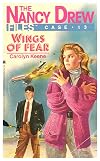
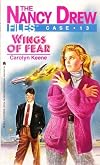
Book 13 here, from the '80s, is one I hadn't read before. Admittedly, I won't be reading all of the 100+ more novels in the series. But it was this book cover's images of Nancy's bulky and vibrant cardigan, her wary and dramatic stance that almost looks like a dance move, and the diving airplane on fire that compelled me to pick this one up.
In the middle of this particular case, what especially put a little fire under my reading? Certain characters' disparaging comments to Nancy—as if this chick must only be playing at this detective thing. But even at eighteen, Nancy is neither new nor an amateur at her show more job.
There comes a point where she's not only looking to solve this case, but she's also looking to prove herself to the naysayers.
So, I was like, "Hey. The proof will be in the pudding. Just do what you do, Drew."
(Well, I actually said under my breath, "Do what you do, Nancy." But, well, rhyming that line sounds better.)
Also, I liked that this wasn't one of those mysteries where the bad guys tie up the good guys and explain everything in a monologue or an info-dumping convo in the end. And I must say, I really got into this novel's rather thrilling climax and the lead-up to it.
Looking forward to whatever Files case I'll pick up next because I'll either remember reading it back in the day or because it'll be one with cover art that grabs me.
Note:
• intended for readers aged 12 years and up show less
Book 13 here, from the '80s, is one I hadn't read before. Admittedly, I won't be reading all of the 100+ more novels in the series. But it was this book cover's images of Nancy's bulky and vibrant cardigan, her wary and dramatic stance that almost looks like a dance move, and the diving airplane on fire that compelled me to pick this one up.
In the middle of this particular case, what especially put a little fire under my reading? Certain characters' disparaging comments to Nancy—as if this chick must only be playing at this detective thing. But even at eighteen, Nancy is neither new nor an amateur at her show more job.
There comes a point where she's not only looking to solve this case, but she's also looking to prove herself to the naysayers.
So, I was like, "Hey. The proof will be in the pudding. Just do what you do, Drew."
(Well, I actually said under my breath, "Do what you do, Nancy." But, well, rhyming that line sounds better.)
Also, I liked that this wasn't one of those mysteries where the bad guys tie up the good guys and explain everything in a monologue or an info-dumping convo in the end. And I must say, I really got into this novel's rather thrilling climax and the lead-up to it.
Looking forward to whatever Files case I'll pick up next because I'll either remember reading it back in the day or because it'll be one with cover art that grabs me.
Note:
• intended for readers aged 12 years and up show less
I loved this branch of Nancy Drew growing up. Besides one book that irritated me I really liked reading about her. This one involved a conundrum with a new boyfriend.
Ratings
Members
- Recently Added By
Author Information

929+ Works 202,735 Members
Carolyn Keene was the pseudonym that Mildred Wirt Benson and Walter Karig used to write Nancy Drew books. The idea of Nancy Drew came from Edward Stratemeyer in 1929. He also had other series, that included the Hardy Boys, but he died in 1930 before the Nancy Drew series became famous. His daughters, Harriet and Edna, inherited his company and show more maintained Nancy Drew having Mildred Wirt Benson, the original Carolyn Keene, as the principal ghostwriter. During the Depression, they asked Benson to take a pay cut and she refused, which is when Karig wrote the books. Karig's Nancy Drew books were Nancy's Mysterious Letter, The Sign of the Twisted Candles, and Password to Larkspur Lane. He was fired from writing more books because of his refusal to honor the request that he keep his work as Carolyn Keene a secret. He allowed the Library of Congress to learn of his authorship and his name appeared on their catalog cards. Afterwards, they rehired Benson and she wrote until her last Nancy Drew book (#30) was written in 1953, Clue of the Velvet Mask. Harriet and Edna Stratemeyer also contributed to the Nancy Drew series. Edna wrote plot outlines for several of the early books and Harriet, who claimed to be the sole author, had actually outlined and edited nearly all the volumes written by Benson. The Stratemeyer Syndicate had begun to make its writers sign contracts that prohibited them from claiming any credit for their works, but Benson never denied her writing books for the series. After Harriet's death in 1982, Simon and Schuster became the owners of the Stratemeyer Syndicate properties and in 1994, publicly recognized Benson for her work at a Nancy Drew conference at her alma mater, the University of Iowa. Now, Nancy Drew has several ghostwriters and artists that have contributed to her more recent incarnations. (Bowker Author Biography) show less
Series


Work Relationships
Is contained in
Common Knowledge
- Canonical title
- Wings of Fear
- Important places
- Seattle, Washington, USA
Classifications
Statistics
- Members
- 148
- Popularity
- 221,791
- Reviews
- 2
- Rating
- (3.86)
- Languages
- Dutch, English
- Media
- Paper, Ebook
- ISBNs
- 5
- ASINs
- 3