On This Page
Description
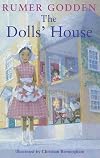
The activities, sorrows, and joys of a family of dolls living in an old doll house are related from the dolls' point of view.Tags
Recommendations
















Member Recommendations
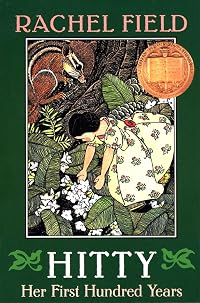
DisassemblyOfReason The title character of Hitty: Her First Hundred Years is a doll like Tottie - a doll who, by the end of the story, has existed for many years and passed through many hands. However, the story in Hitty: Her First Hundred Years follows Hitty throughout her life, rather than (as in The Dolls' House), only showing her in the present day.
30
Member Reviews
The Plantagenets—a group of dolls of different types, made into a family by being thrown together and belonging to the same two girls—long for a proper doll house in this children's novel from Rumer Godden. Their wish is granted when the little girls, Emily and Charlotte, inherit a house from an elderly relative, and everything seems ideal at first. Tottie, a little farthing doll from 1846, is distressed by her experiences being loaned out to an exhibition, but is happy when she discovers she is not to be sold. But when Marchpane—a vain and cruel doll Tottie knew long ago—enters the scene, the Plantagenets find their happiness destroyed. Pushed aside in their own house, and disregarded by Emily, the elder of their two human show more girls, things go from bad to worse. Only an act of sacrificial love on the part of Birdie, a celluloid doll who is the mother of the Plantagenet family, sets things to rights...
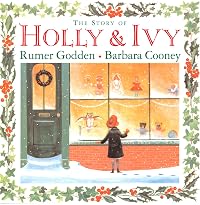
Originally published in 1947, with illustrations by Dana Saintsbury, The Dolls' House was republished in the edition I read in 1962, with new artwork from Tasha Tudor. I have not seen the earlier edition, and therefore cannot speak to its appeal, but when it comes to the illustrations, this newer edition was simply charming! Tudor's black and white drawings, sprinkled throughout, are delightful, and greatly enhanced my reading experience. The story itself was fairly engaging, although nowhere near as appealing as some of Godden's other doll tales, such as The Story of Holly and Ivy, which is a personal favorite. I tend to have an on-again off-again relationship with doll fiction, sometimes finding it very appealing and poignant, and then sometimes being indifferent to it. This was shaping up to be in the latter category, until the final few chapters, which were unexpected and quite melancholy. I think Godden does some interesting things here, playing with themes such as the longing for a home—the dolls are a mismatched group, and some have experienced misfortune, so I interpreted this longing not as materialism, as some reviewers have stated, but as a desire for safety—and the silliness of class divisions. After all, Marchpane is a refined and expensive doll, whereas Birdie is a "cheap" celluloid doll, but in the end, it is the latter who has true value. All in all, I'm glad to have read this one, even though it's not destined to become a personal favorite, and I would recommend it to readers who enjoy doll fiction. show less
Originally published in 1947, with illustrations by Dana Saintsbury, The Dolls' House was republished in the edition I read in 1962, with new artwork from Tasha Tudor. I have not seen the earlier edition, and therefore cannot speak to its appeal, but when it comes to the illustrations, this newer edition was simply charming! Tudor's black and white drawings, sprinkled throughout, are delightful, and greatly enhanced my reading experience. The story itself was fairly engaging, although nowhere near as appealing as some of Godden's other doll tales, such as The Story of Holly and Ivy, which is a personal favorite. I tend to have an on-again off-again relationship with doll fiction, sometimes finding it very appealing and poignant, and then sometimes being indifferent to it. This was shaping up to be in the latter category, until the final few chapters, which were unexpected and quite melancholy. I think Godden does some interesting things here, playing with themes such as the longing for a home—the dolls are a mismatched group, and some have experienced misfortune, so I interpreted this longing not as materialism, as some reviewers have stated, but as a desire for safety—and the silliness of class divisions. After all, Marchpane is a refined and expensive doll, whereas Birdie is a "cheap" celluloid doll, but in the end, it is the latter who has true value. All in all, I'm glad to have read this one, even though it's not destined to become a personal favorite, and I would recommend it to readers who enjoy doll fiction. show less
Reread in a collection. I don't remember much about the first read; I think because it's such an unsatisfactory story. The dolls are materialistic and not appreciative of the children; the villain gets no punishment, and the sweetest doll dies. I suppose it's all very metaphoric and all; Godden is a [L]iterary writer, after all, but it just sits wrong in my heart. And doll house stories should be about joy, not weighty worldly affairs.
I love this book. I have always loved this book. I received it for Christmas, the year my sister and I got the chicken pox - we were confined to bed and Mom read it to us. We pretended we were Charlotte and Emily. I then read it for myself - my first chapter book,
As a child, I loved the characters and story. As an adult (and a senior citizen to boot) I love the slightly quirky use of language, as well as the characters and story.
As a child, I loved the characters and story. As an adult (and a senior citizen to boot) I love the slightly quirky use of language, as well as the characters and story.
Summary: This fantasy children’s book follows a group of dolls, Tottie, a wooden doll, is the main character and she lives with Mr. Plantaganet, Birdie, Apple, and a little dog named Darner. All of them are made of different materials and are happily living together. Through the story, Tottie wishes for her old dollhouse that the great-aunt had played with. Tottie is an antique and was passed down to Emily and Charlotte. Emily and Charlotte received a “new” doll who Tottie knew many years ago, and she does not like. This doll is named Marchpane and she is a beautiful doll made of China not really meant for children to play with. Marchpane sets to dollhouse on fire using the lights and poor Birdie who is made of celluloid burns to show more her death. In the end, Marchpane is put away because her original owners think she is too nice to play with.
Personal Reaction: I didn’t particularly enjoy this book, but that is because I never really played with dolls. This book is written very well and most little girls who play with dolls would probably enjoy it. I think there are many lessons throughout the book that children can learn from, one being take care of your belongings and also play nice with others. The characters have distinct personalities that create a well written plot. There are many great events in the book, such as the doll exhibition. Dolls can not pick their owners but like Tottie said in the beginning, if a doll wishes hard enough things can come true.
Classroom Extension Ideas:
1) After reading the book, have the children write about a doll, stuffed animal, or other toy they enjoy playing with. The teacher will ask the students to give the toy life and personality. Students will write a complete description of the toy, and what they think that toy is like if it could come to life. Then the teacher will have students draw and color the toy, and then the teacher can have students share with the class about their toy.
2) Another great activity that would coincide with the above activity would be to place students in groups and have them take their toy and create a story together about how their toys could live together and what they might do. show less
Personal Reaction: I didn’t particularly enjoy this book, but that is because I never really played with dolls. This book is written very well and most little girls who play with dolls would probably enjoy it. I think there are many lessons throughout the book that children can learn from, one being take care of your belongings and also play nice with others. The characters have distinct personalities that create a well written plot. There are many great events in the book, such as the doll exhibition. Dolls can not pick their owners but like Tottie said in the beginning, if a doll wishes hard enough things can come true.
Classroom Extension Ideas:
1) After reading the book, have the children write about a doll, stuffed animal, or other toy they enjoy playing with. The teacher will ask the students to give the toy life and personality. Students will write a complete description of the toy, and what they think that toy is like if it could come to life. Then the teacher will have students draw and color the toy, and then the teacher can have students share with the class about their toy.
2) Another great activity that would coincide with the above activity would be to place students in groups and have them take their toy and create a story together about how their toys could live together and what they might do. show less
Charming, with a surprisingly heavy ending. Loved it.
A very disturbing book, but very true-to-life. It has haunted me for years. I won't let my daughter read it until she is a LOT older.
The activities, sorrows, and joys of a family of dolls living in an old doll house are related from the dolls’ point of view.
It’s rather dated, but charming. Read this if: you ever played with a dollhouse – or wanted to (and who didn’t?) 3 stars
It’s rather dated, but charming. Read this if: you ever played with a dollhouse – or wanted to (and who didn’t?) 3 stars
Members
- Recently Added By
Lists

1001 Children's Books You Must Read Before You Grow Up
774 works; 101 members

Children's Chapter Books from 1940s, ...
77 works; 4 members

Toy Stories: Living Dolls, Bears and Other Toys
129 works; 7 members

CCE 1000 Good Books List
1,033 works; 12 members
Honey For a Child's Heart
1,152 works; 25 members

Books I Own But Haven't Read
144 works; 2 members

Used books to buy next
565 works; 1 member

Children's Literature 1900 - 1950 in order
413 works; 8 members

Miniature, little, tiny characters -- children's/young adult fiction
278 works; 13 members
Author Information

89+ Works 15,246 Members
Margaret Rumer Godden was born Dec. 10, 1907, in Sussex, England. She was nine months old when her family moved to India, where her father ran a shipping line. She returned to London at age 20 to learn how to teach dance to children, and opened a school back in India. Returning to England while she was pregnant, she wrote her first book, "Chinese show more Puzzle," published in 1936. Her marriage to a stockbroker, Laurence Sinclair Foster, ended in 1941, leaving her penniless. In an effort to pay off her former husband's debts, Godden moved her family into a mountain cottage where she ran a school, made herbal teas for sale, and wrote books. Another novel of India, "The River," published in 1949, was one of her most acclaimed books and was made into a film by Jean Renoir in 1951. She returned to England to stay in 1945. Rumer Godden was the author of more than 60 books, including novels, short story collections, poetry, plays and non-fiction. She published her 21st novel, "Cromartie vs. the God Shiva," in 1997. Rumer Godden died a year later on November 8, 1998, in Thornhill, Scotland, at the age of 90. (Bowker Author Biography) show less
Some Editions
Awards and Honors
Series

Belongs to Publisher Series
Puffin Story Books (478)
Work Relationships
Is contained in
Common Knowledge
- Canonical title
- The Dolls' House
- Original title
- The Dolls' House
- Original publication date
- 1947
- People/Characters
- Tottie; Marchpane; Emily; Charlotte
- Related movies
- Tottie: The Story of a Dolls' House (1984 | IMDb)
- First words
- This is a novel written about dolls in a dolls' house.
- Last words
- (Click to show. Warning: May contain spoilers.)And Birdie's bright tinkling music went on in the dolls' house and, on her hat that still hung in the hall, and on her feather broom, and on her bird and on her parasol, the colours and patterns were still bright.
Classifications
- Genres
- Children's Books, Fiction and Literature, Kids
- DDC/MDS
- 823.912 — Literature & rhetoric English & Old English literatures English fiction 1900- 1901-1999 1901-1945
- LCC
- PZ8.9 .G65 .D — Language and Literature Fiction and juvenile belles lettres Fiction and juvenile belles lettres Juvenile belles lettres
- BISAC
Statistics
- Members
- 739
- Popularity
- 38,017
- Reviews
- 8
- Rating
- (4.15)
- Languages
- Dutch, English
- Media
- Paper, Ebook
- ISBNs
- 24
- UPCs
- 1
- ASINs
- 16