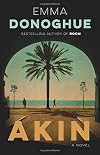
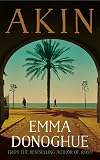
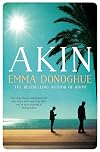
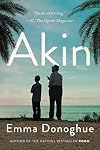
Akin
by Emma Donoghue
On This Page
Description
"Noah Selvaggio is a retired chemistry professor and widower living on the Upper West Side, but born in the South of France. He is days away from his first visit back to Nice since he was a child, bringing with him a handful of puzzling photos he's discovered from his mother's wartime years. But he receives a call from social services: Noah is the closest available relative of an eleven-year-old great-nephew he's never met, who urgently needs someone to look after him. Out of a feeling of show more obligation, Noah agrees to take Michael along on his trip. Much has changed in this famously charming seaside mecca, still haunted by memories of the Nazi occupation. The unlikely duo, suffering from jet lag and culture shock, bicker about everything from steak fries to screen time. But Noah gradually comes to appreciate the boy's truculent wit, and Michael's ease with tech and sharp eye help Noah unearth troubling details about their family's past. Both come to grasp the risks people in all eras have run for their loved ones, and find they are more akin than they knew. Written with all the tenderness and psychological intensity that made Room an international bestseller, Akin is a funny, heart-wrenching tale of an old man and a boy, born two generations apart, who unpick their painful story and start to write a new one together." -- show lessTags
Recommendations














Member Reviews
Noah is unprepared for the social worker's request; to foster his nephew's eleven-year-old son, at least temporarily. He's about to turn eighty, content with his quiet, well-heeled life as a retired academic and planning a trip to the French city he left as a young boy. He and his wife had cut ties with their nephew after he'd stolen from them to support his drug habit, so Noah had never even met his great nephew. But he can't quite brush aside the request, given that Michael's only other option is to be put permanently into the system, where he'll lose all contact with his incarcerated mother. So off they go, a careful elderly man looking for his roots and a unmoored child covering his loss and lack of security with a fierce bravado. show more
Emma Donoghue takes a few familiar literary tropes (the protagonist looking for his roots, the odd couple, the fish out of water) and approaches them with an unexpected freshness. Every time I thought the novel was falling into a rut, Donoghue surprised me. Noah spends his time in Nice searching for evidence of his mother's years after she'd bundled him alone as a four-year-old to make the long transatlantic voyage to his father in New York, until she joined them after the war. And as he learned both about what happened in Nice during WWII and specifically about his mother, he begins to form a picture of what she was doing in those years. But Noah's research has holes in it, and he's making some big assumptions.
And then there's Michael, a heartbreakingly realistic boy. He's got layers of defense built up and all the habits that seem designed to annoy a cultured old man, from the refusal to eat anything but the familiar to the constant phone time. Donoghue allows Michael to be revealed through Noah's observations and it's beautifully done.
This is a quiet, reflective novel about change, whether utter, life up-ending change or as an adjustment in how a relationship is viewed long after its end. Donoghue manages to inhabit the lives of two characters at opposite ends of their life trajectories and to do so with great empathy. A solid novel that I'll be thinking about for some time to come. show less
Emma Donoghue takes a few familiar literary tropes (the protagonist looking for his roots, the odd couple, the fish out of water) and approaches them with an unexpected freshness. Every time I thought the novel was falling into a rut, Donoghue surprised me. Noah spends his time in Nice searching for evidence of his mother's years after she'd bundled him alone as a four-year-old to make the long transatlantic voyage to his father in New York, until she joined them after the war. And as he learned both about what happened in Nice during WWII and specifically about his mother, he begins to form a picture of what she was doing in those years. But Noah's research has holes in it, and he's making some big assumptions.
And then there's Michael, a heartbreakingly realistic boy. He's got layers of defense built up and all the habits that seem designed to annoy a cultured old man, from the refusal to eat anything but the familiar to the constant phone time. Donoghue allows Michael to be revealed through Noah's observations and it's beautifully done.
This is a quiet, reflective novel about change, whether utter, life up-ending change or as an adjustment in how a relationship is viewed long after its end. Donoghue manages to inhabit the lives of two characters at opposite ends of their life trajectories and to do so with great empathy. A solid novel that I'll be thinking about for some time to come. show less
Septuagenarian widower Noah is planning to return to Nice, the town of his birth, to mark his 80th birthday. The grandson of a famous French photographer, Noah wants to look into his family history there, and perhaps identify the subjects of some old photos he inherited.
Shortly before his departure, Noah is contacted by social services. The son of his deceased drug addict nephew, Michael, needs a guardian and a home, since his mother is in jail. Very reluctantly, out of a sense of family duty, Noah takes Michael on rather than consign him to a home. Preferring not to cancel his visit, he takes Michael to Nice with him.
To begin with, this feels like a familiar trope of an adult dragging a resentful kid around Europe, until the brutally show more candid Michael says something about one of the photos that causes Noah to look again, and then to question his family history. Donoghue then twists the story to being about Noah's need to establish the truth of what his family did during WW2.
It's an interesting plot, far better than promised at the outset, but I still struggled with this book. I could not find a single redeeming feature in the character of Michael, whom Donoghue depicts as an unmitigated pre-teen horror. There is some attempt by the author to stir up sympathy for him, but I just could not bring myself to care about his fate and, since the novel is pretty much entirely about Michael and Noah, that's a serious flaw. show less
Shortly before his departure, Noah is contacted by social services. The son of his deceased drug addict nephew, Michael, needs a guardian and a home, since his mother is in jail. Very reluctantly, out of a sense of family duty, Noah takes Michael on rather than consign him to a home. Preferring not to cancel his visit, he takes Michael to Nice with him.
To begin with, this feels like a familiar trope of an adult dragging a resentful kid around Europe, until the brutally show more candid Michael says something about one of the photos that causes Noah to look again, and then to question his family history. Donoghue then twists the story to being about Noah's need to establish the truth of what his family did during WW2.
It's an interesting plot, far better than promised at the outset, but I still struggled with this book. I could not find a single redeeming feature in the character of Michael, whom Donoghue depicts as an unmitigated pre-teen horror. There is some attempt by the author to stir up sympathy for him, but I just could not bring myself to care about his fate and, since the novel is pretty much entirely about Michael and Noah, that's a serious flaw. show less
Akin demonstrates yet again that, when it comes to fictional worlds, Emma Donoghue is at home everywhere. The novel is set in New York and Nice, France. 79-year-old retired academic Noah—widowed, set in his ways, still living in the same apartment where he and his wife Joan (nine years dead) spent their married life and surrounded by mementos of their years together—is preparing to travel to Nice for the first time since he was a child to reconnect with the city of his birth when he receives a phone call. It is a social worker with an unusual request. Her hope is that Noah will assume temporary custodianship of his great-nephew, 11-year-old Michael Young—the offspring of his nephew Victor, also dead, the victim of a drug show more overdose—until a more permanent arrangement can be found. The boy’s mother, Amber, is in jail. Noah’s reluctance is justified on several counts: he knows nothing about being a parent (he and Joan never had children), he’s old, he’s a couple of days away from getting on a plane to France. But when he learns of the chain of events that led to the request and the unfortunate circumstances of Michael’s young life, he feels a tug of empathy and the weight of familial duty begin to offset his misgivings. With the tortuous bureaucratic details settled, the mismatched pair—virtual strangers to one another—embark on a trip that, for both Noah and Michael, turns out to be one of discovery. Donoghue adds interest to the trip by giving Noah a deeper purpose: he is trying to solve the puzzle of his mother’s activities during WWII, his curiosity having been sparked by a parcel of photographs discovered among his late sister’s belongings—cryptic images taken by his mother that are open to interpretation and call into question her role with the French Resistance. The adventure begins in earnest once they get off the plane and hit the streets of Nice, which has changed significantly since Noah’s childhood, but also remains the same in ways that come to seem even more important. Michael tags along as Noah explores, behaving much as we would expect an 11-year-old with discipline and impulse-control issues to behave. Donoghue walks a fine line with this character. Yes, Michael can be obnoxious: he makes unreasonable demands, he is rude, defiant and self-centred, he tests the limits of Noah’s patience, he has his whiny moments. But Donoghue also endows Michael with uncanny powers of observation, a kind of raw intelligence, a generous nature, and an instinct for survival. Over the week in Nice, Noah and Michael get to know one another’s strengths and weaknesses, fears and desires. There are plenty of bumps along the way, but the emotional bond that springs up between the two develops gradually, naturally, and convincingly. Donoghue never manipulates her reader, and in Akin, as in her previous books, she expertly sidesteps any hints of sentimentality. The story of Michael and Noah is absorbing because both characters are humanly flawed and trying to navigate a path through difficult, heart-rending situations. In the end, the strength they find within themselves has its origins in the realization that they are better together than they are on their own. Comparisons with Room, her 2010 Booker Prize-shortlisted bestseller, are inevitable, but Akin is so vastly different in every respect that such comparisons are largely pointless. Let it be said however, that it is to Emma Donoghue’s credit that she continues to extend her range and does not try to replicate past triumphs. show less
Noah Selvaggio, a retired chemistry professor living in New York, decides to make a trip to Nice, France, for his 80th birthday. He hasn’t been back since he was four years old. His plans are altered when he becomes a temporary guardian for his 11-year-old great-nephew Michael. Since there is no one else to care for Michael, the childless widower agrees to look after him in the short term and takes him to France.
While in France, Noah tries to uncover the significance of some photos his mother left behind. They were apparently taken during World War II in Nice, after Noah’s mother had sent him to the U.S. Why did his mother abandon him for two years? With the help of the tech-savvy Michael, Noah is able to find some answers to his show more questions.
The mystery surrounding Noah’s mother is not difficult to solve. I found that Noah tends to jump to conclusions when other possibilities are so obvious. He talks about “’the law of closure. Like closing a gap. The viewer fills in what they don’t see, what’s missing.’” The problem is that Noah does not behave like an 80-year-old man who was a scientist. Considering his age and his background, he should certainly be more cautious and considered when making inferences.
It is the character of Michael that makes the novel. His behaviour rings so true. He’s street-wise and defiant; he’s often foul-mouthed and tends to be glued to his cell phone on which he constantly plays games. As would be expected of a boy his age, he loves scatological humour. His attention span tends to be limited. Beneath the bravado however, there is a child who has experienced loss and has a number of stresses in his life.
The repartee between Noah and Michael emphasizes the gulf between the two. There is the obvious age gap but there are other differences as well. Noah would be considered wealthy, living in a tony part of the city, whereas Michael comes from an impoverished background and has lived in a rough neighbourhood where safety is a major concern. It is inevitable that conflicts and misunderstandings arise, especially because Noah tends to make assumptions about Michael’s upbringing.
There is also humour because of their different interests. Michael’s attire makes little sense to Noah: “Michael’s T-shirt said WINTER IS COMING, which seemed belated, in February.” The Game of Thrones reference means nothing to Noah. Likewise, Noah’s old fedora has Michael commenting, “’What’s up with that hat?’” When Noah explains that the hat is an heirloom, Michael asks, “’What’s an air loom?’” Noah tends to be pedantic and Michael just tunes out.
As is expected, the two learn from each other. Though Michael often seems to be inattentive, he proves that he has learned some of Noah’s lessons. Noah realizes his biases and decides that there may be little to mark his time on earth, “only any individual’s short, incalculable tally,” but he can perhaps help Michael: “But really all Noah was attempting to do was fill a gap; throw his ungainly self down so the kid could cross over the abyss. Weren’t we all of us bridges for each other, one way or another?”
I’ve read most of Emma Donoghue’s books. I’m not sure I’d rank this one among her best, but it is brisk and entertaining. Though somewhat predictable, it has a truly authentic character in Michael, and for him and his verbal exchanges with Noah, the book is worth reading.
Note: Please check out my reader's blog (https://schatjesshelves.blogspot.com) and follow me on Twitter (@DCYakabuski). show less
While in France, Noah tries to uncover the significance of some photos his mother left behind. They were apparently taken during World War II in Nice, after Noah’s mother had sent him to the U.S. Why did his mother abandon him for two years? With the help of the tech-savvy Michael, Noah is able to find some answers to his show more questions.
The mystery surrounding Noah’s mother is not difficult to solve. I found that Noah tends to jump to conclusions when other possibilities are so obvious. He talks about “’the law of closure. Like closing a gap. The viewer fills in what they don’t see, what’s missing.’” The problem is that Noah does not behave like an 80-year-old man who was a scientist. Considering his age and his background, he should certainly be more cautious and considered when making inferences.
It is the character of Michael that makes the novel. His behaviour rings so true. He’s street-wise and defiant; he’s often foul-mouthed and tends to be glued to his cell phone on which he constantly plays games. As would be expected of a boy his age, he loves scatological humour. His attention span tends to be limited. Beneath the bravado however, there is a child who has experienced loss and has a number of stresses in his life.
The repartee between Noah and Michael emphasizes the gulf between the two. There is the obvious age gap but there are other differences as well. Noah would be considered wealthy, living in a tony part of the city, whereas Michael comes from an impoverished background and has lived in a rough neighbourhood where safety is a major concern. It is inevitable that conflicts and misunderstandings arise, especially because Noah tends to make assumptions about Michael’s upbringing.
There is also humour because of their different interests. Michael’s attire makes little sense to Noah: “Michael’s T-shirt said WINTER IS COMING, which seemed belated, in February.” The Game of Thrones reference means nothing to Noah. Likewise, Noah’s old fedora has Michael commenting, “’What’s up with that hat?’” When Noah explains that the hat is an heirloom, Michael asks, “’What’s an air loom?’” Noah tends to be pedantic and Michael just tunes out.
As is expected, the two learn from each other. Though Michael often seems to be inattentive, he proves that he has learned some of Noah’s lessons. Noah realizes his biases and decides that there may be little to mark his time on earth, “only any individual’s short, incalculable tally,” but he can perhaps help Michael: “But really all Noah was attempting to do was fill a gap; throw his ungainly self down so the kid could cross over the abyss. Weren’t we all of us bridges for each other, one way or another?”
I’ve read most of Emma Donoghue’s books. I’m not sure I’d rank this one among her best, but it is brisk and entertaining. Though somewhat predictable, it has a truly authentic character in Michael, and for him and his verbal exchanges with Noah, the book is worth reading.
Note: Please check out my reader's blog (https://schatjesshelves.blogspot.com) and follow me on Twitter (@DCYakabuski). show less
Emma Donoghue has a gift for achingly accurate portrayals of emotionally wounded children. I wanted to hug Michael, to give him a new phone and to get his mother out of prison. All the subtle details and the slow unwinding of his many hurts and indignities. Brilliant. An Noah too, a widowed 79 year old former chemistry professor heading towards an empty end of life. I was fearful as he stepped up to the challenge of looking after his grand-nephew. It would have been a lot for Noah to look after him even if they'd stayed in NYC, but to take him to Nice. Wow. And wow it turned the story up a notch. Add to all that, the complication of what Noah was looking for when they got to Nice, about what his mother had been up to in WWII, whether he show more should be proud of her or ashamed. The balancing off of the two relatives, their many backstories, their connections and differences, was such a satisfying read. I'm still thinking about it. Love love love this book. show less
3.5 stars
Noah is 79-years old and planning a trip to his home country, France – a country he had to leave at 4-years old due to the war. He has a set of photographs his mother took that had been in possession of his sister, who has since passed away, and Noah is hoping to find out more about them. A few days before the trip, he is contacted by social services. He has a great-nephew with no other family they are able to find/contact who needs a temporary guardian, as his father (Noah’s nephew) died, and his mother is in jail. Michael is 11-years old; he and Noah have never met.
It was good. Kept my interest, though it wasn’t terribly fast-moving. I sure did dislike the kid, though.
Noah is 79-years old and planning a trip to his home country, France – a country he had to leave at 4-years old due to the war. He has a set of photographs his mother took that had been in possession of his sister, who has since passed away, and Noah is hoping to find out more about them. A few days before the trip, he is contacted by social services. He has a great-nephew with no other family they are able to find/contact who needs a temporary guardian, as his father (Noah’s nephew) died, and his mother is in jail. Michael is 11-years old; he and Noah have never met.
It was good. Kept my interest, though it wasn’t terribly fast-moving. I sure did dislike the kid, though.
Emma Donoghue's latest novel, Akin, is the third book of hers that I have read. This one explores a relationship between a chemistry professor turning 80 and his great nephew Michael who at 11, has no other next of kin. Noah Selvaggio , the first person narrator, has been a widow for ten years but finally decides to return to Nice, where he was born and to explore several photographs that his mother had left behind regarding her time there during the outbreak of WWII. He considers himself a healthy 80 year old. "Ancient Romans used to distinguish between senectus (still lively) and decrepitus (done for). Sharp as ever, hale, hearty—surely Noah could still count himself in the senectus camp?" When a social worker calls explaining the show more dire circumstances of this boy,( father dead of drug overdose, mother in prison), Noah decides that he will take the boy with him on his birthday trip. The relationship between the two goes from uncomfortable to endearing with the author doing a nice job of capturing the distracted, phone addicted life of a young boy. (She has one of her own). Gems of dialogue bring out the humor of the novel and the hidden intelligence of the boy. Noah, always the professor tries to correct Michael's grammar: "It’s an, rather than a, when it’s followed by a vowel: an atheist.” “Like, you’re an asshole.” Michael comes from a tough neighborhood, ("It’s a renewal school.” “What does that mean?” “Gotta go an extra hour a day because we’re dumb.”) However it is Michael's skills on the internet that help answer some of the questions about the mysterious past of Noah's mother.
The author nicely brings in the history of Nice and the resistance movement as the two unlikely explorers reconstruct what clues they have. As a reader I enjoyed learning about the Marcel Network that saved over 500 children. Though the novel is somewhat predictable, it is always pleasant. I would recommend.
Some lines:
Rosa Figueroa’s name would always conjure up pressure on the buttocks for Noah. That was how it was, approaching eighty: everything got close to the bone.
Was genius a weed that sprang up anywhere, or did it need a particular habitat?
But really all Noah was attempting to do was fill a gap; throw his ungainly self down so the kid could cross over this abyss. Weren’t all of us bridges for each other, one way or another?
He supposed it was always that way with the dead; they slid away before we knew enough to ask them the right questions. All we could do was remember them, as much as we could remember of them, whether it was accurate or not. Walk the same streets that they’d walked; take our turn. show less
The author nicely brings in the history of Nice and the resistance movement as the two unlikely explorers reconstruct what clues they have. As a reader I enjoyed learning about the Marcel Network that saved over 500 children. Though the novel is somewhat predictable, it is always pleasant. I would recommend.
Some lines:
Rosa Figueroa’s name would always conjure up pressure on the buttocks for Noah. That was how it was, approaching eighty: everything got close to the bone.
Was genius a weed that sprang up anywhere, or did it need a particular habitat?
But really all Noah was attempting to do was fill a gap; throw his ungainly self down so the kid could cross over this abyss. Weren’t all of us bridges for each other, one way or another?
He supposed it was always that way with the dead; they slid away before we knew enough to ask them the right questions. All we could do was remember them, as much as we could remember of them, whether it was accurate or not. Walk the same streets that they’d walked; take our turn. show less
Members
- Recently Added By
Lists

Books Read in 2019
4,052 works; 110 members
Author Information

42+ Works 34,688 Members
Emma Donoghue was born on October 24, 1969 in Dublin, Ireland. She received her BA degree from the University College Dublin and PhD in English from University of Cambridge. Her first novel was Stir. Her next novel was Hood which won the 1997 American Library Association's Gay, Lesbian and Bisexual Book Award for Literature. Her novel Slammerkin show more was a finalist in the 2001 Irish Times Irish Literature Prize for Fiction. The Sealed Letter, published in 2008, is a work of historical fiction. This work was the joint winner of the 2009 Lambda Literary Award for Lesbian Fiction. She continued writing several award winning novels including Room which was shortlisted for the Man Booker Prize in September 2010. Some of her other works include Astray, Three and a Half Deaths, and Frog Music. (Bowker Author Biography) show less
Some Editions
Awards and Honors
Awards
Common Knowledge
- Original publication date
- 2019-09-10
- People/Characters
- Noé "Noah" Pierre Selvaggio; Michael Jerome Young; Joan Chubatovsky; Fernande Selvaggio Young; Dan Young; Victor Pierre Young (show all 18); Rose Figueroa; Amber Davis; Vivienne; Père Sonne (Pierre Jean Personnet); Margot Isabelle Personnet Selvaggio (Marie Zabel); Marc Selvaggio; Grace Davis Drew; Cody Davis; Ella Davis; Collette "Coco" Estelle Dupont Lamarche; Isabelle Gaspsrd Personet; Lucien Demetz
- Important places
- Nice, France; New York, New York, USA
- Important events
- Holocaust.; World War II
- Epigraph
- Akin, adjective
1. related by blood
2. Similar in character - Dedication
- To my beloved kinsmen
Denis and Finn - First words
- An old man packing his bags.
- Quotations
- It hit him now that when a mother was sent to jail, her kids were receiving just as long a sentence.
"The whole point of travel is to learn there's no such thing as normal."
Maybe history really boiled down to how the hell did we happen to happen.
We spend most of our lives holding on to objects, he thought, and finally they fall from our cold dead hands and those who tidy up after us have the worry of what to do with all this stuff.
He supposed it was always that way with the dead; they slid away before we knew enough to ask them the right questions. All we could do was remember them, as much as we could remember of them, whether it was accurate or not. ... (show all)Walk the same streets that they'd walked; take our turn. - Last words
- (Click to show. Warning: May contain spoilers.)He shut his eyes and said, Merci, merci, mille mercies.
- Blurbers
- Lyall, Sarah; Corrigan, Maureen; King, Stephen
- Original language
- English
Classifications
Statistics
- Members
- 754
- Popularity
- 37,486
- Reviews
- 45
- Rating
- (3.70)
- Languages
- English, Swedish
- Media
- Paper, Audiobook, Ebook
- ISBNs
- 29
- ASINs
- 5