On This Page
Description
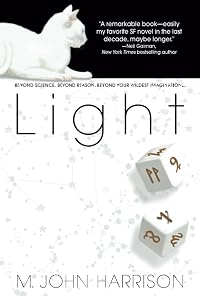
On the barren surface of an asteroid, located deep in the galaxy beneath the unbearable light of the Kefahuchi Tract, lie three objects: an abandoned spacecraft, a pair of bone dice covered with strange symbols, and a human skeleton. What they are and what they mean are the mysteries explored and unwrapped in LIGHT, M. John Harrison's triumphant novel.Tags
Recommendations
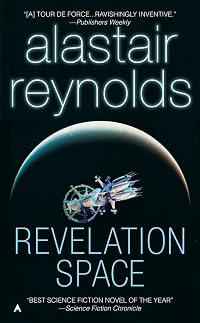
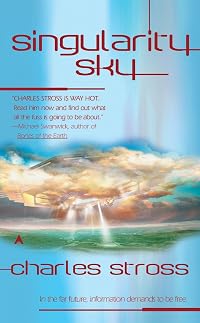
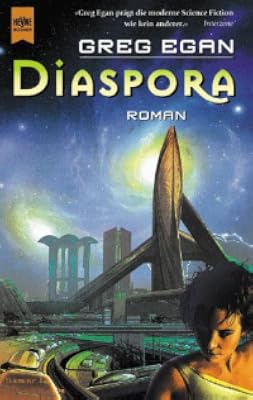
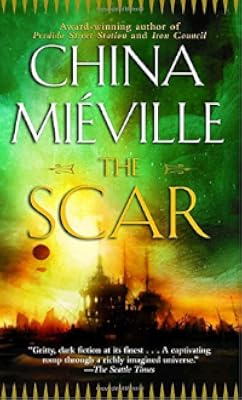
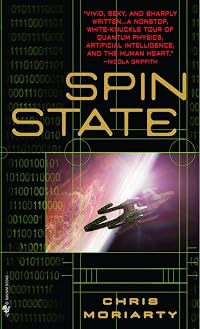
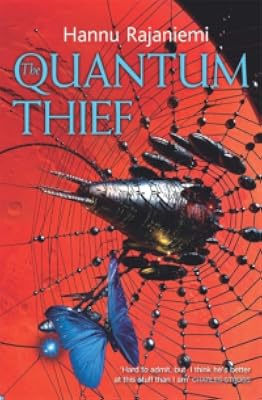
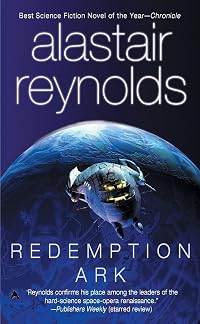
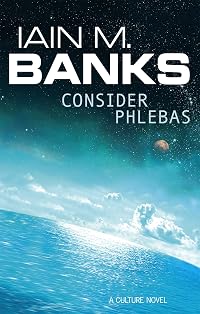
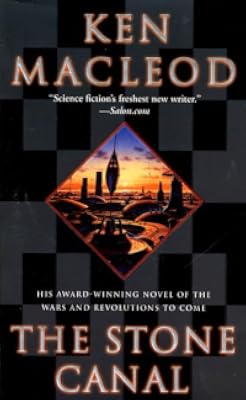
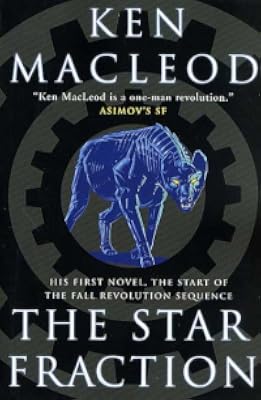
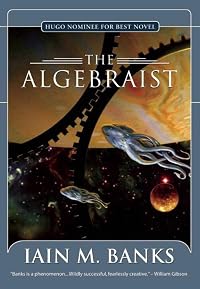
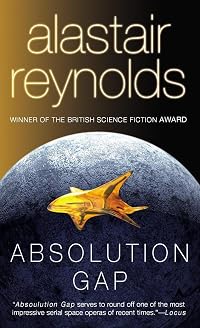




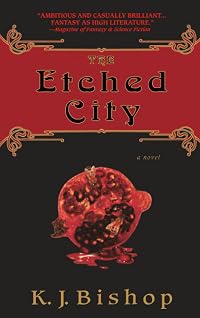
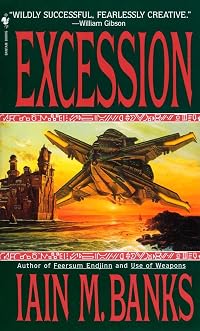
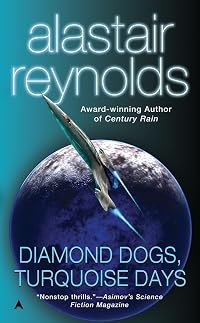
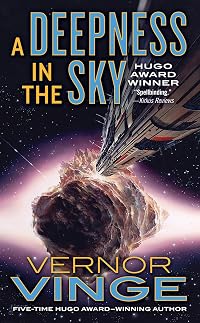
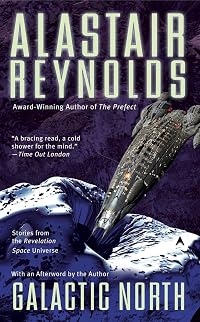
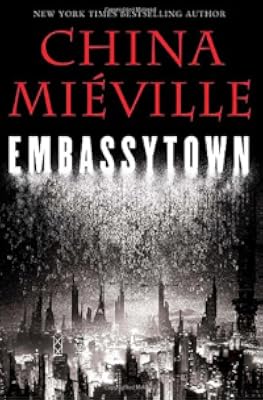
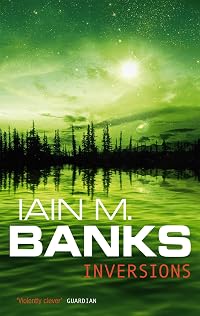

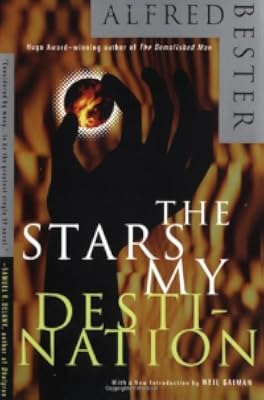

Member Recommendations
Member Reviews
Well. Tempting as it is to simply rant about how much I disliked this book, I'm going to at least try to provide slightly more studied, thoughtful analysis, i.e., WHY do I dislike this book?
1) It consists of completely unengaging stories presented in a wandering, incoherent writing style. The technique of writing alternating chapters from the viewpoint of different characters can be a very effective way to tell a story. But for this to work, each of the individual plotlines needs to be able to catch and hold the reader's interest, and in this case, none of the three does. Physicist Michael Kearney? I found him contemptible. I didn't understand why he behaved as he did, and the story didn't even make me care why. Seria Mau Genlicher? show more Some of these chapters were so shot through with casually tossed-off quantum physics-related word diarrhea that they were meaningless. To be clear, I like quantum physics. I find it fascinating. But I thought that the author was using it as a cheap techno-version of "magic." If something incomprehensible was happening, he simply threw in some quantum jargon in lieu of explaining it and called it good. Ed Chianese? This character has both problems. He is a completely uninteresting character, doing nothing of consequence, and the chapters that include him are peppered with cyberpunk jargon that the author has made up. It's as if the author had three unrelated novellas in mind, and decided to try to splice them together into a novel. To the extent that the stories come together at all, they do so only very awkwardly, and only at the very end of the book.
2) Excessive use of unexplained jargon. I was extremely annoyed by this. Harrison casually tosses off terms he has created without any definition or explanation of their meaning. He does this at points where understanding what he means is pretty much required if one is to follow the story. The casual way that he uses his made-up vocabulary fails to provide much of a hint for what these neologisms mean just from context. The author might- or might not- later get around to explaining his neologisms several chapters later, but even where this is done, it's never adequate. Examples: What is a "fetch?" What are "shadow operators?" What is a "shadow boy?" What is a "cultivar," and what distinguishes it from a simple "clone" (both terms are used in the book). What is a "one-shot cultivar?" What exactly is a "twink?"
3) Masturbation, masturbation, masturbation. Lots and lots of masturbation. Other sex acts as well, but a creepy focus on masturbation. The so-called "New Men" are explicitly described as masturbating every twenty minutes, and I have no idea why we readers needed to know that. The omnipresent onanism involves not just characters relieving themselves in private. People walk in on other people casually masturbating and no one bats an eyelash at it. Now, I don't object to putting sex into a story if there is some point to it. But all the masturbation in this book is just pointless. If it's supposed to make me feel more contempt for the characters, well, that's not possible, I pretty much disliked them all already.
And while we're on the subject of sex, a detail in the life of Seria Mau's was pretty disgusting. Her widowed father telling her she needs to be the mother now, and touching her inappropriately, made me very nearly decide to just give up on this book altogether.
From all the above, it's probably no surprise that I do not intend to read the remaining books in the trilogy. I finished this one only because I make a point of finishing every book I start - but this one brought me closer to making an exception to that rule than anything I've read in the last ten years. show less
1) It consists of completely unengaging stories presented in a wandering, incoherent writing style. The technique of writing alternating chapters from the viewpoint of different characters can be a very effective way to tell a story. But for this to work, each of the individual plotlines needs to be able to catch and hold the reader's interest, and in this case, none of the three does. Physicist Michael Kearney? I found him contemptible. I didn't understand why he behaved as he did, and the story didn't even make me care why. Seria Mau Genlicher? show more Some of these chapters were so shot through with casually tossed-off quantum physics-related word diarrhea that they were meaningless. To be clear, I like quantum physics. I find it fascinating. But I thought that the author was using it as a cheap techno-version of "magic." If something incomprehensible was happening, he simply threw in some quantum jargon in lieu of explaining it and called it good. Ed Chianese? This character has both problems. He is a completely uninteresting character, doing nothing of consequence, and the chapters that include him are peppered with cyberpunk jargon that the author has made up. It's as if the author had three unrelated novellas in mind, and decided to try to splice them together into a novel. To the extent that the stories come together at all, they do so only very awkwardly, and only at the very end of the book.
2) Excessive use of unexplained jargon. I was extremely annoyed by this. Harrison casually tosses off terms he has created without any definition or explanation of their meaning. He does this at points where understanding what he means is pretty much required if one is to follow the story. The casual way that he uses his made-up vocabulary fails to provide much of a hint for what these neologisms mean just from context. The author might- or might not- later get around to explaining his neologisms several chapters later, but even where this is done, it's never adequate. Examples: What is a "fetch?" What are "shadow operators?" What is a "shadow boy?" What is a "cultivar," and what distinguishes it from a simple "clone" (both terms are used in the book). What is a "one-shot cultivar?" What exactly is a "twink?"
3) Masturbation, masturbation, masturbation. Lots and lots of masturbation. Other sex acts as well, but a creepy focus on masturbation. The so-called "New Men" are explicitly described as masturbating every twenty minutes, and I have no idea why we readers needed to know that. The omnipresent onanism involves not just characters relieving themselves in private. People walk in on other people casually masturbating and no one bats an eyelash at it. Now, I don't object to putting sex into a story if there is some point to it. But all the masturbation in this book is just pointless. If it's supposed to make me feel more contempt for the characters, well, that's not possible, I pretty much disliked them all already.
And while we're on the subject of sex, a detail in the life of Seria Mau's was pretty disgusting. Her widowed father telling her she needs to be the mother now, and touching her inappropriately, made me very nearly decide to just give up on this book altogether.
From all the above, it's probably no surprise that I do not intend to read the remaining books in the trilogy. I finished this one only because I make a point of finishing every book I start - but this one brought me closer to making an exception to that rule than anything I've read in the last ten years. show less
Light braids narratives about three central characters. The least admirable of these (and that's saying something), a figure downright despicable in fact, shares the given name of the author. "M" is for Michael, and writer Harrison is "Mike" to his friends. Michael Kearney is an English physicist in the early 21st century, and I find it strange to imagine what it must have been like, or done for, Harrison to invent and describe this homicidal obsessive with his own name. This novel, like all of Harrison's I've read, is a writer's delight, brimming with artful language and deploying its genre elements in original and impressive ways.
The other two plot threads are set in the 25th century far from Earth, and there is a somewhat mechanical show more rotation among the three, chapter by chapter. They are certainly set in the same imagined universe, so that they occasionally illuminate each others' background, but it's not until roughly the midpoint of the book that any of the actual relationships among these individuals start to become evident. Seria Mau is the mercenary captain of The White Cat, a cutting-edge starship constructed around salvaged technology from a long-expired alien civilization. Ed Chinaese is a washed-up pilot and explorer who has been killing time dead in a downmarket virtual reality.
The stories in this book are about the use and abuse of memory, the boundaries of human understanding, and a kind of cosmic hope. They play out through a blend of exotic physics and occultism witnessed through the sort of conversational and gestural detail that transforms banalities into objects of fascination. show less
The other two plot threads are set in the 25th century far from Earth, and there is a somewhat mechanical show more rotation among the three, chapter by chapter. They are certainly set in the same imagined universe, so that they occasionally illuminate each others' background, but it's not until roughly the midpoint of the book that any of the actual relationships among these individuals start to become evident. Seria Mau is the mercenary captain of The White Cat, a cutting-edge starship constructed around salvaged technology from a long-expired alien civilization. Ed Chinaese is a washed-up pilot and explorer who has been killing time dead in a downmarket virtual reality.
The stories in this book are about the use and abuse of memory, the boundaries of human understanding, and a kind of cosmic hope. They play out through a blend of exotic physics and occultism witnessed through the sort of conversational and gestural detail that transforms banalities into objects of fascination. show less
If I was polemically inclined, I would start this post off with saying that Light is Science Fiction for readers with a brain. Since I am not, I would of course never do that, but even so I would like to say that this is one of the more intelligent Sci Fi novels around and that it requires a reader for whom reading is a process of active participation rather than passive consumption to fully enjoy it. I (in case you were wondering) can be either, depending on my current mood and on the book I’m reading, and yes, I enjoyed Light very much, thank you.
Light plays out along three narrative strands that run alongside each other for most of the novel and are brought together only at the very end. At least on the level of plot (of which show more there is not all that much in the first place), but an even slightly closer look reveals that they are tightly interwoven with each other on the levels of theme and imagery, the most obvious one being probably the repeated mentioning of the Kefahuchi Tract (which gives the trilogy Light is the first part of its name) in each of the three strands. Slightly harder to discern (unless you happen to be a buff at anagram-solving) is the recurring presence of an entity (named “the Shrander” in the present day strand), who during the novel’s finale turns out to have played a central role during events. And there is much, much more, like the gestures of rubbing one’s mouth or face that both Michael Kearney and Ed Chianese use constantly as if they needes to ascertain themselves of their own corporeality. This would make it appear that they in some way have issues with their bodies, maybe even their existence, which ties in with the protagonist of the third strand, Seria Mau Genlicher, who has given up her body to become one with her spaceship and kills humans to create “evidence of herself”. Which in turns contrasts with Kearny’s strand as he is a serial killer, but the bodies he leaves seem to show no evidence pointing towards him at all.
The closer you look, the more interrelations between the seemingly decoherent strands are there to be discovered, there is always another level, another stratum of threads weaving back and forth between them; the effect is almost fractal. This means that the reader has to pay close attention, not just to what is going on in terms of plot but to what is actually written on the page, the words themselves, and also has to do some thinking, if she or he wants to catch even a part of it. This is not gratuitous, not merely self-absorbed puzzle-solving, but Harrison using the means of literary language and literary structure to create something that cannot be conceived of in referential terms.
And I have not even touched on the cultural references this novel is brimming over with, or on my suspicion that each of its three strands may be a pastiche of a different Science Fiction writer (I am really unsure about that part – but Seria Mau Genlicher’s parts seem to owe a lot to Cordwainer Smith, while I was getting some strong Philip K. Dick vibes from Ed Chianese’s strand. I can’t place the Michael Kearney strand with any confidence, though – maybe J.G. Ballard?). There is a wealth of things to discover in this brightly shining novel, and as far as I’m concerned, Light is the best Science Fiction novel since at least Feersum Endjinn, possibly even since Nova. show less
Light plays out along three narrative strands that run alongside each other for most of the novel and are brought together only at the very end. At least on the level of plot (of which show more there is not all that much in the first place), but an even slightly closer look reveals that they are tightly interwoven with each other on the levels of theme and imagery, the most obvious one being probably the repeated mentioning of the Kefahuchi Tract (which gives the trilogy Light is the first part of its name) in each of the three strands. Slightly harder to discern (unless you happen to be a buff at anagram-solving) is the recurring presence of an entity (named “the Shrander” in the present day strand), who during the novel’s finale turns out to have played a central role during events. And there is much, much more, like the gestures of rubbing one’s mouth or face that both Michael Kearney and Ed Chianese use constantly as if they needes to ascertain themselves of their own corporeality. This would make it appear that they in some way have issues with their bodies, maybe even their existence, which ties in with the protagonist of the third strand, Seria Mau Genlicher, who has given up her body to become one with her spaceship and kills humans to create “evidence of herself”. Which in turns contrasts with Kearny’s strand as he is a serial killer, but the bodies he leaves seem to show no evidence pointing towards him at all.
The closer you look, the more interrelations between the seemingly decoherent strands are there to be discovered, there is always another level, another stratum of threads weaving back and forth between them; the effect is almost fractal. This means that the reader has to pay close attention, not just to what is going on in terms of plot but to what is actually written on the page, the words themselves, and also has to do some thinking, if she or he wants to catch even a part of it. This is not gratuitous, not merely self-absorbed puzzle-solving, but Harrison using the means of literary language and literary structure to create something that cannot be conceived of in referential terms.
And I have not even touched on the cultural references this novel is brimming over with, or on my suspicion that each of its three strands may be a pastiche of a different Science Fiction writer (I am really unsure about that part – but Seria Mau Genlicher’s parts seem to owe a lot to Cordwainer Smith, while I was getting some strong Philip K. Dick vibes from Ed Chianese’s strand. I can’t place the Michael Kearney strand with any confidence, though – maybe J.G. Ballard?). There is a wealth of things to discover in this brightly shining novel, and as far as I’m concerned, Light is the best Science Fiction novel since at least Feersum Endjinn, possibly even since Nova. show less
A fine slice of hard SF, noirish and existentialist. Three quantumly entangled narratives whose deeply, I mean deeply, flawed characters, grapple with the unknowable depths and revelations of the Kefahuchi Tract. Baffling but "I don't want you to undertstand it, Ed. I want you to surf it." Slightly thrown by the remarkable similarity between it's horrifying central figure and a certain Harry Hill character (spoilers - http://www.youtube.com/watch?v=e46oyEZlM...). But then, thinking about it, this wouldn't be out of place itself in this trippy ride.(less)
Surprising and grand, I'm always thrilled and amazed when I get to read a serious SF about the soft and squishy underbelly of the universe. The world-building and the span of time and the characterizations are tops, too. The writing is actually pretty spiffy, too, with very clever idea-connections between every chapter and deep mirroring going on, not to mention a thousand and a half great SF ideas and themes running around and deepening the tale.
I would never have read this if Gaiman hadn't selected it for our notice, honestly, and that's a real shame because it's pretty damn high in not only literary quality and style, but also all the little things that make up a very memorable tale. Virtual reality, post-cyberpunk, dreams and show more alternate dimension-spaces, and broken physics. That's some great stuff, let me tell you. It's broken in terms of how certain particular math-branches see it, but each alien race manages to make a full math proof that disproves all the others and yet EVERYTHING works. It reminds me of all the alien races in Brin's Uplift saga with so many ways to break space, including the ones that Believe and then Make. :) Quantum Awesomeness.
Quantum mechanics in SF can be rather streamlined and silly, sometimes, but then we get works like this that don't focus so much on descriptions of how it works or any small engineering applications, but instead become a grand world-building exercise of what happens to so many alien species (and human) when they simply want to know why or what a portion of deep space is doing when it goes very wrong.
The Kefahuchi Tract. How many aliens and now humanity has broken themselves trying to understand what is happening there? Go in, and never come back out. Anything that can be imagined or tried, from super smart races to BDOs have been thrown at it, and every race fails. Humanity is in the process of it's greedy drive to understand and crack open its secrets, too.
We have three characters that run square up against some sort of entity called the Shrander. One is a modern physicist that also happens to be a serial murderer. One is an odd adventurer and virtual slacker from the future, and another is a heavily modded female captain of one of the really *broken* alien physics crafts that travel in 14 dimensions, with four of time, and all of the tales are pretty amazing.
Lots of sex, too. Not gratuitous, but it is part of the theme and it works very well, literarily, into the final message. Things are quite dark, but there is also light. :)
This is a novel that should be very welcome to hardcore Space Opera fans who love Iain M Banks, Reynolds, and some of the wilder and weirder authors of Science Fiction. It's not for the faint of heart, either. It's rich, rich, rich with ideas. :) I can't wait to read the rest of the trilogy, now! show less
I would never have read this if Gaiman hadn't selected it for our notice, honestly, and that's a real shame because it's pretty damn high in not only literary quality and style, but also all the little things that make up a very memorable tale. Virtual reality, post-cyberpunk, dreams and show more alternate dimension-spaces, and broken physics. That's some great stuff, let me tell you. It's broken in terms of how certain particular math-branches see it, but each alien race manages to make a full math proof that disproves all the others and yet EVERYTHING works. It reminds me of all the alien races in Brin's Uplift saga with so many ways to break space, including the ones that Believe and then Make. :) Quantum Awesomeness.
Quantum mechanics in SF can be rather streamlined and silly, sometimes, but then we get works like this that don't focus so much on descriptions of how it works or any small engineering applications, but instead become a grand world-building exercise of what happens to so many alien species (and human) when they simply want to know why or what a portion of deep space is doing when it goes very wrong.
The Kefahuchi Tract. How many aliens and now humanity has broken themselves trying to understand what is happening there? Go in, and never come back out. Anything that can be imagined or tried, from super smart races to BDOs have been thrown at it, and every race fails. Humanity is in the process of it's greedy drive to understand and crack open its secrets, too.
We have three characters that run square up against some sort of entity called the Shrander. One is a modern physicist that also happens to be a serial murderer. One is an odd adventurer and virtual slacker from the future, and another is a heavily modded female captain of one of the really *broken* alien physics crafts that travel in 14 dimensions, with four of time, and all of the tales are pretty amazing.
Lots of sex, too. Not gratuitous, but it is part of the theme and it works very well, literarily, into the final message. Things are quite dark, but there is also light. :)
This is a novel that should be very welcome to hardcore Space Opera fans who love Iain M Banks, Reynolds, and some of the wilder and weirder authors of Science Fiction. It's not for the faint of heart, either. It's rich, rich, rich with ideas. :) I can't wait to read the rest of the trilogy, now! show less
The second best new sci-fi novel I've read this year (after The Wind-Up Girl), Light is an explosive, densely intertwined triple narrative that links the near present with the far future, a psychopathic mathematician with a girl who is a star-ship, and delivers eyeball-kicking writing on every page. This is not an easy or obvious book to read; in some places complications pile up so high that they obscure the plot and the characters, but it is a work of staggering Imagination and Fancy. Light is ultimately about the impossible, about Tasting the Void, as it were, and does a great job of bringing us closer to the imagination and mystery.
Who cares about the details? Have some fun with some genuinely strange people and places!
Who cares about the details? Have some fun with some genuinely strange people and places!
I was here once before, but that was in a different life, a life where I was only a reader, not a writer of science fiction. Now I see the Kefahuchi Tract with new eyes. The fantastic details, magical, metaphorical physics, and techno-poetic prose are dazzling, bringing to life within me a jealous monster. Harrison tows some of his suns into Radio Bay with alien technology. I use a devil to move stars into my Cluster. Harrison says, “suddenly everything was out of the bag: every idea anyone had ever had about the universe was available, operating, and present.” That is my “spiritual universe”, my “heaven.” So, sometimes we think the same thoughts, but his language is light-years ahead of mine. But as the Shrander says, show more “Don’t be naive, Steady Eddy. You can’t stay still in this life. You go on or you go down. What’ll it be?” It’ll be, read more of Harrison’s books, follow his ion trail. show less
Members
- Recently Added By
Published Reviews
ThingScore 75
Contextualizing Harrison's approach to SF generally more than a review of any given book, and to the Viriconium series more than to books not part of that series. Nevertheless, he reminds readers of Harrison's quote on world-building as "the great clomping foot of nerdism" and derides it as destructive more than constructive.
Harrison's own books, the Viriconium sequence, are in his own words, show more "a theory about the power-structures culture is designed to hide; an allegory of language, how it can only fail; the statement of a philosophical (not to say ethological) despair." But he doesn't want them to be read for the "furniture" of the world so he makes sure that the reader can never grasp it. Viriconium has an evershifting description – there is setting but no continuity. He makes sure that "you can't read it for that stuff and so you have to read it for everything else." show less
Harrison's own books, the Viriconium sequence, are in his own words, show more "a theory about the power-structures culture is designed to hide; an allegory of language, how it can only fail; the statement of a philosophical (not to say ethological) despair." But he doesn't want them to be read for the "furniture" of the world so he makes sure that the reader can never grasp it. Viriconium has an evershifting description – there is setting but no continuity. He makes sure that "you can't read it for that stuff and so you have to read it for everything else." show less
added by elenchus
Lists

The Guardian's 1000 Novels Everyone Must Read
1,005 works; 550 members

Best Science Fiction Novels
816 works; 430 members

Noirvember: The Best Noir
113 works; 56 members

The Guardian's 100 best books of the 21st century
100 works; 21 members

S.F. Masterworks (Complete)
229 works; 15 members

Arthur C. Clarke Award Winners and Shortlisted Books
219 works; 14 members

Otherland Book Club
36 works; 2 members

Unshelved Book Clubs
579 works; 5 members

New Weird Fiction
69 works; 11 members

Same Title
115 works; 3 members

Broderick and Di Filippo's Science Fiction: The 101 Best Novels 1985-2010
103 works; 7 members
SF Masterworks
193 works; 8 members

Books Read in 2023
5,547 works; 145 members
Favorite Science Fiction
456 works; 218 members
Author Information

85+ Works 9,771 Members
Some Editions
Awards and Honors
Awards
Distinctions
Series

Belongs to Publisher Series
SF Masterworks (New design)
Work Relationships
Is contained in
Common Knowledge
- Canonical title*
- Light
- Original publication date
- 2002
- People/Characters
- Seria Mau Genlicher; Michael Kearney; Brian Tate; Ed Chianese; Anna Kearney; Uncle Zip (show all 10); Tig Vesicle; Neena Vesicle; Sandra Shen; Annie Glyph
- Dedication
- To Cath, with love
- First words
- 1999:
Towards the end of things, someone asked Michael Kearney, "How do you see yourself spending the first minute of the new millennium?" - Last words
- (Click to show. Warning: May contain spoilers.)The the sky began to change colour, subtly and slowly at first, then faster and wilder than anyone could dream.
THE BEGINNING - Blurbers
- Gaiman, Neil; Banks, Iain M.; Mieville, China; MacLeod, Ken; Smith, Michael Marshall; Reynolds, Alastair
- Canonical DDC/MDS
- 823.914
*Some information comes from Common Knowledge in other languages. Click "Edit" for more information.
Classifications
Statistics
- Members
- 2,246
- Popularity
- 8,936
- Reviews
- 67
- Rating
- (3.43)
- Languages
- 7 — English, Finnish, French, German, Hungarian, Polish, Spanish
- Media
- Paper, Audiobook, Ebook
- ISBNs
- 15
- ASINs
- 9