On This Page
Description
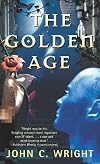
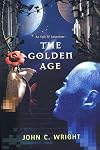
The Golden Age is Grand Space Opera, a large-scale SF adventure novel in the tradition of A. E. Van vogt and Roger Zelazny, with perhaps a bit of Cordwainer Smith enriching the style. It is an astounding story of super science, a thrilling wonder story that recaptures the excitements of SF's golden age writers. The Golden Age takes place 10,000 years in the future in our solar system, an interplanetary utopian society filled with immortal humans. Within the frame of a traditional tale-the show more one rebel who is unhappy in utopia-Wright spins an elaborate plot web filled with suspense and passion. Phaethon, of Radamanthus House, is attending a glorious party at his family mansion to celebrate the thousand-year anniversary of the High Transcendence. There he meets first an old man who accuses him of being an impostor and then a being from Neptune who claims to be an old friend. The Neptunian tells him that essential parts of his memory were removed and stored by the very government that Phaethon believes to be wholly honorable. It shakes his faith. He is an exile from himself. And so Phaethon embarks upon a quest across the transformed solar system--Jupiter is now a second sun, Mars and Venus terraformed, humanity immortal--among humans, intelligent machines, and bizarre life forms that are partly both, to recover his memory, and to learn what crime he planned that warranted such preemptive punishment. His quest is to regain his true identity. The Golden Age is one of the major, ambitious SF novels of the year and the international launch of an important new writer in the genre. show lessTags
Recommendations

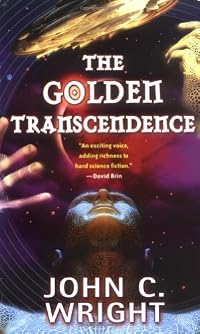



Member Recommendations

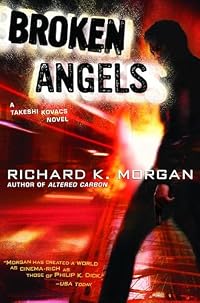
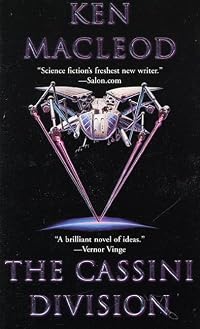
whiten06 A similar view of transhumanism and augmented reality.
Member Reviews
I'm being generous with the three stars, because it definitely suffered on the reread. I still like the basic concept: Phaeton is investigating himself because he has large chunks of his memory missing, and he's trying to figure out why he's done this to himself and how this affects his sense of self. The book and its world are hamstrung by the author's worldview, however, and the talking exposition wears on you after a while. At least his editor stuck with the book till the end this time instead of giving up halfway through.
The Golden Age by John C. Wright is a fully developed view of an age 10,000 years into the future, named the “Golden Oecumene”. The solar system is a utopian society teeming with a vast assortment of human, artificial intelligence, nearly immortal tech-assisted post-humans, and many entities in between, including mass minds and AI collectives. They exist in an abundantly populated Solar System that has been re-engineered on a planetary scale. The book is filled with big ideas, whether it’s the layers of alternate reality the beings exist and communicate through, or the complex society and subtle relationships between the various life-forms. The scale of the world-building in this trilogy is stunning.
I enjoyed the start of this show more story, set at a masquerade ball during the time of ‘High-Transcendence”, an event held every thousand years, meant to bring together all life forms, to celebrate the Golden Oecumene, and to plan the next thousand years. The masquerade allows beings to conceal their identity, which provides some intrigue and a slow reveal of many of the main characters. The protagonist is Phaethon, son of Helion. A great lord, Helion, completed some celestial engineering of the Sun providing some of the stability and power to this golden age. Phaethon quickly realizes he has lost large swaths of his memory and quickly determines that he himself played a role in suppressing his memories. The rest of this first book, largely follows Phaethon attempting to recover his lost memories, but also unraveling a web of complexity and intrigue.
In my opinion, the novel is not without its issues. I found it to be a laborious read, never turning into the ‘mind-movie’ that the best books create for me. I was never able to easily visual the settings and I never connected with the characters. The one exception might be Rhadamanthus, Phaethon’s AI assistant that often manifests as a penguin. There are no strong female characters, and the most important one, is a strikingly beautiful, puppet replica who is deeply in love with Phaethon, but is constantly dismissed. In this respect, the book feels a bit like a typical 1950’s misogynistic sci-fi novel. What’s impressive is that despite its flaws, I never once considered abandoning this book. It was not the plot or characters that kept me, but the continuous creative ideas about this utopian society so far in the future.
I will likely read the next two novels at some point, hoping that Wright continues to produce the intriguing ideas, but also finding better footing is his story telling. I don’t read a great deal of far future or cyberpunk sci-fi, so maybe I’m being exposed to concepts and ideas that more common than I realize. But for me, this was chocked full of imaginative concepts.
A challenging read, but worth the investment due to the non-stop mind-stretching imagining of a far off future, it’s inhabitants, and it’s wonders and tribulations. show less
I enjoyed the start of this show more story, set at a masquerade ball during the time of ‘High-Transcendence”, an event held every thousand years, meant to bring together all life forms, to celebrate the Golden Oecumene, and to plan the next thousand years. The masquerade allows beings to conceal their identity, which provides some intrigue and a slow reveal of many of the main characters. The protagonist is Phaethon, son of Helion. A great lord, Helion, completed some celestial engineering of the Sun providing some of the stability and power to this golden age. Phaethon quickly realizes he has lost large swaths of his memory and quickly determines that he himself played a role in suppressing his memories. The rest of this first book, largely follows Phaethon attempting to recover his lost memories, but also unraveling a web of complexity and intrigue.
In my opinion, the novel is not without its issues. I found it to be a laborious read, never turning into the ‘mind-movie’ that the best books create for me. I was never able to easily visual the settings and I never connected with the characters. The one exception might be Rhadamanthus, Phaethon’s AI assistant that often manifests as a penguin. There are no strong female characters, and the most important one, is a strikingly beautiful, puppet replica who is deeply in love with Phaethon, but is constantly dismissed. In this respect, the book feels a bit like a typical 1950’s misogynistic sci-fi novel. What’s impressive is that despite its flaws, I never once considered abandoning this book. It was not the plot or characters that kept me, but the continuous creative ideas about this utopian society so far in the future.
I will likely read the next two novels at some point, hoping that Wright continues to produce the intriguing ideas, but also finding better footing is his story telling. I don’t read a great deal of far future or cyberpunk sci-fi, so maybe I’m being exposed to concepts and ideas that more common than I realize. But for me, this was chocked full of imaginative concepts.
A challenging read, but worth the investment due to the non-stop mind-stretching imagining of a far off future, it’s inhabitants, and it’s wonders and tribulations. show less
The beginning of this book was so confusing that I almost stopped reading. The world created for the story is complex and rich, but it is not explained very much. I was on my own to figure out what was going on. Eventually, I caught up and the plot was worth the effort. I really came to enjoy the idea of a future society of immortal humans who use machines as extensions of their bodies and minds. Unfortunately the book ends abruptly with a note announcing that the story will be concluded in the sequel.
John C. Wright's _The Golden Age_ is a worthy read. Taking place in the far future, 10,000 years from now, it is a world where the transhuman 'singularity' has occurred long before and the population of the solar system is made up of humans of massive (and varied) intellects and powers as well as the 'sophotechs', huge supercomputers of intellectual capacity to dwarf even their superhuman creators who make sure that the society of humanity does not lack for anything except perhaps risk and adventure, "deeds of renown without peer" as the main character would
have it.
This main character is Phaeton, the aptly named son of Helion. His father is one of the seven peers who are the richest and most powerful of men in the richest and most show more powerful age that humanity has ever known. Something does not sit well with Phaeton though, even in this golden age of peace and prosperity. Phaeton hungers for even more than the world can give him, namely the above-mentioned deeds of peerless renown. In addition to this he soon discovers that he has large gaps in his memory and is given some uncomfortable indications that he is not the man he thinks he is and perhaps the world is not as rosy a place as it seems. So begins Phaeton's quest to discover his true identity while his father, wife and seemingly the whole of humanity stand against him. The secrets that Phaeton uncovers will shatter his life and may, in the end, also shatter the world. John C. Wright has created a wonderful glimpse of a far-future for humanity. It is a solar system where FTL has not been discovered, forcing humanity to still live in its cradle system, but they have been able to engineer the planets and the sun to suit their every desire and need. They also live mostly in the cyber-like world of the Mentality where everything from their self-image to their perceptions of the world around them can be tailored to suit their varied tastes and desires. Over all watch the immense minds of the Sophotechs ensuring that no human hurts another (unless it be himself) and keeping track of the endless calculations needed to keep the golden age running smoothly.
The story is a fairly straightforward quest tale in which Phaeton must overcome insurmountable opposition in order to reach his goal, though it is laced with numerous insights into human nature, both personal and political, as well as the philosophical implications of such a utopian world that make it more than an adventure story. The prose is also excellent, a well-crafted piece of work reminiscent of Jack Vance whom the author has sited as a great influence. The ideas are also 'big' in the best tradition of both space opera and tales of human life after the singularity. The book is the first part of a trilogy and ends on something of a cliffhanger, so don't go into it expecting to get a neat resolution to the plot. All in all this was an excellent book and I think you'll enjoy immersing yourself in the world that John C. Wright has created in an erudite and well-crafted story. show less
have it.
This main character is Phaeton, the aptly named son of Helion. His father is one of the seven peers who are the richest and most powerful of men in the richest and most show more powerful age that humanity has ever known. Something does not sit well with Phaeton though, even in this golden age of peace and prosperity. Phaeton hungers for even more than the world can give him, namely the above-mentioned deeds of peerless renown. In addition to this he soon discovers that he has large gaps in his memory and is given some uncomfortable indications that he is not the man he thinks he is and perhaps the world is not as rosy a place as it seems. So begins Phaeton's quest to discover his true identity while his father, wife and seemingly the whole of humanity stand against him. The secrets that Phaeton uncovers will shatter his life and may, in the end, also shatter the world. John C. Wright has created a wonderful glimpse of a far-future for humanity. It is a solar system where FTL has not been discovered, forcing humanity to still live in its cradle system, but they have been able to engineer the planets and the sun to suit their every desire and need. They also live mostly in the cyber-like world of the Mentality where everything from their self-image to their perceptions of the world around them can be tailored to suit their varied tastes and desires. Over all watch the immense minds of the Sophotechs ensuring that no human hurts another (unless it be himself) and keeping track of the endless calculations needed to keep the golden age running smoothly.
The story is a fairly straightforward quest tale in which Phaeton must overcome insurmountable opposition in order to reach his goal, though it is laced with numerous insights into human nature, both personal and political, as well as the philosophical implications of such a utopian world that make it more than an adventure story. The prose is also excellent, a well-crafted piece of work reminiscent of Jack Vance whom the author has sited as a great influence. The ideas are also 'big' in the best tradition of both space opera and tales of human life after the singularity. The book is the first part of a trilogy and ends on something of a cliffhanger, so don't go into it expecting to get a neat resolution to the plot. All in all this was an excellent book and I think you'll enjoy immersing yourself in the world that John C. Wright has created in an erudite and well-crafted story. show less
It's the rare transhumanist story that faces possible defects of a singularity society. Wright's 'Golden Oecumene' is excellent in this respect -- a well imagined singularity future, dense with both good and evil. In the initial scene a 'primitive' has created a piece of conceptual art as caustic commentary on the golden age around him -- silvered trees which cannot respond to sunlight and which he has instead programmed to track an imaginary sun. A fabulous metaphor for a society focused on the shadows on the cave wall.
So there's tremendous potential here, which unfortunately Wright never quite realizes. As with so much sci-fi, the contents of the puzzle box ("what would make a man alter his own memory") can never be as interesting as show more the box itself. The unveiling of the plot is disappointing, and after 400 pages, you don't even get the full reveal. (That comes in Books 2 and 3, I suppose)... show less
So there's tremendous potential here, which unfortunately Wright never quite realizes. As with so much sci-fi, the contents of the puzzle box ("what would make a man alter his own memory") can never be as interesting as show more the box itself. The unveiling of the plot is disappointing, and after 400 pages, you don't even get the full reveal. (That comes in Books 2 and 3, I suppose)... show less
This is the first book I've read from this author and he completely blew me away! He is brilliant! This story weaves an intricate plot with utterly believable science of the far future. His portrayal of intellects ranging from the mere human level to millions of times smarter than us is amazing. Many times there are arguments between two "people" with augmented or machine intelligence and they duel back and forth with with perfect logic on subjects ranging through good vs. evil, objective vs. subjective morality, identity, security vs. freedom, and many others. He creates new sciences and teminologies as easily as breathing and they all seem perfectly believable and are woven seemlessly into the story. The plot is engrossing and the show more unveiling of its mysteries is kept at a perfect pace. I quickly snatched up the other two books in this series and devoured them. This is one of the best stories I've ever read. show less
Unfortunately for John C. Wright, the sci-fi of today must exist in the shadows of its predecessors. Wright has tried to live up to standards set by authors such as Aldous Huxley and Philip K. Dick. He has created a utopian society of the future. He included the initial of his middle name on the cover.
The Golden Age is an NMP: novel of mass production; as potentially dangerous for the literary world as any country’s WMDs for our world. In an attempt to overcome this problem, Wright created another. The horrendous amount of scientific jargon. The reader is mercilessly bombarded with Wright’s habit of displaying his scientific knowledge. Sure, the intricacy of the setting and theme demands some scientific explanation but Wright has show more gone too far.
It is hard to feel a part of Wright’s world, which is an important aspect of any good story. You should be transported to the fictional world and perhaps haggle for a beard with one of the characters. You simply cannot relate to a character named Nebuchednezzar! No bullshit! Get on your knees in the bookstore and find out for yourself. The scientific jargon and unpronounceable names serve only to inhibit the flow of a good story.
In the end, I do not regret reading this book. It was enlightening – I now know never to read John C. Wright again. But seriously, for what it is – a sci-fi NMP – The Golden Age is worthy. You will never be bored with the myriad of characters and ever changing settings. Some trippy scenes spark a competent reader’s imagination well.
To finish on the best note possible, the concept behind the book – though borrowed from the above authors amongst others – was great. Set 10, 000 years in the future, The Golden Age is a story amongst intergalactic worlds. It is a prediction of what our world could come to be, should it survive our mistreatment of it.
If you’re a sci-fi geek, you’ll love this book. If you’re a pseudo literary critic, steer clear.
This review was originally published in On Dit, the student newspaper of Adelaide University. show less
The Golden Age is an NMP: novel of mass production; as potentially dangerous for the literary world as any country’s WMDs for our world. In an attempt to overcome this problem, Wright created another. The horrendous amount of scientific jargon. The reader is mercilessly bombarded with Wright’s habit of displaying his scientific knowledge. Sure, the intricacy of the setting and theme demands some scientific explanation but Wright has show more gone too far.
It is hard to feel a part of Wright’s world, which is an important aspect of any good story. You should be transported to the fictional world and perhaps haggle for a beard with one of the characters. You simply cannot relate to a character named Nebuchednezzar! No bullshit! Get on your knees in the bookstore and find out for yourself. The scientific jargon and unpronounceable names serve only to inhibit the flow of a good story.
In the end, I do not regret reading this book. It was enlightening – I now know never to read John C. Wright again. But seriously, for what it is – a sci-fi NMP – The Golden Age is worthy. You will never be bored with the myriad of characters and ever changing settings. Some trippy scenes spark a competent reader’s imagination well.
To finish on the best note possible, the concept behind the book – though borrowed from the above authors amongst others – was great. Set 10, 000 years in the future, The Golden Age is a story amongst intergalactic worlds. It is a prediction of what our world could come to be, should it survive our mistreatment of it.
If you’re a sci-fi geek, you’ll love this book. If you’re a pseudo literary critic, steer clear.
This review was originally published in On Dit, the student newspaper of Adelaide University. show less
Members
- Recently Added By
Lists

Schisms in transhumanity - SF
34 works; 1 member

Broderick and Di Filippo's Science Fiction: The 101 Best Novels 1985-2010
103 works; 7 members
Author Information

63+ Works 4,677 Members
John C. Wright, an attorney turned SF and fantasy writer, lives in Centreville, Virginia
Awards and Honors
Awards
Distinctions
Series

Belongs to Publisher Series
Common Knowledge
- Original publication date
- 2002
- People/Characters
- Phaethon Prime of Rhadamanth; Helion Relic of Rhadamanth; Daphne Tercius Semi-Rhadamanth; Atkins
- First words
- It was a time of masquerade. It was the eve of the High Transcendence, an event so solemn and significant that it could be held but once each thousand years...
- Publisher's editor
- Hartwell, David G.
- Blurbers
- Levinson, Paul; Modesitt, L. E., Jr.; Sawyer, Robert J.
*Some information comes from Common Knowledge in other languages. Click "Edit" for more information.
Classifications
Statistics
- Members
- 907
- Popularity
- 29,443
- Reviews
- 22
- Rating
- (3.85)
- Languages
- 6 — Czech, English, French, Italian, Portuguese, Spanish
- Media
- Paper, Ebook
- ISBNs
- 12
- ASINs
- 3