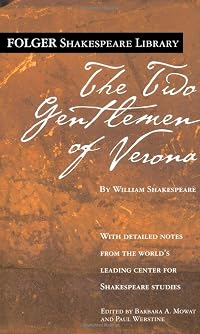
The Two Gentlemen of Verona
by William Shakespeare
On This Page
Description
The New Cambridge Shakespeare appeals to students worldwide for its up-to-date scholarship and emphasis on performance. The series features line-by-line commentaries and textual notes on the plays and poems. Introductions are regularly refreshed with accounts of new critical, stage and screen interpretations. In this second edition of The Two Gentlemen of Verona, Kurt Schlueter approaches Shakespeare's early comedy as a parody of two types of Renaissance educational fiction: the love-quest show more story and the test-of-friendship story, which in combination show high-flown human ideals as incompatible with each other and with human nature. Since the first known production at David Garrick's Drury Lane Theatre, the play has tempted major directors and actors, though changing conceptions of the play often fail to recognise its subversive impetus. This updated edition includes a new introductory section by Lucy Munro on recent stage and critical interpretations, bringing the thoroughly researched, illustrated performance history up to date. show lessTags
Recommendations



















Member Reviews
Proteus and Valentine, the eponymous two gentlemen, are best friends. Valentine sets out on a journey to Milan, but Proteus is happy to remain where he is, since he’s recently fallen in love with Julia. His father, however, wants him to see the world and sends him to Milan as well. Meanwhile, Valentine has fallen in love with Sylvia, the Duke of Milan’s daughter – but when Proteus gets to Milan and sees her, he falls in love with her too! Banishment, cross-dressing, and bumbling clowns – all the usual Shakespearean fun – help to sort out the tangled lovers in a traditional (though implausible) comic ending.
I enjoyed this play quite a lot, although the scholarly introduction called it an immature work (it’s one of show more Shakespeare’s earliest plays). You can definitely see traces of the characters and plot devices that Shakespeare used in later plays – Julia, for example, reminds me a lot of Rosalind from As You Like It – but Two Gentlemen of Verona is enjoyable on its own merits. There are some very witty exchanges in the text, but they’re brief enough that the plot doesn’t lose its intensity. The main characters (except for fickle Proteus) are all likeable, and I especially enjoyed the interactions between Julia and her maid Lucetta. There’s a band of outlaws, just for fun – and the moral of the story is, “Bros before hos.” Ah, Shakespeare, forever timeless… show less
I enjoyed this play quite a lot, although the scholarly introduction called it an immature work (it’s one of show more Shakespeare’s earliest plays). You can definitely see traces of the characters and plot devices that Shakespeare used in later plays – Julia, for example, reminds me a lot of Rosalind from As You Like It – but Two Gentlemen of Verona is enjoyable on its own merits. There are some very witty exchanges in the text, but they’re brief enough that the plot doesn’t lose its intensity. The main characters (except for fickle Proteus) are all likeable, and I especially enjoyed the interactions between Julia and her maid Lucetta. There’s a band of outlaws, just for fun – and the moral of the story is, “Bros before hos.” Ah, Shakespeare, forever timeless… show less
Shakespeare's romances are an acquired taste even among their more successful examples, and this appreciation becomes more difficult when, as with The Two Gentlemen of Verona, it's hard to settle on a frame of reference for experiencing it. One struggles to know whether to approach this play as romance, as something comic or, due to an episode of threatened sexual coercion (as well as a theme of jealousy and slander that the Bard would later flesh out more brilliantly in Othello), to view it through a more complex dramatic lens.
The Two Gentlemen of Verona is put at a further disadvantage by being one of Shakespeare's earliest plays (indeed, it is often said to be his first). It therefore lacks much of the skill and clarity its writer show more would later hone – in the process making his name a synonym for literary genius – though the play is certainly light and relatively easy to follow. There are many features that would go on to become Shakespeare staples: two pairs of lovers, misunderstandings and scheming, women dressed as boys to disguise themselves from the menfolk, as well as the first squeaky turns of many of the mechanisms of plot development and resolution that the author would later come to rely on.
In truth, aside from one charming eulogy to a scrappy dog to open Act Four, Scene Four (ironically making Launce, Shakespeare's first comic relief, one of his more successful Fools), there's not much that is memorable about The Two Gentlemen of Verona. Its main point of interest is in observing Shakespeare in embryo, and little more than that. show less
The Two Gentlemen of Verona is put at a further disadvantage by being one of Shakespeare's earliest plays (indeed, it is often said to be his first). It therefore lacks much of the skill and clarity its writer show more would later hone – in the process making his name a synonym for literary genius – though the play is certainly light and relatively easy to follow. There are many features that would go on to become Shakespeare staples: two pairs of lovers, misunderstandings and scheming, women dressed as boys to disguise themselves from the menfolk, as well as the first squeaky turns of many of the mechanisms of plot development and resolution that the author would later come to rely on.
In truth, aside from one charming eulogy to a scrappy dog to open Act Four, Scene Four (ironically making Launce, Shakespeare's first comic relief, one of his more successful Fools), there's not much that is memorable about The Two Gentlemen of Verona. Its main point of interest is in observing Shakespeare in embryo, and little more than that. show less
This is one of Shakespeare’s early comedies and you can tell. It hits a lot of the notes that he comes back to again and again—witty banter, impassioned proclamations of and insightful musings on love, women dressing as men, largely inexplicable plot developments, servants who are absolutely terrible at their jobs—but they never feel as coherent or deep as in his later plays. It felt like Shakespeare was still finding his feet, learning what worked and what played well, and that’s pretty much exactly the case. There are several scenes where the banter and puns just keep on g o i n g or stuff happens that I’m sure either a) played really well to a late-1500s audience or b) was Shakespeare desperately writing himself out of a show more corner. It also doesn’t help that he couldn’t keep his cities straight and that the period sexism is … pretty present.
That said, it delivered about what I wanted it to, which was romantic shenanigans with a side order of horrendous punnery, and a few hours’ worth of entertainment. It was pretty easy to follow too (see: early play), and despite the sexism, the women still had opinions and agency, Sylvia especially. She seems cool and I wish she’d been in a better story.
Mostly, I’m glad I read this because it gave me a glimpse at Shakespeare growing into himself. And the punning was pretty great.
6/10
To bear in mind: Renaissance ideas about love and women, I guess? show less
That said, it delivered about what I wanted it to, which was romantic shenanigans with a side order of horrendous punnery, and a few hours’ worth of entertainment. It was pretty easy to follow too (see: early play), and despite the sexism, the women still had opinions and agency, Sylvia especially. She seems cool and I wish she’d been in a better story.
Mostly, I’m glad I read this because it gave me a glimpse at Shakespeare growing into himself. And the punning was pretty great.
6/10
To bear in mind: Renaissance ideas about love and women, I guess? show less
20 years ago, on our honeymoon, my newlywed wife and I rode a train through Italy sharing a compartment with two gentlemen who disembarked at Verona. It was a nice coincidence to a play I knew only by title. The Two Gentlemen of Verona is one of Shakespeare's earliest works and not among his best.
The two "gentlemen" (I'll use this term loosely as we'll see how ungentlemanly one of them behaves) are Valentine and Proteus, two friends from Verona. Valentine leaves for Milan where he falls in love with the Duke's daughter Silvia, and they plan an elopement. Proteus initially stays home with the woman he loves, Julia, but then his father sends him to Milan as well. Upon arriving, he not only betrays Julia by also falling for Silvia, he show more betrays Valentine by revealing his elopement plans to the Duke. With Valentine banished to woods where he joins a band of outlaws, Proteus woos Silvia but she spurns him. Meanwhile, Julia arrives in Milan disguised as the page boy Sebastian and becomes a servant to Proteus.
A lot of elements of Shakespeare's style are already apparent: word play, women disguised as men, and overly quick proclamations of true love. Proteus servant Lance steals the play with comical asides, and while not apparent in the text, his comical dog is a highlight of stage productions. The play has a notorious problematic element when Proteus decides to "force himself" on Silvia. Despite the attempted rape, he is very swiftly forgiven by Silvia, Valentine, and Julia and the play ends with weddings planned for Valentine & Silvia and Proteus & Julia. I suspect this aspect is why the play isn't performed all that much, although on the other hand there is still fiction told within my lifetime where sexual assault was portrayed as "romantic," so who knows? show less
The two "gentlemen" (I'll use this term loosely as we'll see how ungentlemanly one of them behaves) are Valentine and Proteus, two friends from Verona. Valentine leaves for Milan where he falls in love with the Duke's daughter Silvia, and they plan an elopement. Proteus initially stays home with the woman he loves, Julia, but then his father sends him to Milan as well. Upon arriving, he not only betrays Julia by also falling for Silvia, he show more betrays Valentine by revealing his elopement plans to the Duke. With Valentine banished to woods where he joins a band of outlaws, Proteus woos Silvia but she spurns him. Meanwhile, Julia arrives in Milan disguised as the page boy Sebastian and becomes a servant to Proteus.
A lot of elements of Shakespeare's style are already apparent: word play, women disguised as men, and overly quick proclamations of true love. Proteus servant Lance steals the play with comical asides, and while not apparent in the text, his comical dog is a highlight of stage productions. The play has a notorious problematic element when Proteus decides to "force himself" on Silvia. Despite the attempted rape, he is very swiftly forgiven by Silvia, Valentine, and Julia and the play ends with weddings planned for Valentine & Silvia and Proteus & Julia. I suspect this aspect is why the play isn't performed all that much, although on the other hand there is still fiction told within my lifetime where sexual assault was portrayed as "romantic," so who knows? show less
4. The Two Gentlemen of Verona (The Oxford Shakespeare) by William Shakespeare
editor: Roger Warren
published: 1591? (Introduction 2008)
format: 183-page Oxford World Classic paperback
acquired: September read: Dec 17, 2021, Jan 1 – Feb, 6, 2022 time reading: 12:41, 4.2 mpp
rating: 4?
genre/style: Classic Drama theme Shakespeare
locations: A Verona and Milan connected by sea travel??
about the author: April 23, 1564 – April 23, 1616
In her program note for The Two Gentlemen of Verona at Stratford-upon-Avon in I970, [[Hilary Spurling]] described the play's world as one of:
Acts 1-4 were really entertaining, delightfully so. Funny, clever, disturbing, there's even a dog. It‘s terrific fun Shakespeare. A pre-Juliet-like Julia tears up a lover's a letter, and then when alone secretly tries to put them back together again. Silvia is wooed by three men, in open and discrete competition, involving musicians and great spiteful spurning on her part. Valentine has a servant cleverer than he, if less charismatic, and Proteus's servant has the dog and the two chat in a way mocking those they serve. But what to make of act 5? Up-till-then Valentine is likable. But he not only forgives Proteus for attempting to rape his lover Silvia, but then offers her to him. And this is presented as a happy ending. It really seems to spoil this play. (and maybe that‘s why parts were recycled into [Romeo and Juliet], [The Merchant of Venice], [Loves Labour Lost], and several other plays.)
Because of the ending, mainly only recommended to completists. But I wouldn't suggest at all hesitating to see a performance.
2022
https://www.librarything.com/topic/337810#7753825 show less
editor: Roger Warren
published: 1591? (Introduction 2008)
format: 183-page Oxford World Classic paperback
acquired: September read: Dec 17, 2021, Jan 1 – Feb, 6, 2022 time reading: 12:41, 4.2 mpp
rating: 4?
genre/style: Classic Drama theme Shakespeare
locations: A Verona and Milan connected by sea travel??
about the author: April 23, 1564 – April 23, 1616
In her program note for The Two Gentlemen of Verona at Stratford-upon-Avon in I970, [[Hilary Spurling]] described the play's world as one of:
"“knights errant, distracted lovers, and as preposterous a band of brigands as ever strode a stage. This is an Italy of true romance, where Milan is reached from Veronashow more
by sea. Proteus abandons Julia, betrays Valentine, abducts Silvia, and when his career of complicated treachery is finally unmasked, apologizes as casually as though he had just sneezed. Whereupon our hero, Valentine, is so overcome that he promptly offers to hand over his beloved to the man who, not three minutes before, had meant to rape her."
Acts 1-4 were really entertaining, delightfully so. Funny, clever, disturbing, there's even a dog. It‘s terrific fun Shakespeare. A pre-Juliet-like Julia tears up a lover's a letter, and then when alone secretly tries to put them back together again. Silvia is wooed by three men, in open and discrete competition, involving musicians and great spiteful spurning on her part. Valentine has a servant cleverer than he, if less charismatic, and Proteus's servant has the dog and the two chat in a way mocking those they serve. But what to make of act 5? Up-till-then Valentine is likable. But he not only forgives Proteus for attempting to rape his lover Silvia, but then offers her to him. And this is presented as a happy ending. It really seems to spoil this play. (and maybe that‘s why parts were recycled into [Romeo and Juliet], [The Merchant of Venice], [Loves Labour Lost], and several other plays.)
Because of the ending, mainly only recommended to completists. But I wouldn't suggest at all hesitating to see a performance.
2022
https://www.librarything.com/topic/337810#7753825 show less
HE WAS HAVING A LARF
Securely placed in the Shakespeare cannon being the second play included in the first folio of 1623 this comedy was probably written early in the playwrights career probably before the closure of the theatres in January 1593. The theatres were closed due to an outbreak of the plague in London and would not be re-opened until spring 1594: (any similarities between those years and the Covid-19 virus today when many of us have restrictions is purely coincidental). The Two Gentlemen of Verona is considered by many critiques and readers to be an inferior play because it is thought to be an immature work. Admittedly it has no great drama and does not grapple with "life meaning" issues as some of the later plays do, but it show more is one of the most consistently funny of the Bards plays and never fails to entertain, it also contains Shakespeares most celebrated song (thanks to Schubert amongst others). I read the Arden Shakespeare edition with its copious notes and modern English spelling, but it is not a difficult play to follow and might serve as a gentle introduction to Shakespeare's oeuvre.
Although the play contains some of the Elizabethan tropes expected of comedies: disguise, trickery and banter between masters and servants, its main feature is the ludicrous natures of some of the characters. One would probably never meet a bunch of outlaws so ridiculous or a central character (Proteus) who changes his attitudes on the turn of a pin (not once but twice) or male characters who are so easily deceived. The females are much more resolute, but the reason for much of this behaviour is of course love sickness or one could say lust.
The story: Proteus and Valentine are very close friends, but it is time for them to seek their place in the world. Proteus is in love with Julia and they exchange rings just before he leaves Verona to go to the big city of Milan. Valentine has made the same journey some time before. Proteus is joined by his servant Lance and his dog Crab. At the court of Milan he discovers that his friend Valentine has fallen in love with Sylvia and as soon as Proteus meets SyIvia he becomes love stricken as well. He stitches up his lifelong friend Valentine with the Duke; Silvia's father causing Valentine to be banished, so he has a chance to woo Sylvia. Meanwhile Julia missing Proteus disguises herself as a man (Sebastian) so that she can travel to Milan in safety to find her beloved. Proteus is making no headway with Sylvia and is not helped when the dog Crab whom he gives as a present to Sylvia pisses all over her petticoats. Valentine is captured by outlaws who are so impressed with his demeanour they make him their general. Proteus does not recognise Julia disguised as Sebastian and employs her to act as a go between with Sylvia. Sylvia now engages Sir Eglamour to go with her to find her true love Valentine. The Duke and Proteus are in pursuit and they all meet up in the woods with Valentine and the outlaws. Proteus attempts to take Sylvia by force, but is prevented by Valentine, Proteus immediately realises he has been acting foolishly and asks to be forgiven. Julia still in disguise faints and when she comes to throws off her disguise and once again claims Proteus. The outlaws are all pardoned by the Duke and a wedding day is arranged for the two couples.
My usual method of approaching a Shakespeare play especially one that is new to me, is to read the play through first, before reading any criticism, so that I can gain my own first impression. The introduction to the Arden edition written by William C Carroll concentrates on Shakespeares dramatic strategies and its links with previous sixteenth century drama and also recent critical and theoretical work on the early modern theatre. There is a discussion of male friendship which is undoubtedly a feature of the play. The question it poses is can a male friendship be more important than love between a woman and a man and there are plenty of examples from the text, especially the controversial ending to the play where some interpretations of Valentines reconciliation speech with Proteus see him offering to share Sylvia with him. This supposed offer comes a very short time after Proteus has attempted to rape Sylvia, however I think that the offer of sharing Sylvia is a misinterpretation of the text and it is surprising that Carrol's introduction makes so much of it. The links backwards to the plays of John Lily and further back to Ovid as sources for the ideas of friendship in previous drama are explored. Another theme explored at some length is that of the prodigal son. Both Proteus and Valentine are away from their home in Verona, but we never see them return to their families. There is also a section on women disguised as men (this could have been the first time that Shakespeare used this trope) and how it would look to an audience who would see men playing all the female roles and then see them playing females disguised as males. This sounds very complicated to an audience today who might have trouble getting their heads around the fact that there were no female actors in Shakespeare's companies.
Reading this scholarly introduction seemed like it was avoiding the elephant in the room. The play is a comedy, throughout the play there are comic interludes, nearly all the characters indulge in word play, there are malapropisms galore and plenty of good jokes and there is Lance and his dog Crab. In my opinion much could have been gained by writing more on the tradition of comedy rather than giving an impression that the play was essentially a serious examination of renaissance themes. The comedy is mainly verbal, there is no slapstick, we are only told about Crabs indiscretions in Julias house. Speed is the name given to Valentine's page and he is well named for his quick repartee whether it is outperforming Valentino or making fun of Lance. There is also plenty of wit and repartee between Julia and her waiting maid Lucetta and then there is Lance with his hilarious soliloquies with his dog Crab. Even at the plays most dramatic moments there is time for some comedy, for example when Julia is disguising herself as a man there is the question of the codpiece:
Lucetta says:
A round hose, madam, now's not worth a pin
Unless you have a codpiece to stick pins on.
Then Julia makes a speech about Proteus who at that moment is betraying her love in order to woo Sylvia:
Base men that use them to so base effect!
But truer stars did govern Proteus' birth;
His words are bonds, his oaths are oracles,
His love sincere, his thoughts immaculate,
His tears pure messengers sent from his heart,
His heart as far from fraud as heaven from earth.
I could imagine an Elizabethan audience laughing out loud through much of this play and waiting for the next joke to come along.
There are other scenes that could be played to garner laughs: for example when the Duke accosts Valentine who is about to elope with his daughter and is hiding a ladder under his cloak; the Duke asks him for his advice on how to gain access to a lady who lives in an upstairs apartment. I agree with William Rossky who maintains that the play is first and foremost a burlesque and should be judged on those terms. He goes on to say;
"If it is myopic to read Shakespeare only in terms of our own time and convenience, it is just as blind to read him as inevitably illustrating any single Renaissance convention. The result of unscrutinised assumptions about Elizabethan acceptance of a particular idea or convention has sometimes been to make Shakespeare appear inaccessible to our time and to dehumanise the drama"
Although the idea of a burlesque is never far away, the second half of the play has enough dialogue to enable the actors to move the audience as the lovers stories unfold. Julia and Sylvia have some particularly touching scenes. There are very few long speeches, but plenty of one liners. Proteus gets the longest speech in a scene all to himself when he convinces himself that his love for Sylvia is worth forsaking Julia and his friend Valentine. The speech contains some word play, but it is straight forward with no imagery. Why waste time on metaphors and similes when you are going all out to make people laugh, however be it in a more sophisticated non physical way. I enjoyed reading the versification which flows well and I enjoyed figuring out the puns. I am sure I did not get them all. Looking forward to seeing a production of the play - hope it makes me laugh.
The BBC film of the play shown in 1983 certainly did make me laugh and I thought the two main stage settings: The court in Milan and the Forest of Mantua were brilliantly set up. The first half of the play with all its wit and repartee had an innocence about it, especially as the actors were mainly young people. It was frothy, light and just right. The second part of the play which has all the drama of the lovers betrayals was darker, but still with some lighter touches, there was a lovely setting of the song "Who is Sylvia" Overall a very good film of the play and proof positive that it can be made to work and to entertain.
The play has been performed sporadically during the last century, but the Royal Shakespeare company has three productions to its credit, the last in 2014. Any production must come to terms with the comedy elements, how much of the play should be played to amuse the audience, to keep it laughing, without stopping the drama unfolding of the lovers betrayals and eventual conciliation. At the end of the day it is a fantasy, a lovers fantasy and a play that can make its audience laugh and cry - 4 stars. show less
Securely placed in the Shakespeare cannon being the second play included in the first folio of 1623 this comedy was probably written early in the playwrights career probably before the closure of the theatres in January 1593. The theatres were closed due to an outbreak of the plague in London and would not be re-opened until spring 1594: (any similarities between those years and the Covid-19 virus today when many of us have restrictions is purely coincidental). The Two Gentlemen of Verona is considered by many critiques and readers to be an inferior play because it is thought to be an immature work. Admittedly it has no great drama and does not grapple with "life meaning" issues as some of the later plays do, but it show more is one of the most consistently funny of the Bards plays and never fails to entertain, it also contains Shakespeares most celebrated song (thanks to Schubert amongst others). I read the Arden Shakespeare edition with its copious notes and modern English spelling, but it is not a difficult play to follow and might serve as a gentle introduction to Shakespeare's oeuvre.
Although the play contains some of the Elizabethan tropes expected of comedies: disguise, trickery and banter between masters and servants, its main feature is the ludicrous natures of some of the characters. One would probably never meet a bunch of outlaws so ridiculous or a central character (Proteus) who changes his attitudes on the turn of a pin (not once but twice) or male characters who are so easily deceived. The females are much more resolute, but the reason for much of this behaviour is of course love sickness or one could say lust.
The story: Proteus and Valentine are very close friends, but it is time for them to seek their place in the world. Proteus is in love with Julia and they exchange rings just before he leaves Verona to go to the big city of Milan. Valentine has made the same journey some time before. Proteus is joined by his servant Lance and his dog Crab. At the court of Milan he discovers that his friend Valentine has fallen in love with Sylvia and as soon as Proteus meets SyIvia he becomes love stricken as well. He stitches up his lifelong friend Valentine with the Duke; Silvia's father causing Valentine to be banished, so he has a chance to woo Sylvia. Meanwhile Julia missing Proteus disguises herself as a man (Sebastian) so that she can travel to Milan in safety to find her beloved. Proteus is making no headway with Sylvia and is not helped when the dog Crab whom he gives as a present to Sylvia pisses all over her petticoats. Valentine is captured by outlaws who are so impressed with his demeanour they make him their general. Proteus does not recognise Julia disguised as Sebastian and employs her to act as a go between with Sylvia. Sylvia now engages Sir Eglamour to go with her to find her true love Valentine. The Duke and Proteus are in pursuit and they all meet up in the woods with Valentine and the outlaws. Proteus attempts to take Sylvia by force, but is prevented by Valentine, Proteus immediately realises he has been acting foolishly and asks to be forgiven. Julia still in disguise faints and when she comes to throws off her disguise and once again claims Proteus. The outlaws are all pardoned by the Duke and a wedding day is arranged for the two couples.
My usual method of approaching a Shakespeare play especially one that is new to me, is to read the play through first, before reading any criticism, so that I can gain my own first impression. The introduction to the Arden edition written by William C Carroll concentrates on Shakespeares dramatic strategies and its links with previous sixteenth century drama and also recent critical and theoretical work on the early modern theatre. There is a discussion of male friendship which is undoubtedly a feature of the play. The question it poses is can a male friendship be more important than love between a woman and a man and there are plenty of examples from the text, especially the controversial ending to the play where some interpretations of Valentines reconciliation speech with Proteus see him offering to share Sylvia with him. This supposed offer comes a very short time after Proteus has attempted to rape Sylvia, however I think that the offer of sharing Sylvia is a misinterpretation of the text and it is surprising that Carrol's introduction makes so much of it. The links backwards to the plays of John Lily and further back to Ovid as sources for the ideas of friendship in previous drama are explored. Another theme explored at some length is that of the prodigal son. Both Proteus and Valentine are away from their home in Verona, but we never see them return to their families. There is also a section on women disguised as men (this could have been the first time that Shakespeare used this trope) and how it would look to an audience who would see men playing all the female roles and then see them playing females disguised as males. This sounds very complicated to an audience today who might have trouble getting their heads around the fact that there were no female actors in Shakespeare's companies.
Reading this scholarly introduction seemed like it was avoiding the elephant in the room. The play is a comedy, throughout the play there are comic interludes, nearly all the characters indulge in word play, there are malapropisms galore and plenty of good jokes and there is Lance and his dog Crab. In my opinion much could have been gained by writing more on the tradition of comedy rather than giving an impression that the play was essentially a serious examination of renaissance themes. The comedy is mainly verbal, there is no slapstick, we are only told about Crabs indiscretions in Julias house. Speed is the name given to Valentine's page and he is well named for his quick repartee whether it is outperforming Valentino or making fun of Lance. There is also plenty of wit and repartee between Julia and her waiting maid Lucetta and then there is Lance with his hilarious soliloquies with his dog Crab. Even at the plays most dramatic moments there is time for some comedy, for example when Julia is disguising herself as a man there is the question of the codpiece:
Lucetta says:
A round hose, madam, now's not worth a pin
Unless you have a codpiece to stick pins on.
Then Julia makes a speech about Proteus who at that moment is betraying her love in order to woo Sylvia:
Base men that use them to so base effect!
But truer stars did govern Proteus' birth;
His words are bonds, his oaths are oracles,
His love sincere, his thoughts immaculate,
His tears pure messengers sent from his heart,
His heart as far from fraud as heaven from earth.
I could imagine an Elizabethan audience laughing out loud through much of this play and waiting for the next joke to come along.
There are other scenes that could be played to garner laughs: for example when the Duke accosts Valentine who is about to elope with his daughter and is hiding a ladder under his cloak; the Duke asks him for his advice on how to gain access to a lady who lives in an upstairs apartment. I agree with William Rossky who maintains that the play is first and foremost a burlesque and should be judged on those terms. He goes on to say;
"If it is myopic to read Shakespeare only in terms of our own time and convenience, it is just as blind to read him as inevitably illustrating any single Renaissance convention. The result of unscrutinised assumptions about Elizabethan acceptance of a particular idea or convention has sometimes been to make Shakespeare appear inaccessible to our time and to dehumanise the drama"
Although the idea of a burlesque is never far away, the second half of the play has enough dialogue to enable the actors to move the audience as the lovers stories unfold. Julia and Sylvia have some particularly touching scenes. There are very few long speeches, but plenty of one liners. Proteus gets the longest speech in a scene all to himself when he convinces himself that his love for Sylvia is worth forsaking Julia and his friend Valentine. The speech contains some word play, but it is straight forward with no imagery. Why waste time on metaphors and similes when you are going all out to make people laugh, however be it in a more sophisticated non physical way. I enjoyed reading the versification which flows well and I enjoyed figuring out the puns. I am sure I did not get them all. Looking forward to seeing a production of the play - hope it makes me laugh.
The BBC film of the play shown in 1983 certainly did make me laugh and I thought the two main stage settings: The court in Milan and the Forest of Mantua were brilliantly set up. The first half of the play with all its wit and repartee had an innocence about it, especially as the actors were mainly young people. It was frothy, light and just right. The second part of the play which has all the drama of the lovers betrayals was darker, but still with some lighter touches, there was a lovely setting of the song "Who is Sylvia" Overall a very good film of the play and proof positive that it can be made to work and to entertain.
The play has been performed sporadically during the last century, but the Royal Shakespeare company has three productions to its credit, the last in 2014. Any production must come to terms with the comedy elements, how much of the play should be played to amuse the audience, to keep it laughing, without stopping the drama unfolding of the lovers betrayals and eventual conciliation. At the end of the day it is a fantasy, a lovers fantasy and a play that can make its audience laugh and cry - 4 stars. show less
Members
- Recently Added By
Lists

Favorite Shakespeare plays?
37 works; 44 members

Plays I Like
230 works; 31 members

University literature
145 works; 5 members

Tonikat reading completed on Librarything journals
329 works; 2 members

Books available on Open Library
171 works; 4 members
Stage Plays/Screenplays/Dialogues/Anything Dialogue-Storytelling Related
81 works; 2 members

Books Mentioned in The Wedding Planner's Daughter series
107 works; 2 members
Greatest Books, allegedly
484 works; 10 members
Essential/Recognized Stage Plays
115 works; 4 members
'Books You Can't Live Without: The Top 100', The Guardian, 2007
156 works; 7 members

Books With Place Names in the Title
215 works; 10 members
My Play Collection
769 works; 3 members

Next Plays / 2025
352 works; 1 member
Author Information

6,097+ Works 442,076 Members
William Shakespeare, 1564 - 1616 Although there are many myths and mysteries surrounding William Shakespeare, a great deal is actually known about his life. He was born in Stratford-Upon-Avon, son of John Shakespeare, a prosperous merchant and local politician and Mary Arden, who had the wealth to send their oldest son to Stratford Grammar School. show more At 18, Shakespeare married Anne Hathaway, the 27-year-old daughter of a local farmer, and they had their first daughter six months later. He probably developed an interest in theatre by watching plays performed by traveling players in Stratford while still in his youth. Some time before 1592, he left his family to take up residence in London, where he began acting and writing plays and poetry. By 1594 Shakespeare had become a member and part owner of an acting company called The Lord Chamberlain's Men, where he soon became the company's principal playwright. His plays enjoyed great popularity and high critical acclaim in the newly built Globe Theatre. It was through his popularity that the troupe gained the attention of the new king, James I, who appointed them the King's Players in 1603. Before retiring to Stratford in 1613, after the Globe burned down, he wrote more than three dozen plays (that we are sure of) and more than 150 sonnets. He was celebrated by Ben Jonson, one of the leading playwrights of the day, as a writer who would be "not for an age, but for all time," a prediction that has proved to be true. Today, Shakespeare towers over all other English writers and has few rivals in any language. His genius and creativity continue to astound scholars, and his plays continue to delight audiences. Many have served as the basis for operas, ballets, musical compositions, and films. While Jonson and other writers labored over their plays, Shakespeare seems to have had the ability to turn out work of exceptionally high caliber at an amazing speed. At the height of his career, he wrote an average of two plays a year as well as dozens of poems, songs, and possibly even verses for tombstones and heraldic shields, all while he continued to act in the plays performed by the Lord Chamberlain's Men. This staggering output is even more impressive when one considers its variety. Except for the English history plays, he never wrote the same kind of play twice. He seems to have had a good deal of fun in trying his hand at every kind of play. Shakespeare wrote 154 sonnets, all published on 1609, most of which were dedicated to his patron Henry Wriothsley, The Earl of Southhampton. He also wrote 13 comedies, 13 histories, 6 tragedies, and 4 tragecomedies. He died at Stratford-upon-Avon April 23, 1616, and was buried two days later on the grounds of Holy Trinity Church in Stratford. His cause of death was unknown, but it is surmised that he knew he was dying. (Bowker Author Biography) show less
Some Editions
Series
Belongs to Publisher Series
New Penguin Shakespeare (NS17)
Work Relationships
Is contained in
The Works of William Shakespeare: The Henry Irving Shakespeare: Volume 1: Love's Labour's Lost, A Comedy of Errors, Two Gentlemen of Verona by William Shakespeare
3 Plays: The Merry Wives of Windsor; The Tempest; The Two Gentlemen of Verona by William Shakespeare
5 Plays: The Comedy of Errors; Love's Labours Lost; A Midsummer Night's Dream; The Taming of the Shrew; The Two Gentlemen of Verona by William Shakespeare
Has the adaptation
Has as a study
Has as a supplement
Has as a student's study guide
Common Knowledge
- Canonical title
- The Two Gentlemen of Verona
- Original title
- The Two Gentlemen of Verona
- Original publication date
- 1623 (First Folio) (First Folio)
- People/Characters
- Valentine; Proteus; Julia; Launce; Speed; Antonio (show all 13); Panthino; Lucetta; Crab; Duke of Milan; Silvia; Thurio; Sir Eglamour
- Important places
- Verona, Veneto, Italy; Veneto, Italy; Italy
- Related movies
- The Two Gentlemen of Verona (1983 | IMDb); Die zwei Herren aus Verona (1966 | IMDb)
- First words
- Cease to persuade, my loving Proteus;
Home-keeping youth have ever homely wits;
Were't not affection chains thy tender days
To the sweet glances of thy honour'd love, I rather would entreat thy compan... (show all)y
To see the wonders of the world abroad,
Than, living dully sluggardiz'd at home,
Wear out thy youth with shapeless idleness.
Valentine. Cease to persuade, my loving Proteus:
Home-keeping youth have ever homely wits.
Were it not affection chains your tender days
To the sweet glances of your honored love,
I rather would entreat your compa... (show all)ny
To see the wonders of the world abroad,
Than, living dully sluggardized at home,
Wear out your youth with shapeless idleness.
But since you love, love still, and thrive therein,
Even as I would, when I to love begin. - Quotations
- O, how this spring of love resembleth
The uncertain glory of an April day!
That man that hath a tongue, I say, is no man,
If with his tongue he cannot win a woman.
Come not within the measure of my wrath. - Last words
- (Click to show. Warning: May contain spoilers.)Come, Proteus; 'tis your penance, but to hear
The story of your loves discovered:
That done, our day of marriage shall be yours;
One feast, one house, one mutual happiness. - Publisher's editor
- Sanders, Norman (New Penguin Shakespeare)
- Disambiguation notice
- This work is for the complete The Two Gentlemen of Verona only. Do not combine this work with abridgements, adaptations or "simplifications" (such as "Shakespeare Made Easy"), Cliffs Notes or similar study guides, or a... (show all)nything else that does not contain the full text. Do not include any video recordings. Additionally, do not combine this with other plays.
Classifications
Statistics
- Members
- 2,130
- Popularity
- 9,599
- Reviews
- 33
- Rating
- (3.25)
- Languages
- 20 — Catalan, Chinese, Danish, Dutch, English, Finnish, French, German, Greek, Hungarian, Italian, Multiple languages, Norwegian (Bokmål), Norwegian, Polish, Portuguese, Russian, Slovenian, Spanish, Turkish
- Media
- Paper, Audiobook, Ebook
- ISBNs
- 203
- UPCs
- 3
- ASINs
- 70