
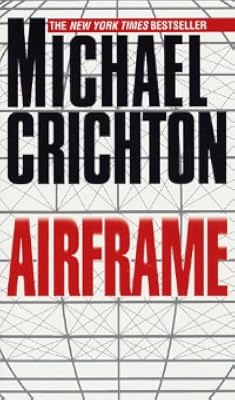
Airframe
by Michael Crichton
On This Page
Description
Fiction. Literature. Thriller. HTML:Three passengers are dead. Fifty-six are injured. The interior cabin virtually destroyed. But the pilot manages to land the plane. . . .At a moment when the issue of safety and death in the skies is paramount in the public mind, a lethal midair disaster aboard a commercial twin-jet airliner bound from Hong Kong to Denver triggers a pressured and frantic investigation.
AIRFRAME is nonstop reading: the extraordinary mixture of super suspense and authentic show more information on a subject of compelling interest that has been a Crichton landmark since The Andromeda Strain. show less
Tags
Recommendations




Member Reviews
This is a fast-reading book that was meticulously researched...but I fear that's where my praise ends. I've read and truly enjoyed Crichton works before, but in this case, I'm hard-pressed to call this a thriller, and I really can't say I enjoyed it. In fact, it honestly would have been a DNF if not for the fact that I was stuck under my oversized dog and undersized cat for a larger portion of the middle, and no other book was within reach. But, on to the details...
First of all, the primary stakes revolve around money. Nothing else is at stake when it comes to the investigation at the heart of the book and the supposedly ticking clock. Will the giant company keep making planes and making money hand over fist so it can keep making show more planes, or will it not? Sure, some characters' jobs may be on the line...but considering that those characters clearly care more about money than morals, and have more than enough money already in comparison to the average person, it's tough to take into account their futures when thinking about why a reader should actually care about the characters. And, truly, the characters are the biggest issue. I'll happily read a low-stakes book if the writing or the characters keep me engaged, but the characters here are built to be unlikeable--in fact, it sometimes felt like Crichton was actively trying to make us dislike them with every passing page. (Thinking here of when the protagonist starts daydreaming in a high-level meeting about a plane crash that cost lives because she's suddenly been promised a raise that will pay for Hawaiian vacations.)
And none of this takes into account the fact that the book and the writing are unabashedly anti-press, anti-union, and infuriatingly sexist.
So, no, I wouldn't recommend this one. If you pick it up and read it fast enough, you might just miss the fact that there's no substance to why the story matters and very little to care about as the pages keep turning, but you also might just become bored or annoyed out of your mind. show less
First of all, the primary stakes revolve around money. Nothing else is at stake when it comes to the investigation at the heart of the book and the supposedly ticking clock. Will the giant company keep making planes and making money hand over fist so it can keep making show more planes, or will it not? Sure, some characters' jobs may be on the line...but considering that those characters clearly care more about money than morals, and have more than enough money already in comparison to the average person, it's tough to take into account their futures when thinking about why a reader should actually care about the characters. And, truly, the characters are the biggest issue. I'll happily read a low-stakes book if the writing or the characters keep me engaged, but the characters here are built to be unlikeable--in fact, it sometimes felt like Crichton was actively trying to make us dislike them with every passing page. (Thinking here of when the protagonist starts daydreaming in a high-level meeting about a plane crash that cost lives because she's suddenly been promised a raise that will pay for Hawaiian vacations.)
And none of this takes into account the fact that the book and the writing are unabashedly anti-press, anti-union, and infuriatingly sexist.
So, no, I wouldn't recommend this one. If you pick it up and read it fast enough, you might just miss the fact that there's no substance to why the story matters and very little to care about as the pages keep turning, but you also might just become bored or annoyed out of your mind. show less
I really hate flying. I'm not scared of it, I just dislike being herded into inky-dinky seats meant for short people by ill-tempered sky-waiters who charge for pillows and booze, and then I have to pay more than I used to make a week for the privilege of being searched, patted by men I'm not attracted to in places I don't want to be patted unless I am, etc etc etc.
Fifteen years ago, all that was more or less to come, and storymonger Crichton used planes for a very different kind of tale. What happens to cause a huge section of a plane to go *flooey*, killing a few people and making the entire world nervous about flying? We're about to find out, Casey Singleton and the reader that is. We're going to go into surprisingly interesting show more amounts of detail about the structure, the manufacture, the sales, the service, the use of airplanes, and how a careful planner could cause huge havoc in a few, small, seemingly innocuous ways.
I miss Michael Crichton. He understood the value of detail, the urgency of tight plotting, and the uncomplicated pleasure of following a complicated and logical plot to its only possible ending. If I didn't have Steve Berry, I'd be visiting Crichton's grave once a year with 200 roses to mourn his passing.
LitSnobs take note...turn up your noses and all that happens is us groundlings who like books that are fun get an unobstructed view of your boogers. show less
Fifteen years ago, all that was more or less to come, and storymonger Crichton used planes for a very different kind of tale. What happens to cause a huge section of a plane to go *flooey*, killing a few people and making the entire world nervous about flying? We're about to find out, Casey Singleton and the reader that is. We're going to go into surprisingly interesting show more amounts of detail about the structure, the manufacture, the sales, the service, the use of airplanes, and how a careful planner could cause huge havoc in a few, small, seemingly innocuous ways.
I miss Michael Crichton. He understood the value of detail, the urgency of tight plotting, and the uncomplicated pleasure of following a complicated and logical plot to its only possible ending. If I didn't have Steve Berry, I'd be visiting Crichton's grave once a year with 200 roses to mourn his passing.
LitSnobs take note...turn up your noses and all that happens is us groundlings who like books that are fun get an unobstructed view of your boogers. show less
It's the nightmare of a lot of people: a passenger aircraft flailing wildly out of control at 35,000 feet, with multiple injuries and fatalities. The aircraft manufacturer is determined to find out what went wrong before the media completely trashes the company, but there is someone else equally determined to prevent the truth from coming out.
As an aviation enthusiast, I was predictably bound to like this. It is a veritable feast of technical details, reports and impressive-sounding acronyms. The story is told in very short, snappy chapters, always ensuring that the reader is oriented in time and place. The protagonist is female, which is a nice bonus and adds even more to the already-high stakes, because she is trying to do her job in show more a highly male-dominated sphere.
I did wonder why the National Transportation Safety Board would just let the manufacturer investigate the occurrence instead of taking it over themselves, but apparently the NTSB's aviation "go teams" respond only to accidents that occur on US territory or in international waters, and the plane in this story merely landed at LAX. Still, since there were fatalities, I would have thought that the NTSB would want to at least have someone checking up on the investigation. Perhaps they didn't have the budget.
The technology is probably dated somewhat -- I specifically noticed the pagers, but there is probably even more that would be considered ancient history in the world of aviation. The media landscape has also changed significantly: would Norton have even had a chance at containing the story now, in the world of blogs and social media? A similar story set in the present day could be interesting. Airframe was published in 1996, but its themes of aviation safety and the dangers of sensationalist media presenting the story they want instead of the truth are still relevant today. show less
As an aviation enthusiast, I was predictably bound to like this. It is a veritable feast of technical details, reports and impressive-sounding acronyms. The story is told in very short, snappy chapters, always ensuring that the reader is oriented in time and place. The protagonist is female, which is a nice bonus and adds even more to the already-high stakes, because she is trying to do her job in show more a highly male-dominated sphere.
I did wonder why the National Transportation Safety Board would just let the manufacturer investigate the occurrence instead of taking it over themselves, but apparently the NTSB's aviation "go teams" respond only to accidents that occur on US territory or in international waters, and the plane in this story merely landed at LAX. Still, since there were fatalities, I would have thought that the NTSB would want to at least have someone checking up on the investigation. Perhaps they didn't have the budget.
The technology is probably dated somewhat -- I specifically noticed the pagers, but there is probably even more that would be considered ancient history in the world of aviation. The media landscape has also changed significantly: would Norton have even had a chance at containing the story now, in the world of blogs and social media? A similar story set in the present day could be interesting. Airframe was published in 1996, but its themes of aviation safety and the dangers of sensationalist media presenting the story they want instead of the truth are still relevant today. show less
This is a book about a commercial airplane called a Norton-22, or N-22 for short, the safest aircraft flying in the world. However, it has had some issues with slat deployments. The slats are those things at the front of the wings that come out when the plane slows down as it is about to land. It provides additional lift so the plane doesn't drop like a rock. However, on one particular flight, and at 35,000 feet and traveling at Mach .8, they deployed. The result was extreme turbulence, three deaths, and fifty-six injuries of various severity.
The book is about the investigation into why, a leak to a nasty newspaper with a reputation as an attack dog, and intra-company intrigue. No dinosaurs, ghosts, monsters of any kind, murders, show more zombies, children in corn fields, or psychopaths. A potentially dull story line that few could turn into something really intriguing. But the late, great Michael Creighton has done just that.
One thing Michael Creighton seems to be doing in his books (I've now only read two of his - I've gotten a late start so I could be wrong) is to insert some of his own opinions into his dialog. Sometimes I find that a little annoying, but in this case I agreed with one point of view, if, indeed, that was what he did. From pages 140-141, he objected to corporate deregulation (I have gotten into many a "discussion" with my conservative friends over the merits of regulations and the laissez-faire free market) when a character was discussing the eventual probable outcome of deregulating the airline industry, inspired by the discovery of counterfeit parts in the airplane: "You know: government deregulates the airlines, and everybody cheers. We get cheaper fares: everybody cheers. But the carriers have to cut costs. So the food is awful. That's okay. There are fewer direct flights, more hubs. That's okay. ... But still the carriers have to cut more costs. So they run the planes longer, buy fewer new ones. That will be okay - for a while. Eventually it won't be. So where else do they cut? Maintenance? Parts? What? It can't go on indefinitely. Just can't. Of course, now Congress is helping them out by cutting appropriations for the FAA, so there'll be less oversight. ... [F]ree markets don't provide safety. Only regulation does that. You want safe food you better have inspectors. You want safe water, you better have an EPA. You want a safe stock market, you better have the SEC." Can business regulations get too picky? Sure. A former colleague of mine had to replace all of his baseboards because they were 1/4 inch too small. Those types of regulations are obscene and repressive. But many are designed to protect the American consumer from corporate greed (in my humble opinion).
The book also addresses the role of an unrestrained press. I'm all for the First Amendment. I'm also all for responsible journalism which was undermined in this country when President Reagan allowed the Fairness Doctrine to expire. That doctrine required news outlets to present both sides of an issue so the American public can be better informed. Reagan did this country a great disservice there with lasting and severely harmful consequences helping to poison so many minds today. That issue is discussed on page 288 of this book.
I actually sort of guessed at what the problem with the aircraft might have been fairly early and I will not mention it here in case anyone wants to read the book. Michael Creighton is superb. Before I even realized it, I had read 50, 60, or a hundred pages of a story line that is basically an investigation into an in flight incident. Now that is skillful writing. show less
The book is about the investigation into why, a leak to a nasty newspaper with a reputation as an attack dog, and intra-company intrigue. No dinosaurs, ghosts, monsters of any kind, murders, show more zombies, children in corn fields, or psychopaths. A potentially dull story line that few could turn into something really intriguing. But the late, great Michael Creighton has done just that.
One thing Michael Creighton seems to be doing in his books (I've now only read two of his - I've gotten a late start so I could be wrong) is to insert some of his own opinions into his dialog. Sometimes I find that a little annoying, but in this case I agreed with one point of view, if, indeed, that was what he did. From pages 140-141, he objected to corporate deregulation (I have gotten into many a "discussion" with my conservative friends over the merits of regulations and the laissez-faire free market) when a character was discussing the eventual probable outcome of deregulating the airline industry, inspired by the discovery of counterfeit parts in the airplane: "You know: government deregulates the airlines, and everybody cheers. We get cheaper fares: everybody cheers. But the carriers have to cut costs. So the food is awful. That's okay. There are fewer direct flights, more hubs. That's okay. ... But still the carriers have to cut more costs. So they run the planes longer, buy fewer new ones. That will be okay - for a while. Eventually it won't be. So where else do they cut? Maintenance? Parts? What? It can't go on indefinitely. Just can't. Of course, now Congress is helping them out by cutting appropriations for the FAA, so there'll be less oversight. ... [F]ree markets don't provide safety. Only regulation does that. You want safe food you better have inspectors. You want safe water, you better have an EPA. You want a safe stock market, you better have the SEC." Can business regulations get too picky? Sure. A former colleague of mine had to replace all of his baseboards because they were 1/4 inch too small. Those types of regulations are obscene and repressive. But many are designed to protect the American consumer from corporate greed (in my humble opinion).
The book also addresses the role of an unrestrained press. I'm all for the First Amendment. I'm also all for responsible journalism which was undermined in this country when President Reagan allowed the Fairness Doctrine to expire. That doctrine required news outlets to present both sides of an issue so the American public can be better informed. Reagan did this country a great disservice there with lasting and severely harmful consequences helping to poison so many minds today. That issue is discussed on page 288 of this book.
I actually sort of guessed at what the problem with the aircraft might have been fairly early and I will not mention it here in case anyone wants to read the book. Michael Creighton is superb. Before I even realized it, I had read 50, 60, or a hundred pages of a story line that is basically an investigation into an in flight incident. Now that is skillful writing. show less
It's slightly dated now - I can't imagine that a significant portion of the population even knows what a pager it (hint it's a very limited twitter DM). - but at the same time, the point and forescast that Chrichton was making, has come true.
You can ignore pretty much the every reference to any of the airplane technological bits, they're just background to the real story. They make a pretty hook, but that's it. It's quite possible that Chrichton has got some minor details wrong somewhere, and it wouldn't matter. The story is about image and media representation. Caesy Singleton is a QA rep to a company that builds areoplanes. SHe's aprt of a team investigating a recent incident, a process which usually takes months. Unfortunately some show more passengers died, and so there's media interest in the causes (although only after several days which is very odd). Casey's given just a week to come up with an answer. This in and of itself would be a challenge, but of course she doesn't just need the right answer, she needs an answer that she can sell to the media within a minute or so of 'live' TV. (these days that's down to less than 15 seconds!). And so the pressure is on between her trying to find a simple explanation for a very complex problem, and the newsline producer who has to fill a few minutes of a prime tine show.
It's a great read, clever as always from Chrichton - and worth bearing in mind every time you see something sensational online. The truth is inevitably far more complicated than that. There's no reason why we the public who pay for the news couldn't be given the real story, and walked through the complexities. But it takes time, doesn't always produce anything shocking, and so doesn't happen.
Read it. show less
You can ignore pretty much the every reference to any of the airplane technological bits, they're just background to the real story. They make a pretty hook, but that's it. It's quite possible that Chrichton has got some minor details wrong somewhere, and it wouldn't matter. The story is about image and media representation. Caesy Singleton is a QA rep to a company that builds areoplanes. SHe's aprt of a team investigating a recent incident, a process which usually takes months. Unfortunately some show more passengers died, and so there's media interest in the causes (although only after several days which is very odd). Casey's given just a week to come up with an answer. This in and of itself would be a challenge, but of course she doesn't just need the right answer, she needs an answer that she can sell to the media within a minute or so of 'live' TV. (these days that's down to less than 15 seconds!). And so the pressure is on between her trying to find a simple explanation for a very complex problem, and the newsline producer who has to fill a few minutes of a prime tine show.
It's a great read, clever as always from Chrichton - and worth bearing in mind every time you see something sensational online. The truth is inevitably far more complicated than that. There's no reason why we the public who pay for the news couldn't be given the real story, and walked through the complexities. But it takes time, doesn't always produce anything shocking, and so doesn't happen.
Read it. show less
This is my first Crichton since the Andromeda Strain written so many years ago. Another reason to ignore the professional critics who have not been terribly kind to Crichton in the past few years. I really liked this book. It has a marvelous blend of science, information and a good plot that keeps the pages turning.
It’s interesting that many of the reviews I read focused on the aircraft industry. I think the book is more about the media and it’s relentless pursuit of the visual and the sound bite at the expense of truth and the whole picture more than about airplanes.
Enroute from Hong Kong to Denver, a brand new Norton-22, a plane clearly modeled on the Boeing 747, pitches and dives like a porpoise before being brought under show more control. The violent maneuvers kill three passengers and injures 56 others. . The airline's VP in charge of quality assurance — Casey Singleton — has to find out why, before more passengers and the airline's future go into a tailspin. As always in Crichton's expert hands, readers learn a lot about science while becoming enmeshed in the power-plays, office politics, and pressures of the global market and American jobs. Her job is complicated, because, as we gradually learn, powers within the company are trying to manipulate her and to embarrass the company so that the president of the company can be forced out in favor of another. Casey is saddled with a Norton family nephew who turns out to be a spy for one of the other company officers. We learn a great deal about aircraft manufacture and design — I must admit to really loving the technical detail — as Casey tries to figure out why the cockpit reports of turbulence differ from physical evidence of a “commanded slat deployment,” something, that even had it occurred at altitude and high speed should not have caused the plane to go out-of-control the way it appears to have done.
Crichton obviously doesn’t like lawyers, their stoolies (an ex-FAA employee who testifies for the plaintiffs in injury suits figures prominently in the media’s desire to create a nasty story) nor the media, and a character clearly modeled after Mike Wallace has few redeeming qualities. At one point Casey is to be interviewed by the Wallace character, Marty Reardon, and a company PR person comes by to help her prepare a little. “There’s only one more thing I can tell you, Katherine. You work in a complex business. If you try to explain that complexity to Marty, you’ll be frustrated. You’ll feel he isn’t interested. He’ll probably cut you off. Because he isn’t interested. A lot of people complain television lacks focus. But that’s the nature of the medium. Television’s not about information at all. Information is active, engaging. Television is passive. Information is disinterested, objective. Television is emotional. It’s entertainment. . . . [Marty’s:] paid to exercise his one reliable talent: provoking people, getting them to make an emotional outburst, to lose their temper, to say something outrageous. He doesn’t really want to know about airplanes. He wants a media moment.”
Casey’s father was a journalist and an old friend of his remarks at the end of the book, “Used to be — in the old days-- the media image roughly corresponded to reality. But now it’s all reversed. The media image is the reality, and by comparison day-to-day life seems to lack excitement. So now day-to-day life is false, and the media image is true. Sometimes I look around my living room, and the most real thing in the room is the television. It’s bright and vivid, and the rest of my life looks drab. So I turn the damn thing off. That does it every time. Get my life back.” show less
It’s interesting that many of the reviews I read focused on the aircraft industry. I think the book is more about the media and it’s relentless pursuit of the visual and the sound bite at the expense of truth and the whole picture more than about airplanes.
Enroute from Hong Kong to Denver, a brand new Norton-22, a plane clearly modeled on the Boeing 747, pitches and dives like a porpoise before being brought under show more control. The violent maneuvers kill three passengers and injures 56 others. . The airline's VP in charge of quality assurance — Casey Singleton — has to find out why, before more passengers and the airline's future go into a tailspin. As always in Crichton's expert hands, readers learn a lot about science while becoming enmeshed in the power-plays, office politics, and pressures of the global market and American jobs. Her job is complicated, because, as we gradually learn, powers within the company are trying to manipulate her and to embarrass the company so that the president of the company can be forced out in favor of another. Casey is saddled with a Norton family nephew who turns out to be a spy for one of the other company officers. We learn a great deal about aircraft manufacture and design — I must admit to really loving the technical detail — as Casey tries to figure out why the cockpit reports of turbulence differ from physical evidence of a “commanded slat deployment,” something, that even had it occurred at altitude and high speed should not have caused the plane to go out-of-control the way it appears to have done.
Crichton obviously doesn’t like lawyers, their stoolies (an ex-FAA employee who testifies for the plaintiffs in injury suits figures prominently in the media’s desire to create a nasty story) nor the media, and a character clearly modeled after Mike Wallace has few redeeming qualities. At one point Casey is to be interviewed by the Wallace character, Marty Reardon, and a company PR person comes by to help her prepare a little. “There’s only one more thing I can tell you, Katherine. You work in a complex business. If you try to explain that complexity to Marty, you’ll be frustrated. You’ll feel he isn’t interested. He’ll probably cut you off. Because he isn’t interested. A lot of people complain television lacks focus. But that’s the nature of the medium. Television’s not about information at all. Information is active, engaging. Television is passive. Information is disinterested, objective. Television is emotional. It’s entertainment. . . . [Marty’s:] paid to exercise his one reliable talent: provoking people, getting them to make an emotional outburst, to lose their temper, to say something outrageous. He doesn’t really want to know about airplanes. He wants a media moment.”
Casey’s father was a journalist and an old friend of his remarks at the end of the book, “Used to be — in the old days-- the media image roughly corresponded to reality. But now it’s all reversed. The media image is the reality, and by comparison day-to-day life seems to lack excitement. So now day-to-day life is false, and the media image is true. Sometimes I look around my living room, and the most real thing in the room is the television. It’s bright and vivid, and the rest of my life looks drab. So I turn the damn thing off. That does it every time. Get my life back.” show less
From Amazon:
At a moment when the issue of safety and death in the skies is paramount in the public mind, a lethal midair disaster aboard a commercial twin-jet airliner flying from Hong Kong to Denver triggers a pressured and frantic investigation in which the greatest casualty may be the truth.
My Thoughts:
The inner workings of this book are fantastic. Michael Crichton puts us into the Norton Aircraft facilities, with all the political goings on, the backstabbing, the wolves at the gate and now...an air disaster.
As well as entertaining us, Crichton provides with an education in Public Relations and how the investigative journalism doesn't care about the truth, unless it suits their entertainment needs (one example is the DC-10 story he show more puts in).
I liked the main character who is always on the edge of losing her job. She has a tightrope the size of Dental Floss to work on and timelines that are impossible to meet. That, and the fact that her superiors want her to fail. It was worth the price of the book just to see how she would escape the tomb that others had thrown her in.
The book is divided up into days...she has 7 days to figure out what caused a near-fatal problem that caused 3 deaths on a flight, and that provides good suspense and closure as each section ends. show less
At a moment when the issue of safety and death in the skies is paramount in the public mind, a lethal midair disaster aboard a commercial twin-jet airliner flying from Hong Kong to Denver triggers a pressured and frantic investigation in which the greatest casualty may be the truth.
My Thoughts:
The inner workings of this book are fantastic. Michael Crichton puts us into the Norton Aircraft facilities, with all the political goings on, the backstabbing, the wolves at the gate and now...an air disaster.
As well as entertaining us, Crichton provides with an education in Public Relations and how the investigative journalism doesn't care about the truth, unless it suits their entertainment needs (one example is the DC-10 story he show more puts in).
I liked the main character who is always on the edge of losing her job. She has a tightrope the size of Dental Floss to work on and timelines that are impossible to meet. That, and the fact that her superiors want her to fail. It was worth the price of the book just to see how she would escape the tomb that others had thrown her in.
The book is divided up into days...she has 7 days to figure out what caused a near-fatal problem that caused 3 deaths on a flight, and that provides good suspense and closure as each section ends. show less
Members
- Recently Added By
Author Information

142+ Works 171,952 Members
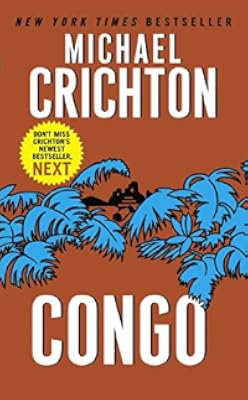
John Michael Crichton, known as Michael Crichton, was born on October 28, 1942 in Chicago, Illinois. He wrote novels while attending Harvard University and Harvard Medical School to help pay the tuition. One of these, The Andromeda Strain, which was published in 1969, became a bestseller. After graduating summa cum laude, he was a postdoctoral show more fellow at the Salk Institute in California before becoming a full-time writer and film director. His carefully researched novels included Eaters of the Dead, The Terminal Man, The Great Train Robbery, Congo, Sphere, Jurassic Park, Rising Sun, Disclosure, The Lost World, Airframe, and Micro. He also wrote non-fiction works including Five Patients: The Hospital Explained, Jasper Johns, and Travels. In the late 1960s, he also wrote under the pen names Jeffrey Hudson and John Lange. He has received several awards including Writer of the Year in 1970 from the Association of American Medical Writers and two Edgar Awards in 1968 and in 1979. Many of his novels have been made into highly successful films, six of which he directed. He was also the creator and executive producer of the Emmy Award-winning television series ER. In addition to his writing and directorial success, his expertise in information science enabled him to run a software company and develop a computer game. He died of cancer on November 4, 2008 at the age of 66. (Bowker Author Biography) show less
Some Editions
Awards and Honors
Distinctions
Notable Lists
Series
Belongs to Publisher Series
Work Relationships
Common Knowledge
- Canonical title
- Airframe
- Original title
- Airframe
- Original publication date
- 1996-11-27
- People/Characters
- Casey Singleton; Norma; Bob Richman; John Marder; Teddy; Hal Edgarton
- Important places
- Los Angeles International Airport (Los Angeles, California, USA); Los Angeles, California, USA
- Epigraph*
- Crichton bevestigt definitief zijn briljante gevoel voor timing....de bittere overlevingsstrijd in de vliegtuigindustrie sluit naadloos aan op het voorpaginanieuws.
- Dedication
- For Sonny Mehta
- First words
- Emily Jansen sighed in relief.
- Quotations*
- Die krengen wegen tweehonderdvijftig ton, vliegen in drie vluchten de wereld rond en vervoeren passagiers op een comfortabeler en veiliger manier dan welk voertuig dan ook in de geschiedenis der mensheid. En wilden jullie ons... (show all) nou echt vertellen hoe we ons werk beter kunnen doen? Wilden jullie beweren dat jullie er ook maar iets van weten? Volgens mij willen jullie alleen maar onrust zaaien, om wat voor persoonlijke reden dan ook. (Luchtvaartlegende Charley Norton (78) tijdens een interview na een vliegtuigongeluk in 1970)
Het ironische van het informatietijdperk is dat het een nieuw soort aanzien verleend heeft aan ongefundeerde meningen. (Verslaggever John Lawton (68) in een toespraak tot de American Association of Broadcast Journalists in 1995.) - Last words
- (Click to show. Warning: May contain spoilers.)International procedures are being reviewed by the carrier.
- Blurbers*
- Terwijl er steeds meer vragen rijzen over de veiligheid van het luchtverkeer, vindt tijdens vlucht 545 een ongeluk plaats. Drie passagiers dood, vele gewonden, de cabine een ravage. Desondanks ziet de piloot kans het toestel aan de grond te zetten. Alles wijst op een constructiefout. Een conclusie die voor de vliegtuigbouwer op een zeer ongelegen moment komt. Casey Singleton wordt op het onderzoek naar de oorzaak van het ongeluk gezet.
- Original language*
- Amerikanisch
*Some information comes from Common Knowledge in other languages. Click "Edit" for more information.
Classifications
Statistics
- Members
- 8,069
- Popularity
- 1,385
- Reviews
- 111
- Rating
- (3.43)
- Languages
- 18 — Czech, Danish, Dutch, English, Finnish, French, German, Hungarian, Indonesian, Italian, Norwegian (Bokmål), Polish, Russian, Slovak, Slovenian, Spanish, Swedish, Portuguese (Portugal)
- Media
- Paper, Audiobook, Ebook
- ISBNs
- 90
- ASINs
- 47