On This Page
Description
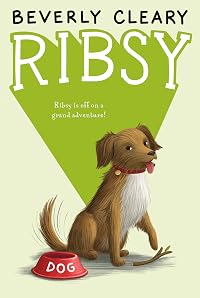
Separated from his owner, Henry Huggins, in a shopping center parking lot, an ordinary city dog begins a string of bewildering adventures.Tags
Recommendations




Member Reviews
Ribsy is the last of the books centered on Henry Huggins that Beverly Cleary wrote, although, as the title suggests, it doesn't really center on Henry, but rather centers on his dog Ribsy. In the story, Ribsy gets lost and has a series of adventures as he tries to find his way home. After the first chapter, Henry mostly appears in short vignettes at the beginning of each chapter as the book details the efforts made by Henry and his parents to find their wayward hound. Meanwhile, Ribsy bounces around the small city, encountering person after person who is taken in by his muttish charm.
One of the most notable facts about the book is that it was written in 1964, and it shows. The world depicted in its pages represents a reality of show more childhood, pet ownership, and the treatment of animals that simply no longer exists. Ribsy is routinely allowed to run free in the Huggins' neighborhood, so much so that the instigating event in the book is caused by him racing for blocks after the family station wagon dodging traffic in an attempt to join Henry and his parents as they drive to the local shopping mall. Once there, the family leaves Ribsy alone in the car for hours while they go off to shop - Henry having taken off his collar so the dog could scratch at a troublesome flea.
After getting out of the car by accidentally rolling down the window, Ribsy finds himself disoriented and unable to locate the correct car. Eventually, he jumps into a car that he thinks is correct, only to discover later that he was sadly mistaken when the automobile's owners return. Thus begins Ribsy's extended travels as the Dingley family decides to simply bring this strange dog home with them as an afternoon diversion for their many children. From there, Ribsy's life becomes a series of vignettes as he travels from one usually well-meaning person to another. He goes from a violet-scented bubble bath administered by the gaggle of Dingley children, to a comfy existence with the elderly Mrs. Frawley, to a hectic week spent living as a mascot for Mrs. Sonchek's second grade class, to an exciting afternoon at a high school football game concluding with a trip to Joe Saylor's house, and finally a sojourn at the apartment building occupied by latchkey kid Larry Biggerstaff.
There is something distinctly idyllic about the world Cleary presents. Ribsy, despite being what amounts to a stray for more than a month, is never bothered by an animal control officer, never runs across someone who turns him in to an animal shelter, never encounters a person who wants to abuse him, or does more than simply say "shoo" to get him to move on. He never goes hungry - the only complaint really registered by Ribsy concerning food is that he is sometimes reduced to eating cat food or other things he finds less than appealing. For the most part, however, Ribsy runs across little old ladies who feed him stew, children who are more than happy to give them half of their bagged school lunches, or people at sporting events who gladly hand over so many pieces of hot dog that Ribsy can turn down ones that have too more mustard than he likes on them.
A mildly interesting wrinkle of this book is that Cleary uses it as a means of introducing the reader to characters that don't fit the typical moderate middle-class residents of Klickitat Street. The Dingleys only appear in the book for a short time, presenting a raucously chaotic family with more children than any of the families featured in Cleary's other books, Mrs. Frawley is an older single woman, clearly widowed, retired, and lonely, while Joe Saylor's family is lower middle-class and obviously much less well-off than the Huggins' (or the Quimby's). Finally, Larry Biggerstaff lives in an apartment with his single working mother, left alone all day so she can wait tables at a nearby café. In short, it seems like one of the motivating impulses for writing the book was Cleary's desire to show an array of people from all walks of life in her fictionalized Portland, giving the reader a window into a wider world of people who might not be quite as blessed as her usual characters.
Ribsy should not be mistaken for anything resembling incisive social commentary. All that Cleary does in the book is point to a couple of impoverished children and say "these people exist in the world", with no real discussion as to why a boy like Joe Saylor would feel the need to beg his way into a high school football game and scrounge the bleachers afterwards looking for lost change, or why Larry Biggerstaff's mother would be in a position where she left him alone all day to sit on the front steps of an apartment building, not even having enough money to buy her son a ball to replace the worn-out one he owns. Even so, in a media environment that was pushing programs like Leave It to Beaver and Ozzie and Harriet as the standard vision for American families, presenting an array of families diverging from those models seems like a revelation.
In the end, Ribsy is a children's book that delivers a fun story for kids with just a bit of an edge to keep adults entertained. Throughout the pages, Ribsy manages to both be somewhat anthropomorphized and still clearly a dog, with doggish sensibilities: Viewing the world through scent, confused by unfamiliar people and places, and confounded by things like unaccommodating bus drivers and fire escapes. Despite being more than sixty years old, the book kept my eight-year old enraptured, and she eagerly anticipated each additional chapter. Even so, the resolution of the book is not really much of a mystery - my daughter predicted the ending quite early in the book - although the fun is in exactly how the story gets to what is the somewhat obvious conclusion. In short, this book is a fun romp that comes packaged with just a little bit of insight, and is certainly worth reading for almost every child. show less
One of the most notable facts about the book is that it was written in 1964, and it shows. The world depicted in its pages represents a reality of show more childhood, pet ownership, and the treatment of animals that simply no longer exists. Ribsy is routinely allowed to run free in the Huggins' neighborhood, so much so that the instigating event in the book is caused by him racing for blocks after the family station wagon dodging traffic in an attempt to join Henry and his parents as they drive to the local shopping mall. Once there, the family leaves Ribsy alone in the car for hours while they go off to shop - Henry having taken off his collar so the dog could scratch at a troublesome flea.
After getting out of the car by accidentally rolling down the window, Ribsy finds himself disoriented and unable to locate the correct car. Eventually, he jumps into a car that he thinks is correct, only to discover later that he was sadly mistaken when the automobile's owners return. Thus begins Ribsy's extended travels as the Dingley family decides to simply bring this strange dog home with them as an afternoon diversion for their many children. From there, Ribsy's life becomes a series of vignettes as he travels from one usually well-meaning person to another. He goes from a violet-scented bubble bath administered by the gaggle of Dingley children, to a comfy existence with the elderly Mrs. Frawley, to a hectic week spent living as a mascot for Mrs. Sonchek's second grade class, to an exciting afternoon at a high school football game concluding with a trip to Joe Saylor's house, and finally a sojourn at the apartment building occupied by latchkey kid Larry Biggerstaff.
There is something distinctly idyllic about the world Cleary presents. Ribsy, despite being what amounts to a stray for more than a month, is never bothered by an animal control officer, never runs across someone who turns him in to an animal shelter, never encounters a person who wants to abuse him, or does more than simply say "shoo" to get him to move on. He never goes hungry - the only complaint really registered by Ribsy concerning food is that he is sometimes reduced to eating cat food or other things he finds less than appealing. For the most part, however, Ribsy runs across little old ladies who feed him stew, children who are more than happy to give them half of their bagged school lunches, or people at sporting events who gladly hand over so many pieces of hot dog that Ribsy can turn down ones that have too more mustard than he likes on them.
A mildly interesting wrinkle of this book is that Cleary uses it as a means of introducing the reader to characters that don't fit the typical moderate middle-class residents of Klickitat Street. The Dingleys only appear in the book for a short time, presenting a raucously chaotic family with more children than any of the families featured in Cleary's other books, Mrs. Frawley is an older single woman, clearly widowed, retired, and lonely, while Joe Saylor's family is lower middle-class and obviously much less well-off than the Huggins' (or the Quimby's). Finally, Larry Biggerstaff lives in an apartment with his single working mother, left alone all day so she can wait tables at a nearby café. In short, it seems like one of the motivating impulses for writing the book was Cleary's desire to show an array of people from all walks of life in her fictionalized Portland, giving the reader a window into a wider world of people who might not be quite as blessed as her usual characters.
Ribsy should not be mistaken for anything resembling incisive social commentary. All that Cleary does in the book is point to a couple of impoverished children and say "these people exist in the world", with no real discussion as to why a boy like Joe Saylor would feel the need to beg his way into a high school football game and scrounge the bleachers afterwards looking for lost change, or why Larry Biggerstaff's mother would be in a position where she left him alone all day to sit on the front steps of an apartment building, not even having enough money to buy her son a ball to replace the worn-out one he owns. Even so, in a media environment that was pushing programs like Leave It to Beaver and Ozzie and Harriet as the standard vision for American families, presenting an array of families diverging from those models seems like a revelation.
In the end, Ribsy is a children's book that delivers a fun story for kids with just a bit of an edge to keep adults entertained. Throughout the pages, Ribsy manages to both be somewhat anthropomorphized and still clearly a dog, with doggish sensibilities: Viewing the world through scent, confused by unfamiliar people and places, and confounded by things like unaccommodating bus drivers and fire escapes. Despite being more than sixty years old, the book kept my eight-year old enraptured, and she eagerly anticipated each additional chapter. Even so, the resolution of the book is not really much of a mystery - my daughter predicted the ending quite early in the book - although the fun is in exactly how the story gets to what is the somewhat obvious conclusion. In short, this book is a fun romp that comes packaged with just a little bit of insight, and is certainly worth reading for almost every child. show less
When Ribsy manages to get out of the car at a shopping center, collarless, he ends up going on many adventures before being reunited with his boy, Henry Huggins.
I read all of the Ramona and Henry Huggins books as a kid, so this was a reread for me as I read it to my niece, who enjoys the Ramona books and is also a huge dog fan. This one is mostly told from Ribsy's perspective, though we do get some chapters catching us up on what the Huggins family is doing to try to get the dog back. The whole idea of putting a lost and found ad in the newspaper may have to be explained to kids today. Other than that the lost animal finding its way back is a classic story, and this one holds up well. Cleary does a great job of writing things in a way show more that a child and adult can both relate to, and I especially laughed over the way Ribsy thinks about using "patience" with young children. show less
I read all of the Ramona and Henry Huggins books as a kid, so this was a reread for me as I read it to my niece, who enjoys the Ramona books and is also a huge dog fan. This one is mostly told from Ribsy's perspective, though we do get some chapters catching us up on what the Huggins family is doing to try to get the dog back. The whole idea of putting a lost and found ad in the newspaper may have to be explained to kids today. Other than that the lost animal finding its way back is a classic story, and this one holds up well. Cleary does a great job of writing things in a way show more that a child and adult can both relate to, and I especially laughed over the way Ribsy thinks about using "patience" with young children. show less
Henry Huggins' dog, Ribsy, accidentally gets into the wrong station wagon at the mall and finds himself going home with a family of girls, who then proceed to give him - horrors - a bubble bath. He manages to run away and then spends the rest of the book trying to find his way back home to his boy, Henry.
I find this type of narrative (family pet gets lost and has various adventures while trying to get back home) frustrating - I just want pet and family reunited, already! Charlie felt the frustration, too, but we were still rooting for Ribsy.
I find this type of narrative (family pet gets lost and has various adventures while trying to get back home) frustrating - I just want pet and family reunited, already! Charlie felt the frustration, too, but we were still rooting for Ribsy.
After a shopping trip gone somewhat wrong, Henry's dog, Ribsy, ends up lost. So begins an adventure of ups and downs on this lively and loyal canine's quest to find his way back home in Ribsy by author Beverly Cleary.
Gee. I know I read this book at some point during my childhood, and I'll bet I enjoyed it. I also think it's very likely that I enjoyed it even more this time around.
While this is another Henry Huggins and Ribsy tale, this one is mostly from middle-aged Ribsy's point of view. (Double gee. Did that detail ever stick out to me before, that friendly and enthusiastic Ribsy is middle-aged?)
This book didn't have quite as many laughs for me as other Henry books, but I felt just as much. Felt for Ribsy through all of the twists and show more turns on his search for home and his favorite boy. Couldn't help but smile at Ribsy's antics and his "making every effort to be charming" even under new and strange circumstances.
It's funny how insightful this story manages to be, giving glimpses into the lives of an interesting mix of people along the way. And with the way various moments during Ribsy's journey tugged on my heartstrings, the moments of excitement were all the more satisfying.
Yup. Emotional, exciting, and satisfying all around. A book with plenty more reasons why Cleary is still my all-time favorite children's book author. show less
Gee. I know I read this book at some point during my childhood, and I'll bet I enjoyed it. I also think it's very likely that I enjoyed it even more this time around.
While this is another Henry Huggins and Ribsy tale, this one is mostly from middle-aged Ribsy's point of view. (Double gee. Did that detail ever stick out to me before, that friendly and enthusiastic Ribsy is middle-aged?)
This book didn't have quite as many laughs for me as other Henry books, but I felt just as much. Felt for Ribsy through all of the twists and show more turns on his search for home and his favorite boy. Couldn't help but smile at Ribsy's antics and his "making every effort to be charming" even under new and strange circumstances.
It's funny how insightful this story manages to be, giving glimpses into the lives of an interesting mix of people along the way. And with the way various moments during Ribsy's journey tugged on my heartstrings, the moments of excitement were all the more satisfying.
Yup. Emotional, exciting, and satisfying all around. A book with plenty more reasons why Cleary is still my all-time favorite children's book author. show less
My kids say this is their favorite book of the series. They seemed to find the part at the football stadium particularly exciting. When we finished listening to the last CD, my daughter confirmed with me that this was the last book in the series then said, "Oh. I feel sad now."
What's funny is that, before the book started, she predicted that because it was the last book in the series and because Ribsy was getting older, the dog would probably die at the end of the book. I wonder if she'd have felt more or less sad had Ribsy pulled an Old Yeller.
(Incidentally, I don't think it's really a spoiler that Ribsy doesn't die since Beverly Cleary said in an interview that part of her purpose in writing the books was giving kids a show more "boy-and-his-dog" story that didn't end in the death of the dog, but I apologize if learning this totally ruins anyone's experience of the series.)
While I enjoyed hearing the story from the dog's point of view, I wouldn't put this one at the top of the Henry Huggins heap. The progression of the book got a little tedious after awhile. Ribsy finds people to stay with until he remembers that he's looking for Henry. He then goes running and sniffing around Portland again until he finds another family and the cycle begins again. About the fourth family in I thought, "Not another one! Haven't the Hugginses found the darned dog yet?"
But that's really a tiny complaint. Mostly I liked the book, and I thought the change in point of view for this last book was interesting. And now I want to re-read the Ramona books again. show less
What's funny is that, before the book started, she predicted that because it was the last book in the series and because Ribsy was getting older, the dog would probably die at the end of the book. I wonder if she'd have felt more or less sad had Ribsy pulled an Old Yeller.
(Incidentally, I don't think it's really a spoiler that Ribsy doesn't die since Beverly Cleary said in an interview that part of her purpose in writing the books was giving kids a show more "boy-and-his-dog" story that didn't end in the death of the dog, but I apologize if learning this totally ruins anyone's experience of the series.)
While I enjoyed hearing the story from the dog's point of view, I wouldn't put this one at the top of the Henry Huggins heap. The progression of the book got a little tedious after awhile. Ribsy finds people to stay with until he remembers that he's looking for Henry. He then goes running and sniffing around Portland again until he finds another family and the cycle begins again. About the fourth family in I thought, "Not another one! Haven't the Hugginses found the darned dog yet?"
But that's really a tiny complaint. Mostly I liked the book, and I thought the change in point of view for this last book was interesting. And now I want to re-read the Ramona books again. show less
Henry Huggins' dog Ribsy wants to accompany the family in their new car, but gets lost in the shopping center parking lot and gets into another car by mistake, and goes home with the wrong family. Over the next month, Henry and Ribsy search for each other and are finally reunited - but not before Ribsy gets a violet-scented bubble bath, attends an old ladies' book club, chases a squirrel around a school classroom, attends a high school football game, and gets stuck on a fire escape.
Almost 4-yo was semi-interested in Ribsy, but lost interest part way through (she only has eyes/ears for Ramona). Neil Patrick Harris does an excellent job with the audiobook, though!
Almost 4-yo was semi-interested in Ribsy, but lost interest part way through (she only has eyes/ears for Ramona). Neil Patrick Harris does an excellent job with the audiobook, though!
Beyond the excellent & funny adventure, there's a great lesson in empathy. Every person or family that Ribsy gets help from is different, and kids can learn to care about all these people because Cleary is a master at characterization, even in the form of chapter-long sketches.
Members
- Recently Added By
Lists

4th Grade Books
312 works; 5 members

Best Dog Stories
109 works; 13 members

Dogs -- children's/young adult fiction
1,317 works; 9 members

Recommended Reading List
219 works; 1 member
Author Information

165+ Works 163,237 Members
Beverly Cleary was born on April 12, 1916. Her family lived on a small farm in McMinnville, Oregon, before moving to Portland. Ironically, this internationally known author of children's books struggled to learn how to read when she entered school. Before long however Cleary had learned to love books, and as a child she spent a good deal of her show more time in the public library. Cleary attended Chaffey Junior College in Ontario, Ca. and went on to earned her first B.A. in 1938 from the University of California at Berkeley. Her second degree, a B.A. in library science, was bestowed by the University of Washington in Seattle in 1939. She worked for a short time as Children's Librarian in Yakima, Washington, before moving to California. Cleary began her writing career in her early thirties. Her first book, Henry Huggins, was published in 1950. Her stories and especially her characters, Henry Huggins and Ramona Quimby, have proven popular with young readers. Her books have been translated into twenty languages and are available in over twenty countries. Some of her best-known titles are Ellen Tebbits (1951), Henry and the Paper Route (1957), Runaway Ralph (1970), and Dear Mr. Henshaw (1983). Several television programs have been produced from the Henry Huggins and Ramona stories. She also wrote two memoirs, A Girl from Yamhill (1988) and My Own Two Feet (1995). Cleary has won many awards for her contributions to children's literature, including the American Library Association's Laura Ingalls Wilder Award in 1975, the Catholic Library Association's Regina Medal in 1980, the John Newbery Medal in 1984 and the National Medal of Arts in 2003. Beverly Cleary died on March 25, 2021 in Carmel, California. She was 104 year old. (Bowker Author Biography) show less
Some Editions
Awards and Honors
Series

Work Relationships
Common Knowledge
- Canonical title
- Ribsy
- Original publication date
- 1964
- People/Characters
- Ribsy (dog); Henry Huggins; Mr. Huggins; Mrs. Huggins
- Important places
- Klickitat Street, Portland, Oregon, USA; Portland, Oregon, USA
- First words
- Henry Huggins' dog Ribsy was a plain ordinary city dog, the kind of dog that strangers usually called Mutt or Pooch.
- Last words
- (Click to show. Warning: May contain spoilers.)Mrs. Huggins smiled at Ribsy and did not say a word. Ribsy could ride in the new station wagon all he wanted.
Classifications
Statistics
- Members
- 4,625
- Popularity
- 3,140
- Reviews
- 24
- Rating
- (3.78)
- Languages
- English
- Media
- Paper, Audiobook, Ebook
- ISBNs
- 47
- ASINs
- 24