On This Page
Description
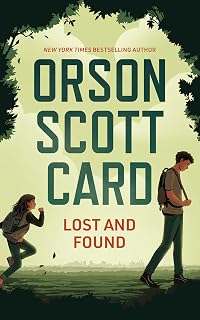
"Are you really a thief?" That's the question that has haunted fourteen-year-old Ezekiel Blast all his life. But he's not a thief, he just has a talent for finding things. Not a superpower—a micropower. Because what good is finding lost bicycles and hair scrunchies, especially when you return them to their owners and everyone thinks you must have stolen them in the first place? If only there were some way to use Ezekiel's micropower for good, to turn a curse into a blessing. His friend show more Beth thinks there must be, and so does a police detective investigating the disappearance of a little girl. When tragedy strikes, it's up to Ezekiel to use his talent to find what matters most. Master storyteller Orson Scott Card delivers a touching and funny, compelling and smart novel about growing up, harnessing your potential, and finding your place in the world, no matter how old you are. A Publishers Weekly Pick of YA Books for Fall.. show less
Tags
Recommendations




Member Reviews
Fourteen-year Ezekial Blast has an unusual 'micropower' (a power that isn't quite super). He not only can find lost objects but, once found, he can locate the owner. Unfortunately, after being accused of stealing a bike he was trying to return, he is labeled a thief and has become an outcast at school. When an FBI agent approaches him to help locate a missing child, he is reluctant. However, when his new (and only) friend, Beth, who has a form of dwarfism that makes her appear much younger than her age, is taken, he agrees to help.
Lost and Found by Orson Scott Card is aimed at a middle grade audience but I enjoyed it quite a bit. In fact, once started, I couldn't put it down. Both Ezekial and Beth are precocious but very likeable show more characters, the story is infused with wit and dark humour, and the mystery is compelling. A warning though: it might not be suitable for a child under twelve as the story does deal with the issue of child pornography. Overall, a high recommendation for children (and adults) 12 and up.
Thanks to Edelweiss+ and Blackstone Publishing for the opportunity to read this book in exchange for an honest review show less
Lost and Found by Orson Scott Card is aimed at a middle grade audience but I enjoyed it quite a bit. In fact, once started, I couldn't put it down. Both Ezekial and Beth are precocious but very likeable show more characters, the story is infused with wit and dark humour, and the mystery is compelling. A warning though: it might not be suitable for a child under twelve as the story does deal with the issue of child pornography. Overall, a high recommendation for children (and adults) 12 and up.
Thanks to Edelweiss+ and Blackstone Publishing for the opportunity to read this book in exchange for an honest review show less
What a fantastic story with fascinating characters. Really enjoyed this book quite a bit. There are a couple of crazy twists that I didn't see coming. The only thing that was a negative for me was the teenage snark from our main character, Ezekiel, got a tad tedious at times. Other than that, I thoroughly enjoyed this book.
Content Notes: Strong language and depictions of child trafficking and kidnapping. Nothing gratuitous or explicit.
Content Notes: Strong language and depictions of child trafficking and kidnapping. Nothing gratuitous or explicit.
What if you had a super-ability that seemed completely useless? What if that ability got you in trouble with the law because of your honesty? What if your super-power isn’t super so much as… annoying? Welcome to the life of Ezekiel.
Ezekiel is a finder of lost things. The things he finds have to be inanimate objects so he spends a part of his youth collecting hair scrunchies, pencils, backpacks, buttons and an inordinate amount of everyday items. of course, returning those items to the people who have lost them means that he finds himself in trouble constantly. How is it that he finds so many lost things? Unfortunately for Ezekiel, he ends up living the isolated life of a teenager who is thought of as a thief. The world has it wrong, show more but that doesn’t help Ezekiel.
When Ezekiel was young, he was doted upon by his mother. Sadly, she was hit by a car and killed when he was four years old. Of course, that changed Ezekiel’s life. But, more importantly, it was the beginning of his realization that people aren’t lost. According to Ezekiel people aren’t lost because they either know where they are, or they’re dead.
This snarky, intelligent teenager is living a very lonely life until he meets short-middle-school girl Beth and then a police officer who actually believes him. What if Ezekiel can actually find lost people?
Like all of Card’s writing, this book is peppered with marvelously sharp dialogue. The snark can get a bit over-the-top at times, but it’s fun. There’s also signature darkness that is often reflected in the younger characters in Card’s writing. There is some content in this novel that I wouldn't recommend for younger readers. show less
Ezekiel is a finder of lost things. The things he finds have to be inanimate objects so he spends a part of his youth collecting hair scrunchies, pencils, backpacks, buttons and an inordinate amount of everyday items. of course, returning those items to the people who have lost them means that he finds himself in trouble constantly. How is it that he finds so many lost things? Unfortunately for Ezekiel, he ends up living the isolated life of a teenager who is thought of as a thief. The world has it wrong, show more but that doesn’t help Ezekiel.
When Ezekiel was young, he was doted upon by his mother. Sadly, she was hit by a car and killed when he was four years old. Of course, that changed Ezekiel’s life. But, more importantly, it was the beginning of his realization that people aren’t lost. According to Ezekiel people aren’t lost because they either know where they are, or they’re dead.
This snarky, intelligent teenager is living a very lonely life until he meets short-middle-school girl Beth and then a police officer who actually believes him. What if Ezekiel can actually find lost people?
Like all of Card’s writing, this book is peppered with marvelously sharp dialogue. The snark can get a bit over-the-top at times, but it’s fun. There’s also signature darkness that is often reflected in the younger characters in Card’s writing. There is some content in this novel that I wouldn't recommend for younger readers. show less
Card always writes an intriguing story often introducing real health issues faced by some of his characters. Narration is well done. Characters believable, violence happens, but you aren't forced to endure every horrible detail, but you definitely understand what happens.
“Are you really a thief?” That’s the question that has haunted fourteen-year-old Ezekiel Blast all his life. But he’s not a thief, he just has a talent for finding things. Not a superpower—a micropower. Because what good is finding lost bicycles and hair scrunchies, especially when you return them to their owners and everyone thinks you must have stolen them in the first place? If only there were some way to use Ezekiel’s micropower for good, to turn a curse show more into a blessing. His friend Beth thinks there must be, and so does a police detective investigating the disappearance of a little girl. When tragedy strikes, it’s up to Ezekiel to use his talent to find what matters most.
Master storyteller Orson Scott Card delivers a touching and funny, compelling and smart novel about growing up, harnessing your potential, and finding your place in the world, no matter how old you are. show less
“Are you really a thief?” That’s the question that has haunted fourteen-year-old Ezekiel Blast all his life. But he’s not a thief, he just has a talent for finding things. Not a superpower—a micropower. Because what good is finding lost bicycles and hair scrunchies, especially when you return them to their owners and everyone thinks you must have stolen them in the first place? If only there were some way to use Ezekiel’s micropower for good, to turn a curse show more into a blessing. His friend Beth thinks there must be, and so does a police detective investigating the disappearance of a little girl. When tragedy strikes, it’s up to Ezekiel to use his talent to find what matters most.
Master storyteller Orson Scott Card delivers a touching and funny, compelling and smart novel about growing up, harnessing your potential, and finding your place in the world, no matter how old you are. show less
What if you had a super-ability that seemed completely useless? What if that ability got you in trouble with the law because of your honesty? What if your super-power isn’t super so much as… annoying? Welcome to the life of Ezekiel.
Ezekiel is a finder of lost things. The things he finds have to be inanimate objects so he spends a part of his youth collecting hair scrunchies, pencils, backpacks, buttons and an inordinate amount of everyday items. of course, returning those items to the people who have lost them means that he finds himself in trouble constantly. How is it that he finds so many lost things? Unfortunately for Ezekiel, he ends up living the isolated life of a teenager who is thought of as a thief. The world has it wrong, show more but that doesn’t help Ezekiel.
When Ezekiel was young, he was doted upon by his mother. Sadly, she was hit by a car and killed when he was four years old. Of course, that changed Ezekiel’s life. But, more importantly, it was the beginning of his realization that people aren’t lost. According to Ezekiel people aren’t lost because they either know where they are, or they’re dead.
This snarky, intelligent teenager is living a very lonely life until he meets short-middle-school girl Beth and then a police officer who actually believes him. What if Ezekiel can actually find lost people?
Like all of Card’s writing, this book is peppered with marvelously sharp dialogue. The snark can get a bit over-the-top at times, but it’s fun. There’s also signature darkness that is often reflected in the younger characters in Card’s writing. There is some content in this novel that I wouldn't recommend for younger readers. show less
Ezekiel is a finder of lost things. The things he finds have to be inanimate objects so he spends a part of his youth collecting hair scrunchies, pencils, backpacks, buttons and an inordinate amount of everyday items. of course, returning those items to the people who have lost them means that he finds himself in trouble constantly. How is it that he finds so many lost things? Unfortunately for Ezekiel, he ends up living the isolated life of a teenager who is thought of as a thief. The world has it wrong, show more but that doesn’t help Ezekiel.
When Ezekiel was young, he was doted upon by his mother. Sadly, she was hit by a car and killed when he was four years old. Of course, that changed Ezekiel’s life. But, more importantly, it was the beginning of his realization that people aren’t lost. According to Ezekiel people aren’t lost because they either know where they are, or they’re dead.
This snarky, intelligent teenager is living a very lonely life until he meets short-middle-school girl Beth and then a police officer who actually believes him. What if Ezekiel can actually find lost people?
Like all of Card’s writing, this book is peppered with marvelously sharp dialogue. The snark can get a bit over-the-top at times, but it’s fun. There’s also signature darkness that is often reflected in the younger characters in Card’s writing. There is some content in this novel that I wouldn't recommend for younger readers. show less
Lost things catch Ezekiel's attention and he knows who has lost them and where the owner is. Every significant character in this book has suffered some grievous loss of the sort that cannot be helped by simply returning an item, until Ezekiel is asked to find a lost child. Much of the meaning of this book is in living after loss and using your abilities to their fullest, and the characters are vivid and touching and if the plot were less dependent on a couple of major co-incidences it might actually deserve it's current average rating of 4.33
(2.5 / 5)
Fourteen-year-old Ezekiel Blast has a talent for finding things and knowing who they belong to. Along with this talent comes a strong need to return things to the owner. This has earned him the label of thief by people who assume he stole the items in the first place. Now ostracized by peers and authority figures alike, he is not expecting to be befriended by fellow outcast Beth, who is thirteen, but looks like she’s seven. When he’s asked to use his “micropower” to find a missing girl, Ezekiel initially refuses for a multitude of reasons, not the least of which is that he finds things, not people. However, with the help of his friend and some others, Ezekiel realizes that there may be more to his micropower than he show more ever knew.
I was pretty excited when I was approved to read an advance copy of this book, since Orson Scott Card is a big name author. I haven’t read anything else by him (though Ender’s Game is on my TBR short list), but fortunately, I’ve read other reviews that say this isn’t like his other, especially earlier, work. Because this could have turned me off to his writing otherwise. I struggled a lot with various aspects of this book.
My biggest issue was the dialog. Not just the dialog itself, but the way it was framed. I’m a huge dialog person, both in my reading and my writing. And this book was something like 75% dialog. Because outside of the actual events that occurred surrounding the lost girl (and even during that), it felt like the characters were always either standing around or sitting around talking. And there was very little in the way of action happening during the talking, but while this worked in Lock In (which I also read recently), it just didn’t work the same in this book. I’m not sure if I can explain why though. Maybe because the MC in Lock In is more of a mind at work, then a physical person? Maybe because it wasn’t 75% of the book?
But then, it might be because of the actual content of the dialog. There was so much snark and snappiness, it was just overwhelming. Almost like it was trying too hard to be witty and intelligent. Most of the characters talked nearly identical, even the minor ones, so it was really difficult to get a sense of who was talking. The only thing that really led me to understand that Ezekiel was particularly smart was that the detective said as much to him. But sometimes, the detective talked just like him, except without the constant need to correct people, so I guess that’s what made Ezekiel smarter? Some dialog scenes actually read as if the characters were doing nothing but one-up’ing each other in being more and more correct about what they were trying to say. And I really didn't buy either Ezekiel or Beth as early teens due to their dialog.
Ezekiel’s micropower is analyzed to death, right up until the end of the book. On the other hand, a few certain elements (that I won’t detail for the sake of spoilers) were left completely unexplained. And there were certain things that happened in this book that reminded me of my 10-year-old self writing about a girl who got her best friend adopted alongside her simply because she was plucky enough to ask. It just felt a bit too unlikely in several spots (including what would likely allowed in police work). But maybe Card has done some research and knows some things I don’t (I am definitely not an expert).
As far as the plot goes, it got off to a bit of a slow start, and then started to get interesting. And thenthe main plot point in the synopsis is solved at the halfway mark, which is fairly shocking (not exactly in a good way) and makes the next thing that happens all too predictable. And a warning: it's fairly dark and gritty for a YA book, dealing with things like kidnapping of young children, child pornography, parent death, and even one death scene (not a parent) described a bit graphically .
Now, the positives. Because I did give this book some stars. Ezekiel’s dad. I really like seeing a parent portrayed in such a great light, especially a father, because let’s face it, they’re pretty beat up in fiction of various mediums these days. I also liked the way the detective treated Ezekiel, for the most part, outside of the unlikely things. I really did like the premise, and even the plot, for the first half of the book. Then it felt like a rinse and repeat for the second half.
I struggled with how many stars to give this book. While I was reading it, I was hovering around 3-3.5. But by the end, I couldn’t figure out what I was seeing that gave it even that much redeeming value. I hate writing a review like this, and I will sum up by saying that a lot of this is personal preference. But it really didn’t suit my preference. I think there are plenty of people who would enjoy the quick, snarky dialog though, considering that the writing actually reminded me of a few people I know. So for those who enjoy that type of writing, it’s probably worth a read.
Thank you to Netgalley and Blackstone Publishing for providing me a copy of this book to review. show less
Fourteen-year-old Ezekiel Blast has a talent for finding things and knowing who they belong to. Along with this talent comes a strong need to return things to the owner. This has earned him the label of thief by people who assume he stole the items in the first place. Now ostracized by peers and authority figures alike, he is not expecting to be befriended by fellow outcast Beth, who is thirteen, but looks like she’s seven. When he’s asked to use his “micropower” to find a missing girl, Ezekiel initially refuses for a multitude of reasons, not the least of which is that he finds things, not people. However, with the help of his friend and some others, Ezekiel realizes that there may be more to his micropower than he show more ever knew.
I was pretty excited when I was approved to read an advance copy of this book, since Orson Scott Card is a big name author. I haven’t read anything else by him (though Ender’s Game is on my TBR short list), but fortunately, I’ve read other reviews that say this isn’t like his other, especially earlier, work. Because this could have turned me off to his writing otherwise. I struggled a lot with various aspects of this book.
My biggest issue was the dialog. Not just the dialog itself, but the way it was framed. I’m a huge dialog person, both in my reading and my writing. And this book was something like 75% dialog. Because outside of the actual events that occurred surrounding the lost girl (and even during that), it felt like the characters were always either standing around or sitting around talking. And there was very little in the way of action happening during the talking, but while this worked in Lock In (which I also read recently), it just didn’t work the same in this book. I’m not sure if I can explain why though. Maybe because the MC in Lock In is more of a mind at work, then a physical person? Maybe because it wasn’t 75% of the book?
But then, it might be because of the actual content of the dialog. There was so much snark and snappiness, it was just overwhelming. Almost like it was trying too hard to be witty and intelligent. Most of the characters talked nearly identical, even the minor ones, so it was really difficult to get a sense of who was talking. The only thing that really led me to understand that Ezekiel was particularly smart was that the detective said as much to him. But sometimes, the detective talked just like him, except without the constant need to correct people, so I guess that’s what made Ezekiel smarter? Some dialog scenes actually read as if the characters were doing nothing but one-up’ing each other in being more and more correct about what they were trying to say. And I really didn't buy either Ezekiel or Beth as early teens due to their dialog.
Ezekiel’s micropower is analyzed to death, right up until the end of the book. On the other hand, a few certain elements (that I won’t detail for the sake of spoilers) were left completely unexplained. And there were certain things that happened in this book that reminded me of my 10-year-old self writing about a girl who got her best friend adopted alongside her simply because she was plucky enough to ask. It just felt a bit too unlikely in several spots (including what would likely allowed in police work). But maybe Card has done some research and knows some things I don’t (I am definitely not an expert).
As far as the plot goes, it got off to a bit of a slow start, and then started to get interesting. And then
Now, the positives. Because I did give this book some stars. Ezekiel’s dad. I really like seeing a parent portrayed in such a great light, especially a father, because let’s face it, they’re pretty beat up in fiction of various mediums these days. I also liked the way the detective treated Ezekiel, for the most part, outside of the unlikely things. I really did like the premise, and even the plot, for the first half of the book. Then it felt like a rinse and repeat for the second half.
I struggled with how many stars to give this book. While I was reading it, I was hovering around 3-3.5. But by the end, I couldn’t figure out what I was seeing that gave it even that much redeeming value. I hate writing a review like this, and I will sum up by saying that a lot of this is personal preference. But it really didn’t suit my preference. I think there are plenty of people who would enjoy the quick, snarky dialog though, considering that the writing actually reminded me of a few people I know. So for those who enjoy that type of writing, it’s probably worth a read.
Thank you to Netgalley and Blackstone Publishing for providing me a copy of this book to review. show less
Members
- Recently Added By
Author Information

575+ Works 213,870 Members
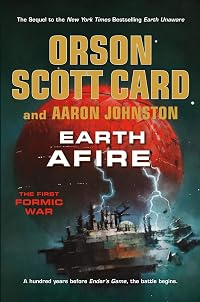
Orson Scott Byron Walley Card, was born in 1951 and studied theater at Brigham Young University. He received his B.A. in 1975 and his M.A. in English in 1981. He wrote plays during that time, including Stone Tables (1973) and the musical, Father, Mother, Mother and Mom (1974). A Mormon, Scott served a two-year mission in Brazil before starting show more work as a journalist in Utah. He also designed games at Lucas Film Games, 1989-92. He is best known for his science fiction novels, including the popular Ender series. Well known titles include A Planet Called Treason (1979), Treasure Box (1996), and Heartfire (1998). He has also written the guide called How to Write Science Fiction and Fantasy (1990). His novel Ender's Game and its sequel Speaker for the Dead, both won Hugo and Nebula awards, making Card the only author to win both prizes in consecutive years. His titles Shadows in Flight, Ruins and Ender's Game made The New York Times Best Seller List. He is also the author of The First Formic War Series, which includes the titles Earth Unaware, Earth Afire, and Earth Awakens. (Bowker Author Biography) show less
Some Editions
Awards and Honors
Awards
Series

Common Knowledge
- Canonical title
- Lost and Found
- Original publication date
- 2019
- People/Characters
- Ezekiel Blast
- Dedication
- To Geoffrey, Emily, and Zina
Safe so far,
And never so lost
That you can’t be found. - First words
- Ezekiel Blast liked to walk to school alone.
- Last words
- (Click to show. Warning: May contain spoilers.)I hope I’m never stupid enough to forget how completely that changed my life for the better.
Classifications
Statistics
- Members
- 200
- Popularity
- 163,544
- Reviews
- 17
- Rating
- (3.95)
- Languages
- English
- Media
- Paper, Audiobook, Ebook
- ISBNs
- 17
- ASINs
- 3