The Nature of Life and Death: Every Body Leaves a Trace
by Patricia Wiltshire
On This Page
Description
From mud tracks on a quiet country road to dirt specks on the soles of walking boots, forensic ecologist Patricia Wiltshire uses her decades of scientific expertise to find often-overlooked clues left behind by criminal activity. She detects evidence and eliminates hypotheses armed with little more than a microscope, eventually developing a compelling thesis of the who, what, how, and when of a crime. Wiltshire's remarkable accuracy has made her one of the most in-demand police consultants show more in the world, and her curiosity, humility, and passion for the truth have guided her every step of the way. A riveting blend of science writing and true-crime narrative, The Nature of Life and Death details Wiltshire's unique journey from college professor to crime fighter: solving murders, locating corpses, and exonerating the falsely accused. Along the way, she introduces us to the unseen world all around us and underneath our feet: plants, animals, pollen, spores, fungi, and microbes that we move through every day. Her story is a testament to the power of persistence and reveals how our relationship with the vast natural world reaches far deeper than we might think.-- show lessTags
Recommendations







Member Reviews
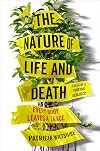
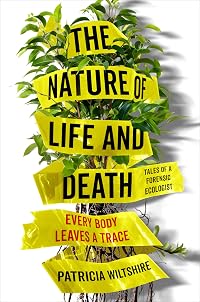
The best thing about this book is its cover.
I’m not joking or trying to seem clever: it’s the truth.
This book is written in a dry, factually correct, and sadly not-very-well edited way. The writer must be expert at what she does; I’m even convinced that she possesses skills that have affected her profession.
Sadly, being able to ride a horse does not mean one should be a horse-race commentator.
This is one of the first pieces in the book:
There’s a lot of morality thrown into Wiltshire’s musings. Taut sentences give very little leeway to expanse in thought or literary structure, which sadly puts a tight lid on what this book could be. A good editor might have turned that around, I believe.
The good bits, then, are actually quite a few. Wiltshire points to the fact that she is an expert palynologist—somebody who analyses pollen grains and other spores—and has been one for decades; there’s plenty of evidence of this, and she is not afraid to tell of how she was once a novice in the criminal-cum-palynological field:
There’s a lot of old-person’s ponderings littering the book:
Other times, her terse sentences work well:
She can be funny and disgusting at the same time, bless:
It’s always obvious to me that the person who’s written this book teaches in some capacity:
Wiltshire writes a bit about her seemingly acrimonious divorce from her husband, about visiting the world-famous Body Farm, different exciting/weird deaths that she’s investigated for police… It’s a few different twists and turns, and I wish that I could say it differently, but this book really does need to be edited. show less
I’m not joking or trying to seem clever: it’s the truth.
This book is written in a dry, factually correct, and sadly not-very-well edited way. The writer must be expert at what she does; I’m even convinced that she possesses skills that have affected her profession.
Sadly, being able to ride a horse does not mean one should be a horse-race commentator.
This is one of the first pieces in the book:
I am not frightened of dead bodies. To me, corpses have ceased to be people; they are repositories of information where nature has left clues that we might follow. Very few times in my career have I let my guard down and been affected by the cadavers in the mortuary.show more
The first was a 22-year-old
prostitute found dead in a wood, leaving three children behind. I was deeply sad for that girl, not because she was dead, but because of all she had suffered. She had been rejected by her parents at 16 and forced to make her own way. She became insidiously controlled by a pimp who purposefully made her addicted to cocaine and then put her to work to support him and her drug habit. She bore three children, not knowing the identity of any of the fathers, but she would not give them up and her scrawny, scruffy little body bore testament to its neglect as she serviced men so that she could keep her children and cope with the rest of her existence. I cried over that girl as she lay exposed and cold on the stainless steel surface of the mortuary table, not because she was dead, but for all the struggle and misery she had suffered in her pathetic existence, while keeping steadfast in her loyalty to her children. I so admired her for that.
There’s a lot of morality thrown into Wiltshire’s musings. Taut sentences give very little leeway to expanse in thought or literary structure, which sadly puts a tight lid on what this book could be. A good editor might have turned that around, I believe.
The good bits, then, are actually quite a few. Wiltshire points to the fact that she is an expert palynologist—somebody who analyses pollen grains and other spores—and has been one for decades; there’s plenty of evidence of this, and she is not afraid to tell of how she was once a novice in the criminal-cum-palynological field:
So much has been on a steep learning curve. The chassis elements of vehicles vary greatly, but I now know the most likely nooks and crannies that might collect relevant evidence. Back then I knew nothing—I had never even seen the underneath of any motorized vehicle, certainly not at first hand with my face about five centimeters from the oily, grimy metal of the various pipes and struts. I soon came to realize that I would just have to do my best and, by trial and error, find the best way to sample these things. I was used to scrubbing the dirt from various artifacts to find out what they had contained. Could this be so dissimilar?
So, I just used my common sense; I started with the most easily removed items and asked that they be brought to me—footwell mats, pedals, bumper, air filters and radiator. Initially, I ignored the wheels because they could have picked up material from a multitude of places. On the other hand, the inside of the car would contain mostly material that was transferred to it from people’s feet, and the objects they carried in it. Simple logic guided me and, in any case, if I were wrong, the rest of the car would still be in the garage and could be resampled.
There’s a lot of old-person’s ponderings littering the book:
When I look back on our sheer freedom, I can only feel sad for today’s children who are packaged and sealed up, their flights of fancy being satisfied by electronic wizardry. I marvel at how young we were, how far we wandered unsupervised, how nobody felt the need to walk us to and from school—and how entirely normal that kind of free, wild life was compared to today.
Other times, her terse sentences work well:
The girl had been missing for almost a year when, in the dying days of summer 2001, she was discovered in an excavated depression on the borders of a Yorkshire forestry plantation. She was still wrapped in the duvet which her killer had hastily put around her body. Not yet 15 years old when she had vanished, her disappearance on the way home after a shopping trip with friends had sparked one of the largest missing person’s operations in the history of Yorkshire policing. Two hundred officers and hundreds of volunteers had fanned out through the streets and along the bus route she took home, knocking on thousands of doors, searching 800 houses, sheds, garages and outbuildings. Search warrants were issued, 140 men with past convictions investigated, collections of household waste curtailed while refuse sites were searched—and a local benefactor even offered a £10,000 reward for information leading to her return. But none of it mattered: she would never return home.
She can be funny and disgusting at the same time, bless:
While I was preparing my samples, a voice called out across the mortuary. “I’m sure you’d like some lunch, wouldn’t you, Pat?” I looked around and there was the friendly face of the Senior Investigating Officer who had called me into the case. “Oh, yes please,” I answered. When we got to the staff refectory, there was little choice because I had taken so long in sampling the body. “What would you like, Pat?” I was too tired to bother and, to be honest, I really did not feel all that hungry anyway. But, I had a long drive back south and needed to have something to keep me going. “Why don’t you choose for me?” I said. “Anything that doesn’t have meat, please . . .”
Moments later, he returned with a laden tray and started placing the plates on the table. I looked, smelled and immediately felt nauseous. It was cauliflower cheese, a dish I usually relish, but it smelled of butyric acid, with a whiff of hydrogen sulfide; in short, it smelled of the corpse. The color was of flesh in livor mortis, with slightly gray tinges at the edges of what looked like bits of brain. Well, of course it did—butyric acid came from the cheese and the sulfur compound from the cauliflower.
The cabbage family, which includes the cauliflower, produces many sulfur compounds and I suppose this is why some people hate cabbage, cauliflower and sprouts. Butyric acid is formed by bacterial fermentation, and the bacteria involved in cheese?making are the same ones involved in both corpse decomposition and the smell of sweaty feet. I tried to be objective but, as I tried to eat my meal, it was coming up as it was going down. I mentally slapped my own face and could imagine my grandmother saying, “Stop whingeing and get on with it!”
So that’s what I did. Clutching my precious bag of samples and equipment, I set off on the long drive south. It took over seven hours because of all sorts of hold-ups on the motorways. I eventually got home, flopped down in front of the TV at about 1:00am with my darling Mickey, my one?eyed, silky, Burmese cat, on my lap. I was next conscious at 4:30am with a crick in my neck, and Mickey’s whiskers tickling my cheek. The discordant music of some ridiculous horror film was screeching away on the TV. I switched it off, Mickey still in my arms, and we both went up to bed, not waking until about 10:00am the next morning.
It’s always obvious to me that the person who’s written this book teaches in some capacity:
Soon after your blood ceases to flow, your body will cool until it reaches the ambient temperature of the place where you died. These environmental conditions will have a significant bearing on what is to come. The blood in your capillaries and veins, no longer being pumped around by the beating of your heart, will settle and pool, leading to the first discolouration of your skin, a phase called livor mortis, and, after that, your muscles will inevitably stiffen, first in the face and then in the entire body, as your muscle filaments begin to bind together. This is the phase referred to as rigor mortis.
Wiltshire writes a bit about her seemingly acrimonious divorce from her husband, about visiting the world-famous Body Farm, different exciting/weird deaths that she’s investigated for police… It’s a few different twists and turns, and I wish that I could say it differently, but this book really does need to be edited. show less
Uh, ok boomer.
It's honestly very rare I start a book, decide to not finish it, and then say something about it, but I feel compelled to here. I picked this up because the topic sounded interesting and I'm trying to read new things, and I think I could have made it through if someone else had written it. Wiltshire's writing isn't bad, but it is so incredibly preachy that it detracts from the theme/topics of the book. Wiltshire harps on about kids and their electronics, different lifestyles, and just really has a kind of attitude that puts certain readers down. There were also early signs that turned me away, such as Wiltshire writing that, to her, "corpses have ceased to be people", as well as her bemoaning the "physical perfection" of show more a 15-year-old rape victim who, according to Wiltshire, would have had a good life because she was so pretty. The topic of bodies and forensic science doesn't disturb me, but the attitude and viewpoints with which Wiltshire writes made me feel deeply uncomfortable and I've decided to not finish this book. show less
It's honestly very rare I start a book, decide to not finish it, and then say something about it, but I feel compelled to here. I picked this up because the topic sounded interesting and I'm trying to read new things, and I think I could have made it through if someone else had written it. Wiltshire's writing isn't bad, but it is so incredibly preachy that it detracts from the theme/topics of the book. Wiltshire harps on about kids and their electronics, different lifestyles, and just really has a kind of attitude that puts certain readers down. There were also early signs that turned me away, such as Wiltshire writing that, to her, "corpses have ceased to be people", as well as her bemoaning the "physical perfection" of show more a 15-year-old rape victim who, according to Wiltshire, would have had a good life because she was so pretty. The topic of bodies and forensic science doesn't disturb me, but the attitude and viewpoints with which Wiltshire writes made me feel deeply uncomfortable and I've decided to not finish this book. show less
Patricia Wiltshire is a pioneering forensic ecologist specialising in palynology - the study of pollen and spores. She compares the pollen and spores found in a suspect's clothing or vehicle with those at the crime scene (and apparently they can vary enormously even in a matter of a few yards) to find out whether the suspect was at the scene or not. If, for example, X says a couple had consensual sex here while Y says it was rape there, Patricia Wiltshire can assess whose story at least gets the location right.
As she rightly assumes that her readers (at least me) are almost totally ignorant of palynology there is a certain amount of dry technical detail to be explained, but the cases she uses as illustrations and the story of her life show more are interesting enough to keep the pages turning. show less
As she rightly assumes that her readers (at least me) are almost totally ignorant of palynology there is a certain amount of dry technical detail to be explained, but the cases she uses as illustrations and the story of her life show more are interesting enough to keep the pages turning. show less
At first I thought this would be a book that would be a 4 or 5 star read for me but there were some things that really detracted from the reading experience. The first was the author's digression into stories from her childhood that seemed shoehorned into the nonfiction excerpts of her career as a forensic ecologist. It really altered the flow of the book and added very little to the overall whole. But the thing that bothered me the most was the author's tone or 'voice' if you will which was patronizing if not downright condescending. She constantly reminded the reader of her various degrees, careers, and accomplishments while at the same time also denigrating other people who were not at her 'level'. It got to be so irksome that I show more contemplated giving the book up entirely. I now wish that I had done so because I could have spent my time with another book and author instead. :-/ show less
The Nature of Life and Death: Every Body Leaves a Trace by Patricia Wiltshire is a highly recommended account of a pioneer in forensic ecology.
Patricia Wiltshire share stories from several of the cases she's been an investigator on as well as personal stories from her life. Wiltshire is an expert palynologist—somebody who analyses pollen grains and other spores. "When a crime has been committed, my role is to read and present the possibilities told by the grains of pollen, the fungi, lichens, and micro‑ organisms that have been retrieved, to try and piece together facts from the natural world." It is a fascinating area of study and she adroitly explains how she uses her knowledge to help solve real cases in the UK. This is real show more scientist working on an investigation, not an excerpt of a CSI episode. The unseen world all around us and underneath our feet does touch and actually cling to us every day. This includes plants, animals, pollen, spores, fungi, and microbes. They can mark where we have been as surely as a map.
In between walking us through some of her cases, she also shares some of her biographical background. Although this is not strictly a biography, it does intermingle stories from her professional scientific work with her upbringing and background - and, you know, sometimes when and where you were raised and some of the particulars of your childhood do influence your life as an adult. Those who believe in an afterlife will want to take note that Wiltshire does not and succinctly shares her belief that once dead, a person will simple be reduced to the elements which the body contains.
The case studies are fascinating and that alone is deserving of a higher rating, even though sometime the personal opinions shared are a bit too sharp. It might have served Wiltshire better if she decided on either a biography or a series of interesting case studies. I would be up for reading either, but the mix between the two was sometimes incongruous. When presenting the cases, Wiltshire is at her best, explain how she determined vital clues bases on the microscopic evidence she found. I found the cases and her investigations to be captivating and could esily breeze through the biographical or opinion parts of the book.
Disclosure: My review copy was courtesy of Penguin Random House.
http://www.shetreadssoftly.com/2019/09/the-nature-of-life-and-death.html show less
Patricia Wiltshire share stories from several of the cases she's been an investigator on as well as personal stories from her life. Wiltshire is an expert palynologist—somebody who analyses pollen grains and other spores. "When a crime has been committed, my role is to read and present the possibilities told by the grains of pollen, the fungi, lichens, and micro‑ organisms that have been retrieved, to try and piece together facts from the natural world." It is a fascinating area of study and she adroitly explains how she uses her knowledge to help solve real cases in the UK. This is real show more scientist working on an investigation, not an excerpt of a CSI episode. The unseen world all around us and underneath our feet does touch and actually cling to us every day. This includes plants, animals, pollen, spores, fungi, and microbes. They can mark where we have been as surely as a map.
In between walking us through some of her cases, she also shares some of her biographical background. Although this is not strictly a biography, it does intermingle stories from her professional scientific work with her upbringing and background - and, you know, sometimes when and where you were raised and some of the particulars of your childhood do influence your life as an adult. Those who believe in an afterlife will want to take note that Wiltshire does not and succinctly shares her belief that once dead, a person will simple be reduced to the elements which the body contains.
The case studies are fascinating and that alone is deserving of a higher rating, even though sometime the personal opinions shared are a bit too sharp. It might have served Wiltshire better if she decided on either a biography or a series of interesting case studies. I would be up for reading either, but the mix between the two was sometimes incongruous. When presenting the cases, Wiltshire is at her best, explain how she determined vital clues bases on the microscopic evidence she found. I found the cases and her investigations to be captivating and could esily breeze through the biographical or opinion parts of the book.
Disclosure: My review copy was courtesy of Penguin Random House.
http://www.shetreadssoftly.com/2019/09/the-nature-of-life-and-death.html show less
This was a fascinating look at a new area of science - forensic ecology. The author describes what it is she does, how she does it and what the results of her efforts have been in several cases, as well as how she came to practice this newly evolving area of forensic science. She uses her knowledge of ecology to help whatever side the facts fall on, making her a unique character in adversarial situations like the courtroom. She is a true pioneer and modern female hero.
Read this for our museum botany department book club. Very interesting, especially since I've spent my working life associating with field botanists.
Members
- Recently Added By
Lists

Psychology: Abuse, Grief, Self-Help
189 works; 1 member
Author Information

2 Works 227 Members
Awards and Honors
Awards
Common Knowledge
- Original publication date
- 2019-07
Classifications
- Genres
- Nonfiction, Science & Nature, General Nonfiction, Biography & Memoir
- DDC/MDS
- 363.25092 — Society, government, & culture Social problems and social services Public Safety - Police, Crime Investigation Police services Criminal investigation & forensics
- LCC
- HV8073 .W5265 — Social sciences Social pathology. Social and public welfare. Criminology Social pathology. Social and public welfare. Criminal justice administration Police. Detectves. Constabulary Police duty. Methods of protection Investigation of crimes. Examination
- BISAC
Statistics
- Members
- 196
- Popularity
- 167,171
- Reviews
- 8
- Rating
- (3.69)
- Languages
- English, Polish
- Media
- Paper, Audiobook, Ebook
- ISBNs
- 11
- ASINs
- 4