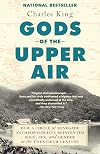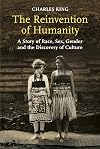
Gods of the Upper Air: How a Circle of Renegade Anthropologists Reinvented Race, Sex, and Gender in the Twentieth Century
by Charles King 
On This Page
Description
"At the end of the 19th century, everyone knew that people were defined by their race and sex and were fated by birth and biology to be more or less intelligent, able, nurturing, or warlike. But one rogue researcher looked at the data and decided everyone was wrong. Franz Boas was the very image of a mad scientist: a wild-haired immigrant with a thick German accent. By the 1920s he was also the foundational thinker and public face of a new school of thought at Columbia University called show more cultural anthropology. He proposed that cultures did not exist on a continuum from primitive to advanced. Instead, every society solves the same basic problems -- from childrearing to how to live well -- with its own set of rules, beliefs, and taboos. Boas's students were some of the century's intellectual stars: Margaret Mead, the outspoken field researcher whose Coming of Age in Samoa is one of the most widely read works of social science of all time; Ruth Benedict, the great love of Mead's life, whose research shaped post-Second World War Japan; Ella Deloria, the Dakota Sioux activist who preserved the traditions of Native Americans of the Great Plains; and Zora Neale Hurston, whose studies under Boas fed directly into her now-classic novel, Their Eyes Were Watching God. Together, they mapped vanishing civilizations from the Arctic to the South Pacific and overturned the relationship between biology and behavior. Their work reshaped how we think of women and men, normalcy and deviance, and re-created our place in a world of many cultures and value systems. Gods of the Upper Air is a page-turning narrative of radical ideas and adventurous lives, a history rich in scandal, romance, and rivalry, and a genesis story of the fluid conceptions of identity that define our present moment"-- show lessTags
Recommendations



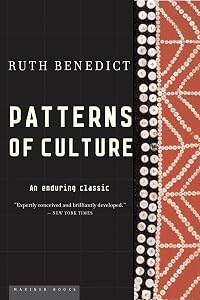




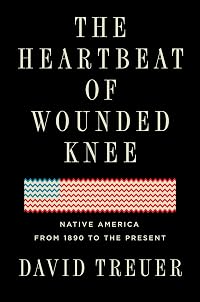
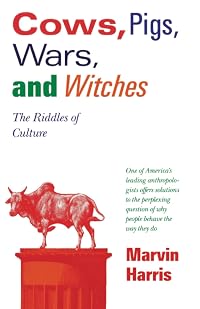
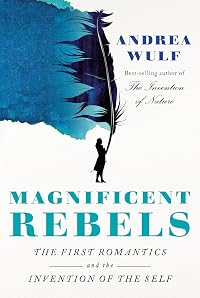
























Member Recommendations
Member Reviews
We should all be thankful that racism and eugenics are no longer part of the scientific mainstream, but how many of us are familiar with the story of how this happened? In this gripping intellectual history, Charles King shows how a group of twentieth-century cultural anthropologists battled against the “common-sense” notions of racial superiority and social hierarchies to show that “humanity is one undivided thing,” with variation and complexity that should be celebrated, not feared.
The most important idea this group of anthropologists discovered was this: you cannot judge an individual according to group averages, because there is greater variation in traits within a race than between races. Race, in fact, is probably the show more worst invention in human history. We’ve spent more time as a species trying to fit ourselves and others into groups based on superficial differences than to expand our circle of empathy and view others as equally human—and ourselves as equally fallible in our cultural knowledge.
That’s what makes this story so timeless. The battle against bigotry and small-mindedness—taken up by Franz Boas more than a century ago—is clearly not over. But the people who did the original work—who conducted the field research and actually conversed with people of different cultures—were the first to discover the biases and fallacies that lead to racist, misogynistic, and homophobic thinking. The overall principle is clear: the most bigoted individuals are the ones who spend the least amount of time with the people they fear, hate, or deem inferior—and the most time with groups that tout their own superiority and limited world-view.
King may be criticised for popularizing a view of cultural relativism, in that all truth is relative and socially constructed and no one culture is any better than any other in any dimension. But I don’t think this is the message. The founders of cultural anthropology—Boas, Benedict, Mead, and others—didn’t embrace extreme relativism; they understood that scientific truths are true independent of cultural beliefs, and that some cultures do engage in practices that result in suffering and harm.
They simply proposed the idea that we should seek to understand other people before we judge them, and that our culture is not automatically superior simply because it’s ours, or because our skin is white. They knew that racial superiority is a ridiculous idea, and that people should be judged based on what they do, not on the basis of their race, gender, or skin color. They also were the first to discover that, because there is so much overlap between races on every physical and mental trait, that to speak in terms of averages is empty and misleading in the real world.
King captures all of these discoveries as they played out in field research, with rich biographical details of these early anthropologists as they worked to establish an entirely new scientific field in the face of scientifically-backed mainstream racism. Even Hitler admired the United States on its stance on race, as he wrote in Mein Kampf in 1925. 100 years later, and we find ourselves in the same battle against a resurgence in white supremacy.
My only complaint is that parts of the book were too heavy on biography—and the details of each person’s love life—and light on science, theory, or actual discoveries from field research. This is obviously a personal preference, but for those with similar preferences, parts of the book will probably drag. show less
The most important idea this group of anthropologists discovered was this: you cannot judge an individual according to group averages, because there is greater variation in traits within a race than between races. Race, in fact, is probably the show more worst invention in human history. We’ve spent more time as a species trying to fit ourselves and others into groups based on superficial differences than to expand our circle of empathy and view others as equally human—and ourselves as equally fallible in our cultural knowledge.
That’s what makes this story so timeless. The battle against bigotry and small-mindedness—taken up by Franz Boas more than a century ago—is clearly not over. But the people who did the original work—who conducted the field research and actually conversed with people of different cultures—were the first to discover the biases and fallacies that lead to racist, misogynistic, and homophobic thinking. The overall principle is clear: the most bigoted individuals are the ones who spend the least amount of time with the people they fear, hate, or deem inferior—and the most time with groups that tout their own superiority and limited world-view.
King may be criticised for popularizing a view of cultural relativism, in that all truth is relative and socially constructed and no one culture is any better than any other in any dimension. But I don’t think this is the message. The founders of cultural anthropology—Boas, Benedict, Mead, and others—didn’t embrace extreme relativism; they understood that scientific truths are true independent of cultural beliefs, and that some cultures do engage in practices that result in suffering and harm.
They simply proposed the idea that we should seek to understand other people before we judge them, and that our culture is not automatically superior simply because it’s ours, or because our skin is white. They knew that racial superiority is a ridiculous idea, and that people should be judged based on what they do, not on the basis of their race, gender, or skin color. They also were the first to discover that, because there is so much overlap between races on every physical and mental trait, that to speak in terms of averages is empty and misleading in the real world.
King captures all of these discoveries as they played out in field research, with rich biographical details of these early anthropologists as they worked to establish an entirely new scientific field in the face of scientifically-backed mainstream racism. Even Hitler admired the United States on its stance on race, as he wrote in Mein Kampf in 1925. 100 years later, and we find ourselves in the same battle against a resurgence in white supremacy.
My only complaint is that parts of the book were too heavy on biography—and the details of each person’s love life—and light on science, theory, or actual discoveries from field research. This is obviously a personal preference, but for those with similar preferences, parts of the book will probably drag. show less
A timely reminder. One of the discouraging aspects of the current rise of racist arguments in public discourse is that it pretends that the last hundred years of social science never happened. Yet Boas demonstrated that race is primarily a socially constructed category, and not the simple recognition of an external reality. Further, different cultures are simply that, different, and not superior. For example, Western society may appear to be "better" than more traditional societies, but that is only because it is more efficient at achieving the goals that Westerners have deemed to be important. So we prioritize money over all other values, and judge our way of life superior because it earns more money (for some). But if you value other show more things--kinship, spirituality, community--then Western culture is a poor method to realize those goals.
The story of the Boasian circle, particularly Ruth Benedict and Margaret Mead, is thus needed. This book not only does that job, but does it supremely well. A must read. show less
The story of the Boasian circle, particularly Ruth Benedict and Margaret Mead, is thus needed. This book not only does that job, but does it supremely well. A must read. show less
A really fascinating look at the intersecting lives of some of the key figures in the establishment of cultural anthropology in the late nineteenth and early twentieth centuries. Charles King focuses largely on the circle that formed around German-born Columbia University professor Franz Boas, one which saw their burgeoning field as not just “a science but also as a state of mind.” This is not a topic I knew a huge amount about, and I appreciated the introduction to how Boas—plus Margaret Mead, Ruth Benedict, Zora Neale Hurston, and Ella Deloria—helped to shape popular thinking about many now well-known concepts such as cultural relativism. King is perhaps a bit easier in his assessments/judgement of their work and its legacy show more than is quite earned, but still very interesting.
(And hey, academics a hundred years ago being over-worked and under-paid! Plus ça change.) show less
(And hey, academics a hundred years ago being over-worked and under-paid! Plus ça change.) show less
Who knew? The emergence of cultural anthropology involved fascinating characters and high drama. Moreover, it left an intellectual heritage that contributed to massive political divisions today. Franz Boaz and his students, most notably Ruth Benedict and Margaret Mead, developed the view that culture is relative, not absolute. This implies that no culture is "better" than any other, simply different. The validity -- or lack thereof -- of this view underlies today's culture wars. This book tells the stories of the people involved, in sparkling prose. A great read in several senses.
"Facts go down mighty hard with some folks."
King quotes Zora Neale Hurston writing this in 1945. She wasn't wrong then, nor now. The core of this book is full description and condemnation of the systemic racism and sexism in America that has been a matter of custom and legislation since [at least] the Civil War, and of the staunch efforts to combat those policies by a group of academics in the first half of the 20th century. Franz Boas and his students marshaled facts about human bodies and behaviors, hard data by the sheaf, to undermine the pseudo-science that formed the bulwark of 'scientific racism' underlying American eugenics, Jim Crow, and the Nazi "Final Solution." These efforts, and these shibboleths, are as timely now as could show more possibly be imagined; that a great deal of this work was conducted and published by women was even more astounding given the character of academia before the 1960s.
But this book is messy and unsatisfying. Long passages of bitter US social history are interspersed with "biographies" of Margaret Mead and a few other specific souls (Ruth Benedict and Hurston, in particular) that amount to episodes of sexual escapades while on-the-clock. Their actual writings deserved more attention. And Edward Sapir! King portrays Sapir as little more than a creepy, possessive lecher, without detailing his accomplishments: for instance, his 1929 "The Status of Linguistics as a Science" is still required reading in most anthropology grad programs, or the lingering legacy of his collaborations through the 1930s with Benjamin Worf (the Sapir-Worf Hypothesis, anyone?).
I'm an anthropologist by training and practice. Some of my older professors had known many of the people in this book well, and had passed along much that is in King's book and much that is not. King has attempted to humanize Boas, Mead, Benedict, Hurston, Deloria, and others with tales of frivolity, volatility, and sexual liaisons, but it makes them look more tawdry than human and overworked (not to mention underpaid). This is a good enough book, but it should have been better. show less
King quotes Zora Neale Hurston writing this in 1945. She wasn't wrong then, nor now. The core of this book is full description and condemnation of the systemic racism and sexism in America that has been a matter of custom and legislation since [at least] the Civil War, and of the staunch efforts to combat those policies by a group of academics in the first half of the 20th century. Franz Boas and his students marshaled facts about human bodies and behaviors, hard data by the sheaf, to undermine the pseudo-science that formed the bulwark of 'scientific racism' underlying American eugenics, Jim Crow, and the Nazi "Final Solution." These efforts, and these shibboleths, are as timely now as could show more possibly be imagined; that a great deal of this work was conducted and published by women was even more astounding given the character of academia before the 1960s.
But this book is messy and unsatisfying. Long passages of bitter US social history are interspersed with "biographies" of Margaret Mead and a few other specific souls (Ruth Benedict and Hurston, in particular) that amount to episodes of sexual escapades while on-the-clock. Their actual writings deserved more attention. And Edward Sapir! King portrays Sapir as little more than a creepy, possessive lecher, without detailing his accomplishments: for instance, his 1929 "The Status of Linguistics as a Science" is still required reading in most anthropology grad programs, or the lingering legacy of his collaborations through the 1930s with Benjamin Worf (the Sapir-Worf Hypothesis, anyone?).
I'm an anthropologist by training and practice. Some of my older professors had known many of the people in this book well, and had passed along much that is in King's book and much that is not. King has attempted to humanize Boas, Mead, Benedict, Hurston, Deloria, and others with tales of frivolity, volatility, and sexual liaisons, but it makes them look more tawdry than human and overworked (not to mention underpaid). This is a good enough book, but it should have been better. show less
Another title I wanted to like as a cultural anthropology major back in college, but I never caught on to the author's point. The story covers early 20th century anthropology academics, mostly in the nascent Columbia University sphere where the big figure Franz Boas spent his career and handpicked successors to his intellectual throne. Yes, there is some coverage of their innovations but for the most part it felt like a tiresome rehash of academia's drama, where the actual scholarship often faded into the distant background. About that, this title confirms that not much has changed in the last hundred years.
The story of the founding of anthropology as we know it today.
I really appreciated the impression from this book that even though Franz Boas founded what is today a powerful school of thought, to everyone else in his world, he looked very aimless. His rich father paid to send him abroad because otherwise there'd be nothing on his resume, that kind of thing. I don't know whether to read a children's book narrative into this -- that if you just persist in following your dreams you'll be successful -- or whether to read a story of inherent unworthiness of anthropology as a field -- or whether to read a story of accidentally stumbling into inspiring a new view of reality -- or something else entirely.
Abandoned regardless, because I found it show more much too dry, academic, and interpersonal for a world I'm unfamiliar with, despite the book's exciting title. (I also found I was more interested in Margaret Mead than Franz Boas, and she doesn't appear in the beginning because she's an inheritor of his rather than a peer -- not something I'd realized when I picked up the book). This book is best understood as a history for people who are already interested in the early days of anthropology. show less
I really appreciated the impression from this book that even though Franz Boas founded what is today a powerful school of thought, to everyone else in his world, he looked very aimless. His rich father paid to send him abroad because otherwise there'd be nothing on his resume, that kind of thing. I don't know whether to read a children's book narrative into this -- that if you just persist in following your dreams you'll be successful -- or whether to read a story of inherent unworthiness of anthropology as a field -- or whether to read a story of accidentally stumbling into inspiring a new view of reality -- or something else entirely.
Abandoned regardless, because I found it show more much too dry, academic, and interpersonal for a world I'm unfamiliar with, despite the book's exciting title. (I also found I was more interested in Margaret Mead than Franz Boas, and she doesn't appear in the beginning because she's an inheritor of his rather than a peer -- not something I'd realized when I picked up the book). This book is best understood as a history for people who are already interested in the early days of anthropology. show less
Members
- Recently Added By
Lists

Phi Beta Kappa reading list
260 works; 8 members

John Carey's Sunday Best
82 works; 3 members

Books Read in 2024
4,623 works; 126 members
Author Information

14 Works 1,533 Members
Charles King lives in Washington, DC, where he is a professor of international affairs and government at Georgetown University. He is the author of five books on Eastern Europe and a frequent commentator on events in the region for television, radio, and the press.
Charles King is a LibraryThing Author, an author who lists their personal library on LibraryThing.
Awards and Honors
Awards
Distinctions
Common Knowledge
- Original publication date
- 2019-08-06
- Important places
- Chicago, Illinois, USA
Classifications
- Genres
- Anthropology, History, Nonfiction, General Nonfiction, Science & Nature, Biography & Memoir
- DDC/MDS
- 306 — Society, government, & culture Social sciences, sociology & anthropology Social Behavior - Dating, Marriage, Divorce
- LCC
- GN308.3 .U6 .K55 — Geography, Anthropology and Recreation Anthropology Anthropology Ethnology. Social and cultural anthropology
- BISAC
Statistics
- Members
- 477
- Popularity
- 63,546
- Reviews
- 14
- Rating
- (4.06)
- Languages
- 6 — English, German, Italian, Portuguese, Spanish, Swedish
- Media
- Paper, Audiobook, Ebook
- ISBNs
- 15
- ASINs
- 5