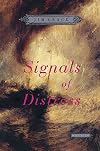
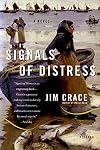
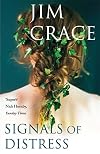
Signals of Distress
by Jim Crace
On This Page
Description
"With beguiling narrative ease and prose lyric . . .a quiet tale of strangers thrown together by caprice . . .[who] find their lives are unintentionally and irreversibly linked." -- New York Times Book Review Signals of Distress tells the story of an American emigration vessel grounded off the coast of England in the 1830's.Tags
Recommendations









































Member Reviews
I am running out of books by Jim Crace to read.
His language is such a delight! His characters, marvelous outsiders of the present and the past, often seem like dear friends.
His language is such a delight! His characters, marvelous outsiders of the present and the past, often seem like dear friends.
This is a jolly and funny novel with a bungling character at it's centre who I came to like. This is Aymer Smith, a gentleman soap maker who has come to Wherrytown because it was right to tell the kelp pickers face-to-face that their kelp was no longer required in the manufacture of soap due to new chemicals. This in itself makes him likeable, although his dealings with people are clumsy.
He arrives in Wherrytown at the same time as a group of sailors from America on a ship collecting emigrants for Canada.
These people as well as the newly weds and the local people of Wherrytown are all thrown together and the story unfolds. It is a clever and amusing novel, although not my favourite Jim Crace.
He arrives in Wherrytown at the same time as a group of sailors from America on a ship collecting emigrants for Canada.
These people as well as the newly weds and the local people of Wherrytown are all thrown together and the story unfolds. It is a clever and amusing novel, although not my favourite Jim Crace.
This novel reminded me of William Golding's 'Rites of Passage', in that it is about the contrast of opposites; men and manners. Rough and ready sailors and peasants, and the few educated and better off folk, all get thrust together when a storm wrecks one ship and prevents another from sailing. The main character Aymer Smith is a middle-aged innocent; he'll bore the pants off you given a chance, but has his redeeming qualities as he looks for the best in people, and is generous with his shillings and soap (being the agent for a soap company). There to review the kelp harvesting (which provides soda for making soap) he initially falls for young Miggy Bowes, the daughter of a kelper, who promptly falls for one of the sailors instead. He show more adopts the ship Captain's dog, frees the black slave Otto, and generally manages to get in everyone's way without realising. Eventually the ships can depart and they all go their separate ways. Like Golding, Crace has captured the manners and class of his characters perfectly, making this a very enjoyable read. show less
This was a poignant and thoughtful book. Aymer Smith reminded me a little of Eugene Henderson in Saul Bellow's Henderson the Rain King. Both characters try so hard to do the right thing, and often their efforts make things worse. I liked the interactions between Aymer Smith and the townspeople of Wherrytown and the American sailors.
Historical novels by contemporary writers are usually about famous historical figures or events. Not so Signals of distress by Jim Crace.
Crace's novel uses a narrative technique often used in drama: a random group of characters is brought together by circumstance, and is forced to spend some time together, before each can go their own way. In drama this is a very forceful technique, which can bring about very interesting confrontations, while the audience is forced in a similar way to keep on listening. This same technique could work well in a novel, but in this novel it's deployment is only moderately successful.
In Signals of distress a group of American sailors, carrying one African-American slave, is stranded in a small port city in show more Britain, awaiting the completion of repairs on their vessel which was damaged in a gale. They spend a few nights at an inn, together with a traveller, who intends to sail to the US.
Unfortunately, all these characters are rather boring, and none of them are described in any amount of great detail. There is no apparent forceful dilemma, except for the difference in manners between sailors and a middle-class Englishman. The situation of the slave plays a very minor role. Without any further interesting events or developments, the novel remains a rather bland story. A bit as if the author tries his pen, but does not move beyond some simple dabbings.
For its shortcomings in the plot, the novel's descriptions of the English countryside, and the historical couleur locale are impressive. The book is a pleasant read, with considerable, but moderately achieved potential. show less
Crace's novel uses a narrative technique often used in drama: a random group of characters is brought together by circumstance, and is forced to spend some time together, before each can go their own way. In drama this is a very forceful technique, which can bring about very interesting confrontations, while the audience is forced in a similar way to keep on listening. This same technique could work well in a novel, but in this novel it's deployment is only moderately successful.
In Signals of distress a group of American sailors, carrying one African-American slave, is stranded in a small port city in show more Britain, awaiting the completion of repairs on their vessel which was damaged in a gale. They spend a few nights at an inn, together with a traveller, who intends to sail to the US.
Unfortunately, all these characters are rather boring, and none of them are described in any amount of great detail. There is no apparent forceful dilemma, except for the difference in manners between sailors and a middle-class Englishman. The situation of the slave plays a very minor role. Without any further interesting events or developments, the novel remains a rather bland story. A bit as if the author tries his pen, but does not move beyond some simple dabbings.
For its shortcomings in the plot, the novel's descriptions of the English countryside, and the historical couleur locale are impressive. The book is a pleasant read, with considerable, but moderately achieved potential. show less
Ratings
Members
- Recently Added By
Author Information

22+ Works 7,531 Members
British author Jim Crace has won the 2015 International IMPAC Dublin Literary Award for his novel Harvest (Picador). The ¿100,000 (A$205,140) award is presented annually for a novel written in English or translated into English, and is chosen by judges from a selection of titles nominated by libraries across the world. (Bowker Author Biography)
Awards and Honors
Awards
Common Knowledge
- Original title
- Signals of Distress
- Original publication date
- 1994
- People/Characters
- Aymer Smith
- Epigraph
- "This stranger's footprinter are engrav'd in front
But soon forgot
The sun bedazzles. They are lost.
And he has not
Impress'd his passage on this spot
That rime's emboss'd
Or left enduring signs
That he h... (show all)as cross'd
Our Parish lines."
Abraham Howper, "Hoc Genus Omne," xvii - First words
- Both men were en voyage and sleeping in their berths.
- Last words
- (Click to show. Warning: May contain spoilers.)Helped only by the muscle of the wind, and by the charity of dreams, the Cradle Rock ascended and declined.
Classifications
Statistics
- Members
- 235
- Popularity
- 137,985
- Reviews
- 5
- Rating
- (3.70)
- Languages
- Dutch, English, French
- Media
- Paper, Ebook
- ISBNs
- 14
- ASINs
- 4