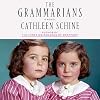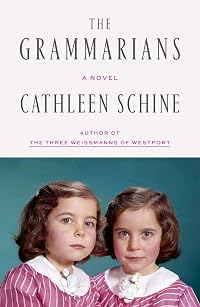
The Grammarians
by Cathleen Schine
On This Page
Description
An enchanting, comic love letter to sibling rivalry and the English language.From the author compared to Nora Ephron and Nancy Mitford, not to mention Jane Austen, comes a new novel celebrating the beauty, mischief, and occasional treachery of language.
The Grammarians are Laurel and Daphne Wolfe, identical, inseparable redheaded twins who share an obsession with words. They speak a secret "twin" tongue of their own as toddlers; as adults making their way in 1980s Manhattan, their verbal show more infatuation continues, but this love, which has always bound them together, begins instead to push them apart. Daphne, copy editor and grammar columnist, devotes herself to preserving the dignity and elegance of Standard English. Laurel, who gives up teaching kindergarten to write poetry, is drawn, instead, to the polymorphous, chameleon nature of the written and spoken word. Their fraying twinship finally shreds completely when the sisters go to war, absurdly but passionately, over custody of their most prized family heirloom: Merriam Webster's New International Dictionary, Second Edition.
Cathleen Schine has written a playful and joyful celebration of the interplay of language and life. A dazzling comedy of sisterly and linguistic manners, a revelation of the delights and stresses of intimacy, The Grammarians is the work of one of our great comic novelists at her very best.
. show less
Tags
Recommendations





Member Reviews
I love words, and I love stories about female friendship, especially this kind, where each friend looks to the other as a mirror, to help her figure out who she is, and as a window, to help her figure out what the world is. These two are twins, and they're both the kind of child who makes friends with a dictionary and tries to take it to bed in order to have someone to talk to.
In school, both Laurel and Daphne often had to clarify that they were themselves and not their sister. "No," they would say, "I'm the other one."
"I'm the other one," Daphne said in third grade when a little boy who had a crush on Laurel stuck paste in her hair. "I'm the other one."
"I don't care," the boy said, but he ran away to the far end of the playground.
show more "I'm the other one," Laurel said to the cafeteria lady who knew Daphne's love of Sloppy Joes and was ladling an extra gelatinous spoonful onto her hamburger bun.
The cafeteria lady said, "Oh! Well, you enjoy your meal, too, dear."
"How can we both be the other one?" Daphne asked Laurel.
They looked up "other" in the dictionary.
The entry was surprisingly long. "Other" was an adjective that meant one of two. It was usually preceded by a demonstrative or possessive word. Daphne liked the idea of a demonstrative word, imagining the word hugging and kissing "other," generally making a spectacle of itself, until their father explained that a demonstrative word meant, simply, a word like "this" or "that."
Then Schine opens the next chapter demonstrating two meanings of "every other":
Uncle Don and Aunt Paula and their little boy, Brian, came for dinner every other Sunday; and every other Sunday, Laural and Daphne and their parents went to Uncle Don and Aunt Paula and Brian's house for dinner.
I was thinking that Schine reminds me of Laurie Anderson, the way she plays with overloaded words; then one character used "O Superman" on his answering machine. When Laurel starts making poetry out of grammar samples taken from letters people wrote to the War Department, I was hoping for a reference to John Cale's "Cordoba". That didn't show up, but still, Cathleen Schine speaks my language. show less
In school, both Laurel and Daphne often had to clarify that they were themselves and not their sister. "No," they would say, "I'm the other one."
"I'm the other one," Daphne said in third grade when a little boy who had a crush on Laurel stuck paste in her hair. "I'm the other one."
"I don't care," the boy said, but he ran away to the far end of the playground.
show more "I'm the other one," Laurel said to the cafeteria lady who knew Daphne's love of Sloppy Joes and was ladling an extra gelatinous spoonful onto her hamburger bun.
The cafeteria lady said, "Oh! Well, you enjoy your meal, too, dear."
"How can we both be the other one?" Daphne asked Laurel.
They looked up "other" in the dictionary.
The entry was surprisingly long. "Other" was an adjective that meant one of two. It was usually preceded by a demonstrative or possessive word. Daphne liked the idea of a demonstrative word, imagining the word hugging and kissing "other," generally making a spectacle of itself, until their father explained that a demonstrative word meant, simply, a word like "this" or "that."
Then Schine opens the next chapter demonstrating two meanings of "every other":
Uncle Don and Aunt Paula and their little boy, Brian, came for dinner every other Sunday; and every other Sunday, Laural and Daphne and their parents went to Uncle Don and Aunt Paula and Brian's house for dinner.
I was thinking that Schine reminds me of Laurie Anderson, the way she plays with overloaded words; then one character used "O Superman" on his answering machine. When Laurel starts making poetry out of grammar samples taken from letters people wrote to the War Department, I was hoping for a reference to John Cale's "Cordoba". That didn't show up, but still, Cathleen Schine speaks my language. show less
I'm not sure where I found this book, probably in the Washington Post's book section, but I knew that a book about twin girls who grow up with their own language and an obsession with words would work for me.
Daphne and Laurel are identical twins whose interest in words is cemented when their father brings home an enormous, old, dictionary, and places it on a pedestal in their home. They are completely reliant on each other through young adulthood, when their love of words begins to drive them apart. Daphne ends up writing a weekly column about grammar and word usage, and Laurel becomes a kindergarten teacher. They both marry. When Laurel starts to question the elitism of Daphne's column, things begin to fall apart.
What people call show more 'standard' English is really just the dialect of the elite.
I loved this novel. It was, in some ways, an easy, light read, but it also ended up giving me quite a bit to think about in the end.
Original publication date: 2020
Author’s nationality: American
Original language: English
Length: 258 pages
Rating: 4 stars
Format/where I acquired the book: library hardback
Why I read this: a review grabbed my attention show less
Daphne and Laurel are identical twins whose interest in words is cemented when their father brings home an enormous, old, dictionary, and places it on a pedestal in their home. They are completely reliant on each other through young adulthood, when their love of words begins to drive them apart. Daphne ends up writing a weekly column about grammar and word usage, and Laurel becomes a kindergarten teacher. They both marry. When Laurel starts to question the elitism of Daphne's column, things begin to fall apart.
What people call show more 'standard' English is really just the dialect of the elite.
I loved this novel. It was, in some ways, an easy, light read, but it also ended up giving me quite a bit to think about in the end.
Original publication date: 2020
Author’s nationality: American
Original language: English
Length: 258 pages
Rating: 4 stars
Format/where I acquired the book: library hardback
Why I read this: a review grabbed my attention show less
What is this thing called Language which exists between us? Who are these Words that penetrate, separate, and create what we know of one another and ourselves?
In The Grammarians, the author explores these questions indirectly through the relationship of identical twin sisters with a secret language of their own and an obsession with Samuel Johnson’s Dictionary of the English Language. Each chapter begins with a word and definition.
It is a novel about words. It is a novel about family relationships. It explores the push and pull, the desire to be alike and the desire to be unique. It explores the civil wars of relationships couched within a love that is sometimes destructively expressed. It explores the civil wars in language, the show more fight between prescriptive and descriptive grammars. Language. Love.
Having raised identical twins, I appreciated her insights into the closeness and independence of these siblings as a way to look at relationship. She excited me enough with grammatical concepts that I’m studying grammar again. Whatever I learned in school has drifted into unconscious usage. show less
In The Grammarians, the author explores these questions indirectly through the relationship of identical twin sisters with a secret language of their own and an obsession with Samuel Johnson’s Dictionary of the English Language. Each chapter begins with a word and definition.
It is a novel about words. It is a novel about family relationships. It explores the push and pull, the desire to be alike and the desire to be unique. It explores the civil wars of relationships couched within a love that is sometimes destructively expressed. It explores the civil wars in language, the show more fight between prescriptive and descriptive grammars. Language. Love.
Having raised identical twins, I appreciated her insights into the closeness and independence of these siblings as a way to look at relationship. She excited me enough with grammatical concepts that I’m studying grammar again. Whatever I learned in school has drifted into unconscious usage. show less
Twin sisters, Laurel and Daphne, are inseparable and indistinguishable as children. Among the many, many things they share is a love for words and language, often to the bemused exasperation of their parents. As they grow up, they continue to be physically indistinguishable, even to the point of trading jobs for a day, but their mutual love of language takes them in very different directions and threatens their close bond.
If you are a word nerd, or a grammar peever (nb: those are not the same thing), there is a lot to love in Schine's exploration of sisterhood and learning to be your own person. She has a light touch that keeps the serious passages from weighing too heavily, but that also blunted the impact of the book overall for me. show more Still, I'd recommend it to all of my linguistically curious friends. show less
If you are a word nerd, or a grammar peever (nb: those are not the same thing), there is a lot to love in Schine's exploration of sisterhood and learning to be your own person. She has a light touch that keeps the serious passages from weighing too heavily, but that also blunted the impact of the book overall for me. show more Still, I'd recommend it to all of my linguistically curious friends. show less
Daphne and Laurel Wolfe are redheaded identical twins who grow up firmly entwined, even through early adulthood. They live together in New York: Daphne finds a job at a newspaper and becomes a copy editor (and later, the Miss Manners of grammar with a column of her own), while Laurel becomes a kindergarten teacher. They have a double wedding, and Laurel has a baby, then Daphne does.
Always fascinated with language (the family dog is named Webster, after the dictionary), a wedge and then an estrangement forms between the sisters as they adhere to different views: Daphne a prescriptivist, and Laurel a descriptivist. After their father's death, they fight over the family dictionary, but when their mother Sally is ill, she envisions how show more they will come back together: in her will, she stipulates that each twin will get custody of the dictionary for six months at a time.
Quotes
It's pleasant to make people uncomfortable sometimes....Making other people uncomfortable allows you to shake off your own discomfort. (32)
Was there anyone who understood anyone else as well as she and Daphne understood each other? (61)
"I thought you were going to say having a baby must be like having a twin."
"But a baby is a whole other person."
"I hate to keep harping on this, but so is your sister."
No, Daphne thought. My sister is me if I were different. (137) show less
Always fascinated with language (the family dog is named Webster, after the dictionary), a wedge and then an estrangement forms between the sisters as they adhere to different views: Daphne a prescriptivist, and Laurel a descriptivist. After their father's death, they fight over the family dictionary, but when their mother Sally is ill, she envisions how show more they will come back together: in her will, she stipulates that each twin will get custody of the dictionary for six months at a time.
Quotes
It's pleasant to make people uncomfortable sometimes....Making other people uncomfortable allows you to shake off your own discomfort. (32)
Was there anyone who understood anyone else as well as she and Daphne understood each other? (61)
"I thought you were going to say having a baby must be like having a twin."
"But a baby is a whole other person."
"I hate to keep harping on this, but so is your sister."
No, Daphne thought. My sister is me if I were different. (137) show less
Were there ever a book written for the pedant in me, this would be it. The Grammarians is the story of twins, Laurel and Daphne, and their love affair with language. It was the Second Edition Webster's Dictionary which kindled the flames of their lifelong romance with words and I, too, can remember being just as enthralled with my own huge (to me) dictionary with its delicate, opaque, tissue-thin pages and
I grew up with a set of twins and we were close up until we went to college. I was never aware of a personal “twin” language but I was supremely aware that they were each one-half of a whole. They went everywhere together until they didn’t and not surprisingly much of their separation was due to an object they both coveted and of course the opposite sex.
But back to The Grammarians, Laurel and Daphne, identical twins, oddities, objects of “those stares”, speaking in their special language, communicating in ways only they understand. How difficult and dispiriting to acknowledge that they are one-half of a whole and longing to be more. They make those around them “uneasy with their secret words and language games”. show more Interesting, I was uneasy reading this book. There were so many words and thoughts based on words and confusion and maybe more than a bit of nonsense regarding all these words. But “this is what words do...they call out from the page and force you to listen.” I listened but there were so many words and so much back and forth in code and ugh, the split, the separation, the twin-ship torn asunder.
I found this to be a refreshing bit of writing which was sometimes amusing, often puzzling as the next verbal tangent went off into left field. Unfortunately the ending was unimpressive and lost the depth that Schine had managed through much of the book.
Thank you NetGalley and Farrar, Straus and Giroux for a copy. show less
But back to The Grammarians, Laurel and Daphne, identical twins, oddities, objects of “those stares”, speaking in their special language, communicating in ways only they understand. How difficult and dispiriting to acknowledge that they are one-half of a whole and longing to be more. They make those around them “uneasy with their secret words and language games”. show more Interesting, I was uneasy reading this book. There were so many words and thoughts based on words and confusion and maybe more than a bit of nonsense regarding all these words. But “this is what words do...they call out from the page and force you to listen.” I listened but there were so many words and so much back and forth in code and ugh, the split, the separation, the twin-ship torn asunder.
I found this to be a refreshing bit of writing which was sometimes amusing, often puzzling as the next verbal tangent went off into left field. Unfortunately the ending was unimpressive and lost the depth that Schine had managed through much of the book.
Thank you NetGalley and Farrar, Straus and Giroux for a copy. show less
Members
- Recently Added By
Lists

Top Five Books of 2019
387 works; 111 members

Kirkus Starred Fiction Reviews of Books Published in 2019
411 works; 12 members

Books Read in 2019
4,052 works; 108 members

Recommend the 20 best books you've read in the last five years
2,168 works; 601 members
Author Information

18+ Works 4,796 Members
Author Cathleen Schine was born in Bridgeport, Connecticut in 1953. She received a BA from Barnard College in 1976. She is both a novelist and a freelance writer. Two of her novels, The Love Letters and Rameau's Niece, were made into movies. She has also written for The New Yorker, The New York Review of Books and Family Circle. She currently show more lives in New York City. (Bowker Author Biography) show less
Awards and Honors
Distinctions
Common Knowledge
- Canonical title
- The Grammarians
- Original publication date
- 2019
- People/Characters
- Laurel Wolfe; Daphne Wolfe
- Epigraph
- TWIN, n. A couple; a pair; two
Twin, v.t. & i. To part, sever, sunder; deprive (of)
—Webster's New International Dictionary of the English Language, Second Edition - Dedication
- To Janet
- First words
- That writer called," Michael said when she got home.
- Last words
- (Click to show. Warning: May contain spoilers.)Relax and see what happens next.
- Blurbers
- Dreyer, Benjamin; Nunez, Sigrid; Strout, Elizabeth
- Canonical DDC/MDS
- 813.54
- Canonical LCC
- PS3569.C497
Classifications
Statistics
- Members
- 546
- Popularity
- 54,460
- Reviews
- 35
- Rating
- (3.63)
- Languages
- English, Italian
- Media
- Paper, Audiobook, Ebook
- ISBNs
- 11
- ASINs
- 2