Voyages in the Underworld of Orpheus Black
by Marcus Sedgwick, Julian Sedgwick
On This Page
Description
Harry Black is lost between the world of war and the land of myth in this illustrated novel that transports the tale of Orpheus to World War II–era London.Brothers Marcus and Julian Sedgwick team up to pen this haunting tale of another pair of brothers, caught between life and death in World War II. Harry Black, a conscientious objector, artist, and firefighter battling the blazes of German bombing in London in 1944, wakes in the hospital to news that his soldier brother, Ellis, has been show more killed. In the delirium of his wounded state, Harry's mind begins to blur the distinctions between the reality of war-torn London, the fiction of his unpublished sci-fi novel, and the myth of Orpheus and Eurydice. Driven by visions of Ellis still alive and a sense of poetic inevitability, Harry sets off on a search for his brother that will lead him deep into the city's Underworld. With otherworldly paintings by Alexis Deacon depicting Harry's surreal descent further into the depths of hell, this eerily beautiful blend of prose, verse, and illustration delves into love, loyalty, and the unbreakable bonds of brotherhood as it builds to a fierce indictment of mechanized warfare.
. show less
Tags
Recommendations



Member Recommendations

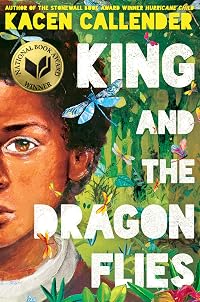
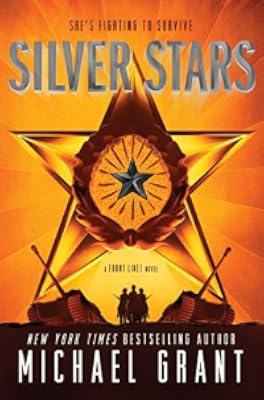
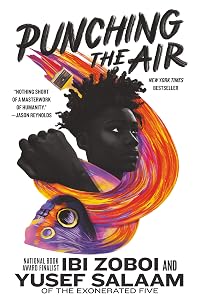
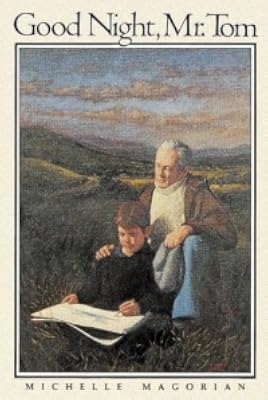
muumi Rhyme of the Flying Bomb is a mystical epic poem of a bombing in London during WWII, thus in the same time and place and partly the same genre as Voyages. It's even illustrated by the author. An amazing book that seems likely to appeal to anyone who even slightly liked Voyages.
Member Reviews
In VOYAGES IN THE UNDERWORLD OF ORPHEUS BLACK, a conscientious objector named Harry loses his brother, Ellis, during a bombing raid in London in December 1944. Despite being injured, Harry returns to the site where Ellis was apparently killed, determined to rescue Ellis — or at least retrieve his body. Along the way, Harry meets several helpers who guide and help him on his perilous quest.
This is a complex, layered book that will reward contemplation and re-reading. The main text — Harry's narrative — discusses Harry's immediate task (rescuing Ellis) and carries running references to Harry's longer-term task of writing a book, "Warriors of the Machine," which forms a critique of both the mechanization of World War Two and the show more industrial future of war. A secondary text — Orpheus's tale — comments on Harry and the other characters, playing with and re-examining the myth of Orpheus and Eurydice. These two texts entwine at times, although Harry does not understand why there are gaps in his consciousness or why his actions seem to be directed by an external agent.
The artistic project of this book could be easily missed by readers expecting a graphic novel. While the illustrations are integral to the telling of the story, representing Harry's sketches and plans for his book, they also form their own allegorical third text. The book is best enjoyed slowly, in sips rather than gulps, and teen readers may need someone to discuss its complexity with others.
VOYAGES IN THE UNDERWORLD OF ORPHEUS BLACK is a lush, powerful commentary that uses the example of World War Two to create a discussion about violence, mechanized warfare, and what humans owe to one another. Definitely worth your time and attention. show less
This is a complex, layered book that will reward contemplation and re-reading. The main text — Harry's narrative — discusses Harry's immediate task (rescuing Ellis) and carries running references to Harry's longer-term task of writing a book, "Warriors of the Machine," which forms a critique of both the mechanization of World War Two and the show more industrial future of war. A secondary text — Orpheus's tale — comments on Harry and the other characters, playing with and re-examining the myth of Orpheus and Eurydice. These two texts entwine at times, although Harry does not understand why there are gaps in his consciousness or why his actions seem to be directed by an external agent.
The artistic project of this book could be easily missed by readers expecting a graphic novel. While the illustrations are integral to the telling of the story, representing Harry's sketches and plans for his book, they also form their own allegorical third text. The book is best enjoyed slowly, in sips rather than gulps, and teen readers may need someone to discuss its complexity with others.
VOYAGES IN THE UNDERWORLD OF ORPHEUS BLACK is a lush, powerful commentary that uses the example of World War Two to create a discussion about violence, mechanized warfare, and what humans owe to one another. Definitely worth your time and attention. show less
 This review was written for LibraryThing Early Reviewers.
Harry Black is a conscientious objector to the war; he is also an artist. His brother Ellis is a soldier; he is also a writer. They don't see eye-to-eye, however, both risk his their lives for his country. Harry is a firefighter—tasked with responding to the fires that break out during the devastating air raids on the city of London. In a rare wartime opportunity, Harry and his brother meet up for a beer at a London pub. Soon after they separate, the block where the pub stood is bombed to obliteration. Harry finds himself in the hospital in a hazy, surreal state of shock. Ellis' whereabouts are unknown. There is also a curious young German girl in the hospital—Agatha.
It is in this otherworldly scenario that Harry draws and thinks, show more and digs to the tune of an unknown musician who plays with great beauty amidst the horrors. The reader has the benefit of understanding the musician's purpose. The story is told in prose, in Harry's sketches, and in the haunting speech of the musician, whose words turn often to song,
"I've a story to tell of Harry Black,
who went to the Underworld and how he came back;
of the love for his brother, who'd pushed him away.
Of London by starlight, under attack,
of bombs falling, of people calling
through darkened streets,
of sirens and wayfarers, of lost souls,
of vicious women and mindless dogs.
These are the things of which I'll sing."
There are many books about WWII, the Kindertransport, the bombing of London. None are like this one. Read it.
More at: https://shelf-employed.blogspot.com/2019/06/voyages-in-underworld-of-orpheus-bla...
(My copy of Voyages in the Underworld of Orpheus Black was provided by the publisher.) show less
It is in this otherworldly scenario that Harry draws and thinks, show more and digs to the tune of an unknown musician who plays with great beauty amidst the horrors. The reader has the benefit of understanding the musician's purpose. The story is told in prose, in Harry's sketches, and in the haunting speech of the musician, whose words turn often to song,
"I've a story to tell of Harry Black,
who went to the Underworld and how he came back;
of the love for his brother, who'd pushed him away.
Of London by starlight, under attack,
of bombs falling, of people calling
through darkened streets,
of sirens and wayfarers, of lost souls,
of vicious women and mindless dogs.
These are the things of which I'll sing."
There are many books about WWII, the Kindertransport, the bombing of London. None are like this one. Read it.
More at: https://shelf-employed.blogspot.com/2019/06/voyages-in-underworld-of-orpheus-bla...
(My copy of Voyages in the Underworld of Orpheus Black was provided by the publisher.) show less
The first thing that came to my mind as I read Voyages was that it is sort of like a modern A Quiet on the Western Front.
A WWII retelling of Orpheus and Eurydice that begins on Boxing Day, 1944, this is the story of two brothers. Ellis, fighting on the front lines and Harry, who is, much to the chagrin of his father and brother, a conscientious objector. Further disturbing Harry is his father's work developing weapons/munitions.
Harry is not necessarily avoiding the war--he's on the home front and a fire fighter, and at the start of the book he's helping at a warehouse fire where, mistaking a pile of mannequins for real people, has an ever greater realization about the horrors of war. He just wishes that his family could understand show more things they way he does.
He and Ellis agree to meet at the White Horse pub and their talk goes well, but soon after Harry leaves, a V2 hits the building, killing all in it. Harry's bus is hit as well, but it's not fatal, and when he later wakes at the hospital, he's in a state of delirium. He then embarks on a journey to rescue his brother from the underworld.
I wasn't sure what to expect from this book, though I will happily read anything about WWII. But I didn't think I would connect to a CO in this particular war, given what we were fighting for and against. But I have to admit that I enjoyed it a lot. Harry's point that maybe we should stop focusing on building weaponry that increases in its accuracy and deadliness, that we should stop meeting hate with more hate, is significant.
I also loved the format of this novel--it's Harry's narrative, but it's interspersed by poetry, gorgeous illustrations, and "primary sources" (Harry's journals, CO card, letters, etc.). It's a little confusing to know what's reality and what is Harry's delirium here, but I think that's the point. And after all, being in a constant state of war such as this would make anyone crazy.
Thank you to Candlewick Press for giving me this review copy--it's another great entry from them and well worth a look. show less
A WWII retelling of Orpheus and Eurydice that begins on Boxing Day, 1944, this is the story of two brothers. Ellis, fighting on the front lines and Harry, who is, much to the chagrin of his father and brother, a conscientious objector. Further disturbing Harry is his father's work developing weapons/munitions.
Harry is not necessarily avoiding the war--he's on the home front and a fire fighter, and at the start of the book he's helping at a warehouse fire where, mistaking a pile of mannequins for real people, has an ever greater realization about the horrors of war. He just wishes that his family could understand show more things they way he does.
He and Ellis agree to meet at the White Horse pub and their talk goes well, but soon after Harry leaves, a V2 hits the building, killing all in it. Harry's bus is hit as well, but it's not fatal, and when he later wakes at the hospital, he's in a state of delirium. He then embarks on a journey to rescue his brother from the underworld.
I wasn't sure what to expect from this book, though I will happily read anything about WWII. But I didn't think I would connect to a CO in this particular war, given what we were fighting for and against. But I have to admit that I enjoyed it a lot. Harry's point that maybe we should stop focusing on building weaponry that increases in its accuracy and deadliness, that we should stop meeting hate with more hate, is significant.
I also loved the format of this novel--it's Harry's narrative, but it's interspersed by poetry, gorgeous illustrations, and "primary sources" (Harry's journals, CO card, letters, etc.). It's a little confusing to know what's reality and what is Harry's delirium here, but I think that's the point. And after all, being in a constant state of war such as this would make anyone crazy.
Thank you to Candlewick Press for giving me this review copy--it's another great entry from them and well worth a look. show less
This review was written for LibraryThing Early Reviewers.There were many things I liked very much about this book. The theme of eyes, inviting us to consider our perceptions and the perceptions of the narrator. The illustrations, which really added depth to the story -- most of the time. (Adding random hanged people to lampposts in that one drawing may have been a bit over the top, for instance.) Harry's introspection about war, conscientious objection to war, and his conflicts with himself, his family, and a very war-oriented English society, all were thought-provoking and sometimes beautiful. The authors' father's experience may have helped shape the authentic character of Harry: he was a conscientious objector during that war. I found the "Orpheus" interludes less attractive. I can't show more critique whether the poetry is good or bad, but it had no consistent rhythm and it rhymed... sometimes, for a few uneven lines (rather like a clerihew) and then stopped again. I found it awkward. Then the infelicitous line (Orpheus praising Harry's artwork) "Harry, you're a wizard!" had me setting the book down for an hour in disbelief. Seriously, Orpheus? You've got the wrong story here! "Harry, you're a wizard!" could have worked as humour in a book set in the 21st century, but in this context it was so jarring that I couldn't stop snickering about it, which spoiled the mood entirely. I was reading an ARC, so perhaps an editor caught it before publication. Page 130 in my copy.
With a different voice for Orpheus this could have been a great book and a classic. It's still a good read. show less
With a different voice for Orpheus this could have been a great book and a classic. It's still a good read. show less
This review was written for LibraryThing Early Reviewers.Voyages in the Underworld of Orpheus Black by Marcus Sedgwick and Julian Sedgwick is quite a journey. This book is not only beautiful with the drawings and poetry but also engaging and touching as the prose takes the reader on a journey.
Harry is a conscientious objector, wanted to be a war artist and is a firefighter. Harry’s brother, Ellis is on the front lines and a wedge is driven between the brothers because of their beliefs.
Always hoping for reconciliation with his brother, Harry meets with Ellis at a local pub. The pub is bombed later in the evening, injuring Harry. When Harry awakes, it’s to the news that his brother has been killed even though his body hasn’t been found. Harry begins his journey to try and find his show more brother, refusing to give up on him.
Harry’s commitment to finding his brother made my heart ache. He’s steadfast in spite of the fact that he’s injured, weak and losing touch with reality.
Perhaps because he’s injured, Harry begins to merge the plot of a story he’s writing, with his desperate hunt for his brother and the myth of Orpheus and Eurydice. I was only vaguely familiar with the story of Orpheus and Eurydice but I found that didn’t matter as I made my way through this book.
The art in this book captures the stark reality of the way, with a strange intimacy that I didn’t expect. The drawings are detailed, sometimes tragic and very poignant. show less
Harry is a conscientious objector, wanted to be a war artist and is a firefighter. Harry’s brother, Ellis is on the front lines and a wedge is driven between the brothers because of their beliefs.
Always hoping for reconciliation with his brother, Harry meets with Ellis at a local pub. The pub is bombed later in the evening, injuring Harry. When Harry awakes, it’s to the news that his brother has been killed even though his body hasn’t been found. Harry begins his journey to try and find his show more brother, refusing to give up on him.
Harry’s commitment to finding his brother made my heart ache. He’s steadfast in spite of the fact that he’s injured, weak and losing touch with reality.
Perhaps because he’s injured, Harry begins to merge the plot of a story he’s writing, with his desperate hunt for his brother and the myth of Orpheus and Eurydice. I was only vaguely familiar with the story of Orpheus and Eurydice but I found that didn’t matter as I made my way through this book.
The art in this book captures the stark reality of the way, with a strange intimacy that I didn’t expect. The drawings are detailed, sometimes tragic and very poignant. show less
In the end, I really enjoyed this book, but only because I persevered with it. It took me a while to get into it, probably because at first I fund it to be quite confusing. I wasn't sure what it was at first, whether it was a novel, a book of poetry, or a graphic novel. Once I worked out that it was a combination of all of these, I started to get into it.
The story is set in WWII and follows the story of Harry, a conscientious objector, working as a fireman in London during the blitz. His older brother, Ellis, is in the army, and it seems that Harry's refuse to enlist has put a wedge between the formerly inseparable brothers. The story is written in the for of a diary by Harry, with some poetry filling in the gaps. The poetry is narrated show more by Orpheus and alludes to Greek myths intertwined with Harry's story. There are also some wonderful illustrations interspersed throughout the book.
It's a well-written, different kind of book and worth reading, once you get beyond the initial confusion of what is going on. show less
The story is set in WWII and follows the story of Harry, a conscientious objector, working as a fireman in London during the blitz. His older brother, Ellis, is in the army, and it seems that Harry's refuse to enlist has put a wedge between the formerly inseparable brothers. The story is written in the for of a diary by Harry, with some poetry filling in the gaps. The poetry is narrated show more by Orpheus and alludes to Greek myths intertwined with Harry's story. There are also some wonderful illustrations interspersed throughout the book.
It's a well-written, different kind of book and worth reading, once you get beyond the initial confusion of what is going on. show less
This review was written for LibraryThing Early Reviewers.Voyages in the Underworld of Orpheus Black by Marcus Sedgwick and Julian Sedgwick is quite a journey. This book is not only beautiful with the drawings and poetry but also engaging and touching as the prose takes the reader on a journey.
Harry is a conscientious objector, wanted to be a war artist and is a firefighter. Harry’s brother, Ellis is on the front lines and a wedge is driven between the brothers because of their beliefs.
Always hoping for reconciliation with his brother, Harry meets with Ellis at a local pub. The pub is bombed later in the evening, injuring Harry. When Harry awakes, it’s to the news that his brother has been killed even though his body hasn’t been found. Harry begins his journey to try and find his show more brother, refusing to give up on him.
Harry’s commitment to finding his brother made my heart ache. He’s steadfast in spite of the fact that he’s injured, weak and losing touch with reality.
Perhaps because he’s injured, Harry begins to merge the plot of a story he’s writing, with his desperate hunt for his brother and the myth of Orpheus and Eurydice. I was only vaguely familiar with the story of Orpheus and Eurydice but I found that didn’t matter as I made my way through this book.
The art in this book captures the stark reality of the way, with a strange intimacy that I didn’t expect. The drawings are detailed, sometimes tragic and very poignant. show less
Harry is a conscientious objector, wanted to be a war artist and is a firefighter. Harry’s brother, Ellis is on the front lines and a wedge is driven between the brothers because of their beliefs.
Always hoping for reconciliation with his brother, Harry meets with Ellis at a local pub. The pub is bombed later in the evening, injuring Harry. When Harry awakes, it’s to the news that his brother has been killed even though his body hasn’t been found. Harry begins his journey to try and find his show more brother, refusing to give up on him.
Harry’s commitment to finding his brother made my heart ache. He’s steadfast in spite of the fact that he’s injured, weak and losing touch with reality.
Perhaps because he’s injured, Harry begins to merge the plot of a story he’s writing, with his desperate hunt for his brother and the myth of Orpheus and Eurydice. I was only vaguely familiar with the story of Orpheus and Eurydice but I found that didn’t matter as I made my way through this book.
The art in this book captures the stark reality of the way, with a strange intimacy that I didn’t expect. The drawings are detailed, sometimes tragic and very poignant. show less
Members
- Recently Added By
Lists

Twists: 2nd time around...Retellings
18 works; 1 member
Author Information

58+ Works 7,581 Members
Marcus Sedgwick was born in East Kent, England. He is primarily a young adult author. His books include She Is Not Invisible, White Crow, Revolver, and The Ghosts of Heaven. He won the 2014 Michael L. Printz Award for Midwinterblood. His first adult novel, A Love Like Blood, was published in 2014. (Bowker Author Biography)
11 Works 309 Members
All Editions
Awards and Honors
Classifications
Statistics
- Members
- 89
- Popularity
- 360,856
- Reviews
- 16
- Rating
- (3.50)
- Languages
- English
- Media
- Paper, Ebook
- ISBNs
- 5
- ASINs
- 1