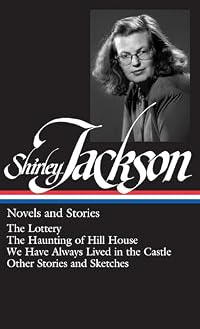
Shirley Jackson: Novels and Stories
by Shirley Jackson
On This Page
Description
Features a collection of writings across different genres by the mid-twentieth-century author. "The world of Shirley Jackson is eerie and unforgettable," writes A. M. Homes. "It is a place where things are not what they seem; even on a morning that is sunny and clear there is always the threat of darkness looming, of things taking a turn for the worse." Jackson's characters-mostly unloved daughters in search of a home, a career, a family of their own-chase what appears to be a harmless dream show more until, without warning, it turns on its heel to seize them by the throat. We are moved by these characters' dreams, for they are the dreams of love and acceptance shared by us all. We are shocked when their dreams become nightmares, and terrified by Jackson's suggestion that there are unseen powers-"demons" both subconscious and supernatural-malevolently conspiring against human happiness. In this volume Joyce Carol Oates, our leading practitioner of the contemporary Gothic, presents the essential works of Shirley Jackson, the novels and stories that, from the early 1940s through the mid-1960s, wittily remade the genre of psychological horror for an alienated, postwar America. She opens with The Lottery (1949), Jackson's only collection of short fiction, whose disquieting title story-one of the most widely anthologized tales of the 20th century-has entered American folklore. Also among these early works are "The Daemon Lover," a story Oates praises as "deeper, more mysterious, and more disturbing than 'The Lottery,' " and "Charles," the hilarious sketch that launched Jackson's secondary career as a domestic humorist. Here too are Jackson's masterly short novels: The Haunting of Hill House (1959), the tale of an achingly empathetic young woman chosen by a haunted house to be its new tenant, and We Have Always Lived in the Castle (1962), the unrepentant confessions of Miss Merricat Blackwood, a cunning adolescent who has gone to quite unusual lengths to preserve her ideal of family happiness. Rounding out the volume are 21 other stories and sketches that showcase Jackson in all her many modes, and the essay "Biography of a Story," Jackson's acidly funny account of the public reception of "The Lottery," which provoked more mail from readers of The New Yorker than any contribution before or since. -- Publisher description show lessTags
Recommendations
Member Reviews
American Master of Subtle Suspense
This Library of America volume contains Shirley Jackson’s two most famous novels, The Haunting of Hill House (1959) and We Have Always Lived in the Castle (1962), as well her only published collection of short fiction, The Lottery; Or the Adventures of James Harris. The volume also includes 21 uncollected stories and sketches, of which six were unpublished, and “Biography of a Story,” concerning the public reaction to her most famous short story, “The Lottery.” Fans of Jackson, of course, will find this a valuable addition to their personal libraries; those new to her or familiar only with her best known work will especially enjoy discovering the full breath of her short fiction, many show more disturbing in very subtle ways.
Jackson is a master of subtle suspense. An ever tightening spring seems always to be lurking in the background, creating tension in a reader until Jackson springs it. Examples include Eleanor Vance’s growing obsession with Hill House, how the house brings out and intensifies her insecurities, until, in the end, it and they fully possess her in an explosive conclusion. We know that Mary Katherine Blackwood is quite a strange young woman from the opening paragraph of We Have Always Lived in the Castle, but we become aware of the depth of that murderous strangeness slowly over the course of her narrative. “The Lottery” begins almost picturesquely, small town America preparing for a celebration centered around a lottery, but with each small event presented, such as Billy Martin filling his pockets with stones at the opening, we feel something ominous in the air. Not all is horror. There are pieces—“After You, My Dear Alphonse” and “Afternoon in Linen,” to cite two—which comment on societal prejudices and expectations of the times (which, incidentally, many will see as still with us). All in all, you’ll come away agreeing the Jackson was a master of short fiction.
This volume contains the hallmarks of LOA collections, among them a timeline bio of Jackson, footnotes clarifying references in the texts, and an explanation of where the stories first appeared. What would have truly enhanced this volume would have been an essay by Joyce Carol Oates, herself the master of gothic horror and social fiction, as well as reviews and commentaries by Jackson contemporaries similar to those appearing in other LOA collections. Nonetheless, readers will not regret adding this collection to their shelves. show less
This Library of America volume contains Shirley Jackson’s two most famous novels, The Haunting of Hill House (1959) and We Have Always Lived in the Castle (1962), as well her only published collection of short fiction, The Lottery; Or the Adventures of James Harris. The volume also includes 21 uncollected stories and sketches, of which six were unpublished, and “Biography of a Story,” concerning the public reaction to her most famous short story, “The Lottery.” Fans of Jackson, of course, will find this a valuable addition to their personal libraries; those new to her or familiar only with her best known work will especially enjoy discovering the full breath of her short fiction, many show more disturbing in very subtle ways.
Jackson is a master of subtle suspense. An ever tightening spring seems always to be lurking in the background, creating tension in a reader until Jackson springs it. Examples include Eleanor Vance’s growing obsession with Hill House, how the house brings out and intensifies her insecurities, until, in the end, it and they fully possess her in an explosive conclusion. We know that Mary Katherine Blackwood is quite a strange young woman from the opening paragraph of We Have Always Lived in the Castle, but we become aware of the depth of that murderous strangeness slowly over the course of her narrative. “The Lottery” begins almost picturesquely, small town America preparing for a celebration centered around a lottery, but with each small event presented, such as Billy Martin filling his pockets with stones at the opening, we feel something ominous in the air. Not all is horror. There are pieces—“After You, My Dear Alphonse” and “Afternoon in Linen,” to cite two—which comment on societal prejudices and expectations of the times (which, incidentally, many will see as still with us). All in all, you’ll come away agreeing the Jackson was a master of short fiction.
This volume contains the hallmarks of LOA collections, among them a timeline bio of Jackson, footnotes clarifying references in the texts, and an explanation of where the stories first appeared. What would have truly enhanced this volume would have been an essay by Joyce Carol Oates, herself the master of gothic horror and social fiction, as well as reviews and commentaries by Jackson contemporaries similar to those appearing in other LOA collections. Nonetheless, readers will not regret adding this collection to their shelves. show less
I enjoyed taking my time with this great collection of Shirley Jackson's works; after hearing a radio piece about Jackson and her stories last year I finally got the 2010 Library of America volume of her novels and short stories, edited by Joyce Carol Oates. I found myself not wanting to read these straight through, so I read just a few stories or a section of a novel each afternoon and night. Creepy, wonderful stuff.
I like how Jackson's able to weave folklore, nightmarish fantasies, reaction to racial and religious bigotry (as well as just anti-"outsider"-ism), and pure shock value into her writing: combining those with well-crafted plots, memorable characters, and flashes of dark humor now and then, you get a collection of truly show more disturbing but absolutely riveting tales.
The volume opens with Jackson's collection "The Lottery: or, the Adventures of James Harris." The title story is Jackson's best known, and it is just as shocking as advertised. Many others in the collection are also extremely powerful: "The Daemon Lover," "Charles," "Seven Types of Ambiguity," "Of Course" and "The Tooth" were probably the ones I liked best from the bunch (plus "The Lottery").
The LOA volume also includes two of Jackson's novels, The Haunting of Hill House and We Have Always Lived in the Castle. I liked both in their own way, the former for its brilliantly-crafted sense of suspense and atmosphere, and the latter for its gothic horror and frightening twists and rambles.
But there's more. The volume is rounded out with some uncollected and unpublished stories. Of these, my favorites were "The Summer People," the incredibly funny "The Night We All Had Grippe," and "The Possibility of Evil" (which just be the one I enjoyed most of all: it's simply perfect). And then there's Jackson's "Biography of a Story," a fascinating and very amusing prepared talk she wrote about the publication and reception of "The Lottery."
If you haven't yet gotten to know Shirley Jackson's writings, and you enjoy a good creepy story, take the time and savor them. They're worth it. show less
I like how Jackson's able to weave folklore, nightmarish fantasies, reaction to racial and religious bigotry (as well as just anti-"outsider"-ism), and pure shock value into her writing: combining those with well-crafted plots, memorable characters, and flashes of dark humor now and then, you get a collection of truly show more disturbing but absolutely riveting tales.
The volume opens with Jackson's collection "The Lottery: or, the Adventures of James Harris." The title story is Jackson's best known, and it is just as shocking as advertised. Many others in the collection are also extremely powerful: "The Daemon Lover," "Charles," "Seven Types of Ambiguity," "Of Course" and "The Tooth" were probably the ones I liked best from the bunch (plus "The Lottery").
The LOA volume also includes two of Jackson's novels, The Haunting of Hill House and We Have Always Lived in the Castle. I liked both in their own way, the former for its brilliantly-crafted sense of suspense and atmosphere, and the latter for its gothic horror and frightening twists and rambles.
But there's more. The volume is rounded out with some uncollected and unpublished stories. Of these, my favorites were "The Summer People," the incredibly funny "The Night We All Had Grippe," and "The Possibility of Evil" (which just be the one I enjoyed most of all: it's simply perfect). And then there's Jackson's "Biography of a Story," a fascinating and very amusing prepared talk she wrote about the publication and reception of "The Lottery."
If you haven't yet gotten to know Shirley Jackson's writings, and you enjoy a good creepy story, take the time and savor them. They're worth it. show less
THE LOTTERY: OR, THE ADVENTURES OF JAMES HARRIS | read 2018-12
A seldom-remarked fact about this collection is Jackson's notion of a character (James Harris) linking the separate tales. This link is subtly presented and Jackson doesn't mention it explicitly in the book, leaving readers to divine it from the subtitle, an obscure epilogue, and peculiar epigraphs to section pages. The book's various title changes over its publication history rendered an obscure clue almost invisible: The Lottery: or, The Adventures of James Harris was amended to The Lottery and Other Stories, and then to just The Lottery in some editions. The epigraphs are all sourced from an historical document on witchcraft (with Part One's quote originally omitted in show more error by the publisher). The epilogue is an excerpt from a Scottish murder ballad naming James Harris. Stories use variations of the name, or refer to him by common characteristics (e.g., a blue suit), so without the explicit mention in the subtitle, Harris is not obvious to the first-time reader.
If all that weren't ambiguous enough, the various storylines do not interlink, nor does witchcraft figure explicitly in any one. Though Harris appears in the majority of stories, most often he lurks "in the wings" rather than taking a speaking part, never mind appearing center stage. I found no reference to him in "The Lottery" itself, arguably the most sinister story here. He figures most memorably in "Like Mother Used To Make", yet most prominently --without actually appearing-- in "The Daemon Lover".
The effect of looking for Harris's influence, then, is remarkable, given his elided presence.
There are 25 stories grouped into four untitled sections, most featuring social interactions between people and often outside of the family. Most of Jackson's protagonists are women, and all take place in an unspecified 20th Century United States. Urban settings are typical, though rural places are featured, such as in "The Lottery".
My key impression: in contrast to Christian invocations of witchcraft, Jackson's conception appears to work backward. That is, instead of witchcraft causing the evil behavior of people (such as adultery, oppression, murder), Jackson suggests those evil behaviors will summon James Harris or, at the least, be attended by him. In some fashion, Harris contributes to a larger influence in the world. Pondering just what that larger influence might be, and how it works, is precisely what ends up informing the story in each case, and the collection as a whole.
WE HAVE ALWAYS LIVED IN THE CASTLE | read 2018-07
As odd and compelling a read as I dared hope, given the distortion that expectations can bring to the reading experience. Part of that oddness stems from the open interpretation to events in the story: whether there is any supernatural element, or whether all is accounted for psychologically, is left to the reader. Another part is Jackson's deliberate ambivalence regarding the age of Merricat, and the time in which the story is set. Easy enough to assume a contemporary setting, and there are clues suggesting the U.S. in the 1950s, but descriptions also suggest sometime between the World Wars. And is it small town New England or semi-urban Deep South? Apparently written over three years in a New York college town, it seems no accident that Jackson never specifies the time or the place. Thematically reminiscent of "The Lottery", though it's been years since I've read that story so the comparison is based upon the force each story had on me, and not any specific parallels which may or may not be there.
Merricat displays classic symptoms of PTSD: first the magical thinking which defines the majority of the book, and later repeated displays of OCD behavior. Clearly she suffered serious trauma both before and during the events of the story, though these too are vaguely defined on key points. All of which contributes to the uncertainty as to whether she's in her late teens or late twenties, her thoughts and speech and actions veer between child and adult. I did not research whether PTSD (under whatever terminology) was clinically defined in the 1950s, but of course the First World War made "shell shock" a cultural reference point.
LOA's chronology suggests but never comments explicitly on the clear parallels between the novel's themes and an aspect of Jackson's biography. Stemming from Jackson's concerns over a teacher's treatment of her daughter and other children, the community actively harasses Jackson and her family, to the point Jackson becomes a recluse. Jackson was uncharacteristic in taking three years to write the novel itself.
to read:
UNCOLLECTED STORIES
THE HAUNTING OF HILL HOUSE show less
A seldom-remarked fact about this collection is Jackson's notion of a character (James Harris) linking the separate tales. This link is subtly presented and Jackson doesn't mention it explicitly in the book, leaving readers to divine it from the subtitle, an obscure epilogue, and peculiar epigraphs to section pages. The book's various title changes over its publication history rendered an obscure clue almost invisible: The Lottery: or, The Adventures of James Harris was amended to The Lottery and Other Stories, and then to just The Lottery in some editions. The epigraphs are all sourced from an historical document on witchcraft (with Part One's quote originally omitted in show more error by the publisher). The epilogue is an excerpt from a Scottish murder ballad naming James Harris. Stories use variations of the name, or refer to him by common characteristics (e.g., a blue suit), so without the explicit mention in the subtitle, Harris is not obvious to the first-time reader.
If all that weren't ambiguous enough, the various storylines do not interlink, nor does witchcraft figure explicitly in any one. Though Harris appears in the majority of stories, most often he lurks "in the wings" rather than taking a speaking part, never mind appearing center stage. I found no reference to him in "The Lottery" itself, arguably the most sinister story here. He figures most memorably in "Like Mother Used To Make", yet most prominently --without actually appearing-- in "The Daemon Lover".
The effect of looking for Harris's influence, then, is remarkable, given his elided presence.
There are 25 stories grouped into four untitled sections, most featuring social interactions between people and often outside of the family. Most of Jackson's protagonists are women, and all take place in an unspecified 20th Century United States. Urban settings are typical, though rural places are featured, such as in "The Lottery".
My key impression: in contrast to Christian invocations of witchcraft, Jackson's conception appears to work backward. That is, instead of witchcraft causing the evil behavior of people (such as adultery, oppression, murder), Jackson suggests those evil behaviors will summon James Harris or, at the least, be attended by him. In some fashion, Harris contributes to a larger influence in the world. Pondering just what that larger influence might be, and how it works, is precisely what ends up informing the story in each case, and the collection as a whole.
WE HAVE ALWAYS LIVED IN THE CASTLE | read 2018-07
As odd and compelling a read as I dared hope, given the distortion that expectations can bring to the reading experience. Part of that oddness stems from the open interpretation to events in the story: whether there is any supernatural element, or whether all is accounted for psychologically, is left to the reader. Another part is Jackson's deliberate ambivalence regarding the age of Merricat, and the time in which the story is set. Easy enough to assume a contemporary setting, and there are clues suggesting the U.S. in the 1950s, but descriptions also suggest sometime between the World Wars. And is it small town New England or semi-urban Deep South? Apparently written over three years in a New York college town, it seems no accident that Jackson never specifies the time or the place. Thematically reminiscent of "The Lottery", though it's been years since I've read that story so the comparison is based upon the force each story had on me, and not any specific parallels which may or may not be there.
Merricat displays classic symptoms of PTSD: first the magical thinking which defines the majority of the book, and later repeated displays of OCD behavior. Clearly she suffered serious trauma both before and during the events of the story, though these too are vaguely defined on key points. All of which contributes to the uncertainty as to whether she's in her late teens or late twenties, her thoughts and speech and actions veer between child and adult. I did not research whether PTSD (under whatever terminology) was clinically defined in the 1950s, but of course the First World War made "shell shock" a cultural reference point.
LOA's chronology suggests but never comments explicitly on the clear parallels between the novel's themes and an aspect of Jackson's biography. Stemming from Jackson's concerns over a teacher's treatment of her daughter and other children, the community actively harasses Jackson and her family, to the point Jackson becomes a recluse. Jackson was uncharacteristic in taking three years to write the novel itself.
to read:
UNCOLLECTED STORIES
THE HAUNTING OF HILL HOUSE show less
American Master of Subtle Suspense
This Library of America volume contains Shirley Jackson’s two most famous novels, The Haunting of Hill House (1959) and We Have Always Lived in the Castle (1962), as well her only published collection of short fiction, The Lottery; Or the Adventures of James Harris. The volume also includes 21 uncollected stories and sketches, of which six were unpublished, and “Biography of a Story,” concerning the public reaction to her most famous short story, “The Lottery.” Fans of Jackson, of course, will find this a valuable addition to their personal libraries; those new to her or familiar only with her best known work will especially enjoy discovering the full breath of her short fiction, many show more disturbing in very subtle ways.
Jackson is a master of subtle suspense. An ever tightening spring seems always to be lurking in the background, creating tension in a reader until Jackson springs it. Examples include Eleanor Vance’s growing obsession with Hill House, how the house brings out and intensifies her insecurities, until, in the end, it and they fully possess her in an explosive conclusion. We know that Mary Katherine Blackwood is quite a strange young woman from the opening paragraph of We Have Always Lived in the Castle, but we become aware of the depth of that murderous strangeness slowly over the course of her narrative. “The Lottery” begins almost picturesquely, small town America preparing for a celebration centered around a lottery, but with each small event presented, such as Billy Martin filling his pockets with stones at the opening, we feel something ominous in the air. Not all is horror. There are pieces—“After You, My Dear Alphonse” and “Afternoon in Linen,” to cite two—which comment on societal prejudices and expectations of the times (which, incidentally, many will see as still with us). All in all, you’ll come away agreeing the Jackson was a master of short fiction.
This volume contains the hallmarks of LOA collections, among them a timeline bio of Jackson, footnotes clarifying references in the texts, and an explanation of where the stories first appeared. What would have truly enhanced this volume would have been an essay by Joyce Carol Oates, herself the master of gothic horror and social fiction, as well as reviews and commentaries by Jackson contemporaries similar to those appearing in other LOA collections. Nonetheless, readers will not regret adding this collection to their shelves. show less
This Library of America volume contains Shirley Jackson’s two most famous novels, The Haunting of Hill House (1959) and We Have Always Lived in the Castle (1962), as well her only published collection of short fiction, The Lottery; Or the Adventures of James Harris. The volume also includes 21 uncollected stories and sketches, of which six were unpublished, and “Biography of a Story,” concerning the public reaction to her most famous short story, “The Lottery.” Fans of Jackson, of course, will find this a valuable addition to their personal libraries; those new to her or familiar only with her best known work will especially enjoy discovering the full breath of her short fiction, many show more disturbing in very subtle ways.
Jackson is a master of subtle suspense. An ever tightening spring seems always to be lurking in the background, creating tension in a reader until Jackson springs it. Examples include Eleanor Vance’s growing obsession with Hill House, how the house brings out and intensifies her insecurities, until, in the end, it and they fully possess her in an explosive conclusion. We know that Mary Katherine Blackwood is quite a strange young woman from the opening paragraph of We Have Always Lived in the Castle, but we become aware of the depth of that murderous strangeness slowly over the course of her narrative. “The Lottery” begins almost picturesquely, small town America preparing for a celebration centered around a lottery, but with each small event presented, such as Billy Martin filling his pockets with stones at the opening, we feel something ominous in the air. Not all is horror. There are pieces—“After You, My Dear Alphonse” and “Afternoon in Linen,” to cite two—which comment on societal prejudices and expectations of the times (which, incidentally, many will see as still with us). All in all, you’ll come away agreeing the Jackson was a master of short fiction.
This volume contains the hallmarks of LOA collections, among them a timeline bio of Jackson, footnotes clarifying references in the texts, and an explanation of where the stories first appeared. What would have truly enhanced this volume would have been an essay by Joyce Carol Oates, herself the master of gothic horror and social fiction, as well as reviews and commentaries by Jackson contemporaries similar to those appearing in other LOA collections. Nonetheless, readers will not regret adding this collection to their shelves. show less
This was my first experience with Shirley Jackson, aside from reading "The Lottery" many years ago (and not remembering it particularly favorably, I suppose I should say). Yet, I devoured this book, moving from one volume into the next, and was consistently fascinated with her graceful prose and the vast range of her subjects, characters, and themes. I'd strongly recommend this full volume to any fan of contemporary American fiction, but I've written brief reviews of each of the three separate volumes below for readers who might want to pick up one of the single works. I do want to say, first, though, that each of these works is incredibly different, and a reader who dislikes one may truly enjoy another. On a last note, the further a show more reader reaches into the collection order-wise, the darker the stories get in a slow evelation toward themes that verge on horror, or at least psychological suspense. The transition occurs towards the end of the collection, and plays as a nice lead-in towards Jackson's longer and darker work that follows.
The Lottery and Other Stories: Each off these is a solid and graceful story, full and worthwhile in its own right. I found the ones which were a bit longer to be more to my taste, probably because they allowed more time for character development, but I'd go back to reread any of them in the end. I even found somewhat that I'd grown into "The Lottery", though I probably still hold over some prejudices on that one from highschool. Regardless, the stories here are masterpieces of short fiction, and it's not a collection that becomes tiresome from an author repeating similar structures, themes or characters. I'd see readers of both Raymond Carver's and Eudora Welty's short fiction as enjoying Jackson's very much, though I'd level the charge of repetition against both those writers to some extent--not Jackson though. These stories are packed, unique, and quietly explosive in an oddly contemporary fashion.
The Haunting of Hill House: A fascinating and gothic psychological tour, worth reading for those who enjoy either horror, ghost stories, or psychological suspense. The work is masterful and terrifying, even for me, who knew exactly what to expect subject/action-wise. It's a mainstay in the haunted house genre of works, and you can see the conventions here. Still, the book is put together in a genius fashion, and I'm still not sure quite how it sucked me in so completely. Highly recommended, even if you think you know exactly what to expect.
We Have Always Lived in the Castle: this is the only volume in the collection that keeps the full book from being a five star rating for me, but it was still well worth the read, powerful and jarring in every respect. My only criticism is that this book alone seemed as if it ran a bit long, and small portions of the narrator's thoughts might have been left out without any real disadvantage to the work. I can stylistically and thematically see why Jackson felt the need for the slight repetition that occurs, but it didn't work for me as well as the stylistic moves she made in other writings. As with her other work though, this final piece in the collection is well worth the time, graceful, and incredibly jarring in a decidedly powerful and contemporary nature of revelation.
All three are highly recommended if you want a quietly jarring read. show less
The Lottery and Other Stories: Each off these is a solid and graceful story, full and worthwhile in its own right. I found the ones which were a bit longer to be more to my taste, probably because they allowed more time for character development, but I'd go back to reread any of them in the end. I even found somewhat that I'd grown into "The Lottery", though I probably still hold over some prejudices on that one from highschool. Regardless, the stories here are masterpieces of short fiction, and it's not a collection that becomes tiresome from an author repeating similar structures, themes or characters. I'd see readers of both Raymond Carver's and Eudora Welty's short fiction as enjoying Jackson's very much, though I'd level the charge of repetition against both those writers to some extent--not Jackson though. These stories are packed, unique, and quietly explosive in an oddly contemporary fashion.
The Haunting of Hill House: A fascinating and gothic psychological tour, worth reading for those who enjoy either horror, ghost stories, or psychological suspense. The work is masterful and terrifying, even for me, who knew exactly what to expect subject/action-wise. It's a mainstay in the haunted house genre of works, and you can see the conventions here. Still, the book is put together in a genius fashion, and I'm still not sure quite how it sucked me in so completely. Highly recommended, even if you think you know exactly what to expect.
We Have Always Lived in the Castle: this is the only volume in the collection that keeps the full book from being a five star rating for me, but it was still well worth the read, powerful and jarring in every respect. My only criticism is that this book alone seemed as if it ran a bit long, and small portions of the narrator's thoughts might have been left out without any real disadvantage to the work. I can stylistically and thematically see why Jackson felt the need for the slight repetition that occurs, but it didn't work for me as well as the stylistic moves she made in other writings. As with her other work though, this final piece in the collection is well worth the time, graceful, and incredibly jarring in a decidedly powerful and contemporary nature of revelation.
All three are highly recommended if you want a quietly jarring read. show less
The Haunting of Hill House
not sure about this one. wish i could give ½ stars on Goodreads because this one is a 2.5 star story for me.
there’s something about this story that’s compelling but, on the other hand, much of the dialogue is really bubble gummy and tritely saccharin. the reasons for these people being invited and actually coming to stay in an old house with a horrible reputation are trumped up at best and simply ridiculous at worst.
however, some of the scary bits are really frightening and well-written. the mystery and atmosphere Jackson creates for the Hill House throughout most of the story is very descriptive and engaging but i cannot help but feel that at least some of it was written almost as a comedy. just a little show more tongue-in-cheek.
the thing that surprised me a little was its resemblance to lots of elements and the basic trope of Stephen King’s The Shining. Jackson’s story was published in 1959 so it predates King’s story by 15 years or so. i wonder if it influenced/inspired him? i’ve only read about that one old creepy hotel giving him the Muse.
i’m not sure what else there is to say. this story was awful and yet appealing in equal measures for me. parts were scary (the pounding on the doors), others were comical (Mrs. Montegue), and some were truly well-written (Eleanor’s internal voiceover). i think it’s worth a read but i’m not sure i would classify this as a great ghost story even though it is often cited as one.
We Have Always Lived in the Castle
this isn’t scary so much as it is a creepy peek inside the mind of a disturbed individual.
i have to admit that even though i did not like the story i found it thought-provoking and profound in a couple of different ways. Jackson’s portrayal of a young woman named Mary Katherine or “Merricat” who seems to be very simple-minded but also very imaginative feels very realistic. to put an APA diagnostic spin on it, she’s supposed to be paranoid schizophrenic, similar to Norman Bates.
BEWARE: BEYOND THIS POINT, THERE MAY BE SPOILERS
constant references to arbitrary social boundaries and rigid rules that seem to keep Merricat feeling safe and in control -living on the moon, imagining people dead, not being able to even go in Uncle Julian’s room- and sideways hints about her being a witch -creating barriers to strangers entering the property by burying things and nailing books to trees, ritualized consumption and secreting of daily “power words,” her constant companion being Jonas the cat- all eerily depict the mind of an innocent murderess.
the really brilliant turn in this story comes from another kind of “insanity” described by Jackson: that of social stigma, ostracization, and mob psychosis. the house catches on fire and the village fire fighters arrive to put out the fire but then proceed to wreck the house while chanting what i imagined to be childlike sing-songy refrains about the murders that caused Merricat’s family to become pariahs. very chilling and maybe even more disturbing than Merricat’s behavior.
the ending left me cold and wanting something more but maybe that’s the way Jackson wanted it show less
not sure about this one. wish i could give ½ stars on Goodreads because this one is a 2.5 star story for me.
there’s something about this story that’s compelling but, on the other hand, much of the dialogue is really bubble gummy and tritely saccharin. the reasons for these people being invited and actually coming to stay in an old house with a horrible reputation are trumped up at best and simply ridiculous at worst.
however, some of the scary bits are really frightening and well-written. the mystery and atmosphere Jackson creates for the Hill House throughout most of the story is very descriptive and engaging but i cannot help but feel that at least some of it was written almost as a comedy. just a little show more tongue-in-cheek.
the thing that surprised me a little was its resemblance to lots of elements and the basic trope of Stephen King’s The Shining. Jackson’s story was published in 1959 so it predates King’s story by 15 years or so. i wonder if it influenced/inspired him? i’ve only read about that one old creepy hotel giving him the Muse.
i’m not sure what else there is to say. this story was awful and yet appealing in equal measures for me. parts were scary (the pounding on the doors), others were comical (Mrs. Montegue), and some were truly well-written (Eleanor’s internal voiceover). i think it’s worth a read but i’m not sure i would classify this as a great ghost story even though it is often cited as one.
We Have Always Lived in the Castle
this isn’t scary so much as it is a creepy peek inside the mind of a disturbed individual.
i have to admit that even though i did not like the story i found it thought-provoking and profound in a couple of different ways. Jackson’s portrayal of a young woman named Mary Katherine or “Merricat” who seems to be very simple-minded but also very imaginative feels very realistic. to put an APA diagnostic spin on it, she’s supposed to be paranoid schizophrenic, similar to Norman Bates.
BEWARE: BEYOND THIS POINT, THERE MAY BE SPOILERS
constant references to arbitrary social boundaries and rigid rules that seem to keep Merricat feeling safe and in control -living on the moon, imagining people dead, not being able to even go in Uncle Julian’s room- and sideways hints about her being a witch -creating barriers to strangers entering the property by burying things and nailing books to trees, ritualized consumption and secreting of daily “power words,” her constant companion being Jonas the cat- all eerily depict the mind of an innocent murderess.
the really brilliant turn in this story comes from another kind of “insanity” described by Jackson: that of social stigma, ostracization, and mob psychosis. the house catches on fire and the village fire fighters arrive to put out the fire but then proceed to wreck the house while chanting what i imagined to be childlike sing-songy refrains about the murders that caused Merricat’s family to become pariahs. very chilling and maybe even more disturbing than Merricat’s behavior.
the ending left me cold and wanting something more but maybe that’s the way Jackson wanted it show less
..with an afterword by Joyce Carol Oates (I can't think of any other writer more suited for the job of writing about Ms. Jackson, the two women both have the sense of the macabre about them!!)
For someone who looked so safe in her publicity stills, Shirley Jackson was anything but. An inspiration to Stephen King (whose photo DEFINITELY gives you a clue to his dark side), Jackson wrote stories that are creepy because you can’t sweep them under the bed, thinking they could never happen in real life.
Her infamous short story "The Lottery" eerily captures the brute force of a small town gone wrong, years before mob mentality became front page news. But as chilling and powerful as "The Lottery" is, it’s her lesser known tales that are my show more absolute favorites and (I think) her true gems.
Some of the stories are downright scary; besides "The Lottery," there’s the bizarre and chilling "The Intoxicated," where a teenage girl startles a grown man with her vision of the future. Others, including “Charles” — complete with a startling twist at the end — are surprisingly adorable and funny. And some are heartbreakingly sad, as is “The Daemon Lover” where a hopeful, deluded woman waits a LONG time for the fiance who never shows at her door.
Response to the publication of "The Lottery" in the New Yorker was so strong many people canceled their subscriptions: response to "The Lottery"
Jackson was not particularly prolific, but what she did write (including posthumously released collections like Just An Ordinary Day) was (and still is) often downright delicious.
Also included in the Library of America edition (it's about time LOA recognize how great a writer Jackson was!) are the two unnerving novels The Haunting of Hill House and We Have Always Lived in the Castle. show less
For someone who looked so safe in her publicity stills, Shirley Jackson was anything but. An inspiration to Stephen King (whose photo DEFINITELY gives you a clue to his dark side), Jackson wrote stories that are creepy because you can’t sweep them under the bed, thinking they could never happen in real life.
Her infamous short story "The Lottery" eerily captures the brute force of a small town gone wrong, years before mob mentality became front page news. But as chilling and powerful as "The Lottery" is, it’s her lesser known tales that are my show more absolute favorites and (I think) her true gems.
Some of the stories are downright scary; besides "The Lottery," there’s the bizarre and chilling "The Intoxicated," where a teenage girl startles a grown man with her vision of the future. Others, including “Charles” — complete with a startling twist at the end — are surprisingly adorable and funny. And some are heartbreakingly sad, as is “The Daemon Lover” where a hopeful, deluded woman waits a LONG time for the fiance who never shows at her door.
Response to the publication of "The Lottery" in the New Yorker was so strong many people canceled their subscriptions: response to "The Lottery"
Jackson was not particularly prolific, but what she did write (including posthumously released collections like Just An Ordinary Day) was (and still is) often downright delicious.
Also included in the Library of America edition (it's about time LOA recognize how great a writer Jackson was!) are the two unnerving novels The Haunting of Hill House and We Have Always Lived in the Castle. show less
Members
- Recently Added By
Published Reviews
ThingScore 100
We Have Always Lived in the Castle is an entrancing, unsettling tale that builds like the pressure pushed ahead of an approaching storm; Jackson weaves words like Merricat makes the talismans that she believes must protect what is left of her family from the outside world. The pressure and tension climbs and climbs towards a climax that is simultaneously unavoidable and shocking.
added by elenchus
Author Information

121+ Works 40,146 Members
Shirley Jackson was born in San Francisco, California on December, 14, 1919. She received a Bachelor of Arts degree from Syracuse University in 1940. Much of her writing was done during the years she was raising her children. She is best-known for the short story The Lottery, which was first published in 1948 and adapted for television in 1952 and show more into play form in 1953. Her published works include articles, nonfiction prose, plays, poetry, seven novels, and fifty-five short stories. Her other works include Life among the Savages, Raising Demons, The Haunting of Hill House, which was adapted to film, and We Have Always Lived in the Castle. She died on August 8, 1965 at the age of 45. (Bowker Author Biography) show less
All Editions
Series
Belongs to Publisher Series
Library of America (204)
Work Relationships
Contains
Common Knowledge
- Canonical title
- Shirley Jackson: Novels and Stories
- Original title
- Shirley Jackson: Novels and Stories
- Original publication date
- 2010-05-27
- Related movies
- The Haunting (1999 | IMDb); The Lottery (1969 | IMDb); The Lottery (1996 | IMDb); The Haunting (1963/I | IMDb); The Haunting of Hill House (2018 | IMDb)
Classifications
Statistics
- Members
- 987
- Popularity
- 26,335
- Reviews
- 17
- Rating
- (4.45)
- Languages
- English
- Media
- Paper
- ISBNs
- 3
- ASINs
- 7