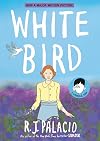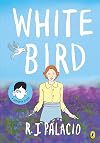
White Bird
by R. J. Palacio
On This Page
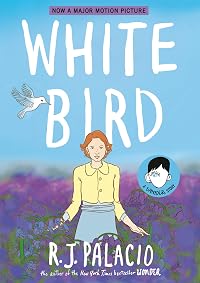
Description
Tells the story of Julian's Grandmére's childhood as she, a Jewish girl, was hidden by a family in a Nazi-occupied French village during World War II and how the boy she once shunned became her savior and best friend.Tags
Recommendations


Member Reviews
***NO SPOILERS***
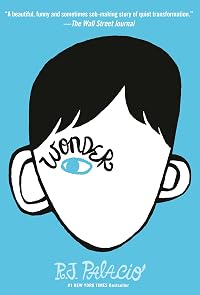
White Bird is proof that a story about suffering is not only not held back by the graphic-novel format but could actually be at its best, most powerful told this way. Author R.J. Palacio used the format’s magic pairing of text and illustration to tell the story of Sara and how the Holocaust triggered her personal transformation when it upended her carefree life. Palacio put her exhaustive research to phenomenal use here, as Sara’s account could easily pass for a nonfictional survivor account. White Bird is actually a spin-off character story from Palacio’s acclaimed [b:Wonder|11387515|Wonder (Wonder, #1)|R.J. show more Palacio|https://i.gr-assets.com/images/S/compressed.photo.goodreads.com/books/1545695751l/11387515._SY75_.jpg|16319487], in which Sara is the grandmother of Julian, one of that book’s main characters. However, the happenings in White Bird don’t reference the happenings in Wonder, so fortunately readers can understand and enjoy this on its own.
Sara’s story is an absorbing, intensely emotional journey with many moments of tension as one surprise after another pops up. As is to be expected for anything Holocaust-themed, it’s also unbearably sad. It opens with her as a teenager, recounting details of her comfortable life pre-Holocaust. Her biggest concerns are those typical of a child her age—friends, school, and material possessions. By her own admission, she’s a little spoiled and, in her immaturity, sometimes uncharitable. Her life takes a sharp downturn when the Nazis occupy the Free Zone in France, where she lives. In an inventive touch, Palacio had Sara’s vanity work in her favor when her desire to keep her favorite red shoes pristine saves her life. Later, a life-changing, unexpected friendship matures her and teaches her the importance of charity.
In these pages humans are shown at their worst but also at their best and White Bird is a tear-jerker as much for its moments of sorrow as for its moments of loving kindness. Emphasis is on really showing the importance of never hesitating to speak up against injustice and helping others in need. That may sound maudlin, but White Bird balances the sweetness with enough grit to keep scenes from feeling emotionally manipulative. Nevertheless, for accounts about cruelties that humans inflict on other humans, capturing the emotion is paramount, and Palacio did that.
In an engaging note at the end, Palacio explained that this graphic novel resulted from her fascination with the Holocaust, starting just after learning about it as a young girl. Informed by her research, White Bird reads like a synthesis of some of the best parts of the most dramatic Holocaust accounts, strung together with an ample dash of her own imagination and expressive illustrations. The influence of Anne Frank’s diary is easy to see. Sara is a blend of three different women, and Palacio based some characters on specific people, whose photos she included at the end.
As time passes, and especially as the last of the Holocaust’s eye-witnesses die, the likelihood increases that this horrific event could be forgotten—or more easily denied—and subsequently repeated. In its accessible format, White Bird educates and brings this event to life for young readers especially, an essential first step in keeping the memory alive. But it also transcends the limits of its genre, and even topic, to appeal to readers of all ages who simply want stories that are well-told and pack a gut-punch. It’s impossible not to be touched by it. show less
White Bird is proof that a story about suffering is not only not held back by the graphic-novel format but could actually be at its best, most powerful told this way. Author R.J. Palacio used the format’s magic pairing of text and illustration to tell the story of Sara and how the Holocaust triggered her personal transformation when it upended her carefree life. Palacio put her exhaustive research to phenomenal use here, as Sara’s account could easily pass for a nonfictional survivor account. White Bird is actually a spin-off character story from Palacio’s acclaimed [b:Wonder|11387515|Wonder (Wonder, #1)|R.J. show more Palacio|https://i.gr-assets.com/images/S/compressed.photo.goodreads.com/books/1545695751l/11387515._SY75_.jpg|16319487], in which Sara is the grandmother of Julian, one of that book’s main characters. However, the happenings in White Bird don’t reference the happenings in Wonder, so fortunately readers can understand and enjoy this on its own.
Sara’s story is an absorbing, intensely emotional journey with many moments of tension as one surprise after another pops up. As is to be expected for anything Holocaust-themed, it’s also unbearably sad. It opens with her as a teenager, recounting details of her comfortable life pre-Holocaust. Her biggest concerns are those typical of a child her age—friends, school, and material possessions. By her own admission, she’s a little spoiled and, in her immaturity, sometimes uncharitable. Her life takes a sharp downturn when the Nazis occupy the Free Zone in France, where she lives. In an inventive touch, Palacio had Sara’s vanity work in her favor when her desire to keep her favorite red shoes pristine saves her life. Later, a life-changing, unexpected friendship matures her and teaches her the importance of charity.
In these pages humans are shown at their worst but also at their best and White Bird is a tear-jerker as much for its moments of sorrow as for its moments of loving kindness. Emphasis is on really showing the importance of never hesitating to speak up against injustice and helping others in need. That may sound maudlin, but White Bird balances the sweetness with enough grit to keep scenes from feeling emotionally manipulative. Nevertheless, for accounts about cruelties that humans inflict on other humans, capturing the emotion is paramount, and Palacio did that.
In an engaging note at the end, Palacio explained that this graphic novel resulted from her fascination with the Holocaust, starting just after learning about it as a young girl. Informed by her research, White Bird reads like a synthesis of some of the best parts of the most dramatic Holocaust accounts, strung together with an ample dash of her own imagination and expressive illustrations. The influence of Anne Frank’s diary is easy to see. Sara is a blend of three different women, and Palacio based some characters on specific people, whose photos she included at the end.
As time passes, and especially as the last of the Holocaust’s eye-witnesses die, the likelihood increases that this horrific event could be forgotten—or more easily denied—and subsequently repeated. In its accessible format, White Bird educates and brings this event to life for young readers especially, an essential first step in keeping the memory alive. But it also transcends the limits of its genre, and even topic, to appeal to readers of all ages who simply want stories that are well-told and pack a gut-punch. It’s impossible not to be touched by it. show less
White Bird is a moving graphic novel that tells the story of Julian’s grandmother, Sara, and her experience hiding from the Nazis as a Jewish girl in France during World War II. I liked how it gave more depth to Julian’s character from Wonder—he’s the boy who bullied Auggie, but in White Bird, he’s trying to learn and grow by hearing his grandmother’s story. The illustrations are beautiful and emotional, and the story is powerful without being overwhelming. It shows how kindness and courage can survive even in terrible times. I didn’t expect to feel so connected to the characters, but it really stuck with me. It’s a great reminder that people can change and that stories from the past still matter today.
If I could give White Bird more than five stars, I would. The artwork and book design are just dazzling, and the story, although written for children, wholly engrossed--and moved--this adult. The tie-in to things happening today felt organic, unforced, and appropriate. And finally, the information and personal stories that Palacio offers at the end are just perfect. Not too much, not too little, and of great usefulness to the child or adult who wants to learn more. White Bird goes a long way towards ensuring that a new generation will never forget the Holocaust and its lessons.
Excellent and very moving graphic novel that ties into the Wonder story by espousing the same values of acceptance of people no matter who they are or what they look like. In this novel, Julian, the bully from Wonder, interviews his grandmother about her life in Europe during World War 2. Grandmere then goes on to explain her persecution as a Jewish child in Occupied France and how she eventually has to flee school when the Nazi soldiers come to take her and the other children away. The tolerance factor comes in when she is hidden in the barn of a boy who has polio; a boy she has never spoken to at school because he is different. This novel will make you cry.
In a Nutshell: A graphic novel connected to the outstanding ‘Wonder’ world. Impeccable plot, illustrations, and message. Much recommended. Can be read as a standalone.
~~~~~~~~~~~~~~~~~~~~~~~
“Those who cannot remember the past are condemned to repeat it.” - George Santayana.
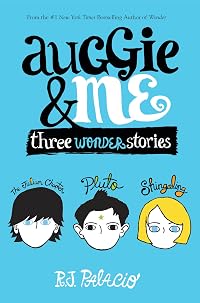
I am sure most avid readers have heard of RJ Palacio’s fabulous book, ‘Wonder’. (And if you have heard of it but haven’t read it, dismissing it as children’s/middle-grade fiction, rectify your mistake right away and get to the book!) Auggie’s three classmates – Charlotte, Christopher, and Julian – got their own spinoff novel in ‘Auggie & Me’. In Julian’s arc, we saw a glimpse of his Grandmère, who touched upon an incident from her show more younger years. This graphic novel takes a detailed look at that memory.
By some strange quirk of fate, this graphic novel first arrived in my life a few years ago as an audiobook. I had absolutely loved the narration and was keenly awaiting the day I could get my hands on the actual book. I never thought I would have to wait almost five years, but my wait is finally over.
In this book, Julian’s Grandmère narrates to her grandson her experience as a young Jewish girl in a Nazi-occupied French village during WWII. She talks about her life before the occupation and also of the painful events during the Nazi takeover. Her reminiscences demonstrate the highs and lows of humankind, and they come with a thought-provoking moral. This book delivers a powerful wallop to the mistakes of the past as well as the present.
It would be so easy to assume that eighty years after the end of WWII, those atrocities are a fact of the past, that such mistakes won't happen again because we have learnt our lesson, and that we have now realised we are all the same underneath our varied religions and races and skin colours. But as we all know, things are somewhat the same even now. So many people would be able to resonate with this line: “To be attacked not for something I have done but for something I am.“ We might not be talking at the level of racial genocide (at least not on the same scale), but we still have not learnt how to look at everyone with equality in our eyes and minds.
I don’t want to speak much about the storyline as it is best discovered for yourself. Suffice it to say, the book delivers on plot development, writing quality, and emotional intensity. Many scenes are harrowing, as would be expected from a WWII book. But there are also scenes that indicate the bigheartedness of humans. Just as in Wonder, this book also contains many lines that would make readers pause and ponder over them.
The extensive end content – covering a guest writer’s note, an author’s note, a glossary, added resources, and a lot more – is the icing on the cake of this outstanding story.
This book marks the debut of Palacio as a graphic artist. She had already impressed me with the power of her pen in ‘Wonder’ (which is one of my all-time favourite novels), and now, she has stunned me with her ability to convey all kinds of emotions just through a character’s face. Her art is simple, but it does the job more than effectively. I appreciate how she kept the depiction of the more gruesome events a bit toned down.
I read this book with my children – all three of us are big fans of Wonder – and it was a memorable experience of shared time and emotions. I don’t think the kids realised how depressing this would get. I could actually hear how invested they were in the story as they kept interjecting with remarks like “Oh no” or tsk-tsking at certain characters. They always chime in with their opinions when we read books together, but this is the first time we didn’t pause for personal discussions in between scenes. Of the three of us, two sobbed through some scenes and the third was a bit shell-shocked as this was her first WWII book and it turned out to be more horrendous than she had bargained for. Despite the tears and fears, they found this outstanding.
Basically, I have no complaints at all about this book. From start to end, it delivered exactly what I wanted, and a lot more. (It helped that I had long forgotten the story heard on audio, so this was as good as a first-time read.)
Much, much recommended. I loved this as both a multi-cast audiobook as well as a graphic novel so take your pick of format. Each has its advantage and disadvantage: outstanding narration but no visuals in the audio, and vice versa in the book.
This graphic novel can be read as a standalone as the story is almost entirely independent of the Wonder characters. But honestly, do yourself a favour and read ‘Wonder’ as well.
5 stars.
This was a library read.
~~~~~~~~~~~~~~~~~~~~~~~
Original review for the audiobook: Dated Oct. 1, 2020.
I heard this in the audio version and now I'm so tempted to actually go and get the graphic novel. It's an absolutely beautiful story. Must read!
~~~~~~~~~~~~~~~~~~~~~~~
Connect with me through:
|| My Blog || The StoryGraph || Instagram || Facebook || show less
~~~~~~~~~~~~~~~~~~~~~~~
“Those who cannot remember the past are condemned to repeat it.” - George Santayana.
I am sure most avid readers have heard of RJ Palacio’s fabulous book, ‘Wonder’. (And if you have heard of it but haven’t read it, dismissing it as children’s/middle-grade fiction, rectify your mistake right away and get to the book!) Auggie’s three classmates – Charlotte, Christopher, and Julian – got their own spinoff novel in ‘Auggie & Me’. In Julian’s arc, we saw a glimpse of his Grandmère, who touched upon an incident from her show more younger years. This graphic novel takes a detailed look at that memory.
By some strange quirk of fate, this graphic novel first arrived in my life a few years ago as an audiobook. I had absolutely loved the narration and was keenly awaiting the day I could get my hands on the actual book. I never thought I would have to wait almost five years, but my wait is finally over.
In this book, Julian’s Grandmère narrates to her grandson her experience as a young Jewish girl in a Nazi-occupied French village during WWII. She talks about her life before the occupation and also of the painful events during the Nazi takeover. Her reminiscences demonstrate the highs and lows of humankind, and they come with a thought-provoking moral. This book delivers a powerful wallop to the mistakes of the past as well as the present.
It would be so easy to assume that eighty years after the end of WWII, those atrocities are a fact of the past, that such mistakes won't happen again because we have learnt our lesson, and that we have now realised we are all the same underneath our varied religions and races and skin colours. But as we all know, things are somewhat the same even now. So many people would be able to resonate with this line: “To be attacked not for something I have done but for something I am.“ We might not be talking at the level of racial genocide (at least not on the same scale), but we still have not learnt how to look at everyone with equality in our eyes and minds.
I don’t want to speak much about the storyline as it is best discovered for yourself. Suffice it to say, the book delivers on plot development, writing quality, and emotional intensity. Many scenes are harrowing, as would be expected from a WWII book. But there are also scenes that indicate the bigheartedness of humans. Just as in Wonder, this book also contains many lines that would make readers pause and ponder over them.
The extensive end content – covering a guest writer’s note, an author’s note, a glossary, added resources, and a lot more – is the icing on the cake of this outstanding story.
This book marks the debut of Palacio as a graphic artist. She had already impressed me with the power of her pen in ‘Wonder’ (which is one of my all-time favourite novels), and now, she has stunned me with her ability to convey all kinds of emotions just through a character’s face. Her art is simple, but it does the job more than effectively. I appreciate how she kept the depiction of the more gruesome events a bit toned down.
I read this book with my children – all three of us are big fans of Wonder – and it was a memorable experience of shared time and emotions. I don’t think the kids realised how depressing this would get. I could actually hear how invested they were in the story as they kept interjecting with remarks like “Oh no” or tsk-tsking at certain characters. They always chime in with their opinions when we read books together, but this is the first time we didn’t pause for personal discussions in between scenes. Of the three of us, two sobbed through some scenes and the third was a bit shell-shocked as this was her first WWII book and it turned out to be more horrendous than she had bargained for. Despite the tears and fears, they found this outstanding.
Basically, I have no complaints at all about this book. From start to end, it delivered exactly what I wanted, and a lot more. (It helped that I had long forgotten the story heard on audio, so this was as good as a first-time read.)
Much, much recommended. I loved this as both a multi-cast audiobook as well as a graphic novel so take your pick of format. Each has its advantage and disadvantage: outstanding narration but no visuals in the audio, and vice versa in the book.
This graphic novel can be read as a standalone as the story is almost entirely independent of the Wonder characters. But honestly, do yourself a favour and read ‘Wonder’ as well.
5 stars.
This was a library read.
~~~~~~~~~~~~~~~~~~~~~~~
Original review for the audiobook: Dated Oct. 1, 2020.
I heard this in the audio version and now I'm so tempted to actually go and get the graphic novel. It's an absolutely beautiful story. Must read!
~~~~~~~~~~~~~~~~~~~~~~~
Connect with me through:
|| My Blog || The StoryGraph || Instagram || Facebook || show less
This is an extremely moving account of the Holocaust period told from the perspective of a young Jewish girl named Sara. Her classmate, Julien, saves her life by bringing her home to live in his family's barn. The two grow up together, bonded by their feeling of being different (her Jewish and him disabled by childhood Polio), and walk through heart-breaking struggles together. Inhumanity and hope are both powerfully extended to modern times right at the end.
*Well. I cried. Multiple times. Moving emotions are very clear in the illustrations and text, and I felt very connected to the characters very quickly. It feels very authentic to the time period, and the author does not shy away from many hard truths-while also keeping it show more age-appropriate. This would be an incredible addition to any collection- school or personal. show less
*Well. I cried. Multiple times. Moving emotions are very clear in the illustrations and text, and I felt very connected to the characters very quickly. It feels very authentic to the time period, and the author does not shy away from many hard truths-while also keeping it show more age-appropriate. This would be an incredible addition to any collection- school or personal. show less
Recommended Ages: Gr. 5-8, maybe 4th
Plot Summary: Sara's life hasn't changed drastically since the Nazi invasion until a classmate insults her Judaism. Her parents worry about their safety but decide not to leave France quite yet. Papa asks Sara to promise she'll wear her boots even though it's technically spring. Sara is too worried about fashion to wear her boots, so she wears her red shoes to school instead. But that day, the Nazis came to collect the Jewish students from her school. To protect the students, Sara's teacher led them into the woods. It started snowing and Sara chose to go to the belltower instead. The Nazis went after the students in the woods and led them onto a truck. Shortly thereafter, they started looking for the show more three Jewish students that didn't go in the woods, including Sara. The door to the belltower opened and revealed Torteau, the boy that sat next to Sara in most of her classes but they've never really spoken. He led her through the sewer to his hometown 15 km away, where he hid her in a barn. That was where Sara stayed for years. Her only company was Julien and his parents. Until Vincent, Julien's bully and Nazi sympathizer, discovered Sara was in the barn. Will she escape? What will happen to Julien and his parents?
Setting: Aubervilliers-aux-Bois, France, 1940
Characters:
Sara - loves to draw in math class
Papa - AKA Max, wanted to stay in France a little longer to see what happened
Mama - wanted to leave France
Julien Beaumier - AKA Torteau "Crab," walked with a limp and with a crutch from Polio
Vincent - Sara's classmate, everyone's crush, bullied Torteau, said first anti-semitic thing to Sara
Recurring Themes: Holocaust, survival, racism, kindness, friendship, anti-semitism, light vs. darkness
Controversial Issues:
Nazi violence, guns, blood, death
Example: pg 50 "Then they shot him. His blood spilled out on to the snow. The snowflakes covered his body like a blanket."
Personal Thoughts: This graphic novel has everything: excellent illustrations expressing emotions and enhancing the storytelling to a great extent, good character development, and metaphors (bird, light vs. dark). It isn't horribly graphic, although it certainly does show death--and the emotions surrounding the deaths--a few times, which is necessary in a novel about the Holocaust.
Genre: historical fiction (graphic novel)
Pacing: fast
Characters: well- developed, not too many
Frame:
Storyline:
Activity: show less
Plot Summary: Sara's life hasn't changed drastically since the Nazi invasion until a classmate insults her Judaism. Her parents worry about their safety but decide not to leave France quite yet. Papa asks Sara to promise she'll wear her boots even though it's technically spring. Sara is too worried about fashion to wear her boots, so she wears her red shoes to school instead. But that day, the Nazis came to collect the Jewish students from her school. To protect the students, Sara's teacher led them into the woods. It started snowing and Sara chose to go to the belltower instead. The Nazis went after the students in the woods and led them onto a truck. Shortly thereafter, they started looking for the show more three Jewish students that didn't go in the woods, including Sara. The door to the belltower opened and revealed Torteau, the boy that sat next to Sara in most of her classes but they've never really spoken. He led her through the sewer to his hometown 15 km away, where he hid her in a barn. That was where Sara stayed for years. Her only company was Julien and his parents. Until Vincent, Julien's bully and Nazi sympathizer, discovered Sara was in the barn. Will she escape? What will happen to Julien and his parents?
Setting: Aubervilliers-aux-Bois, France, 1940
Characters:
Sara - loves to draw in math class
Papa - AKA Max, wanted to stay in France a little longer to see what happened
Mama - wanted to leave France
Julien Beaumier - AKA Torteau "Crab," walked with a limp and with a crutch from Polio
Vincent - Sara's classmate, everyone's crush, bullied Torteau, said first anti-semitic thing to Sara
Recurring Themes: Holocaust, survival, racism, kindness, friendship, anti-semitism, light vs. darkness
Controversial Issues:
Nazi violence, guns, blood, death
Example: pg 50 "Then they shot him. His blood spilled out on to the snow. The snowflakes covered his body like a blanket."
Personal Thoughts: This graphic novel has everything: excellent illustrations expressing emotions and enhancing the storytelling to a great extent, good character development, and metaphors (bird, light vs. dark). It isn't horribly graphic, although it certainly does show death--and the emotions surrounding the deaths--a few times, which is necessary in a novel about the Holocaust.
Genre: historical fiction (graphic novel)
Pacing: fast
Characters: well- developed, not too many
Frame:
Storyline:
Activity: show less
Members
- Recently Added By
Lists

Florida's Book Bans and Challenges
311 works; 4 members

Banned or Challenged Books
402 works; 43 members

Youth: War & Terrorism
47 works; 1 member
Author Information

32+ Works 26,102 Members
R. J. Palacio is a graphic designer and book jacket designer. She is the author of Wonder, 365 Days of Wonder: Mr. Browne's Book of Precepts, and Auggie and Me: Three Wonder Stories. (Bowker Author Biography)
All Editions
Awards and Honors
Awards
Distinctions
Notable Lists
Common Knowledge
Classifications
- Genres
- Tween, Kids, Graphic Novels & Comics
- DDC/MDS
- 741.5 — Arts & recreation Drawing & decorative arts Drawing Comic books, graphic novels, fotonovelas, cartoons, caricatures, comic strips
- LCC
- PZ7.7 .P153 .W — Language and Literature Fiction and juvenile belles lettres Fiction and juvenile belles lettres Juvenile belles lettres
- BISAC
Statistics
- Members
- 884
- Popularity
- 30,735
- Reviews
- 39
- Rating
- (4.33)
- Languages
- 7 — Catalan, English, German, Greek, Italian, Portuguese (Portugal), Spanish
- Media
- Paper, Audiobook, Ebook
- ISBNs
- 36
- ASINs
- 3