On This Page
Description
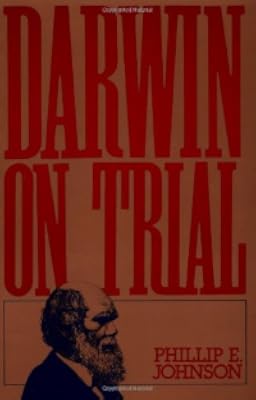
Is evolution fact or fancy? Is natural selection an unsupported hypothesis or a confirmed mechanism of evolutionary change? These were the courageous questions that professor of law Phillip Johnson originally took up in 1991. His relentless pursuit to follow the evidence wherever it leads remains as relevant today as then. The facts and the logic of the arguments that purport to establish a theory of evolution based on Darwinian principles, says Johnson, continue to draw their strength from show more faith--faith in philosophical naturalism. In this edition Johnson responds to critics of the first edition and maintains that scientists have put the cart before the horse, regarding as scientific fact what really should be regarded as a yet unproved hypothesis. Also included is a new, extended introduction by noted biologist Michael Behe, who chronicles the ongoing relevance of Johnson's cogent analysis. - Publisher. show lessTags
Recommendations










Member Reviews
Great info but I’m not going to pretend that I understood all the science. Worth reading - the author thoroughly fleshes out the nuances in all arguments surrounding Darwinism.
An attempt to reduce science to an ideology which must be accepted on faith. Since Creationism has to be accepted on faith, the two are equivalent in that respect according to the author. Evolution has to be accepted by faith therefore. There is a type of lawyer who thinks any subject can be discussed by means of logic alone without bothering to learn the actual subject. He is such a lawyer.
To describe the book as shallow would be charitable. The scientific illiiteracy exhibited by the author is truly shocking. Useful to understand the peurile drivel this movement espouses and reveals the intellectual bankrutcy of modern evangelical Christianity.
To describe the book as shallow would be charitable. The scientific illiiteracy exhibited by the author is truly shocking. Useful to understand the peurile drivel this movement espouses and reveals the intellectual bankrutcy of modern evangelical Christianity.
A good telling of Darwinism's history in the U.S. with an emphasis on the courts.
JOHNSON. 'I think ridicule may be fairly used against an infidel; for instance, if he be an ugly fellow.' [. . .] 'When a man voluntarily engages in an important controversy, he is to do all he can to lessen his antagonist. I will attack him for his bad language.’
ADAMS. ‘You would not jostle a chimney-sweeper.’
JOHNSON. ‘Yes, Sir, if it were necessary to jostle him down.’
— James Boswell, The Life of Samuel Johnson
On Honesty
In his time, Samuel Johnson was regarded as a brilliant, if not problematic, interlocutor. On matters of substance he was known to take an odious position for the sake of argument. A paraphrased Johnson would say, "bad positions are more attractive than good ones because most ingenious things, that is show more to say, most new things, can be said upon them." In addition, Samuel Johnson possessed such verbal agility, and spoke with such intention, that he was quite literally a "professional quote maker" (enlightened by his own intelligence) — though not all surviving quotations are good ones. In his way Samuel Johnson has produced some famous howlers: On the immaterial/metaphysical quality of matter, "striking his foot with mighty force against a large stone, till he rebounded from it, ‘I refute it thus.’" On women, "Sir, a woman’s preaching is like a dog’s walking on his hinder legs. It is not done well; but you are surprized to find it done at all." Samuel Johnson was also known as an eager sophist in matters of great seriousness. He would not hesitate to jostle an "infidel" chimney-sweeper (see above). Thus, Johnson embodied a superimposition of belief (both serious and joking — in retrospect quite modern), such that it's not always clear, even in retrospect, when Johnsonian casuistry is being used for mental exercise or to defend an entrenched position. What comes down to us from James Boswell, Johnson's biographer (and famously obsequious hanger-on) hardly helps. We know, at least, that the misogyny was real. Though Boswell's thousand-page biography of this man of letters is still useful, perhaps, as a record of not-very-honest arguments.
I don't believe Samuel Johnson has any relation to the author of this work. Compared to the enigma Samuel Johnson once was, Phillip Johnson's entrenched positions are hardly a mystery. It's remarkable how many readers — I'm thinking of those left-wing types not a priori of the Evangelical persuasion — are unable to perceive what constitutes the difference between an honest inquiry and motivated reasoning. I intend here only to make a few brief comments on Phillip Johnson's approach. (Nota bene: Since I do a little work as a chimney sweeper I must disclose a conflict of interest in not wanting to be jostled down by P. Johnson.) There's an important quotation from Eileen Myles that goes: "Painters taught me to look at the edges, that's when you aestheticize, when you get to the edge." (Myles, School of Fish) This is an aesthetic way of restating the Derridean contention that certain arguments are made by blurring the edges of meaning between terms. For Phillip Johnson, "Darwinism" means "Evolution." "Evolution" means "Speciation"; "Central Dogma" means "Dogma"; and so on. These are not-very-honest edges.
Motivated reasoning isn't capable of being defeated because it will always wage war on a smaller scale. Exempli gratia of a pugnacious retreat: "Natural Selection" can't be shown to produce "Speciation," and even if you could prove it, that doesn't mean that it applies to "Man," and even if you could prove it, that doesn't mean there wasn't a "Divine Plan" (analogous to the Schopenhauerian Will; down to the nuclear force on scale of atoms). The less-than-honest non sequitur at the end of this string is more apparent when we take a different approach: "Saturated fat from red meat" can't be shown to produce "atherosclerosis," and even you could prove it, that doesn't mean it produces "coronary thrombosis," and even if you could prove it, that doesn't mean this wasn't a "Divine Plan." Obviously, we are dealing with a difference of category here: id est, a religious ontology trying to make its case on the basis of an argument from material facts. There will always be another missing link in the fossil record.
I will leave off here because these arguments are always tiresome. Regardless of the quality of honesty I'm reading into the text, Phillip Johnson is as entitled to his reasoning as he is to have his Sunday Roast. One only hopes that, for his sake, the association between such delicacies and his heart disease remains unproven. The miraculous thing about Samuel Johnson is that there's always a quotation from the Johnsoniana appropriate for the occasion (with a Myles-style adjustment at the end): One of the company mentioned his having seen a noble person driving in his carriage, and looking exceedingly well, notwithstanding his great age. Johnson. ‘Ah, Sir; that is nothing. Bacon observes, that a stout healthy old man is like a tower undermined [. . .] on Sunday.' show less
amusing but shallow
Berkeley law professor challenges scientific naturalism.
Berkeley law professor challenges scientific naturalism.
Members
- Recently Added By
Lists

Top 50 Books That Have Shaped Evangelical Christians
49 works; 6 members

Develop Your Personal Christian Library
101 works; 15 members
GreatBooks Worldview Academy Lists
133 works; 4 members

The Great Courses: The Darwinian Revolution
50 works; 1 member
Author Information

32+ Works 4,637 Members
Phillip E. Johnson is a graduate of Harvard University and the University of Chicago Law School. He taught law for more than thirty years at the University of California at Berkeley where he is professor emeritus. For the last decade Johnson has also been at the forefront of the public debate over evolution and creation. He has taken his message show more to such places as the New York Times and the Wall Street Journal. His InterVarsity Press titles include Reason in the Balance, The Wedge of Truth, The Right Questions and Defeating Darwinism by Opening Minds. show less
Some Editions
Awards and Honors
Notable Lists
Series

Common Knowledge
- Canonical title*
- Fallet Darwin : vart leder bevisen?
- Original title
- Darwin on trial
- Original publication date
- 1991
- People/Characters
- Charles Darwin [Charles Robert: 1809-1882]
- Blurbers
- Denton, Michael; Plantinga, Alvin; Neuhaus, Richard John
*Some information comes from Common Knowledge in other languages. Click "Edit" for more information.
Classifications
Statistics
- Members
- 1,872
- Popularity
- 11,568
- Reviews
- 9
- Rating
- (3.57)
- Languages
- 5 — Chinese, English, German, Spanish, Swedish
- Media
- Paper, Audiobook, Ebook
- ISBNs
- 15
- ASINs
- 12