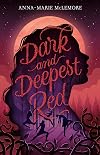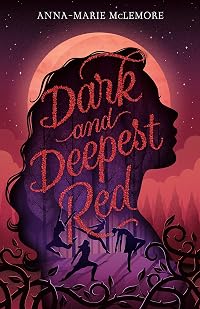
Dark and Deepest Red
by Anna-Marie McLemore
On This Page
Description
"Summer, 1518. A strange sickness sweeps through Strasbourg: women dance in the streets, some until they fall down dead. As rumors of witchcraft spread, suspicion turns toward Lavinia and her family, and Lavinia may have to do the unimaginable to save herself and everyone she loves. Five centuries later, a pair of red shoes seal to Rosella Oliva's feet, making her dance uncontrollably. They draw her toward a boy who knows the dancing fever's history better than anyone: Emil, whose family was show more blamed for the fever five hundred years ago. But there's more to what happened in 1518 than even Emil knows, and discovering the truth may decide whether Rosella survives the red shoes." -- Publisher annotation. show lessTags
Recommendations




Member Reviews
McLemore (contributor: Color Outside the Lines, 2019, etc.) weaves another magic spell in this haunting retelling of Hans Christian Andersen’s “The Red Shoes.”
In their most ambitious novel yet, they interconnect the present-day trials of Mexican American Rosella and Romani American Emil with those of Lavinia, a young Romani woman in 16th-century Strasbourg, who is revealed to be Emil’s ancestor. Emil and Rosella became friends as children when they realized their darker skin color and families’ religious practices set them apart from the rest of their friends. Now teens, the two are drawn to each other during their town’s “glimmer,” an annual weeklong occurrence in which magical things happen. This year, the red shoes show more created by Rosella’s family cause people to pursue their romantic passions. However, Rosella is cursed with uncontrollable dancing, very similar to the plague of dancing that swept through Strasbourg in 1518, when the townspeople blamed Lavinia and the White trans boy she loved for their affliction. McLemore’s lush sentence-level writing is masterly, painting vivid pictures of Lavinia’s world. The past timeline is especially compelling, and readers will eagerly return to it. The author spins a tale of first love, misfits forging their own places in the world, and the inherent prejudices of people who fear what they don’t understand.
This novel will leave an indelible mark on readers’ hearts. (Magical realism. 14-adult)
-Kirkus Review show less
In their most ambitious novel yet, they interconnect the present-day trials of Mexican American Rosella and Romani American Emil with those of Lavinia, a young Romani woman in 16th-century Strasbourg, who is revealed to be Emil’s ancestor. Emil and Rosella became friends as children when they realized their darker skin color and families’ religious practices set them apart from the rest of their friends. Now teens, the two are drawn to each other during their town’s “glimmer,” an annual weeklong occurrence in which magical things happen. This year, the red shoes show more created by Rosella’s family cause people to pursue their romantic passions. However, Rosella is cursed with uncontrollable dancing, very similar to the plague of dancing that swept through Strasbourg in 1518, when the townspeople blamed Lavinia and the White trans boy she loved for their affliction. McLemore’s lush sentence-level writing is masterly, painting vivid pictures of Lavinia’s world. The past timeline is especially compelling, and readers will eagerly return to it. The author spins a tale of first love, misfits forging their own places in the world, and the inherent prejudices of people who fear what they don’t understand.
This novel will leave an indelible mark on readers’ hearts. (Magical realism. 14-adult)
-Kirkus Review show less
Reinventing a folktale for the modern world is hard enough, but McLemore makes it look easy with this story, which weaves together the lives of two slightly outcast teenagers and historical events which tie into their families. The modern arc of the story follows Rosella and Emil, two Romani descents living in Briar Meadow, a small city with magical underpinnings, who grew up as the closest of friends but who have fallen apart over the years, as so many boys and girls do when they hit those awkward Middle School years. Every year Briar Meadow experiences magical events known as the Glimmer, which cause some consternation amongst the townsfolk, but largely do no harm once they have run their course. This year the magic centers around a show more reappearance of red shoes, each pair of which seem to instill in their wearer a heedless abandon for their normal lives and an encouragement to let loose. In the other story, we are transported to the Strasbourg of 1518, where a dancing fever begins to overtake townsfolk. This story arc is led by Emil’s ancestors, Lavinia (Lala) and her aunt, and their friend Alifair, who as Romani are already living a challenging life in secret and for whom the dancing plague may be their deathknell. In the modern story Rosella is taken up by the dance as well, bringing her closer to Emil, and forcing both of them to confront the truth of their rejected heritage. McLemore’s weaving of these two timelines is seamless and artful throughout, even though I struggled with the occasionally jagged feeling of some of the prose, and it’s impossible not to get swept up in the soft magic that traipses throughout both storylines. The historicity of the story is what really kept me enthralled though, since we truly don’t know what caused the dancing fever of 1518, and while McLemore’s story may not give us any actual answers, it gives us food for thought regarding the unknown occurrences in the world. Modern folktale of note, their writing definitely is, and I can’t wait to see what other tales they’ve set out to tell. show less
I love the structural elements of this novel. The alternating timelines unfurl two distinct stories which enhance each other. The story from the 16th century told in the present tense and the contemporary story told in the past tense. One of the storylines fills more pages and the other alternates between 2 point of view characters as often encountered in a contemporary romance.
Color is important to both. The dyes and inks in one and the flame tests of a chemistry student in the other. These narrative elements provide heft to all other descriptions of color in the story.
And the most important color is of course red. This is a reimagining of the Red Shoes fairy tale. Instead of a morality tale about vanity, it's expanded into an show more indictment against discrimination toward the other.
I particularly like the emphasis the story places on the craft of an artisan. The custom dyes, the shoemaking, the founding of an artisan collective.
There's also a theme of intersectionality. Distinct family traditions involving ancestors, unfamiliar to the community, but shared between characters of different backgrounds. Different letters of LGBT discovering and uplifting each other. The structure of an aspen grove provides a spectacular metaphor.
In spite of how much magic exists in the story, it's grounded in such a way that I hesitate to label the story fantasy. I love how the periodic intrusion of magic in the contemporary story is described. Sprinkled throughout are single sentences that bloom in the mind into entire magical seasons. The egalitarian and ephemeral nature of this magic stands in stark contrast to the concentration of magic as power so common in traditional fantasy.
The story is dense with actualized metaphors, but its greatest strength is the plethora of relationships that thrive in spite of institutionalized hate. In both subtle and dramatic fashion embracing what the majority hate or fear is shown to be both beautiful and powerful.
--
Since it might be of interest to others, I was drawn to read this book by the author's release day twitter thread, celebrating the book with multiple gender presentations. I have more of their books purchased and waiting on my e-reader. show less
Color is important to both. The dyes and inks in one and the flame tests of a chemistry student in the other. These narrative elements provide heft to all other descriptions of color in the story.
And the most important color is of course red. This is a reimagining of the Red Shoes fairy tale. Instead of a morality tale about vanity, it's expanded into an show more indictment against discrimination toward the other.
I particularly like the emphasis the story places on the craft of an artisan. The custom dyes, the shoemaking, the founding of an artisan collective.
There's also a theme of intersectionality. Distinct family traditions involving ancestors, unfamiliar to the community, but shared between characters of different backgrounds. Different letters of LGBT discovering and uplifting each other. The structure of an aspen grove provides a spectacular metaphor.
In spite of how much magic exists in the story, it's grounded in such a way that I hesitate to label the story fantasy. I love how the periodic intrusion of magic in the contemporary story is described. Sprinkled throughout are single sentences that bloom in the mind into entire magical seasons. The egalitarian and ephemeral nature of this magic stands in stark contrast to the concentration of magic as power so common in traditional fantasy.
The story is dense with actualized metaphors, but its greatest strength is the plethora of relationships that thrive in spite of institutionalized hate. In both subtle and dramatic fashion embracing what the majority hate or fear is shown to be both beautiful and powerful.
--
Since it might be of interest to others, I was drawn to read this book by the author's release day twitter thread, celebrating the book with multiple gender presentations. I have more of their books purchased and waiting on my e-reader. show less
I loved how history and fairy tale are twisted together in this retelling, and enjoyed the two different stories being told here. However, I am also VERY glad that the chapter headings told me who the narrator was for each chapter, because having two linked stories in two timelines told by three narrators could have gotten quite confusing if it weren't for that.
I enjoyed the book, and both of its main plots and characters, but I really only felt a sense of immediacy for the historical characters. I felt their dangers much more than those of the contemporary characters, and so I was looking forward to the historical sections most. However, I really liked seeing how the two timelines meshed together. I also especially loved the author's show more note at the end about the history of the story that served as the inspiration for this retelling. And I liked that—given how little explanation we have for the real events—there was no attempt at fully explaining things in this story. In many ways, it is more of a character study focused on humanity than anything else, and in that sense it fits in very well with the fairy tale it is retelling. show less
I enjoyed the book, and both of its main plots and characters, but I really only felt a sense of immediacy for the historical characters. I felt their dangers much more than those of the contemporary characters, and so I was looking forward to the historical sections most. However, I really liked seeing how the two timelines meshed together. I also especially loved the author's show more note at the end about the history of the story that served as the inspiration for this retelling. And I liked that—given how little explanation we have for the real events—there was no attempt at fully explaining things in this story. In many ways, it is more of a character study focused on humanity than anything else, and in that sense it fits in very well with the fairy tale it is retelling. show less
Dark and Deepest Red is a gorgeous and smart magical realist remix of Hans Christian Andersen's "The Red Shoes" that flits back and forth in time (the present day vs the early 16th century) to weave a lyrical fairy tale about generational trauma, the pressure to "pass"/inexpressible identities (Romani, Mexican, and trans, respectively), and the powers of love, empathy, and self-acceptance. As usual, McLemore's lush prose and sophisticated understanding of magic and monstrosity (and their roles in the histories of queer communities, especially those of color) put her work head and shoulders above most YA fairy tale retellings.
I'm presently writing a dissertation on positive reclamations of monstrosity in queer YA (including a chapter on show more witches/witchcraft) and was desperately looking for more novels with representation of communities of color and/or trans representation, and Dark and Deepest Red absolutely did not disappoint. I'll absolutely be discussing it in one of my chapters... which means I have to restructure my outline! ....yay? It'll definitely be worth it, though, as I cannot recommend this book enough.
Thank you to the publishers and NetGalley for providing me with a digital arc in exchange for an honest review. show less
I'm presently writing a dissertation on positive reclamations of monstrosity in queer YA (including a chapter on show more witches/witchcraft) and was desperately looking for more novels with representation of communities of color and/or trans representation, and Dark and Deepest Red absolutely did not disappoint. I'll absolutely be discussing it in one of my chapters... which means I have to restructure my outline! ....yay? It'll definitely be worth it, though, as I cannot recommend this book enough.
Thank you to the publishers and NetGalley for providing me with a digital arc in exchange for an honest review. show less
I absolutely loved the idea of this book, but given that this is the second book by McLemore that I've read (or tried to read) and I really didn't enjoy either, I think I need to accept that they're not the author for me. The book follows a set of characters in two different timelines: Lala and Alafair from 500 years ago, when Lala is accused of being behind the dancing fever spreading through Strasbourg, and Rosella and Emil in the present, as Rosella finds herself trapped in a pair of red shoes and Emil grapples with the history of his family as the ones blamed for the dancing fever.
I thought the concept of the dual timelines was great, but I just found that the book was lacking depth for me. I found Lala's story significantly more show more interesting than Rosella and Emil's and actually thought it could've served as the full story by itself. I felt like the development of side characters in both timelines was lacking and there were many things important to the story that I didn't really understand until midway or more through the book. This left me feeling a lingering confusion almost until I reached the end of the book.
Aside from the development of the book, I also just felt like the writing wasn't for me? The whole book seemed to be written in a very figurative way, and I kept finding myself reading the same sentences over and over trying to figure out what they meant. By the end of the book, I was skimming to just get the important parts, which didn't make the reading experience super pleasant.
My favorite part of the book was Lala and Alifair's romance, which did give the book an extra star. Overall though, this book just didn't give me enough and left me feeling disappointed and confused much of the way through. show less
I thought the concept of the dual timelines was great, but I just found that the book was lacking depth for me. I found Lala's story significantly more show more interesting than Rosella and Emil's and actually thought it could've served as the full story by itself. I felt like the development of side characters in both timelines was lacking and there were many things important to the story that I didn't really understand until midway or more through the book. This left me feeling a lingering confusion almost until I reached the end of the book.
Aside from the development of the book, I also just felt like the writing wasn't for me? The whole book seemed to be written in a very figurative way, and I kept finding myself reading the same sentences over and over trying to figure out what they meant. By the end of the book, I was skimming to just get the important parts, which didn't make the reading experience super pleasant.
My favorite part of the book was Lala and Alifair's romance, which did give the book an extra star. Overall though, this book just didn't give me enough and left me feeling disappointed and confused much of the way through. show less
I enjoyed this book. I thought it was a very interesting concept and unique spin on the fairy tale, and I loved the prose. However, it never really grabbed me. Normally, with McLemore's work, I can't put it down and get sucked into the story, but that never happened with this one, and I didn't care about the characters all that much. Overall, if you are a fan of magical realism or interesting fairy tale retellings, I would recommend it, but I feel that the author's other works are better.
Members
- Recently Added By
Lists

Can't Wait Books of 2020
12 works; 1 member

Fairy Tales..retellings
44 works; 2 members

LGBTQ+ Speculative Fiction
821 works; 51 members

LGBTQIA Horror
172 works; 7 members

Good LGBT fiction for LGBT folk and friends
551 works; 51 members

Red Shoes Fairy Tale Retellings, Variations, or Adaptations
3 works; 1 member

Trans YA
8 works; 1 member

YA Fantasy LGBTQ+ Reads
14 works; 1 member
Author Information

14+ Works 4,177 Members
Awards and Honors
Awards
Distinctions
Common Knowledge
- Original publication date
- 2020-01-14
- Important events
- plagues ('Dancing Plague', 1518)
- Epigraph
- Cuando el camino es largo, hasta las zapatillas aprietan.
When the road is long, even slippers are tight. --Peruvian Proverb
Chacun sent le mieux ou le soulier le blesse.
No one knows better where the shoe pinches than she who wears it. --French Proverb
Dance in red shoes, but make sure they're the ones you've made by hand. -- Clarissa Pinkola Estes, Women Who Run with the Wolves - Dedication
- To my father, who taught me to love books in the first place
- First words
- My mother told me once that being an Oliva meant measuring our lives in lengths of red thread.
- Last words
- (Click to show. Warning: May contain spoilers.)"Emil," she says as she bends to her son's small hand and kisses it. "His name is Emil."
- Publisher's editor
- Brzozowski, Kat
- Blurbers
- Lee, Mackenzi; Dennard, Susan; Brockenbrough, Martha; LaFevers, Robin; Arnold, Elana K.; Speas, Rebecca
- Original language
- English
Classifications
- Genres
- Teen, Fiction and Literature, LGBTQ+, Fantasy, Young Adult
- DDC/MDS
- 813.6 — Literature & rhetoric American literature in English American fiction in English 2000-
- LCC
- PZ7.1 .M463 .D — Language and Literature Fiction and juvenile belles lettres Fiction and juvenile belles lettres Juvenile belles lettres
- BISAC
Statistics
- Members
- 396
- Popularity
- 78,746
- Reviews
- 10
- Rating
- (3.56)
- Languages
- English, Italian
- Media
- Paper, Audiobook, Ebook
- ISBNs
- 9
- ASINs
- 2