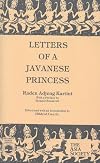
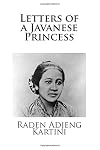
Letters of a Javanese Princess
by Raden Kartini
On This Page
Description
The famous letters written by prominent Javanese and Indonesian national heroine Raden Ajeng Kartini to her friends in Europe, originally published as 'Door Duisternis tot Licht' (Out of Dark Comes Light).Tags
Recommendations





































Member Reviews
RARE 1920 1st edition JAVA PRINCESS INDONESIA RADEN ADJENG KARTINI FIRST US ENGLISH EDITION Description: Raden Adjeng Kartini, (21 April 1879 – 17 September 1904), or sometimes known as Raden Ajeng Kartini, was a prominent Javanese and an Indonesian national heroine. Kartini was a pioneer in the area of women's rights for Indonesians. ON AUCTION HERE is a rare 1920 first edition, Letters of a Javanese Princess, by Raden Adjeng Kartini, translated from the original Dutch by Agnes Louise Symmers. Published by Alfred A. Knopf, New York. Bound in red cloth, 310 pages. Sized 9x7 inches. Very good condition, NOT common. Biography Kartini was born into an aristocratic Javanese family when Java was part of the Dutch colony of the Dutch East show more Indies. Kartini's father, Sosroningrat, became Regency Chief of Jepara. Kartini's father, was originally the district chief of Mayong. Her mother, Ngasirah was the daughter of Madirono and a teacher of religion in Teluwakur. She was his first wife but not the most important one. At this time, polygamy was a common practice among the nobility. She also wrote the Letters of a Javanese Princess. Colonial regulations required a Regency Chief to marry a member of the nobility. Since Ngasirah was not of sufficiently high nobility, her father married a second time to Woerjan (Moerjam), a direct descendant of the Raja of Madura. After this second marriage, Kartini's father was elevated to Regency Chief of Jepara, replacing his second wife's own father, Tjitrowikromo. Kartini was the fifth child and second eldest daughter in a family of eleven, including half siblings. She was born into a family with a strong intellectual tradition. Her grandfather, Pangeran Ario Tjondronegoro IV, became a Regency Chief at the age of 25 while Kartini's older brother Sosrokartono was an accomplished linguist. Kartini's family allowed her to attend school until she was 12 years old. Here, among other subjects, she learnt to speak Dutch, an unusual accomplishment for Javanese women at the time. After she turned 12 she was 'secluded' at home, a common practice among Javanese nobility, to prepare young girls for their marriage. During seclusion girls were not allowed to leave their parents' house until they were married, at which point authority over them was transferred to their husbands. Kartini's father was more lenient than some during his daughter's seclusion, giving her such privileges as embroidery lessons and occasional appearances in public for special events. During her seclusion, Kartini continued to educate herself on her own. Because she could speak Dutch, she acquired several Dutch pen friends. One of them, a girl by the name of Rosa Abendanon, became a close friend. Books, newspapers and European magazines fed Kartini's interest in European feminist thinking, and fostered the desire to improve the conditions of indigenous Indonesian women, who at that time had a very low social status. Kartini's reading included the Semarang newspaper De Locomotief, edited by Pieter Brooshooft, as well as leestrommel, a set of magazines circulated by bookshops to subscribers. She also read cultural and scientific magazines as well as the Dutch women's magazine De Hollandsche Lelie, to which she began to send contributions which were published. Before she was 20 she hard read Max Havelaar and Love Letters by Multatuli. She also read De Stille Kracht (The Hidden Force) by Louis Couperus, the works of Frederik van Eeden, Augusta de Witt, the Romantic-Feminist author Goekoop de-Jong Van Eek and an anti-war novel by Berta von Suttner, Die Waffen Nieder! (Lay Down Your Arms!). All were in Dutch. Kartini's concerns were not only in the area of the emancipation of women, but also other problems of her society. Kartini saw that the struggle for women to obtain their freedom, autonomy and legal equality was just part of a wider movement. Kartini with Joyodiningrat Kartini's parents arranged her marriage to Joyodiningrat, the Regency Chief of Rembang, who already had three wives. She was married on the 12 N... show less
Ratings
Members
- Recently Added By
Lists

500 Great Books by Women
507 works; 60 members
Author Information

4 Works 69 Members
Awards and Honors
Notable Lists
Common Knowledge
- Canonical title
- Letters of a Javanese Princess
- Original title
- Door duisternis tot licht
- Original publication date
- 1911 (original Dutch) (original Dutch); 1921 (English translation) (English translation)
- People/Characters
- Raden Adjeng Kartini
- Important places
- Java, Indonesia; Dutch East Indies
Classifications
- Genres
- Nonfiction, History, General Nonfiction, Technology
- DDC/MDS
- 305.4 — Society, government, & culture Social sciences, sociology & anthropology Social group - Age, Gender, Ethnicity Women
- LCC
- HQ1752 .K3713 — Social sciences The family. Marriage, Women and Sexuality The Family. Marriage. Women Women. Feminism
- BISAC
Statistics
- Members
- 57
- Popularity
- 540,510
- Reviews
- 1
- Rating
- (4.00)
- Languages
- Dutch, English, Indonesian, Tagalog
- Media
- Paper, Ebook
- ISBNs
- 25
- ASINs
- 3