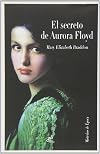
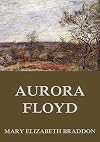
Aurora Floyd
by Mary Elizabeth Braddon
On This Page
Description
Mary Elizabeth Braddon was born in London on 4th October 1835. Braddon suffered early family trauma at age five, when her mother, Fanny, separated from her father, Henry, in 1840. When she was aged ten her brother Edward left England for India and later Australia. However, after being befriended by Clara and Adelaide Biddle she was much taken by acting. For three years she took minor acting roles, which supported both her and her mother, However, her interest in acting began to wane as she show more began to write. It was to be her true vocation. In 1860, Mary met John Maxwell, a publisher of periodicals. By the next year they were living together. The situation and the view from polite society was complicated by the fact that Maxwell was already married with five children, and his wife was under care in an Irish asylum. Until 1874 Mary was to act as stepmother to his children as well as to the six offspring their own relationship produced. Braddon, with a large and growing family, still found time to produce a long and prolific writing career. Her most famous book was a sensational novel published in 1862, 'Lady Audley's Secret'. It won her both recognition and best-seller status. Her works in the supernatural genre were equally prolific and brought new menace to the form. Her pact with the devil story 'Gerald, or the World, the Flesh and the Devil' (1891), and the ghost stories 'The Cold Embrace', 'The Face in the Glass' and 'At Chrighton Abbey' are regarded as classics. In 1866 she founded the Belgravia magazine. This presented readers with serialised sensation novels, poems, travel narratives and biographies, as well as essays on fashion, history and science. The magazine was accompanied by lavish illustrations and offered readers an excellent source of literature at an affordable cost. She was also the editor of The Temple Bar magazine. Maxwell's wife died in 1874 and the couple who had been together for so long were at last able to wed. Mary Elizabeth Brandon died on 4th February 1915 in Richmond and is buried in Richmond Cemetery. After her death her short story masterpieces would be regularly anthologised. But for the rest of her canon her reputation then went into decline. In the past decade her reputation and talent is once more being given the attention it so rightly deserves. show lessTags
Recommendations





















Member Reviews
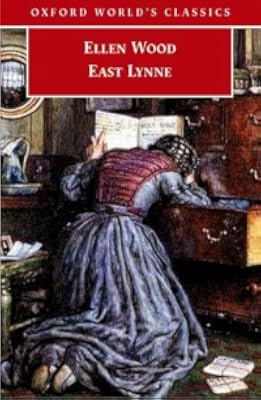
While I learned the hard way that you should never read the introduction to a "classic" if you want to be at all surprised by the book's contents, I've never had a book so thoroughly spoiled by the back cover blurb before! Thanks a lot, Oxford World's Classics. Though it's not like the mystery is that difficult to figure out, I would have appreciated a little more ambiguity from the publishers.
That said, I really enjoyed this book; it took me back to when I was 14 and would stay up all night because I couldn't put down The Woman in White or some other Wilkie Collins novel. I've long since worked my way through his canon (though I'm still working on his more obscure and, usually, less satisfying works), but I'm still just scratching the show more surface of Ms. Braddon's oeuvre. I found Aurora Floyd a real page-turner and highly recommend to any fan of "sensation" literature. show less
That said, I really enjoyed this book; it took me back to when I was 14 and would stay up all night because I couldn't put down The Woman in White or some other Wilkie Collins novel. I've long since worked my way through his canon (though I'm still working on his more obscure and, usually, less satisfying works), but I'm still just scratching the show more surface of Ms. Braddon's oeuvre. I found Aurora Floyd a real page-turner and highly recommend to any fan of "sensation" literature. show less
This is Mary Elizabeth Braddon's second most famous novel after Lady Audley's Secret. Like that one it also concerns a respectable woman with, at least by the standards of the mid 19th century, a disreputable secret in her past. This slightly lacked the sparkle of the other novel, but still contained moments of drama and tension and some interesting characters. There is a murder central to the mystery of Aurora's past, though the identity of the culprit is hardly a surprise and I was slightly hoping for a last minute twist. As an author of Victorian sensationalist novels, Braddon is for me almost up there with Wilkie Collins, though she is undeservedly far less well known.
“Aurora Floyd” features an engaging plot. It’s essentially a domestic drama with something of the detective story thrown in.
I liked most of the characters, particularly Aurora and her cousin Lucy, who have contrasting personalities. Aurora is passionate, Lucy is placid, but both are kind-hearted.
I liked the book a lot, but the number of times that the narrator digresses is irritating. Typical to many other nineteenth-century novels, this one will break off from the story to ramble on about things in life that compare with what the characters are going through, which is needless and annoying. I don't want to read about how people in general feel/behave/react in certain situations, I want to read how the characters in this story show more feel/behave/react. Keep to the narrative.
We also get many references to other authors’ works, especially Shakespeare, which also annoyed me. The reader is expected to be familiar with all these other texts in order to understand the narrator’s meaning. Sometimes I understood, but on numerous occasions I was left clueless.
Apart from the above-mentioned criticisms, I rate this as a very good read. show less
I liked most of the characters, particularly Aurora and her cousin Lucy, who have contrasting personalities. Aurora is passionate, Lucy is placid, but both are kind-hearted.
I liked the book a lot, but the number of times that the narrator digresses is irritating. Typical to many other nineteenth-century novels, this one will break off from the story to ramble on about things in life that compare with what the characters are going through, which is needless and annoying. I don't want to read about how people in general feel/behave/react in certain situations, I want to read how the characters in this story show more feel/behave/react. Keep to the narrative.
We also get many references to other authors’ works, especially Shakespeare, which also annoyed me. The reader is expected to be familiar with all these other texts in order to understand the narrator’s meaning. Sometimes I understood, but on numerous occasions I was left clueless.
Apart from the above-mentioned criticisms, I rate this as a very good read. show less
One of my top two favorite books. I just love it and now I'm collecting various early editions, as well as other works by Braddon
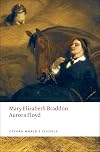
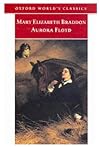
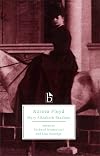
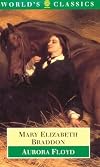
One of my favorites. This is the yellowback edition with a great pictorial front board. Yellowbacks are great to collect because of these boards.
Love this book, one of my top two favorites. This is the paperback version and it's soooo easy to pick up and fall into.
Members
- Recently Added By
Lists

Favourite 19th century fiction
257 works; 60 members

Favourite Virago Modern Classics
183 works; 38 members

Newark Public Library's 1904 List of a Thousand of the Best Novels
95 works; 5 members

Fiction with Women's Names in the Title
378 works; 15 members
Author Information

152+ Works 5,031 Members
Mary Elizabeth Braddon, the daughter of a solicitor, was educated privately. As a young woman, she acted under an assumed name for three years in order to support herself and her mother. In 1860 she met John Maxwell, a publisher of periodicals, whose wife was in an asylum for the insane. Braddon acted as stepmother to Maxwell's five children and show more bore him five illegitimate children before the couple married, in 1874, when Maxwell's wife died. Braddon's most famous novel, Lady Audley's Secret (1862), was first published serially in Robin Goodfellow and The Sixpenny Magazine. One of the earliest sensationalist novels, it sold nearly one million copies during Braddon's lifetime. Its plot involves bigamy, the protagonist's desertion of her child, her murder of her first husband, and her thoughts of poisoning her second husband. The novel shocked and outraged her contemporary, Margaret Oliphant, who said Braddon had invented "the fair-haired demon of modern fiction." Throughout her long literary career, during which she wrote more than 80 novels and edited several magazines, Braddon was often excoriated for her penchant for sensationalizing violence, crime, and sexual indiscretion. Nevertheless, Braddon had many well-known devotees, among them William Makepeace Thackeray, Edward Bulwer-Lytton, and Robert Louis Stevenson. Braddon died in 1915. (Bowker Author Biography) show less
Awards and Honors
Series
Belongs to Publisher Series
Work Relationships
Is contained in
Common Knowledge
- Canonical title
- Aurora Floyd
- Original publication date
- 1863
- People/Characters
- Aurora Floyd; John Mellish; John Conyers
- Related movies
- Aurora Floyd (1912 | IMDb); Aurora Floyd (1915 | IMDb)
- First words
- Faint streaks of crimson glimmer here and there amidst the rich darkness of the Kentish woods.
- Last words
- (Click to show. Warning: May contain spoilers.)So we leave Aurora, a little changed, a shade less defiantly bright, perhaps, but unspeakably beautiful and tender, bending over the cradle of her first-born; and though there are alterations being made at Mellish, and loose-boxes for brood mares building upon the site of the north lodge, and a subscription tan-gallop being laid across Harper's Common, I doubt if my heroine will ever again care so much for horseflesh, or take quite so keen an interest in weight-for-age races as compared to handicaps, as she has done in days that are gone.
- Disambiguation notice
- All 3 volumes
Classifications
Statistics
- Members
- 342
- Popularity
- 92,457
- Reviews
- 8
- Rating
- (3.76)
- Languages
- English, French, German, Spanish
- Media
- Paper, Ebook
- ISBNs
- 34
- ASINs
- 11