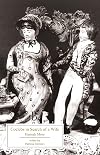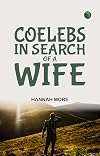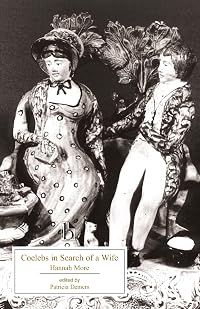
Coelebs in Search of a Wife
by Hannah More
On This Page
Description
In this, Hannah More's only novel and an early nineteenth-century best-seller, More gives voice to a wealthy twenty-three-year-old bachelor, who styles himself "Coelebs" (unmarried), but seeks a wife. After the death of his father, Coelebs journeys from the north of England to London, where he encounters a fashionable array of eager mothers and daughters before he visits the Hampshire home of his father's friend, Mr. Stanley. Lucilla Stanley, Mr. Stanley's daughter, is both an intellectual show more and a domestic woman, and Coelebs' ideal partner. In this intelligent novel about the meeting of two minds, More shows the ways in which a couple becomes truly "matched" as opposed to merely "joined." Along with a critical introduction, this Broadview edition includes a wide selection of historical documents, from reviews, imitations, and sequels of Coelebs in Search of a Wifeto related contemporary writings on conduct, courtship, and women's education. show lessTags
Recommendations
















Member Reviews
I read this book as part of my research toward writing a YA novel set in Regency England. "Coelebs" was a big seller in its time -- Austen certainly read it -- but there's a reason it's more read about than read these days. I give it three stars because it did what it set out to do and I'm not sorry I read it. That said, if you've already read everything Austen wrote and you want something else authentically Regency, I would recommend grabbing something by Fanny Burney rather than Hannah More.
Technically, it's a novel. Really, it's Hannah More using characters to explain her beliefs about women's education and Christianity. I'm interested in both those topics, but even I felt my eyes glazing over now and then. I did like the bits that show more debated the importance of whether human souls are saved by grace or deeds. More thinks both are necessary. As someone raised Catholic and now a hopeless heathen, I had no problem with this, but apparently it was a rather shocking idea in 18th-century England.
Hannah More was a fascinating woman -- if there isn't a full-length biography of her yet, I'd love to write it someday. She was one of five daughters, and learned Latin and mathematics as part of her thorough education. This was unusual for girls at the time. They might learn French or Italian in order to sound elegant at parties (or to have under their belts in case they needed to become governesses), but Latin and Greek were generally reserved for boys. Hannah's father was a schoolmaster, and had no sons. He educated his daughters, and they all became educators as well.
Hannah taught for a time and from a young age, but she loved writing. She also fell very much in love with a man who eventually jilted her. Perhaps he was worried about her family pressing suit for breach of contract -- this really could happen in 18th-century England if a man broke off an engagement -- or perhaps he felt guilty about the nervous breakdown she had as a result of his being such a cad. At any rate, he gave her an annuity of 200 pounds a year, which was enough to allow her to give up teaching and dedicate herself to literary pursuits. (Which sounds like a good deal to *me.*)
Hannah More was a playwright, novelist, and moralist (I don't know how else to describe the fact that she wrote lots of books about how to be pious and good). She also felt strongly about educating women and the poor, and gave money and time to both pursuits. She lived a long and apparently happy life, and there's still at least one school named after her in England. show less
Technically, it's a novel. Really, it's Hannah More using characters to explain her beliefs about women's education and Christianity. I'm interested in both those topics, but even I felt my eyes glazing over now and then. I did like the bits that show more debated the importance of whether human souls are saved by grace or deeds. More thinks both are necessary. As someone raised Catholic and now a hopeless heathen, I had no problem with this, but apparently it was a rather shocking idea in 18th-century England.
Hannah More was a fascinating woman -- if there isn't a full-length biography of her yet, I'd love to write it someday. She was one of five daughters, and learned Latin and mathematics as part of her thorough education. This was unusual for girls at the time. They might learn French or Italian in order to sound elegant at parties (or to have under their belts in case they needed to become governesses), but Latin and Greek were generally reserved for boys. Hannah's father was a schoolmaster, and had no sons. He educated his daughters, and they all became educators as well.
Hannah taught for a time and from a young age, but she loved writing. She also fell very much in love with a man who eventually jilted her. Perhaps he was worried about her family pressing suit for breach of contract -- this really could happen in 18th-century England if a man broke off an engagement -- or perhaps he felt guilty about the nervous breakdown she had as a result of his being such a cad. At any rate, he gave her an annuity of 200 pounds a year, which was enough to allow her to give up teaching and dedicate herself to literary pursuits. (Which sounds like a good deal to *me.*)
Hannah More was a playwright, novelist, and moralist (I don't know how else to describe the fact that she wrote lots of books about how to be pious and good). She also felt strongly about educating women and the poor, and gave money and time to both pursuits. She lived a long and apparently happy life, and there's still at least one school named after her in England. show less
Lena Eden 1826-1879. Cre-Fydd's family fare : young housekeeper's daily assistant. and Household Proverbs I & II.
Members
- Recently Added By
Lists

Books Featured in Jane Austen's Bookshelf
37 works; 7 members
Author Information

67+ Works 344 Members
Some Editions
Common Knowledge
- Canonical title
- Coelebs in Search of a Wife
- Original publication date
- 1809
Classifications
Statistics
- Members
- 35
- Popularity
- 819,646
- Reviews
- 2
- Rating
- (3.00)
- Languages
- English
- Media
- Paper, Ebook
- ISBNs
- 10
- ASINs
- 2