On This Page
Description
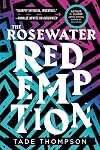
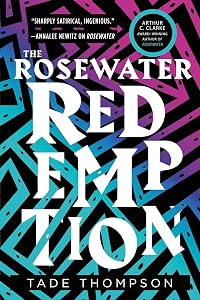
"Life in the newly independent city-state of Rosewater isn't everything its citizens were expecting. The Mayor finds that debts incurred during the insurrection are coming back to haunt him. Nigeria isn't willing to let Rosewater go without a fight. And the city's alien inhabitants are threatening mass murder for their own sinister ends... Operating across spacetime, the xenosphere, and international borders, it is up to a small group of hackers and criminals to prevent the extra-terrestrial show more advance. The fugitive known as Bicycle Girl, Kaaro, and his former handler Femi may be humanity's last line of defense."--Provided by publisher. show lessTags
Recommendations

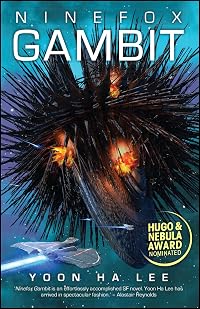
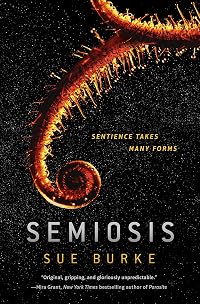
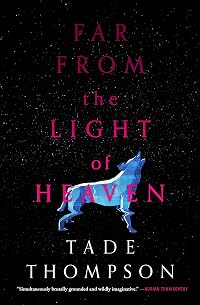
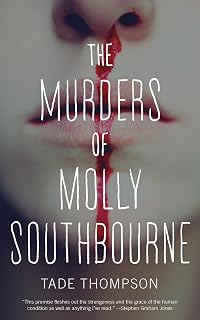

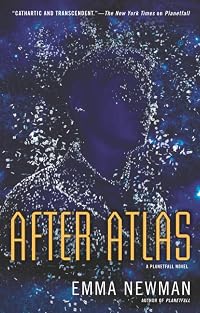
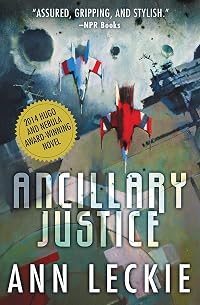
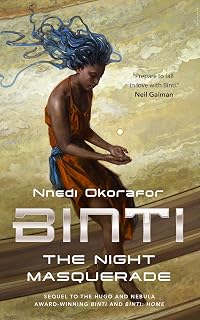
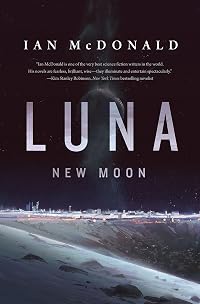

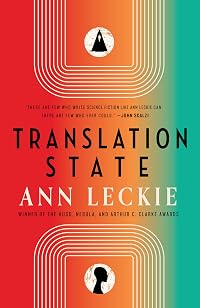
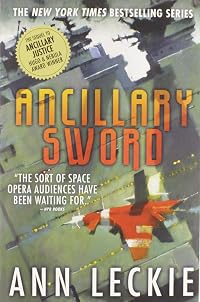
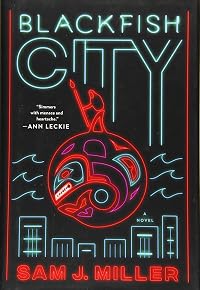
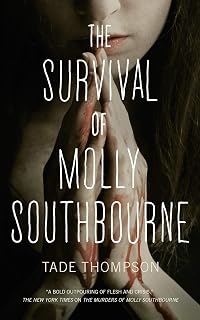






Member Recommendations
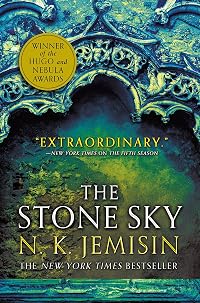
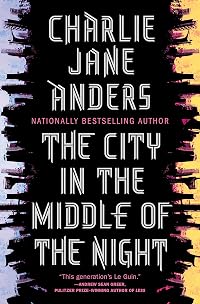
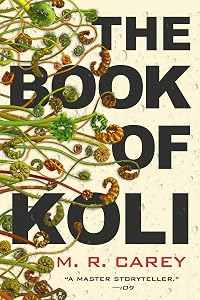
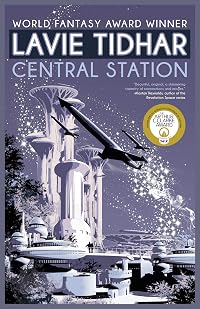
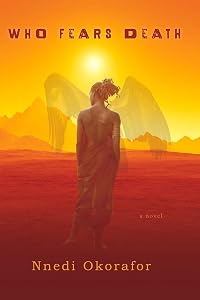
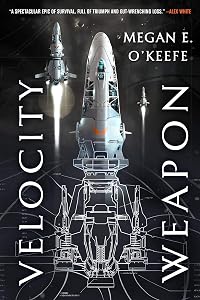
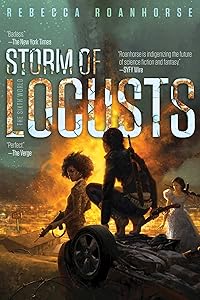
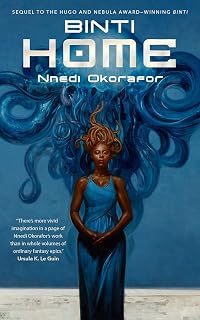
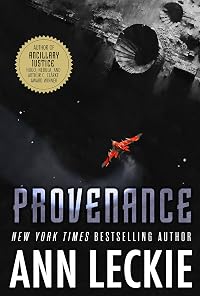
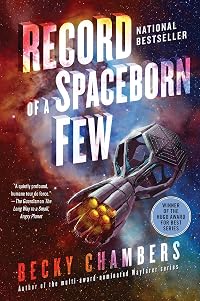
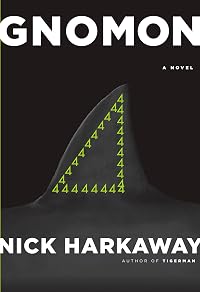
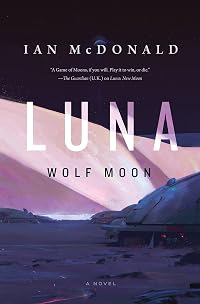
quickmind An alien invasion from aliens who heal humans and trade technology in exchange for a place to stay is a very similar theme.
Member Reviews
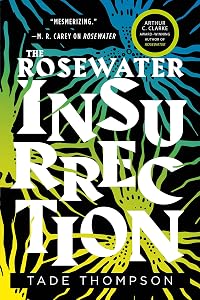
Although this feels like a very obvious thing to say, it merits heavy emphasis: the Rosewater trilogy is enormously fun to read. I've read 118 novels so far this year and both 'The Rosewater Redemption' and [b:The Rosewater Insurrection|40696972|The Rosewater Insurrection (The Wormwood Trilogy, #2)|Tade Thompson|https://i.gr-assets.com/images/S/compressed.photo.goodreads.com/books/1546384122l/40696972._SX50_.jpg|63294872] are among the three I enjoyed most. Tade Thompson is quite simply a brilliant writer. His characters are appealing, his plots wonderfully twisty, his world-building ingenious, his pacing impeccable, and his themes cleverly developed. Each book in the Rosewater trilogy stands as an excellent novel in its own right, but show more together they add up to a totally absorbing reading experience. Each is distinctive in its approach and choice of protagonists, upending your previous sympathies and shifting your prior assumptions. 'Redemption' still follows Kaaro and Aminat, while giving much more time to the mysterious Bicycle Girl and Femi Alaagomeji. While I previously enjoyed them both as enigmas, it was a delight to learn more about their lives and agendas. Each successive book widens the reader's perspective on events and introduces a new layer of complexity.
In 'The Rosewater Redemption' Thompson completely upended my expectations several times, which I absolutely loved.Kaaro is a great character, but when he was suddenly killed by a sniper my main response was excitement. Killing your main male character is unheard of! I absolutely was not expecting it and his subsequent destructive psychic legacy was brilliantly done. I really enjoyed the fact that characters allied with each other then sometimes changed their minds, without falling into a simplistic binary of good vs bad. Moreover, characters who were sympathetic sometimes became much less so, and vice versa. Likewise, the role of the aliens evolved gradually and carefully into a really interesting commentary on colonialism. The third part of the trilogy centres on the fact that Rosewater's independence from Nigeria came at the cost of aliens slowly taking over humanity. The previous novel showed why this might initially seem worth the price, while this one demonstrates why it really isn't. The mayor, previously quasi-heroic, slides into a more antagonistic role. It becomes clear that his hubris in pursuit of independence for Rosewater comes at a horrific cost to its human inhabitants. They are gradually becoming host bodies for the digital consciousness of aliens.
Yet Thompson also shows what Rosewater's independence has achieved. There's a delightful sub-plot in which the mayor formally welcomes LGBT people to the city and holds a brief pride parade, much to the annoyance of Nigeria's president. Prompted by this, Aminat's pyrokinetic brother comes out in a very amusing little moment. I also loved the court scenes in which the mayor's wife argued for the personhood of 'reanimates', the formerly dead humans brought back in zombie-like form by alien intervention. The sharp exchanges between lawyers were magnificent. The large cast are juggled deftly, propelling the plot forward while developing Femi and Oyin Da. The latter's time-travelling adventures with her wife and daughter in the xenophere were a joy. At the very end, Oyin Da and Femi are still standing and chatting about art, which I found very satisfactory. Kaaro has sacrificed what remains of himself to save humanity and the surviving cast are comfortable. However, the city of Rosewater is no more. Ultimately the coexistence of aliens and humans could not be sustained, as the aliens were determined to use humans as resources to exploit.
A major element of my enjoyment throughout the trilogy has been the glorious weirdness and picaresque detail. There's a guy with a tentacle, an android, artificial brains, zombies that get better, alien zombie suicide bombers, crime twins, a hacker in a weird mech suit, a pyrokinetic, and autonomous vehicles that actually work. Thompson includes the best explanation for time travel that I've come across for many years, as well as some fascinating arguments about consciousness and personhood. The action scenes are thrilling and vivid, while the dialogue is witty and intelligent. No-one knows or cares what's happening in America, which has walled itself off from the rest of the world. At one point it seems America could become important to the plot, then it turns out Nigeria can take care of itself. What more can I say? The Rosewater trilogy is fantastic and if you have any interest in fiction set in Africa, sci-fi, or thrillers you should definitely give it a try. show less
In 'The Rosewater Redemption' Thompson completely upended my expectations several times, which I absolutely loved.
Yet Thompson also shows what Rosewater's independence has achieved. There's a delightful sub-plot in which the mayor formally welcomes LGBT people to the city and holds a brief pride parade, much to the annoyance of Nigeria's president. Prompted by this, Aminat's pyrokinetic brother comes out in a very amusing little moment. I also loved the court scenes in which the mayor's wife argued for the personhood of 'reanimates', the formerly dead humans brought back in zombie-like form by alien intervention. The sharp exchanges between lawyers were magnificent. The large cast are juggled deftly, propelling the plot forward while developing Femi and Oyin Da. The latter's time-travelling adventures with her wife and daughter in the xenophere were a joy. At the very end, Oyin Da and Femi are still standing and chatting about art, which I found very satisfactory. Kaaro has sacrificed what remains of himself to save humanity and the surviving cast are comfortable. However, the city of Rosewater is no more. Ultimately the coexistence of aliens and humans could not be sustained, as the aliens were determined to use humans as resources to exploit.
A major element of my enjoyment throughout the trilogy has been the glorious weirdness and picaresque detail. There's a guy with a tentacle, an android, artificial brains, zombies that get better, alien zombie suicide bombers, crime twins, a hacker in a weird mech suit, a pyrokinetic, and autonomous vehicles that actually work. Thompson includes the best explanation for time travel that I've come across for many years, as well as some fascinating arguments about consciousness and personhood. The action scenes are thrilling and vivid, while the dialogue is witty and intelligent. No-one knows or cares what's happening in America, which has walled itself off from the rest of the world. At one point it seems America could become important to the plot, then it turns out Nigeria can take care of itself. What more can I say? The Rosewater trilogy is fantastic and if you have any interest in fiction set in Africa, sci-fi, or thrillers you should definitely give it a try. show less
Rosewater’s independence turns even deadlier as Nigeria attempts to crush the city, the aliens accelerate their attempts to take over human bodies, and humans launch a desperate attempt to fight back. As Abigail Nussbaum says, an anti-invasion narrative is very different when it focuses on Africans who are intimately aware of human colonialist histories. Would you commit genocide—even genocide against a bunch of storied identities on a computer—to save your own people’s future? Does it matter whether there are sympathetic aliens, or not? Thought-provoking, at the very least; I’m looking forward to what comes next for Thompson.
The hot question with me was how Thompson was going to bring this slow-motion take on alien invasion home, and the answer is somewhat haphazard and chaotic, which fits perfectly with the milieu in question. I'm going to admit that I felt that the second book was the strongest part of the trilogy, as that was the one that inspired the most empathy in me, but it also seems clear to me that Thompson had a good sense of how he wanted this trilogy to end, and he stuck to that vision. As for who makes it out on the other side, that would be telling, but let's just say that certain of the characters in these books always wind up on their feet in the end; recommended.
Third of a three-volume science fiction series, and the author's first published novels.
I loved the first two of this trilogy and am puzzled by this one. The world created in this series is complex and I've had to work to keep track of what is going on in each novel. Maybe I wasn't as willng to put in the work on this one? Or my attention is buggered by Covid19? Or maybe it's just more confusing than the first two since it is narrated by Bicycle Girl, who pops in and out of time.
Not satisfied by the ending, suspected ** & >> would save the day. Everything isn't neatly tied up and I didn't expect it to be, but to me it ends on a whimper.
I loved the first two of this trilogy and am puzzled by this one. The world created in this series is complex and I've had to work to keep track of what is going on in each novel. Maybe I wasn't as willng to put in the work on this one? Or my attention is buggered by Covid19? Or maybe it's just more confusing than the first two since it is narrated by Bicycle Girl, who pops in and out of time.
Not satisfied by the ending, suspected ** & >> would save the day. Everything isn't neatly tied up and I didn't expect it to be, but to me it ends on a whimper.
The first two books were so imaginative and unique, that I went into this conclusion with a bit of trepidation. I was looking forward to seeing how it would conclude, but was also a little scared that the ending be dissatisfying. I had hopes that the ending would be a little more nuanced, messy, weird, and not just come down to "us vs them." Unfortunately, I was only partially right. It eventually came down to its either humanity, or the aliens, there can be no coexistence, they either destroy us, or we destroy them. So that was a bit disappointing, but was a logical conclusion based on the characters' arcs and actions. I would have been more satisfied if Oyin Da and her family had figured out how to sustain the Xenosphere before the show more Homians were destroyed and allowed them to live as "ghosts" instead of committing genocide. The ending was a victory in terms of survival for humanity, but was a defeat morally. So, yes, messy, the events were weird, but not as creative and weird as I would have liked. Still one of the most original trilogies I have read, and I'm glad I read it. show less
If it was just me, I might have questioned my, uh, processing ability. But I was lucky enough to be reading [b:The Rosewater Insurrection|40696972|The Rosewater Insurrection (The Wormwood Trilogy, #2)|Tade Thompson|https://i.gr-assets.com/images/S/compressed.photo.goodreads.com/books/1546384122l/40696972._SX50_.jpg|63294872] and Redemption with two brilliant women who seemed as confounded as I in their reaction to Redemption, so I feel at least partially absolved. It’s the capstone to the Rosewater trilogy, which gives an additional layer of complexity to my reaction. I think it’s fair to expect some sort of emotional resolution, as well as a number of plot points to be resolved. Some trilogies are clearly interlinked, but each show more volume does stand on its own ([b:The Last Policeman|13330370|The Last Policeman (The Last Policeman, #1)|Ben H. Winters|https://i.gr-assets.com/images/S/compressed.photo.goodreads.com/books/1344370646l/13330370._SY75_.jpg|18538006] does a fair job at this; [b:Annihilation|17934530|Annihilation (Southern Reach, #1)|Jeff VanderMeer|https://i.gr-assets.com/images/S/compressed.photo.goodreads.com/books/1403941587l/17934530._SX50_.jpg|24946895] less so). This is not true of Redemption, which feels even more chaotic than Insurrection as it carries the various conflicts to nominal resolution.
One new viewpoint is from Oyin Da, aka ‘Bicycle Girl,’ who Kaaro met early in his 20s. Oyin Da is a very confusing character and in some ways, an unreliable narrator, or at least one who is learning a lot more about herself and her world. She travels the xenosphere with ease, and believes she travels back and forth in time.
Needless to say, it gets a little weird.
The prologue is best summed up by Jessica’s astute remark that “it felt like 3am channel surfing.” It was a deconstructed multiple-perspective multiple plot piece largely from Oyin Da that just didn’t work for me. It certainly didn’t work well for reminding the reader of prior players, although it might have brought to mind past events. Was it’s purpose foreshadowing? Mostly, only my confusion. What really happened is that it irritated me enough that the rest of the story had a deficit to overcome. While I understand wanting to play with a narrative, a trilogy is about the arc, and so if you want the readers to stay with your entire tale, you don’t need to challenge them more. Believe me; there’s enough chaos that follows that we didn’t need this obstacle.
Narrative continues to be messy, with multiple viewpoints, but primarily those of Oyin Da, Jack Jacques and his wife Hannah, with touch points of Kaaro, Aminat, the criminal Dahun, Lora the A.I. aide to Jack, Femi, and probably a few others.
Unfortunately, plotting hardly fares better with the war motif in full play on many levels. While Rosewater believes it’s fighting a war of succession with Nigeria, there’s also a war between humans and aliens, with a secret group of humans working to remove aliens from the world while some aliens are working to speed up the process. There might also be a war between the alien Wormwood and the new virus-alien-model, Alyssa, now called ‘Koriko,’ but no one is sure. Meanwhile Jack Jacque’s band of delinquents are the nominal police force, so Aminat is trying to keep order with them at the same time someone seems to be targeting the old head of the criminal organization. In a further twist, Hannah is starting a legal war with the government of Rosewater–essentially, Jack–over reanimate rights.
Although many reviews enjoyed this book and the series, I find myself struggling with my reaction. While it nominally resolves many of the plot points (thus satisfying my book-plot OCD), it does so in very messy and inconsistent ways. Alyssa gives up and decides she doesn’t care about humanity. Aminat has continued to work for Jacque, despite Femi being imprisoned and having to work with a band of thugs. Femi’s methods become even more inscrutable, and don’t get me started on Oyin Da’s ‘time-travel.’ Her ending felt a cheat as well. While I enjoyed the weird gestalt of the first two books, this felt like Thompson reached a little too far and lost control.
But could you read the first two without this? I suppose so, but why would you? And the first? You certainly could read the first and quit. I don’t know; I think this might be best compared to Annihilation, where the first book was outstanding, the second went another place entirely, and the third tried to tie the first two together and provide an overview. While I’m not sorry I read it, it’s definitely made me hesitant to recommend the series to others.
Many, many thanks to the fabulous Jessica and Nataliya for getting me through this book and for the informative discussion! show less
One new viewpoint is from Oyin Da, aka ‘Bicycle Girl,’ who Kaaro met early in his 20s. Oyin Da is a very confusing character and in some ways, an unreliable narrator, or at least one who is learning a lot more about herself and her world. She travels the xenosphere with ease, and believes she travels back and forth in time.
Needless to say, it gets a little weird.
The prologue is best summed up by Jessica’s astute remark that “it felt like 3am channel surfing.” It was a deconstructed multiple-perspective multiple plot piece largely from Oyin Da that just didn’t work for me. It certainly didn’t work well for reminding the reader of prior players, although it might have brought to mind past events. Was it’s purpose foreshadowing? Mostly, only my confusion. What really happened is that it irritated me enough that the rest of the story had a deficit to overcome. While I understand wanting to play with a narrative, a trilogy is about the arc, and so if you want the readers to stay with your entire tale, you don’t need to challenge them more. Believe me; there’s enough chaos that follows that we didn’t need this obstacle.
Narrative continues to be messy, with multiple viewpoints, but primarily those of Oyin Da, Jack Jacques and his wife Hannah, with touch points of Kaaro, Aminat, the criminal Dahun, Lora the A.I. aide to Jack, Femi, and probably a few others.
Unfortunately, plotting hardly fares better with the war motif in full play on many levels. While Rosewater believes it’s fighting a war of succession with Nigeria, there’s also a war between humans and aliens, with a secret group of humans working to remove aliens from the world while some aliens are working to speed up the process. There might also be a war between the alien Wormwood and the new virus-alien-model, Alyssa, now called ‘Koriko,’ but no one is sure. Meanwhile Jack Jacque’s band of delinquents are the nominal police force, so Aminat is trying to keep order with them at the same time someone seems to be targeting the old head of the criminal organization. In a further twist, Hannah is starting a legal war with the government of Rosewater–essentially, Jack–over reanimate rights.
Although many reviews enjoyed this book and the series, I find myself struggling with my reaction. While it nominally resolves many of the plot points (thus satisfying my book-plot OCD), it does so in very messy and inconsistent ways. Alyssa gives up and decides she doesn’t care about humanity. Aminat has continued to work for Jacque, despite Femi being imprisoned and having to work with a band of thugs. Femi’s methods become even more inscrutable, and don’t get me started on Oyin Da’s ‘time-travel.’ Her ending felt a cheat as well. While I enjoyed the weird gestalt of the first two books, this felt like Thompson reached a little too far and lost control.
But could you read the first two without this? I suppose so, but why would you? And the first? You certainly could read the first and quit. I don’t know; I think this might be best compared to Annihilation, where the first book was outstanding, the second went another place entirely, and the third tried to tie the first two together and provide an overview. While I’m not sorry I read it, it’s definitely made me hesitant to recommend the series to others.
Many, many thanks to the fabulous Jessica and Nataliya for getting me through this book and for the informative discussion! show less
All three of these Wormwood books are perfect for Weird fans. Not that you have to be weird as a fan to enjoy them, merely that you must enjoy Weird fiction, be tolerant of cthulhu-like alien entities who provide rather miraculous services in return for a foothold in humanity. Wait. Isn't this just an alien invasion story?
Sure, like Fight Club is just a story about self-help groups.
We get a solid return for main characters in the previous two, get thrown into time-travel, end-of-the-world, last-stand alien repulsion, and, surprisingly, a rather large part of the novel deals with gay rights.
The subtext is solid, but it never gets in the way of the over-arching tale. Which is big. It spans across a lot of countries and across a show more theoretically huge amount of time, and although there IS time travel in this, it doesn't take up a lot of page-time.
I loved the big story. I enjoyed seeing old characters come back. I wasn't as impressed with the amount of character-building in this one as compared to the first or especially the second books, but it felt like a pretty good send-up to me.
The most impressive part of these books is the all-out genre-bending courage it takes to make them. I'm a big fan of Tade when it comes to this. His two novellas gave me a huge wonderful taste and three out of five novels pretty much solidified it. Imagination is key. They're full of it. :) show less
Sure, like Fight Club is just a story about self-help groups.
We get a solid return for main characters in the previous two, get thrown into time-travel, end-of-the-world, last-stand alien repulsion, and, surprisingly, a rather large part of the novel deals with gay rights.
The subtext is solid, but it never gets in the way of the over-arching tale. Which is big. It spans across a lot of countries and across a show more theoretically huge amount of time, and although there IS time travel in this, it doesn't take up a lot of page-time.
I loved the big story. I enjoyed seeing old characters come back. I wasn't as impressed with the amount of character-building in this one as compared to the first or especially the second books, but it felt like a pretty good send-up to me.
The most impressive part of these books is the all-out genre-bending courage it takes to make them. I'm a big fan of Tade when it comes to this. His two novellas gave me a huge wonderful taste and three out of five novels pretty much solidified it. Imagination is key. They're full of it. :) show less
Members
- Recently Added By
Lists

2020 Hugo Eligible Novels
71 works; 12 members

Kirkus Starred Fiction Reviews of Books Published in 2019
411 works; 12 members

Books Read in 2019
4,052 works; 108 members
Author Information

28+ Works 3,344 Members
Awards and Honors
Awards
Distinctions
The Guardian Book of the Day (2019-11-22)
Series

Work Relationships
Has as a study
Common Knowledge
- Canonical title
- The Rosewater Redemption
- Original publication date
- 2019-10
Classifications
Statistics
- Members
- 280
- Popularity
- 115,184
- Reviews
- 11
- Rating
- (3.97)
- Languages
- English
- Media
- Paper, Audiobook, Ebook
- ISBNs
- 9
- ASINs
- 4