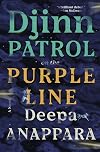
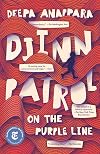
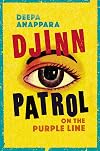
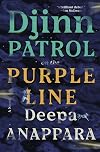
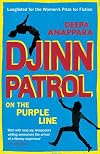
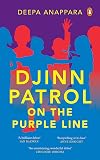
Djinn Patrol on the Purple Line
by Deepa Anappara
On This Page
Description
"Based on a true story--Nine-year-old Jai watches too many reality police shows, thinks he's smarter than his friend Pari (even though she gets the best grades), and considers himself to be a better boss than Faiz (even though Faiz is the one with a job). When a classmate goes missing, Jai decides to use the crime-solving skills he has picked up from TV to find him. He asks Pari and Faiz to be his assistants and together they draw up lists of people to interview and places to visit. But what show more begins as a game turns sinister as other children start disappearing from their neighborhood. Jai, Pari, and Faiz have to confront terrified parents, an indifferent police force, and their fears of soul-snatching djinns. As the disappearances edge ever closer to home, the lives of Jai and his friends will never be the same again. At times exuberant, at times heartbreaking, Djinn Patrol on the Purple Line traces the unfolding of a tragedy while capturing the fierce warmth and resilience of a community forged in times of trouble"-- show lessTags
Recommendations









































Member Recommendations
Member Reviews
I always enjoy checking out lists of publisher recommended reads. I often find a hidden jewel I wouldn't have found on my own. Such is the case with Deepa Anappara's debut novel Djinn Patrol on the Purple Line.
Djinn: "An intelligent spirit of lower rank than the angels, able to appear in human and animal forms and to possess humans."
Jai is nine years old and lives with his parents and older sister in a tin roofed home in the slums and shadow of wealthy high rises in a large Indian city. When a child from his school goes missing and the police are completely indifferent and uninterested, Jai decides to look for him with the help of his two friends.
Initially, I found the narrative to be somewhat light hearted. Jai uses his detective show more skills learned from his favorite television show. The banter between the friends is clever. Jai seems to be always in trouble with his family, teacher and neighbors. But things start to take on another note and a darker tone when another child goes missing. And the same indifference is employed from those 'above' the residents of this shanty town.
Jai's voice was wonderful - quick, sharp-witted, knowing, but still innocent, despite living a life we Westerners would view as deprived. He is greatly loved by his family and friends, is kind and caring with a roguish streak. I liked him very much.
The setting is so well described - I could feel the heat, smell the spices and hear the aunties complaining. The setting is just as much a character in the book. It dictates the direction the plot takes. And it goes places I didn't want it to. On reading the author's notes, I learned that Djinn Patrol on the Purple Line was based on actual events in India. Anappara was a journalist in India for many years, reporting on children's issues. That knowledge and experience brings the book alive.
I laughed and yes, I cried. But I truly enjoyed this book. (And learned quite a bit)
A statistic from Anappara's research: 180 children go missing each day in India. Only 1 in 3 will ever be found. show less
Djinn: "An intelligent spirit of lower rank than the angels, able to appear in human and animal forms and to possess humans."
Jai is nine years old and lives with his parents and older sister in a tin roofed home in the slums and shadow of wealthy high rises in a large Indian city. When a child from his school goes missing and the police are completely indifferent and uninterested, Jai decides to look for him with the help of his two friends.
Initially, I found the narrative to be somewhat light hearted. Jai uses his detective show more skills learned from his favorite television show. The banter between the friends is clever. Jai seems to be always in trouble with his family, teacher and neighbors. But things start to take on another note and a darker tone when another child goes missing. And the same indifference is employed from those 'above' the residents of this shanty town.
Jai's voice was wonderful - quick, sharp-witted, knowing, but still innocent, despite living a life we Westerners would view as deprived. He is greatly loved by his family and friends, is kind and caring with a roguish streak. I liked him very much.
The setting is so well described - I could feel the heat, smell the spices and hear the aunties complaining. The setting is just as much a character in the book. It dictates the direction the plot takes. And it goes places I didn't want it to. On reading the author's notes, I learned that Djinn Patrol on the Purple Line was based on actual events in India. Anappara was a journalist in India for many years, reporting on children's issues. That knowledge and experience brings the book alive.
I laughed and yes, I cried. But I truly enjoyed this book. (And learned quite a bit)
A statistic from Anappara's research: 180 children go missing each day in India. Only 1 in 3 will ever be found. show less
Perhaps it’s the reporter’s instinct for detail that makes this debut book so riveting. As a journalist, Anappara saw a lot of poor neighborhoods desperate for the return of missing and most likely exploited children. In her creation of a young child as the protagonist in this story, she has created an observer not hindered by adult knowledge, one who sees the world through new eyes. Jai lives in a slum. He goes to school unwillingly, and for good reason—gangs, uncaring teachers and large classes. He‘s Hindi. One of his best friends is Muslim. His other best friend is a girl who excels in academics. His sister is involved in track and field at their school and hopes to be able to compete on the state level. As children disappear show more from the neighborhood, Jai and his two friends, become detectives hoping to discover what has happened to them. Local Hindis want to blame it on the Muslims, which turns out to be false, but puts undue pressure on the small Muslim population. As a children’s librarian, I’ve always been impressed by the unexpected, wise observations of children, and this book confirms my belief. Children can be keen observers of the word around them. Although the city is unnamed in the book, if you’ve read BEHIND THE BEAUTIFUL FOREVERS you are familiar with the corrupt police forces, the conditions of slums, and the challenges of survival. This book puts a clear picture in the reader’s mind of the toll it takes on children. show less
I RECEIVED AN ARC FROM THE PUBLISHER. THANK YOU.
My Review: One of my take-aways from living through the twenty-first century as an immigrant to its reality is that there are a *shocking* number of souls that just...vanish...with no explanation, no investigation, and no closure for their families or friends. Author Anappara knows this...she is a journalist, she hears the howls. The question I have is the same one I had when the Ciudad Juárez femicides first came to light: What the actual fuck are the police doing?
That being an unanswerable question without delving into immense mountains of sociopolitical research and studies, I'll go to the next part of the issue raised in the story: Caste and sectarian animosities and prejudices come show more in for scary, extra-believable spotlighting in here. It's like the awfulness I really wasn't privy to before Katherine Boo's book came out (whatever the criticisms Boo gets, I for one hadn't heard anything about these issues before I read it) sprang to life in the eyes of a nine-year-old boy. He's the only one who cares that Bahadur has gone missing...as much, that is, as the child's mother cares.
Very much raised by TV while being resentfully and carelessly monitored by his gifted older sister (a quietly important strand is the terrible, sexist manner that the capitalist system exacerbates her mistreatment, the not terribly bright but terribly endearingly bumptious and energetic Jai gets a scooby-group of kids together to seek out Bahadur. What unfolds is proof that kids are great narrators, if lousy cops. The scooby-group is convinced (well, two-thirds convinced) that there's a Djinn on the eponymous Purple Line of the city's subway. No, there isn't; if you came hoping for a fantasy read, go in peace. What they do discover is, however, very relevant.
There are things in the telling of the story that didn't work well to make it into a satisfying read: The neglected sister who watches Jai does something that removes her from sympathy to distaste. It's not pretty, it was perfectly understandable, but it actually made the central search more complicated and showed that adolescents are not the best choices of parent subsitiutes. The final solution of the mystery at the heart of the book is desperately sad; it's also not what was signaled as one of the book's themes, the complicity of the capitalist world in the destruction of families and ways of life, as well as exacerbating the existing sectarian horrors plaguing India. In my view, this was a narrative error, since it took the wind out of the sails of at least half the book's points. And, perhaps most tellingly, the multiplicity of narrative voices was less an enrichment of the story than a lessening of tension. This is very often the case in crime fiction.
This explains a lot of why this carefully crafted and involvingly told story didn't get all five stars from me.
What was so enriching in this read was the manner of making evident the luxury of a safe, secure childhood anywhere not already rich. What made me think the hardest was the additional, personal light shone on the family of a disappeared child, the struggles of parenting while extremely poor, the harshness of communities that, under threat, are coldly calculatedly indifferent in their actions if not always their hearts...they simply can't afford to be fully realized communities such as existed before capitalism fastened its teeth in India's neck. show less
My Review: One of my take-aways from living through the twenty-first century as an immigrant to its reality is that there are a *shocking* number of souls that just...vanish...with no explanation, no investigation, and no closure for their families or friends. Author Anappara knows this...she is a journalist, she hears the howls. The question I have is the same one I had when the Ciudad Juárez femicides first came to light: What the actual fuck are the police doing?
That being an unanswerable question without delving into immense mountains of sociopolitical research and studies, I'll go to the next part of the issue raised in the story: Caste and sectarian animosities and prejudices come show more in for scary, extra-believable spotlighting in here. It's like the awfulness I really wasn't privy to before Katherine Boo's book came out (whatever the criticisms Boo gets, I for one hadn't heard anything about these issues before I read it) sprang to life in the eyes of a nine-year-old boy. He's the only one who cares that Bahadur has gone missing...as much, that is, as the child's mother cares.
Very much raised by TV while being resentfully and carelessly monitored by his gifted older sister (a quietly important strand is the terrible, sexist manner that the capitalist system exacerbates her mistreatment, the not terribly bright but terribly endearingly bumptious and energetic Jai gets a scooby-group of kids together to seek out Bahadur. What unfolds is proof that kids are great narrators, if lousy cops. The scooby-group is convinced (well, two-thirds convinced) that there's a Djinn on the eponymous Purple Line of the city's subway. No, there isn't; if you came hoping for a fantasy read, go in peace. What they do discover is, however, very relevant.
There are things in the telling of the story that didn't work well to make it into a satisfying read: The neglected sister who watches Jai does something that removes her from sympathy to distaste. It's not pretty, it was perfectly understandable, but it actually made the central search more complicated and showed that adolescents are not the best choices of parent subsitiutes. The final solution of the mystery at the heart of the book is desperately sad; it's also not what was signaled as one of the book's themes, the complicity of the capitalist world in the destruction of families and ways of life, as well as exacerbating the existing sectarian horrors plaguing India. In my view, this was a narrative error, since it took the wind out of the sails of at least half the book's points. And, perhaps most tellingly, the multiplicity of narrative voices was less an enrichment of the story than a lessening of tension. This is very often the case in crime fiction.
This explains a lot of why this carefully crafted and involvingly told story didn't get all five stars from me.
What was so enriching in this read was the manner of making evident the luxury of a safe, secure childhood anywhere not already rich. What made me think the hardest was the additional, personal light shone on the family of a disappeared child, the struggles of parenting while extremely poor, the harshness of communities that, under threat, are coldly calculatedly indifferent in their actions if not always their hearts...they simply can't afford to be fully realized communities such as existed before capitalism fastened its teeth in India's neck. show less
Heartbreaking, based on true lives of children and parents in an unnamed slum or basti of a large Indian city, where the flimsy shacks are ringed by new subway lines and new apartment buildings for the "hi-fi" wealthy, who employ the wives and girls as servants. There's Hindu-Muslim conflicts that burst out sporadically, but the underlying unspoken war is against the corrupt police and politicians who steal from the poorest. Featuring nine-year-old Jai, who yearns for a dog and to be a detective; his striver sister Didi, a fast runner, their parents, and Jai's friends, all seems difficult but bearable until children start disappearing. Jai tries to use the skills he's learned from TV as he ranges through the Bhoot Bazaar and takes on a show more few jobs to help out, but there are no explanations for the disappearances and neighbors turn on each other as all actions are suspicious. It is likely that this boy and his family will occupy your mind and heart forever. show less
Djinn Patrol on the Purple Line by Deepa Anappara is set in the slums that have risen along the Purple Line of an unnamed Indian city’s metro. When one of his classmates goes missing, nine year old Jai and his two friends Pari and Faiz decide investigate the disappearance. Jai is inspired by his favorite reality cop television program. As more children start to disappear, it seems as if this hapless trio are the only ones who are looking into the disappearance of these children.
The story is an excellent mixture of a coming-of-age with a mystery and an intense social commentary on life lived in these crowded slums. We learn of their day-to-day life, their food, clothing, education, religions and culture. The children know of no show more different life so they are for the most part cheerful and happy. Of course the fact that someone or something is taking children is constantly in the background and causing the rules to tighten, parents to become more demanding and freedoms to be curtailed. The tension builds as more children disappear and finally, someone very close to Jai is taken.
Djinn Patrol on the Purple Line is a compelling read that lays bare the complex social and political realities of modern day India and immerses us in Jai’s world both through his imagination and his very sharp observations. This difficult story filtered through a child’s eyes brings a sense of reality to the fact that in India up to 180 children go missing every day. These unfound and unlooked for children are from slums very much like the one that Jai lives in. show less
The story is an excellent mixture of a coming-of-age with a mystery and an intense social commentary on life lived in these crowded slums. We learn of their day-to-day life, their food, clothing, education, religions and culture. The children know of no show more different life so they are for the most part cheerful and happy. Of course the fact that someone or something is taking children is constantly in the background and causing the rules to tighten, parents to become more demanding and freedoms to be curtailed. The tension builds as more children disappear and finally, someone very close to Jai is taken.
Djinn Patrol on the Purple Line is a compelling read that lays bare the complex social and political realities of modern day India and immerses us in Jai’s world both through his imagination and his very sharp observations. This difficult story filtered through a child’s eyes brings a sense of reality to the fact that in India up to 180 children go missing every day. These unfound and unlooked for children are from slums very much like the one that Jai lives in. show less
Nine-year-old Jai lives with his parents and older sister Runu in an Indian basti (slum). When a classmate goes missing, Jai recruits his friends Pari and Faiz to become detectives to help find the missing boy.
Jai is addicted to television crime shows and feels he has picked up crime-solving skills which he hopes to put to use. What starts as a game becomes more serious as more children disappear. The police seem indifferent though the community becomes more concerned. As a result, tensions within the basti arise and, because the missing children are Hindu, Muslim residents are blamed.
Jai is the first-person narrator. It is interesting to have a child’s perspective on the events. Because of his age, Jai is naïve and somewhat show more confused and so not always totally aware of the horror that is happening around him. Of course, as events touch him more personally, his innocence is taken from him. Jai has both Hindu and Muslim friends so his open-mindedness contrasts the opinions of many of the adults in his neighbourhood.
Interspersed throughout are chapters giving the point of view of each of the children who disappears. We learn about their daily struggles and their dreams. What they all have in common is a hope for a better life than the one they are currently living in the basti.
The characterization of Jai is very realistic. He is a very convincing young boy. He is over-confident and so over-estimates his skills as a detective. He lacks maturity so often asks awkward or insensitive questions and finds it difficult to accept that his friend Pari asks better questions that he does; after all, she is a girl. He is rather lazy and easily distractible. He is self-centred; though his parents worry about both Jai and Runu, Jai prays only for himself: “Please God, don’t let me be kidnapped or murdered or djinned.” Through the course of the novel, events force Jai to mature; he realizes his shortcomings and becomes less focused on self.
This book takes the reader on an emotional roller coaster. It begins slowly and seems rather light-hearted. The three children play a game at being detectives. Pari’s constant overshadowing of Jai as an investigator adds humour. Of course, suspense is gradually ramped up as more and more children go missing. As the novel progresses, a reader would have to be unfeeling not to be almost overwhelmed by sadness and anger.
The portrayal of life in the slums seems very realistic. People live in one-room shacks and though both of Jai’s parents have full-time jobs, he often grows hungry: “I find a twig that I can chew to fool my tummy into thinking more food is on its way.” The slum dwellers live under constant threat of having their homes destroyed; they fear going to the police or protesting police inaction because by drawing attention to themselves, they risk authorities demolishing the entire basti.
The lives of the poor are contrasted with those of the rich, the “hi-fi” people. The wealthy have all the power; one man accuses a policeman, “’you are suspicious of maids and carpenters and plumbers, but when you see a hi-fi madam or sir, you bow your head and jump out of the way.’” The plight of the poor is just seen as an inconvenience by the rich. For example, when a woman’s daughter goes missing, she calls her employer to ask for two days off and the employer responds, “’Should I find a new bai to do your job? Your daughter must have run off with a boy. I heard it’s happening a lot in your area.’”
Not only is there inequality between the rich and the poor but also between genders. Girls' lives are especially difficult. Khadifa, a young girl, bemoans how she must always look after her brother Kabir. Their mother “had sent Kabir out to buy a packet of milk in the evening, and then Khadifa to bring him back when he didn’t return a couple of hours later. No matter that Khadifa had friends to talk to, and sewing to complete. Each time Kabir misbehaved, it fell on Khadifa to set things right. How was that fair?” Their mother is pregnant and Khadifa fears, “The new baby brother would probably be a rogue too, just like Kabir. All of Khadifa’s time would go in chasing after these brats; she wouldn’t have a minute to try on a new nail polish or a hairband at a friend’s house.” She covers for her brother because she fears their parents “would pack him off to the village where their grandparents lived, and no doubt assign Khadifa the position of his minder. . . . the mullah [in this village] said girls should be married off before they turned too old, and his too-old was thirteen or fourteen. Kabir would lose nothing if they moved to the village, and Khadifa would lose everything.”
Runu thinks of how Jai has daydreams and the self-confidence “that the world granted boys (which, in girls, was considered a character flaw or evidence of a dismal upbringing).” Runu feels “she existed solely to care for her brother, and the house. Afterward, she would similarly look after her husband, her hands smelling of cow-dung cakes. Her own dreams were inconsequential.”
The author explores an important issue: “As many as 180 children are said to go missing in India every day.” The novel shows the effect these disappearances have on the families, families which are already marginalized. The result is a book that is both thought-provoking and heart-breaking.
Note: I received a digital galley from the publisher via NetGalley.
Please check out my reader's blog (https://schatjesshelves.blogspot.com/) and follow me on Twitter (@DCYakabuski). show less
Jai is addicted to television crime shows and feels he has picked up crime-solving skills which he hopes to put to use. What starts as a game becomes more serious as more children disappear. The police seem indifferent though the community becomes more concerned. As a result, tensions within the basti arise and, because the missing children are Hindu, Muslim residents are blamed.
Jai is the first-person narrator. It is interesting to have a child’s perspective on the events. Because of his age, Jai is naïve and somewhat show more confused and so not always totally aware of the horror that is happening around him. Of course, as events touch him more personally, his innocence is taken from him. Jai has both Hindu and Muslim friends so his open-mindedness contrasts the opinions of many of the adults in his neighbourhood.
Interspersed throughout are chapters giving the point of view of each of the children who disappears. We learn about their daily struggles and their dreams. What they all have in common is a hope for a better life than the one they are currently living in the basti.
The characterization of Jai is very realistic. He is a very convincing young boy. He is over-confident and so over-estimates his skills as a detective. He lacks maturity so often asks awkward or insensitive questions and finds it difficult to accept that his friend Pari asks better questions that he does; after all, she is a girl. He is rather lazy and easily distractible. He is self-centred; though his parents worry about both Jai and Runu, Jai prays only for himself: “Please God, don’t let me be kidnapped or murdered or djinned.” Through the course of the novel, events force Jai to mature; he realizes his shortcomings and becomes less focused on self.
This book takes the reader on an emotional roller coaster. It begins slowly and seems rather light-hearted. The three children play a game at being detectives. Pari’s constant overshadowing of Jai as an investigator adds humour. Of course, suspense is gradually ramped up as more and more children go missing. As the novel progresses, a reader would have to be unfeeling not to be almost overwhelmed by sadness and anger.
The portrayal of life in the slums seems very realistic. People live in one-room shacks and though both of Jai’s parents have full-time jobs, he often grows hungry: “I find a twig that I can chew to fool my tummy into thinking more food is on its way.” The slum dwellers live under constant threat of having their homes destroyed; they fear going to the police or protesting police inaction because by drawing attention to themselves, they risk authorities demolishing the entire basti.
The lives of the poor are contrasted with those of the rich, the “hi-fi” people. The wealthy have all the power; one man accuses a policeman, “’you are suspicious of maids and carpenters and plumbers, but when you see a hi-fi madam or sir, you bow your head and jump out of the way.’” The plight of the poor is just seen as an inconvenience by the rich. For example, when a woman’s daughter goes missing, she calls her employer to ask for two days off and the employer responds, “’Should I find a new bai to do your job? Your daughter must have run off with a boy. I heard it’s happening a lot in your area.’”
Not only is there inequality between the rich and the poor but also between genders. Girls' lives are especially difficult. Khadifa, a young girl, bemoans how she must always look after her brother Kabir. Their mother “had sent Kabir out to buy a packet of milk in the evening, and then Khadifa to bring him back when he didn’t return a couple of hours later. No matter that Khadifa had friends to talk to, and sewing to complete. Each time Kabir misbehaved, it fell on Khadifa to set things right. How was that fair?” Their mother is pregnant and Khadifa fears, “The new baby brother would probably be a rogue too, just like Kabir. All of Khadifa’s time would go in chasing after these brats; she wouldn’t have a minute to try on a new nail polish or a hairband at a friend’s house.” She covers for her brother because she fears their parents “would pack him off to the village where their grandparents lived, and no doubt assign Khadifa the position of his minder. . . . the mullah [in this village] said girls should be married off before they turned too old, and his too-old was thirteen or fourteen. Kabir would lose nothing if they moved to the village, and Khadifa would lose everything.”
Runu thinks of how Jai has daydreams and the self-confidence “that the world granted boys (which, in girls, was considered a character flaw or evidence of a dismal upbringing).” Runu feels “she existed solely to care for her brother, and the house. Afterward, she would similarly look after her husband, her hands smelling of cow-dung cakes. Her own dreams were inconsequential.”
The author explores an important issue: “As many as 180 children are said to go missing in India every day.” The novel shows the effect these disappearances have on the families, families which are already marginalized. The result is a book that is both thought-provoking and heart-breaking.
Note: I received a digital galley from the publisher via NetGalley.
Please check out my reader's blog (https://schatjesshelves.blogspot.com/) and follow me on Twitter (@DCYakabuski). show less
Djinn Patrol on the Purple Line is a hard read, not because the prose is intricate or the plot overly complex. Djinn Patrol on the Purple Line is a hard read because it takes what to many of us are abstract wrongs—huge inequalities in wealth; indifferent law enforcement; the vulnerabilities of children, especially those who are poor—and makes those wrongs concrete. The novel is set in India. While many of its details are specific to India, the issues it wrestles with are more global.
Children are disappearing from a basti (a poor neighborhood) located within sight of the apartment towers of the very rich. After the first disappearance, Jai, a fan of television cop shows, decides he will play detective and bring his classmate home. He show more discovers inequities and dangers that he hadn't imagined and wrestles with questions of fairness and community.
To avoid "spoilers," I don't want to say more about the plot, but I do want to speak a bit about the narrative voices Anappara creates. The primary voice is Jai's, and like him, it is distractable, immature, and changeable. At times, readers may be frustrated by how far off track Jai's perceptions of the world seem or how foolhardy his actions are—but the voice rings true. Other parts of the novel are written in third person, but in ways that embrace the perspective of the different characters depicted. In all these voices we hear a longing for something more hopeful, more stable—and realize how unlikely such hope and stability are.
I receive a free electronic review copy of this title from the publisher via NetGalley. The opinions are my own. show less
Children are disappearing from a basti (a poor neighborhood) located within sight of the apartment towers of the very rich. After the first disappearance, Jai, a fan of television cop shows, decides he will play detective and bring his classmate home. He show more discovers inequities and dangers that he hadn't imagined and wrestles with questions of fairness and community.
To avoid "spoilers," I don't want to say more about the plot, but I do want to speak a bit about the narrative voices Anappara creates. The primary voice is Jai's, and like him, it is distractable, immature, and changeable. At times, readers may be frustrated by how far off track Jai's perceptions of the world seem or how foolhardy his actions are—but the voice rings true. Other parts of the novel are written in third person, but in ways that embrace the perspective of the different characters depicted. In all these voices we hear a longing for something more hopeful, more stable—and realize how unlikely such hope and stability are.
I receive a free electronic review copy of this title from the publisher via NetGalley. The opinions are my own. show less
Members
- Recently Added By
Lists

2020 Women's Prize for Fiction Longlist
16 works; 12 members

child hero ~ adult novel
60 works; 12 members

The Guardian Books of the Year 2020
126 works; 8 members

Edgar Award
2 works; 1 member

Books Read in 2020
4,379 works; 124 members
Author Information

4+ Works 882 Members
Some Editions
Awards and Honors
Awards
Distinctions
Common Knowledge
- Canonical title
- Djinn Patrol on the Purple Line
- Original title
- Djinn Patrol on the Purple Line
- Original publication date
- 2020-02-04
- Important places
- India; Mumbai, Maharashtra, India
- Dedication
- For Divya Anappara and Param
- First words
- When Mental was alive, he was a boss-man with eighteen or twenty children working for him, and he almost never raised his hand against any of them.
- Last words
- (Click to show. Warning: May contain spoilers.)It's so powerful, it can fire past the thickets of clouds and smog and even the walls that Ma's gods have put up to separate one world from the next.
- Blurbers
- Enright, Anne; Obioma, Chigozie; Babiak, Todd; Hozar, Nazanine; Jones, Amy; McEwan, Ian (show all 9); Filer, Nathan; Rum, Etaf; Faleiro, Sonia
- Original language
- English
- Canonical DDC/MDS
- 823.92
- Canonical LCC
- PR6101.N325
Classifications
Statistics
- Members
- 772
- Popularity
- 36,406
- Reviews
- 39
- Rating
- (3.79)
- Languages
- 11 — Czech, Dutch, English, French, German, Greek, Italian, Korean, Portuguese, Spanish, Swedish
- Media
- Paper, Audiobook, Ebook
- ISBNs
- 37
- ASINs
- 8