
Frost: A Literary Life Reconsidered
by William H. Pritchard
On This Page
Description
An incisive analysis of the complex interaction between the poet's life and work offers a chronological approach to Frost's life and poetry.Tags
Recommendations


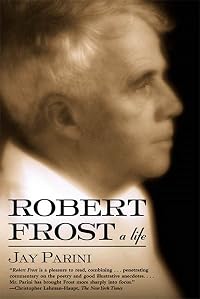
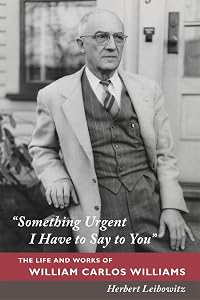


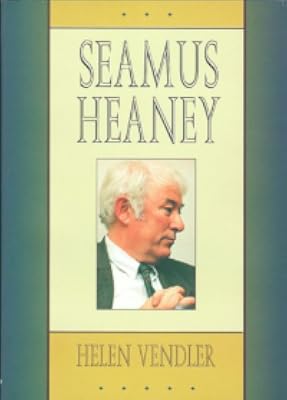















Member Reviews
Continuing on my summer quest to do better with poetry, I selected Frost: A Literary Life Reconsidered from the Chautauqua reading list of 1985. I thought I would like it because one of the few poets have enjoyed reading, and the only one I can quote, is Frost. The book turned out to be a combination of biography and literary criticism which I found difficult to get through. Since I knew very little about Frost's life, however, I did learn some things. He was a difficult person who had a difficult life. He and his wife had 6 children: two died in early childhood; the youngest (and Frost's favorite) daughter survived T.B. to die of complications of puerperal fever; and a son who committed suicide. His wife died in 1938 (4 years after the show more death of the youngest daughter and before the suicide of the son) and he seems to have suffered a great deal of guilt for "having dragged her through pretty much of a life as frail as she was. Too many children, too many habitations, too many vicissitudes. And a faith required that would have exhausted most women."
Another theme of his life is a need for recognition, reassurance and attention. He aparently often said (regarding speaking invitations but it probably also applied to his life in general) "I only go if I'm the show". This need appears to have never met completely met inspite of 4 Pulitzer prizes, several choice positions as "poet in residence" at excellent universities and honorary degrees from many of them including Oxford and Cambridge. And so he died in late January 1963, a complex, difficult and aparently unhappy old man. show less
Another theme of his life is a need for recognition, reassurance and attention. He aparently often said (regarding speaking invitations but it probably also applied to his life in general) "I only go if I'm the show". This need appears to have never met completely met inspite of 4 Pulitzer prizes, several choice positions as "poet in residence" at excellent universities and honorary degrees from many of them including Oxford and Cambridge. And so he died in late January 1963, a complex, difficult and aparently unhappy old man. show less
Here's simply the best life of Frost based on close readings by a critic with an ear (also a fine pianist). The author had many conversations with the poet, over many years, many "talks walking." The writing is worthy of the fine writer that Frost can be; contrast Thompson's ponderous prose, and judgments.
For example, Pritchard cites Jarrell's interviewing Frost for the Library of Congress in 1959, where Jarrell focused on North of Boston and the numbers of deprived women speakers, say, in "A Servant to Servants." "Frost told Jarrell that 'the woman always loses,' but added that 'she loses in an interesting way. She pulls the whole thing down with her.' This remark attributes power to 'the woman' even as it designates her the loser in show more whatever she suffers at the hands of her husband or her family or 'life' in general." show less
For example, Pritchard cites Jarrell's interviewing Frost for the Library of Congress in 1959, where Jarrell focused on North of Boston and the numbers of deprived women speakers, say, in "A Servant to Servants." "Frost told Jarrell that 'the woman always loses,' but added that 'she loses in an interesting way. She pulls the whole thing down with her.' This remark attributes power to 'the woman' even as it designates her the loser in show more whatever she suffers at the hands of her husband or her family or 'life' in general." show less
This biography concentrates on the complex interaction between Frost's life and work. The author sees Frost whole, while demonstrating that Frost's life was a literary one and that the essential fact about it was the poetry that came from it. - paraphrased from book cover
Ratings
Members
- Recently Added By
Author Information
16+ Works 326 Members
William H. Pritchard is Henry Clay Folger Professor of English at Amherst College
Classifications
- Genres
- Literature Studies and Criticism, Fiction and Literature, Biography & Memoir, Poetry
- DDC/MDS
- 811.52 — Literature & rhetoric American literature in English American poetry 20th Century 1900-1945
- LCC
- PS3511 .R94 .Z89 — Language and Literature American literature American literature Individual authors 1900-1960
- BISAC
Statistics
- Members
- 67
- Popularity
- 467,601
- Reviews
- 3
- Rating
- (3.92)
- Languages
- English
- Media
- Paper
- ISBNs
- 3
- ASINs
- 1


